Butterflies (Lepidoptera: Papilionoidea) of Georgia (Caucasus): annotated review of regional butterfly fauna with vernacular names index, notes on distribution and phenology
Iwona Słowińska, Krzysztof Jonko

TL;DR
This paper provides an updated checklist of 244 butterfly species in Georgia, including their distribution, rarity, and vernacular names to support conservation and biodiversity research.
Contribution
A comprehensive and annotated checklist of Georgia's butterfly fauna with vernacular names and updated distribution data.
Findings
244 butterfly species were recorded from nearly 600 locations in Georgia.
Nearly 25% of the species are rare or at risk of extinction.
The checklist includes phenological data, regional occurrence, and vernacular names in three languages.
Abstract
It is well known that butterflies are valuable indicators of environmental quality, given their existence in various habitats. Collecting and regularly updating data on species richness, abundance, and distribution of all butterfly species in the country is crucial for effective monitoring and conservation efforts, which can ultimately help minimise biodiversity losses. Since the last publication of the Georgian butterfly list, there have been numerous reports registering taxonomic revisions, nomenclatural changes or providing several new butterfly “cryptic species” based on genetic research. In the following article, based on a review of various sources of data, including existing literature and new, unpublished data, we present an annotated regional checklist of butterflies of Georgia, a country that is a part of the Caucasus ecoregion representing one of 36 biodiversity “hotspots”.…
Genes, proteins, chemicals, diseases, species, mutations and cell lines named across the full text — each resolved to its canonical identifier and authoritative record.
Click any figure to enlarge with its caption.
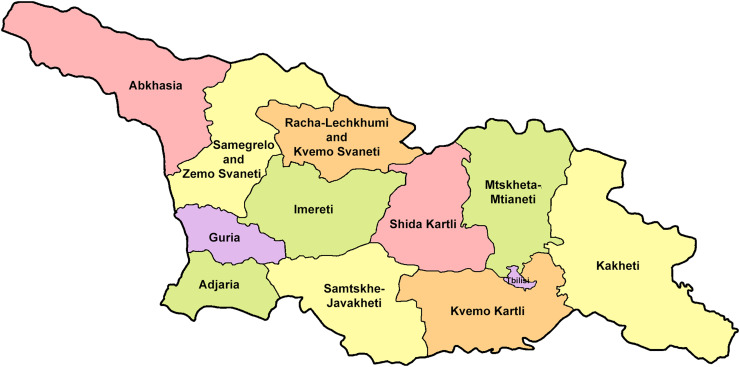 Figure 1
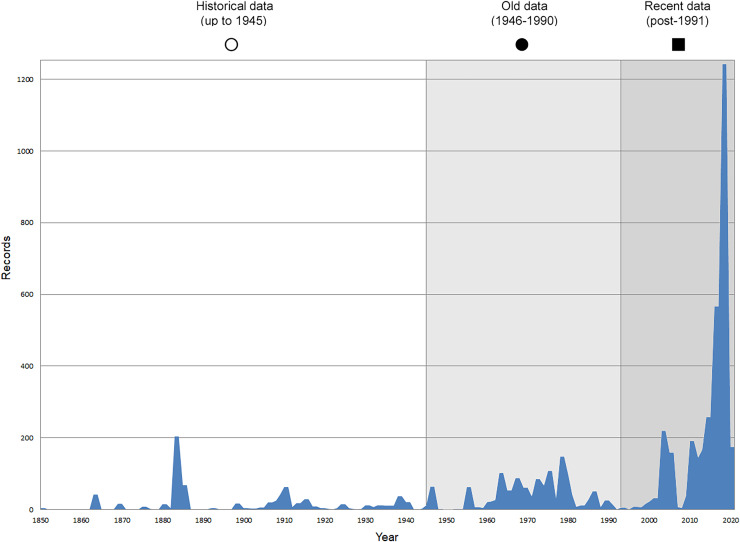 Figure 2
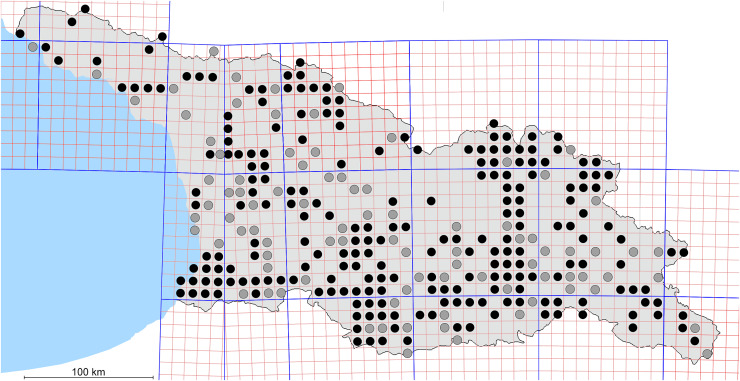 Figure 3
- —International Visegrád Fund
- —University of Lodz Statutory Funds
Peer Reviews
No public reviews on file for this paper yet. If you reviewed it on a platform where reviews are public (OpenReview, ICLR, NeurIPS, ICML), you can paste yours below so the community can read it here.
Videos
No videos yet. Explain this paper in a talk, walkthrough, or lecture? Add one.
Taxonomy
TopicsPlant and animal studies · Lepidoptera: Biology and Taxonomy · Plant Parasitism and Resistance
Introduction
Insect abundance and diversity have declined dramatically during the last decades (Hallmann et al., 2017, 2021; Leather, 2017; Forister, Pelton & Black, 2019; Rhodes, 2019; Sánchez-Bayo & Wyckhuys, 2019; Dalton et al., 2023). The conservation of biodiversity has emerged as a critical global concern. Data on species distribution and fauna diversity may serve as points of reference for estimating environmental changes and, at the same time, constitute the basis for assessing the conservation status of species and implementing conservation strategies to prevent further loss of insects, including Lepidoptera. Regarding Georgian fauna, Didmanidze (2004) is the only work known to the authors with a clear focus to document the lepidopteran fauna of Georgia. It was the first checklist of Georgian butterflies containing all species found in this country known at that time. Unfortunately, many species listed by Didmanidze have been considered doubtful or misidentified by, among others, Nekrutenko, Korshunov & Effendi (1982a, 1982b) and Tshikolovets & Nekrutenko (2012) and require independent confirmation. Generally, data on Georgian butterflies are still quite scattered and mostly deal with some separate regions and taxa only.
The Republic of Georgia is situated between two major mountain ranges: the Greater Caucasus and the Lesser Caucasus. Along with Azerbaijan and Armenia, Georgia forms one Transcaucasian region between the Caucasus Mountains and the borders of Iran and Turkey. It is divided into two autonomous republics (Abkhazia, Adjara), one city district (Tbilisi) and nine regions (Fig. 1).
Map of Georgia with administrative divisions.Map credit: Krzysztof Jonko.
Georgia is located in the Caucasus ecoregion—one of 36 biodiversity hot-spots—which shelters one of the most diverse fauna of the temperate region (Zazanashvili et al., 2004). This ecoregion is distinguished for having high levels of diversity and endemism while, at the same time, being seriously threatened by loss of habitats. Although Georgia covers a small part of the Caucasus, it contains the largest part of Caucasian forests, which cover about 40% of its territory. As many as 98% of Georgian forests are growing in the mountains, and only 2% is situated in low-lying areas (Patarkalashvili, 2017). The major threats to these habitats include overcutting, overgrazing, forest pests and diseases, fires, invasive alien species, and poor land-use practices (Akhalkatsi, 2015; Zazanashvili et al., 2020; Beridze & Dering, 2021). These factors, along with increasing climate changes intensify the overall loss of habitats and, in consequence, the biodiversity in Georgia. For biodiversity management, a national checklist of insect species is essential. Such initiatives as regularly updatable checklists or databases have already been compiled for many countries. These projects may be an important source of necessary information for a broad range of potential users, including conservationists, citizen scientists and scientists that would like to understand patterns of insect species diversity and distribution at a national or regional level.
The history of butterfly research in the region known as present-day Georgia starts in 1832 with a article by Ménétriés (1832) who provided the first species list of the Caucasus butterflies, though without precise locality data. For this reason, that publication could not be used as a data source for the regional checklist of butterflies of Georgia. Some time later, Nordmann (1851) published the first list of Georgian Lepidoptera species with full locality data. More intensive studies of butterflies from the country began in the second half of the 19^th^ century (Lederer, 1864, 1870; Hedemann, 1876; Christoph, 1877, 1881, 1886, 1889; Romanoff, 1884, 1885, 1887; Shavrov, 1886; Radde, 1899) and continued quite actively in the first half of the 20^th^ century. The period before the end of the Second World War was characterised by many reports of Georgian butterflies (e.g., Jachontov, 1911; Sheljuzhko, 1924; Miljanovskiy, 1941, 1947), but none have been so extensive and comprehensive as publications by Romanoff (1884, 1885, 1887). After the Second World War, many different authors, mainly from the former Soviet Union, published data on butterflies from the territory of Georgia (e.g., Rjabov, 1958; Miljanovskiy, 1964; Batiashvili & Didmanidze, 1973; Didmanidze, 1975, 1979, 1980; Vashakidze, 1976; Nekrutenko, 1990). Studies on Georgian butterflies diminished in the late 20^th^ century and have only recently resumed (e.g., Didmanidze et al., 2002; Tshikolovets, 2003, 2011; Didmanidze, 2004, 2005a, 2005b; Korb, 2005; Morgun, 2010, 2019; Tshikolovets & Nekrutenko, 2012; Bolshakov & Korb, 2013; Stradomsky & Tikhonov, 2015; Korb & Bolshakov, 2016). Currently, lepidopterology in Georgia faces significant challenges due to the absence of successors to Professor Didmanidze in both scientific institutions and among actively involved enthusiasts. Mumladze, Japoshvili & Anderson (2019) indicate that only a few taxa—such as Coleoptera, Hemiptera, Hymenoptera, Acari (Oribatida), and Gastropoda—are actively studied in Georgia. Furthermore, there is a lack of comprehensive data regarding the distribution of taxa, particularly butterflies.
Twenty years have passed since Didmanidze’s checklist was published (Didmanidze, 2004); therefore, an update is needed, especially since several new investigations have been carried out, recording new species or new localities for species previously noted in Georgia. Intense genetic studies in recent years have resulted in changes in systematics and increased the number of reported species not previously listed. Currently, apart from the information from Didmanidze (2004), Tshikolovets & Nekrutenko (2012) and scarce data for individual species from four websites, detailed data on the distribution of most butterfly species in Georgia are not available. Based on the number of recorded taxa, several other species can be expected to occur in Georgia, including those reported in surrounding countries or new to science.
Therefore, in the present article, we provide an updated and annotated regional list of Georgian butterflies with vernacular names, species distribution in Georgia/Caucasus, occurrence status in each region of the country, phenological data and habitat requirements. Moreover, we present additional comments for the species with doubtful presence in Georgia and for the species that have not been previously reported in Georgia. This paper should assist in the understanding of present-day knowledge of Georgia’s butterfly fauna and form a starting point for further studies into the biodiversity and conservation of butterflies in that country.
Materials and Methods
Literature records
We need to point out that the checklist by Didmanidze (2004) contains errors such as redundant or missing letters in Latin names, nomenclatural inaccuracies, mistaken authors of species names, omissions, and incomplete or incorrect information about ranges of species. For that reason, we used Tshikolovets & Nekrutenko (2012) as our reference data source. We considered that the aforementioned authors summarised the important publications on the butterfly fauna of the Caucasus. Nevertheless, we also critically reviewed all available literature reports to verify original spelling, possible taxonomic changes and precise distributional information in each region (e.g., Eversmann, 1851; Alphéraky, 1876; Staudinger & Rebel, 1901; Moucha, 1968; Batiashvili & Didmanidze, 1973; Gross, 1978; Tuzov, 1993; Tuzov et al., 1997, 2000; Bukhnikashvili et al., 2012). We did not verify material for misidentified or doubtful species, as it was beyond the scope of the present study. Nonetheless, we have decided to include those records in the checklist. All species with uncertain or questionable occurrence in Georgia are marked with an asterisk (*) placed at the species name in all presented tables. Nevertheless, we included some comments about those species, as well as about some new findings. Due to the lack of data on the number of individuals of particular species, especially in older publications, we defined species rarity using a criterion that focuses on their frequency of occurrence within the territory of Georgia. If a species was recorded from no more than three localities, we considered it rare; if it was recorded from only one locality, we regarded it as extremely rare within the Georgian fauna.
It is important to note that lepidopteran taxonomy and nomenclature are active fields of study, with ongoing revisions based on new discoveries and genetic analyses. The classification system continues to evolve, and for that reason we decided to base our study on the classification and nomenclature used in the recent publication by Rajaei et al. (2023). The primary source of Russian vernacular names was the publication by Lvovsky & Morgun (2007), while Georgian names were derived from various sources, primarily Georgian publications (including Bukhnikashvili et al., 2012) and the portal https://biodiversity.iliauni.edu.ge./.
GBIF records
The records obtained from the Global Biodiversity Information Facility (https://www.gbif.org/, accessed on 2 April 2022) have been subjected to a very critical assessment. All records containing obvious errors have been excluded—for example, records collected from New Georgia Island or from the state of Georgia (in the United States of America) which were erroneously assigned (in the GBIF) to Georgia in the Caucasus. The detailed locations of all GBIF records were also verified. All records with missing Global Positioning System (GPS) coordinates or those indicating localities outside the border of present-day Georgia (i.e., localities in the territory of Russia or Turkey) have been excluded. All records described as human observation that did not contain an image confirming such observation were also excluded. All human observations, confirmed by photographs of species that could be confused with other species, were additionally verified.
Other sources of records
We had access to records submitted by contributors to the Lepidoptera Mundi website (Jonko & Słowińska, 2023) and two other websites: the Georgian Biodiversity Database (Tarkhnishvili & Chaladze, 2023), Butterflies of the Caucasus and the South of Russia (Tikhonov et al., 2023). Additionally, we used data based on the material photographed by us during the Caucasus expeditions in the years 2018–2019 under the project “V4 & Eastern Partnership”. All observed individuals were photographed and identified in the field, and then they were included in the general database.
Database and visualisation
For the purpose of our study, a Microsoft Access 2010 relational database was created locally on the authors’ computers and subsequently migrated to the MySQL platform, based on all available data sources. The database consists of several tables containing information about taxonomy, regions, locations, vernacular names, dates of individual records and the period in which the record was noted originally. It includes taxa identified at least to the species level and records with detailed localities or at least region name. The final checklist has been created for the species level. All taxa within families are arranged in systematic order. The database of faunistic records in SQL/MS Access format is available from the authors upon request.
Visualisation of the regional distribution maps of all species was generated using the GD library and scripts written in PHP. Moreover, the thumbnails of dorsal and ventral views of each species are presented (where available). The main source of the thumbnails is the authors’ website Lepidoptera Mundi (Jonko & Słowińska, 2023). All of the thumbnails were created from photos of pinned specimens, with the photos edited in Adobe Photoshop CS6. We note that the presented thumbnails are not all generated to the same scale and do not contain a 1 cm reference bar. These images are used only for the depiction of a species and may not represent individuals collected in the Caucasus.
To clearly separate historical and more recent data, we decided to divide all records in the database into three periods: very old (historical) records up to 1945 (end of the Second World War), records collected between the end of the Second World War and Georgia’s independence (1945–1991), and records collected since Georgia gained its independence (post-1991). This division was made not for any scientific reasons, but solely based on historical events.
Results
List of Georgian butterflies
Based on the most up-to-date butterfly checklist of the Caucasus by Tshikolovets & Nekrutenko (2012), we registered 201 species confirmed in Georgia. The current systematics forced a recalculation of the number of species listed by the aforementioned authors to make it comparable with the current state of knowledge. In summary, prior to the present study, 205 species of butterflies representing five families were recorded in Georgia. In the present article, 39 species were added to this list and, as a result, a total of 244 species belonging to 85 genera are listed for Georgia. The greatest species richness was recorded within the families Nymphalidae (96 species, 34 genera) and Lycaenidae (83 species, 26 genera) (Table 1).
Table 1: Summary of the number of subfamilies, genera and species within each butterfly family in Georgia.
Sixteen species (6.6% of Georgian fauna) were considered Caucasian endemics (see Tables 1 and 2), while four species (Carterocephalus palaemon, Parnassius phoebus, Pieris bowdeni, Polyommatus admetus) have not been noted since the end of 19^th^ century. Moreover, for eleven species: Muschampia baeticus, Agriades optilete, Polyommatus escheri, Tarucus theophrastus, Satyrium lunulata, Melitaea alatauica, M. casta, Hyponephele amardaea, H. comara, Melanargia hylata and M. teneates no information confirming their occurrence in Georgia is available (Table 2) while over twenty other species (recorded mainly by Didmanidze) require confirmation or verification of the identifications.
Table 2: Updated list of butterflies of Georgia.
Table 3: Comments on new and doubtful butterfly species of Georgia.
A complete listing of taxa with known subspecies is available in Table S1 in Supplemental Material.
In total, 7,695 records were found during the study periods, including 3,849 extracted from GBIF. Among them, 7,180 have locality names or geographical coordinates that indicate precise location. In examining the number of records across each period, an upwards trend was apparent. The number of records was the lowest (822) in the first historical period (up to 1945), while in the second period 2,381 records were reported. The highest number of records (4,492) was noted in the last period (post-1991) (Fig. 2). The increased number of records in the last period was mainly due to large scale user activity on Internet platforms like iNaturalist or GBIF.
Number of records collected in every year in three defined periods (see Materials and Methods).
List of comments on new and doubtful species
After an examination of all available publications dealing with Georgian butterflies, we conclude that the presence of several dozen species in Georgia is not certain, while several other species reported earlier need confirmation or further systematic review. Since Didmanidze’s checklist (Didmanidze, 2004), several faunistic publications and taxonomic studies incorporating DNA-based techniques have appeared. Hereafter, we have added comments to the species whose status rank has changed due to new genetic research, as well as species whose occurrence in Georgia is doubtful due to the availability of conflicting or ambiguous information/data, misidentifications, or a long-term lack of new records (Table 3).
Distribution, habitat, phenology of Georgian butterflies
Most of recorded species are considered as widely distributed and common in both Georgia and the Caucasus. Twelve species: Muschampia cribrellum, Pyrgus cacaliae, P. carthami, P. serratulae, Euphydryas iduna, Limenitis populi, Coenonympha tullia, Aricia teberdina, Cupido alcetas, Kretania sephirus, K. stekolnikovi and Polyommatus eros are confined only to the Great Caucasus, while sixteen: Colias caucasica, Pieris bowdeni, Melitaea ornata, Coenonympha symphita, Hipparchia fatua, Pseudochazara beroe, P. geyeri, P. mniszechii, Lycaena asabinus, Kretania modica, Polyommatus admetus, P. cyaneus, P. ninae, P. aserbeidschana, P. turcicus, P. damon are restricted to the Lesser Caucasus. Seven species: Eogenes alcides, Muschampia poggei, Papilio alexanor, Afarsia morgiana, Polyommatus altivagans, Tomares romanovi, Hyponephele comara may be found only in the Djavakheti-Armenian plateau. The highest number of butterfly species are found in July, and almost half of the species are strictly univoltine (Table 4).
Table 4: List of Georgian butterflies with the presence status in each region and vernacular names index.
We created and provided the first list of Georgian vernacular names for butterfly species, which is as complete as possible (see Table 4). Such a list has not yet been published in any article. Creating this list, in our opinion, was very important out of respect for the traditional native names. We extended this list by supplementing it with Russian names, because the Russian language was used in Georgia during the Soviet times, serving as a lingua franca and a language of inter-ethnic communication. Furthermore, since many young people use English, we also added English names. We hope that a list of vernacular names provides useful guides to identify butterflies for the wider entomological community.
The distribution of numerous species is still poorly known because many regions of Georgia have not been explored extensively. Undoubtedly the best studied regions are: Samtskhe-Javakheti (1,713 records, 191 species) and Mtskheta-Mtianeti (1,245 records, 145 species). Some regions, such as K’akheti, Kvemo Kartli and Abkhazia are also well investigated (more than 460 records), with more than 130 species found in them. It is noteworthy that in Samegrelo-Zemo Svaneti and Ajaria, despite having more than 790 records, less than 100 species were noted. The smallest number of records and species were collected in Guria (only 44 records and 30 species) which is really surprising (Table 5, Fig. 3). A relatively large number of records collected from neighbouring regions and direct access to the Black Sea coast suggests that the real number of species in this region is probably much higher than presented.
Table 5: Comparison of number of records, localities and butterfly species in Georgia regions.
Map of studied localities in UTM projection (grid 10 × 10 km).(˚) One or two record(s). (•) Three or more records. Map credit: Krzysztof Jonko.
The arrangement of sampling points on the map (Fig. 3) indicates that the Lesser Caucasus is relatively well explored in comparison to the Great Caucasus. The Great Caucasus, although it borders Lesser Caucasus, remains poorly investigated with regard to butterflies. More species may be expected in this area, but it will depend on the intensity of the future field research.
Discussion
The territory of Georgia is located between two mountain ranges: the Great Caucasus to the north and the Lesser Caucasus to the south. The inter-montane plains of Central Georgia are located between them. It is necessary to remember that a major part of this country is occupied by mountains with 55% of its surface area located at altitudes higher than 1,000 m. Such topographic heterogeneity and habitat diversity favours high species diversity and endemism visible in different taxonomical groups in the entire area of the Caucasus (e.g., Eliava et al., 2007; Sendra & Reboleira, 2012; Zazanashvili et al., 2012; Mumladze, Cameron & Pokryszko, 2014; Konstantinov & Simov, 2018; Grego et al., 2020; Kokhia & Golovatch, 2020).
After including information given by Tshikolovets & Nekrutenko (2012), we updated the list of Georgian butterflies by adding 39 species which increases the total number of species to 244 (belonging to five families). Quite a large number of species new to Georgia compared to the publication mentioned above is a result of three factors: changes in systematics, new discoveries and description of species new to science. It is important to note that, to date, no species have been identified as endemic to Georgia. However, what distinguishes the Georgian butterfly fauna is the presence of rare and extremely rare species (comprising almost 25% of the butterfly fauna), as well as the species endemic to the Caucasus. Our data shows that butterfly fauna is very diverse, despite the fact that Georgia is a relatively small country. It is worth mentioning that Georgia is located at a biogeographical crossroads where at least three biogeographical provinces converge. For this reason, butterfly fauna of this country expresses the mixed character of its biogeographic connections with European, Asian and Middle Eastern elements, as well as Caucasian endemics. Notably, the presence of 16 endemic species to the Caucasus occurring in Georgia indicates a relatively high level of endemism in this country. It is important to note that these species play a crucial role in maintaining biodiversity, not only in Georgia but throughout the entire Caucasus region. Due to their limited geographic range, endemic species are often more vulnerable to extinction. This makes their conservation a priority in light of habitat loss and climate change.
Many records of over a dozen species in Georgia are probably erroneous, although these species can be expected there as they are noted in the surrounding countries. We assumed that the number of species reported in Georgia and its neighbouring countries was comparable.
Consequently, we compared our list of the butterfly fauna with existing checklists (or papers) from neighbouring countries of Armenia and Azerbaijan (belonging to the Transcaucasia) as well as Russia and Turkey (Tshikolovets & Nekrutenko, 2012; Koçak & Kemal, 2018; Langourov, 2019; Sinev, 2019; Snegovaya & Petrov, 2019). In the case of Russia, we focused only the regions bordering Georgia: Krasnodar and Stavropol Krai, the Republic of Adygea, Kabardino-Balkaria, Karachay-Cherkess, North Ossetia-Alania, Ingushetia, referred to as the West Caucasian region and Chechen Republic and the Republic of Dagestan referred to as the East Caucasian region. In the case of Turkey, we concentrated only on two provinces—Artvin and Ardahan.
We found that the number of species recorded for Georgia is comparable to the butterfly fauna of other republics of the Transcaucasia, while it is higher in relation to neighbouring provinces of Turkey and Russia (Table 6).
Table 6: Comparison of number of butterfly species of Georgia with surrounding countries.
The high number of species recorded for Azerbaijan should be treated with caution; we are convinced that several species require independent confirmation, like in the case of Georgia.
Even though Georgia has a long history of butterfly research, the fauna is still poorly researched. It is worth mentioning that, since the collapse of the Soviet Union, research on Georgian butterflies and moths has primarily been conducted by Didmanidze (2004), and it has been 20 years since the last inventory was published.
The updated checklist presented in this article and data containing thumbnails, vernacular names and species regional distribution maps may serve as a baseline for further exploration of Georgian butterflies. We hope that our work will be useful for scientists and will also promote interest in butterflies among communities, local entomologists and citizen scientists. They may use this checklist to document the presence or absence of butterfly species in specific regions of Georgia. Citizen participation in data collection may be one of the steps towards conservation of butterflies and/or their habitats in that country.
Conclusions
Our study supplements the knowledge of butterflies from Georgia. We added 39 new species found or described in the last decade. Among 244 recorded species almost 25% of Georgian species are categorised as rare and extremely rare, and these species may be at the highest risk of potential extinction. The number of recorded species in Georgia is comparable to the butterfly fauna of other republics of the Transcaucasia; however, it is higher than neighbouring provinces of Turkey and Russia. The occurrence of over a dozen species is questioned by us due to potential misidentification or ambiguous data. That is why we consider it essential to verify determination of several species listed by Didmanidze or confirm their occurrence in Georgia with independent studies. The data presented in this article may serve as a baseline for further exploration of the diversity of butterfly fauna of Georgia. This is crucial to better management of conservation in the face of loss habitats and changes resulting from climate change.
Supplemental Information
10.7717/peerj.18720/supp-1Supplemental Information 1Complete list of Georgian butterflies with known subspecies.
10.7717/peerj.18720/supp-2Supplemental Information 2Raw data with location names and GPS coordinates used in the study.
The reference list from the paper itself. Each links out to its DOI / PubMed record.
- 1Akhalkatsi M Forest habitat restoration in Georgia, Caucasus ecoregion 2015 Tbilisi Mtsignobari
- 2Alphéraky SN The Lepidoptera of the Northern Caucasus Russkoe Entomologicheskoe Obshchestvo 187610334[in German]
- 3Anikin VV Sachkov SA Zolotuhin VV “Fauna lepidopterologica Volgo-Uralensis” 150 years later: changes and additions. Part 1. Rhopalocera (Insecta, Lepidoptera)Atalanta 1993241–289120
- 4Batiashvili ID Didmanidze EA Swallowtails overview in Georgia Proceedings of the Institute for Plant Protection of the GSSR 197324111118[in Russian]
- 5Beridze B Dering M Problems and threats to the Caucasus forest ecosystems on the example of Castanea sativa Kosmos 202170330192610.36921/kos.2021_2662 · doi ↗
- 6Beuret H Palaeochrysophanus candens Herrich-Schäffer a previously unrecognized species (Lepidoptera, Lycaenidae)Announcements from the Entomological Society of Basel 195225764[in German]
- 7Beuret H Third contribution to the knowledge of Palaeochrysophanus candens Herrich-Schäffer Announcements from the Entomological Society of Basel 195443340[in German]
- 8Bohatsch O Contribution to the lepidopteran fauna of Transcaucasia Viennese Entomology Newspaper 18865123128[in German]