Whole plastome sequence of Hibiscus moscheutos L. 1753 (Malvaceae) and its phylogenetic analysis
Yu Sun, Yutian Jin, Maoyin Sun, Liqiang Wang, Qianqian Liu

TL;DR
This paper reports the first complete plastome sequence of Hibiscus moscheutos and uses it to explore its evolutionary relationships with other Hibiscus species.
Contribution
The study provides the first complete plastome sequence for Hibiscus moscheutos and its phylogenetic analysis.
Findings
The plastome is 160,208 bp with a typical quadripartite structure and 130 genes.
Phylogenetic analysis reveals H. mutabilis is sister to H. taiwanensis.
The plastome has a GC content of 36.93%.
Abstract
Hibiscus moscheutos, a perennial herb in the Malvaceae family, has medicinal properties but lacks molecular data. This study sequenced and analyzed its first complete plastome using next-generation sequencing. The 160,208 bp circular plastome has a typical quadripartite structure with 130 genes and 36.93% GC content. Phylogenetic analysis showed that H. mutabilis is sister to H. taiwanensis. This study provides essential molecular data for future research on Hibiscus phylogeny, taxonomy, and evolution.
Genes, proteins, chemicals, diseases, species, mutations and cell lines named across the full text — each resolved to its canonical identifier and authoritative record.
Click any figure to enlarge with its caption.
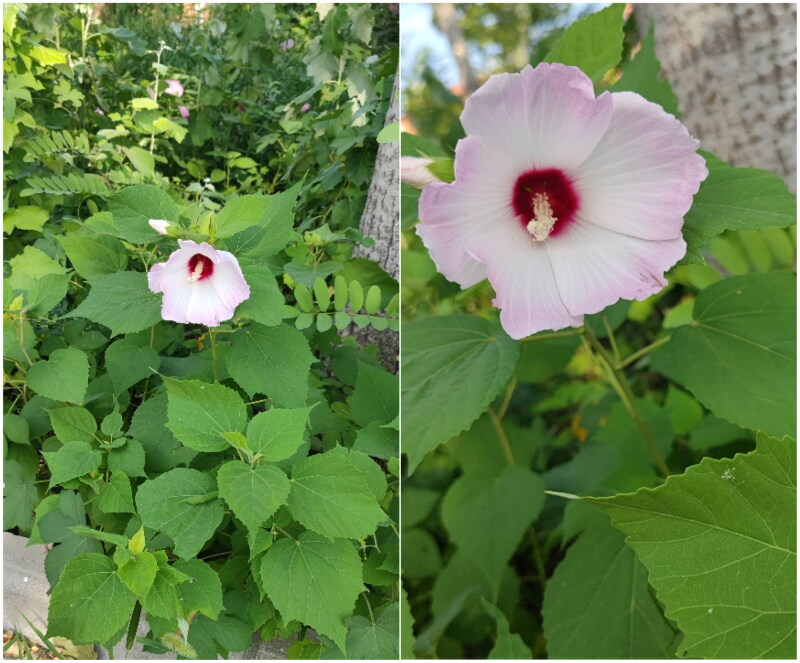 Figure 1
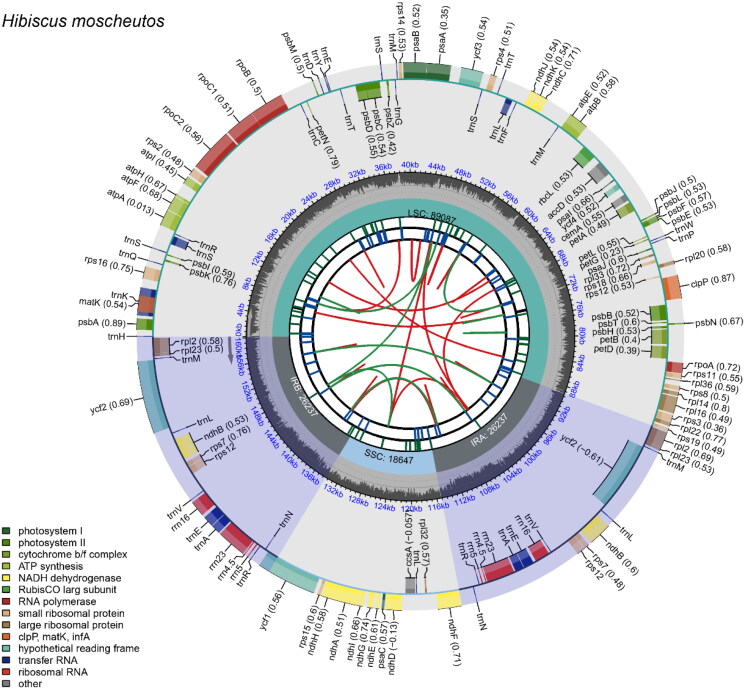 Figure 2
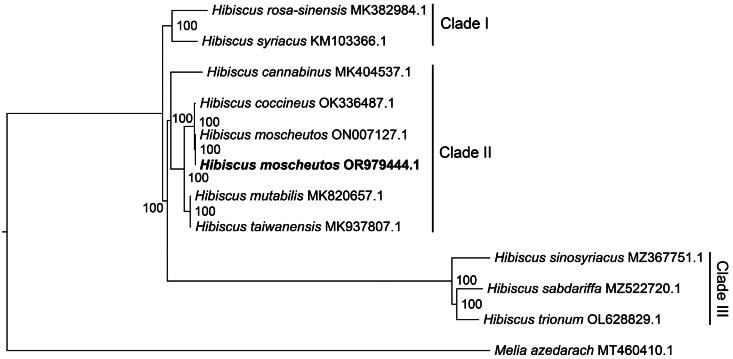 Figure 3
- —Doctoral Fund Project of Heze University10.13039/501100012484
- —Shandong Provincial Natural Science Foundation10.13039/501100007129
Peer Reviews
No public reviews on file for this paper yet. If you reviewed it on a platform where reviews are public (OpenReview, ICLR, NeurIPS, ICML), you can paste yours below so the community can read it here.
Videos
No videos yet. Explain this paper in a talk, walkthrough, or lecture? Add one.
Taxonomy
TopicsHibiscus Plant Research Studies · African Botany and Ecology Studies · Advances in Cucurbitaceae Research
Introduction
Hibiscus moscheutos L. 1753 (Linnaeus 1753), commonly known as grass hibiscus or large-flowered okra, belongs to the Malvaceae family and is native to North America’s wetlands. The species thrives in warm, humid environments, preferring fertile sandy loam soils near water bodies, while also exhibiting some shade tolerance. Flowering occurs between June and August, and H. moscheutos is valued for its ornamental, edible, and medicinal properties (Chensom et al. 2020). Its flowers contain high concentrations of bioactive compounds such as flavonoids, anthocyanins, and phenolics, which display a range of biological activities, including antioxidant, cardioprotective, hypoglycemic, and antihypertensive effects. Anthocyanins are particularly noted for their potent antioxidant and anti-inflammatory properties, potentially mitigating risks associated with cardiovascular diseases, diabetes, arthritis, and cancer.
As a perennial species, H. moscheutos adapts to various environments and reproduces quickly (Snow et al. 2000), supporting ecological equilibrium. The plant also has the capacity to absorb harmful substances and purify the environment. Through its robust water and nutrient absorption capacity (Shimamura et al. 2007), H. moscheutos effectively reduces soil erosion and improves soil quality, making it a valuable species for ecological restoration and environmental protection.
Despite its ecological and medicinal importance, the complete plastome of H. moscheutos has not yet been published, although a preliminary version is available in GenBank with accession number ON007127.1. In this study, the complete plastome of H. moscheutos was assembled and characterized using Illumina paired-end sequencing data, providing a critical resource for future research in conservation and phylogenetics.
Materials and methods
Samples of H. moscheutos (Figure 1) were collected from the campus of Heze University, located in Heze City, Shandong Province, China (35°16′11.78″N, 115°28′0.19″E). A voucher specimen was deposited in the Herbarium of Heze University under specimen number HZ220826 (contact: Liqiang Wang, [email protected]).
Plant morphology of Hibiscus moscheutos. Photographs were taken by Liqiang Wang at coordinates 35°16′11.78″N, 115°28′0.19″E. Key identifying characteristics of the species: perennial herbs, growing 1–2.5 m in height, with stellate pilose or nearly glabrous texture. Leaves are ovoid or ovate-lanceolate, 7–18 cm long, 4–8 cm wide, subglabrous or finely pilose on the upper surface, and covered with gray-white felt-like hairs on the lower surface, with obtuse crenate edges. Flowers are solitary in leaf axils at branch tips, with a pedicel length of 2–8 cm, small linear bracts, and a campanulate calyx with five ovate-triangular lobes. The corolla is white, pink, or red, with obovate flowers valves, and the inner face is basally bearded. Fruit is a conical-ovoid capsule, 2.5–3 cm long, subrounded reniform.
Tender leaves from healthy plants were used for the extraction and purification of whole genomic DNA, utilizing the Plant Genomic DNA Kit (Tiangen Biotech, Beijing, China). The extracted DNA was assessed for quality and fragmented into ∼300 bp inserts. Library preparation and sequencing were carried out on the Illumina NovaSeq 6000 platform by Wuhan Benagen Technology Co. (Wuhan, China), resulting in approximately 11.1 GB of clean reads (FASTQ format) after removing adapters and low-quality bases.
Plastome assembly was performed using GetOrganelle (v1.7.1) (Jin et al. 2020), with annotation done through CPGAVAS2 (Shi et al. 2019) and subsequently refined manually using Apollo (Pontius 2018). The annotated plastome was then submitted to GenBank via BankIt. A circular genome map was generated using CPGview (Liu et al. 2023). For phylogenetic analysis of H. moscheutos, plastome sequences from 10 other Hibiscus species and one outgroup species (Melia azedarach) were aligned using MAFFT (Katoh and Standley 2016) with default parameters (https://mafft.cbrc.jp/alignment/software/). A maximum-likelihood (ML) phylogenetic tree was constructed with IQ-TREE (v2.0) (Nguyen et al. 2015), using 1000 bootstrap replicates and the K3Pu + F + I + R4 substitution model, selected based on the Bayesian information criterion (BIC) score.
Results
Sequencing and assembling the plastome of Hibiscus moscheutos produced a high-quality genome sequence, which was annotated and thoroughly analyzed. The plastome is 160,208 bp in length and features a typical tetrameric structure (Figure 2). It consists of a large single-copy (LSC, 89,087 bp) region, a small single-copy (SSC, 18,647 bp) region, and two inverted repeat (IRa and IRb, 26,237 bp each) regions. The average, maximum, and minimum coverage depths at each position in the assembled genome were 2030.20×, 3353×, and 244×, respectively (Figure S1).
Plastome mapping of Hibiscus moscheutos. The species name appears in the top left corner. The map contains six tracks by default. From the center outward, the first track shows dispersed repeats, including direct and palindromic repeats connected by red and green arcs. The second track displays long tandem repeats as blue bars, while the third displays short tandem repeats or microsatellite sequences in varying colors. The fourth track displays the SSC, IRa, IRb, and LSC regions. The fifth track shows the GC content along the genome. The sixth track presents various genes, color-coded according to their functional classification (shown in the bottom left corner). For protein-coding genes, letters after gene names specify subunits or family members; numbers indicate gene variants or functional differentiation. For rRNA genes, numbers after gene names represent rRNA size in Svedberg units. For tRNA genes, letters after gene names indicate amino acids they recognize. Genes of unknown function are indicated with numbers corresponding to different hypothetical coding genes. Inner genes are transcribed clockwise, while outer genes are transcribed anticlockwise.
The plastome encodes 130 genes, including 85 protein-coding genes, eight rRNA genes, and 37 tRNA genes, with a guanine-cytosine (GC) content of 36.93%. Of the annotated genes, 20 contain one or two introns and are classified as cis-splicing genes. Genes such as rps16, atpF, rpoC1, petB, petD, rpl16, rpl2 (×2), ndhB (×2), ndhA, trnK-UUU, trnS-CGA, trnL-UAA, trnE-UUC (×2), and trnA-UGC (×2) each contain one intron (Figure S2). The genes clpP and ycf3 each have two introns (Figure S2). The rps12 gene is a trans-splicing gene, with its downstream 3′ end located in the IR regions and containing an intron in each 3′ end (Figure S3).
To examine the phylogenetic relationships of H. moscheutos, complete plastome sequences from 11 Hibiscus species and an outgroup were used to construct a ML tree. Most nodes in the tree received strong support with 100% bootstrap values (Figure 3). In the tree, two H. moscheutos plants (OR979444.1 and ON007127.1) formed a monophyletic branch and were most closely related to H. coccineus (Figure 3). The Hibiscus species in the tree were classified into three clades: Clade I included H. rosa-sinensis and H. syriacus; clade II consisted of H. cannabinus, H. coccineus, H. moscheutos, H. mutabilis, and H. taiwanensis; and clade III comprised H. sinosyriacus, H. sabdariffa, and H. trionum (Figure 3).
Maximum-likelihood (ML) phylogeny of Hibiscus moscheutos based on complete plastome sequences. Bootstrap values based on 1000 replicates are shown on each node. Eleven Hibiscus plant and one outgroup were used to reconstruct the ML tree, which are H. rosa-sinensis (MK382984.1, Abdullah et al. 2020), H. syriacus (KM103366.1), H. cannabinus (MK404537.1), H. coccineus (OK336487.1, Wang et al. 2022), H. moscheutos (ON007127.1), H. moscheutos (OR979444, this study), H. mutabilis (MK82065.1, Abdullah et al. 2020), H. taiwanensis (MK937807.1, Go et al. 2024), H. sinosyriacus (MZ367751.1, Kwon et al. 2023), H. sabdariffa (MZ522720.1, Kwon, Park, et al. 2022), H. trionum (OL628829.1, Kwon et al. 2022), and Melia azedarach (MT460410.1, outgroup). The new H. moscheutos plastome in this study is highlighted in bold font.
Discussion and conclusions
In this study, the plastome of H. moscheutos was assembled using short-read data. The genome size, GC content, and gene composition of the plastome are similar to those of other Hibiscus species (Abdullah et al. 2020; Kwon, et al. 2022; Kwon et al. 2022; Wang et al. 2022; Kwon et al. 2023; Go et al. 2024). However, differences in sequence length, gene number, and structural features were observed between species. These variations could reflect specific adaptations to diverse environmental factors, such as cold and heat tolerance (Barrios and Ruter 2019). In short, this study presents valuable information for further exploration of the biological characteristics, genetic diversity, and evolutionary development of H. moscheutos.
The phylogenetic analysis indicated that two H. moscheutos plants and H. coccineus formed a monophyletic clade, which then branched with other closely related species, such as H. mutabilis and H. taiwanensis. Some of the topological results were consistent with previous studies. For example, clade I, which includes H. rosa-sinensis and H. syriacus, was consistent with earlier findings (Xu et al. 2019; Hu et al. 2021; Wang et al. 2022). Additionally, H. mutabilis and H. taiwanensis clustered together, as reported by Li et al. (2022). The phylogenetic analysis was strongly supported by bootstrap values, providing robust evidence for understanding the evolutionary relationships and history of H. moscheutos. These findings offer a scientific foundation for the conservation and utilization of this plant resource.
Supplementary Material
Supplemental Material
The reference list from the paper itself. Each links out to its DOI / PubMed record.
- 1Abdullah, Mehmood F, Shahzadi I, Waseem S, Mirza B, Ahmed I, Waheed MT. 2020. Chloroplast genome of Hibiscus rosa-sinensis (Malvaceae): comparative analyses and identification of mutational hotspots. Genomics. 112(1):581–591. doi:10.1016/j.ygeno.2019.04.010.30998967 · doi ↗ · pubmed ↗
- 2Barrios K, Ruter JM. 2019. Inheritance of foliage color of common rosemallow (Hibiscus moscheutos (L.)) subspecific hybrids. Bot Stud. 60(1):3. doi:10.1186/s 40529-019-0251-4.30874920 PMC 6419790 · doi ↗ · pubmed ↗
- 3Chensom S, Shimada Y, Nakayama H, Yoshida K, Kondo T, Katsuzaki H, Hasegawa S, Mishima T. 2020. Determination of anthocyanins and antioxidants in ‘Titanbicus’ edible flowers in vitro and in vivo. Plant Foods Hum Nutr. 75(2):265–271. doi:10.1007/s 11130-020-00813-3.32246240 · doi ↗ · pubmed ↗
- 4Go S, Koo H, Jung M, Hong S, Yi G, Kim YM. 2024. Pan-chloroplast genomes for accession-specific marker development in Hibiscus syriacus. Sci Data. 11(1):246. doi:10.1038/s 41597-024-03077-7.38413611 PMC 10899175 · doi ↗ · pubmed ↗
- 5Hu G, Hu C, Peng X, Lu S, Zhang Z. 2021. Complete chloroplast genome of a semi-mangrove plant Hibiscus tiliaceus (Malvaceae). Mitochondrial DNA B Resour. 6(7):1904–1905. doi:10.1080/23802359.2021.1935337.34179470 PMC 8204996 · doi ↗ · pubmed ↗
- 6Jin JJ, Yu WB, Yang JB, Song Y, de Pamphilis CW, Yi TS, Li DZ. 2020. Get Organelle: a fast and versatile toolkit for accurate de novo assembly of organelle genomes. Genome Biol. 21(1):241. doi:10.1186/s 13059-020-02154-5.32912315 PMC 7488116 · doi ↗ · pubmed ↗
- 7Katoh K, Standley DM. 2016. A simple method to control over-alignment in the MAFFT multiple sequence alignment program. Bioinformatics. 32(13):1933–1942. doi:10.1093/bioinformatics/btw 108.27153688 PMC 4920119 · doi ↗ · pubmed ↗
- 8Kwon SH, Jang YL, Kwon HY. 2022. Complete chloroplast genome sequence of Hibiscus trionum Linnaeus 1753 (Malvaceae). Mitochondrial DNA B Resour. 7(11):1902–1903. doi:10.1080/23802359.2022.2135399.36353058 PMC 9639535 · doi ↗ · pubmed ↗