Corrigendum: Genome-wide linkage mapping of Fusarium crown rot in common wheat (Triticum aestivum L.)
Faji Li, Can Guo, Qi Zhao, Weie Wen, Shengnan Zhai, Xinyou Cao, Cheng Liu, Dungong Cheng, Jun Guo, Yan Zi, Aifeng Liu, Jianmin Song, Jianjun Liu, Jindong Liu, Haosheng Li

Abstract
Genes, proteins, chemicals, diseases, species, mutations and cell lines named across the full text — each resolved to its canonical identifier and authoritative record.
Click any figure to enlarge with its caption.
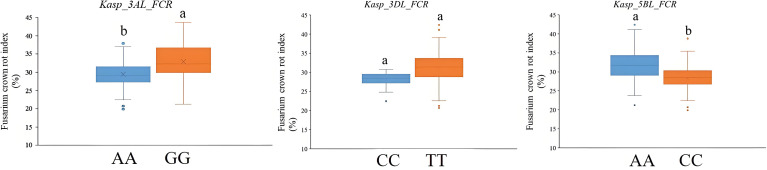 Figure 1
Peer Reviews
No public reviews on file for this paper yet. If you reviewed it on a platform where reviews are public (OpenReview, ICLR, NeurIPS, ICML), you can paste yours below so the community can read it here.
Videos
No videos yet. Explain this paper in a talk, walkthrough, or lecture? Add one.
Taxonomy
TopicsPlant Pathogens and Fungal Diseases · Mycotoxins in Agriculture and Food · Plant Disease Resistance and Genetics
In the published article, there was an error. A correction has been made to the Abstract.
This paragraph previously stated:
“Introduction: Powdery mildew (PM) poses an extreme threat to wheat yields and quality z. [Methods] In this study, 262 recombinant inbred lines (RILs) of Doumai and Shi 4185 cross were used to map PM resistance genes across four environments. A high-density genetic linkage map of the Doumai/Shi 4185 RIL population was constructed using the wheat Illumina iSelect 90K single nucleotide polymorphism (SNP) array.
Results: In total, four stable quantitative trait loci (QTLs) for PM resistance, QPm.caas-2AS, QPm.caas-4AS, QPm.caas-4BL, and QPm.caas-6BS, were detected and explained 5.6%–15.6% of the phenotypic variances. Doumai contributed all the resistance alleles of QPm.caas-2AS, QPm.caas-4AS, QPm.caas-4BL, and QPm.caas-6BS. Among these, QPm.caas-4AS and QPm.caas-6BS overlapped with the previously reported loci, whereas QPm.caas-2AS and QPm.caas-4BL are potentially novel. Additionally, six high-confidence genes encoding the NBS-LRR-like resistance protein, disease resistance protein family, and calcium/calmodulin-dependent serine/threonine-kinase were selected as the candidate genes for PM resistance. Three kompetitive allele-specific PCR (KASP) markers, Kasp_PMR_2AS for QPm.caas-2AS, Kasp_PMR_4BL for QPm.caas-4BL, and Kasp_PMR_6BS for QPm.caas-6BS, were developed, and their genetic effects were validated in a natural population including 100 cultivars.
Discussion: These findings will offer valuable QTLs and available KASP markers to enhance wheat marker-assisted breeding for PM resistance.”
The corrected paragraph appears below:
“Introduction: Fusarium crown rot (FCR) is a severe soil-borne disease that affects wheat globally and leads to significant yield reductions. Identifying the loci associated with resistance to FCR and developing corresponding markers are essential for the breeding of resistant wheat varieties.
Methods: In this study, we evaluated the resistance to FCR in a recombinant inbred line (RIL) population originating from Gaocheng 8901 and Zhoumai 16 across four environments. The RILs and their parents were genotyped using a wheat 90K single-nucleotide polymorphism (SNP) array.
Results: We identified a total of five quantitative trait loci (QTLs) related to FCR resistance: QFCR.caas-3AL, QFCR.caas-3DL, QFCR.caas-5BL, QFCR.caas-6BS, and QFCR.caas-7DS. These QTLs accounted for 4.6% to 12.8% of the phenotypic variance. Notably, QFCR.caas-5BL and QFCR.caas-6BS had been previously detected, whereas QFCR.caas-3AL, QFCR.caas-3DL, and QFCR.caas-7DS are novel loci. The favorable alleles of QFCR.caas-3DL and QFCR.caas-5BL were contributed by Zhoumai 16, while the favorable alleles for QFCR.caas-3AL, QFCR.caas-6BS, and QFCR.caas-7DS originated from Gaocheng 8901. Additionally, this study identified seven candidate genes that encode disease resistance proteins, the BTB/POZ domains, peroxidase activity, and leucine-rich repeat receptor-like protein kinase. Furthermore, we developed and validated two kompetitive allele-specific PCR (KASP) markers, Kasp_3AL_FCR (QFCR.caas-3AL) and Kasp_5BL_FCR (QFCR.caas-5BL), in a natural population of 202 wheat varieties.
Discussion: This study contributes new genetic insights and provides new stable loci and available KASP markers for breeding to enhance FCR resistance in common wheat.”
In the published article, there was an error in Figure 3 as published. The leftmost box plot did not include the different letters to mark significant differences. The corrected Figure 3 appears below.
The authors apologize for these errors and state that this does not change the scientific conclusions of the article in any way. The original article has been updated.