Associations between sleep traits and colorectal cancer: a mendelian randomization analysis
Xiangyue Meng, Enshuo Fan, Dan Lv, Yongjing Yang, Shixin Liu

TL;DR
This study finds that being a morning person may lower the risk of colorectal cancer, using genetic data to explore sleep traits and cancer risk.
Contribution
The study uses Mendelian randomization to suggest a causal link between morning chronotype and reduced colorectal cancer risk.
Findings
Morning chronotype is associated with a statistically significant reduced risk of colorectal cancer.
No significant causal link was found between sleep duration, insomnia, daytime napping, or daytime fatigue and colorectal cancer risk.
Adjusting sleep patterns may help prevent colorectal cancer based on the study's findings.
Abstract
Although many researches have shown a relationship between sleeping habits and the risk of developing colorectal cancer (CRC), there is a lack of data from randomized controlled trials (RCTs) to support this point. Hence, this study used Mendelian randomization (MR) to robustly assess whether five primary sleep characteristics are directly linked with the risk of CRC occurrence. In the performed study, the main Mendelian randomization analysis was conducted using approaches such as Inverse Variance Weighting (IVW), MR Egger, and weighted median method. To this end, five genetically independent variants associated with the sleep-related characteristics (chronotype, sleep duration, insomnia, daytime napping, and daytime fatigue) were identified and used as instrumental variables. Publicly accessible GWAS (Genome-Wide Association Study) data were used to identify these variants to…
Genes, proteins, chemicals, diseases, species, mutations and cell lines named across the full text — each resolved to its canonical identifier and authoritative record.
Click any figure to enlarge with its caption.
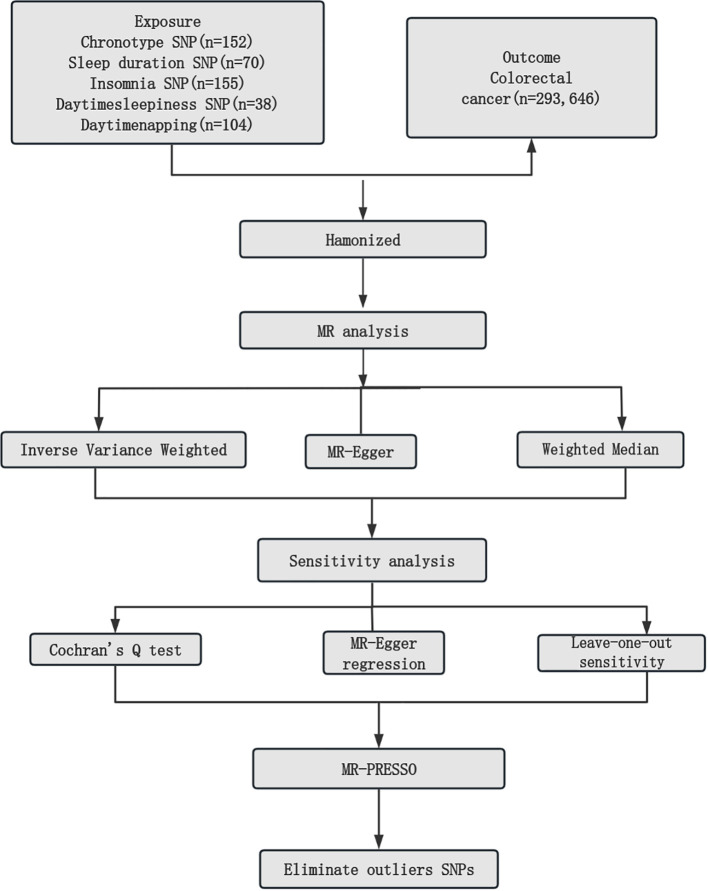 Figure 1
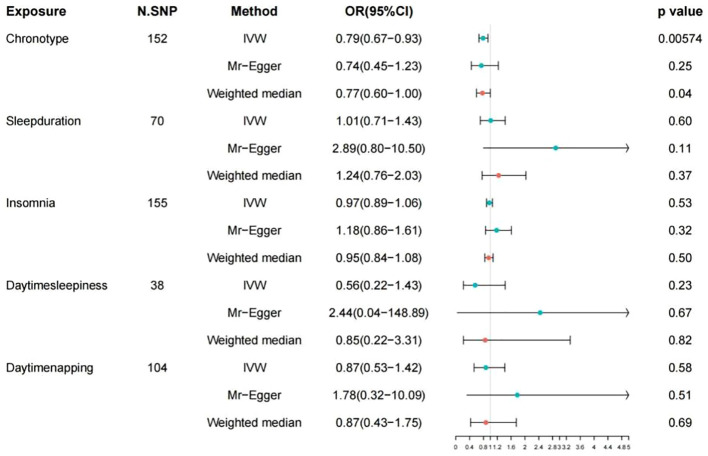 Figure 2
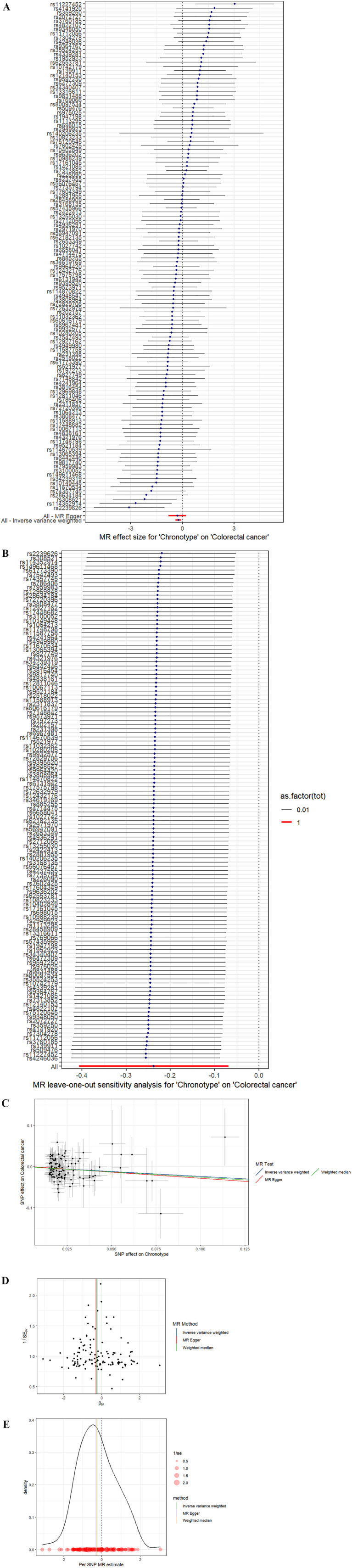 Figure 3
Peer Reviews
No public reviews on file for this paper yet. If you reviewed it on a platform where reviews are public (OpenReview, ICLR, NeurIPS, ICML), you can paste yours below so the community can read it here.
Videos
No videos yet. Explain this paper in a talk, walkthrough, or lecture? Add one.
Taxonomy
TopicsGenetic Associations and Epidemiology · Dietary Effects on Health · Nutritional Studies and Diet