Isotope Encoded Spatial Biology Identifies Amyloid Plaque-Age-Dependent Structural Maturation, Synaptic Loss, and Increased Toxicity
Jack I. Wood, Maciej Dulewicz, Junyue Ge, Katie Stringer, Alicja Szadziewska, Sneha Desai, Srinivas Koutarapu, Haady B. Hajar, Lydia Fenson, Kaj Blennow, Henrik Zetterberg, Damian M. Cummings, Jeffrey N. Savas, Frances A. Edwards, Jörg Hanrieder

TL;DR
This study uses isotope labeling to track how amyloid plaques age, showing that older plaques are more toxic and cause more synaptic loss in Alzheimer's disease.
Contribution
A novel isotope-based method to timestamp and spatially track Aβ plaque maturation and its effects in Alzheimer’s disease.
Findings
Plaque age negatively correlates with synaptic gene expression in individual mice.
Older plaques are more structurally mature and associated with greater synapse loss and toxicity.
Spatial transcriptomics reveals gene-expression changes specific to plaque age, independent of mouse age or disease severity.
Abstract
Understanding how amyloid beta (Aβ) plaques form and progress to neurotoxicity in Alzheimer’s disease remains a significant challenge. This study aims to elucidate the processes involved in Aβ plaque formation and maturation using a knock-in Aβ mouse model (AppNL-F/NL-F). By employing mass spectrometry imaging and stable isotope labeling, we timestamped Aβ plaques from their initial deposition, enabling the spatial tracking of plaque aging. Correlating single-plaque spatial transcriptomics with time since seeding, allowed us to track gene-expression changes specifically associated with plaque age, independent of chronological age of the mouse or disease severity. We found that plaque age, within sections from individual mice aged from 10 to 18 months, negatively correlates with synaptic gene expression. Further, correlation with hyperspectral confocal microscopy using structure-specific…
Genes, proteins, chemicals, diseases, species, mutations and cell lines named across the full text — each resolved to its canonical identifier and authoritative record.
Click any figure to enlarge with its caption.
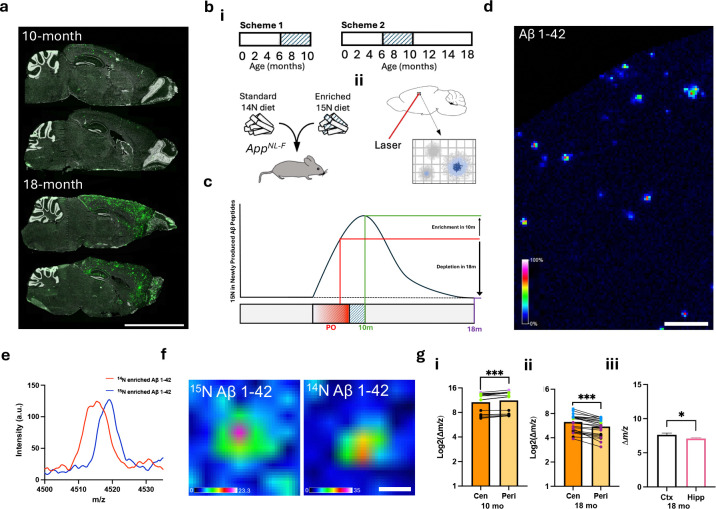 Figure 1
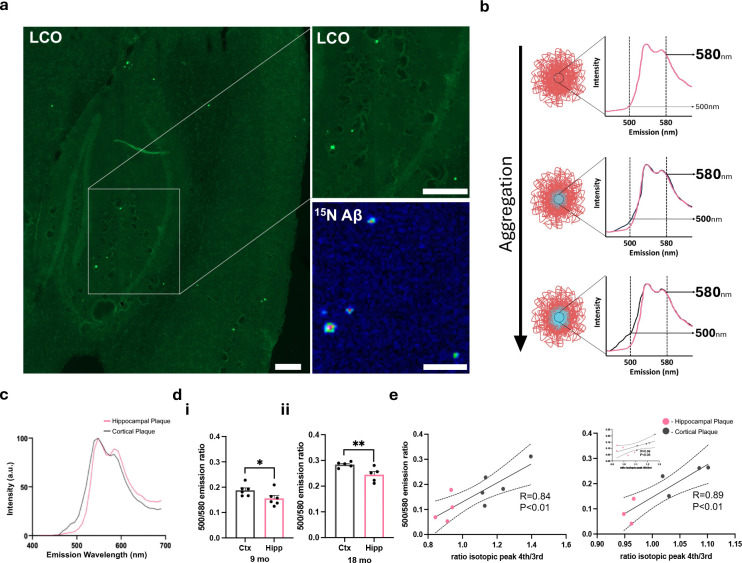 Figure 2
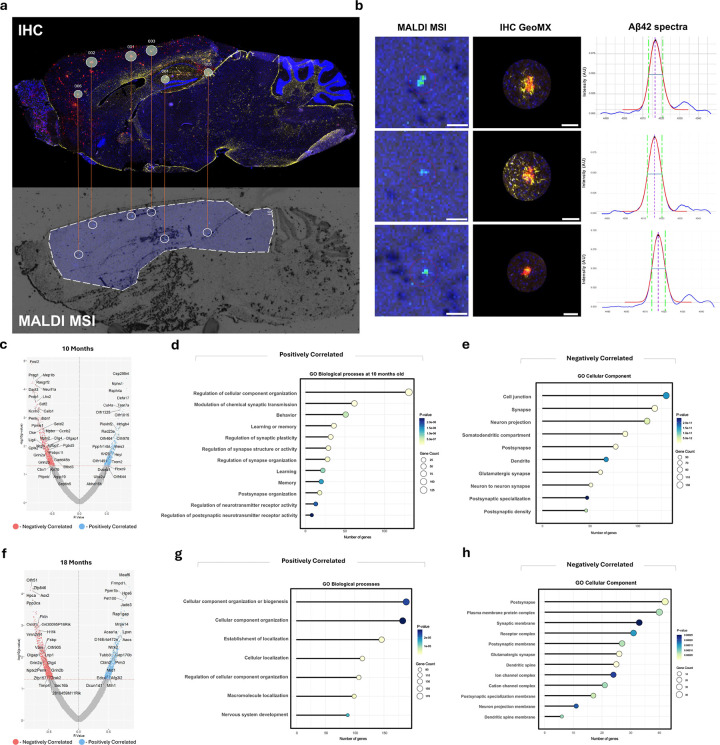 Figure 3
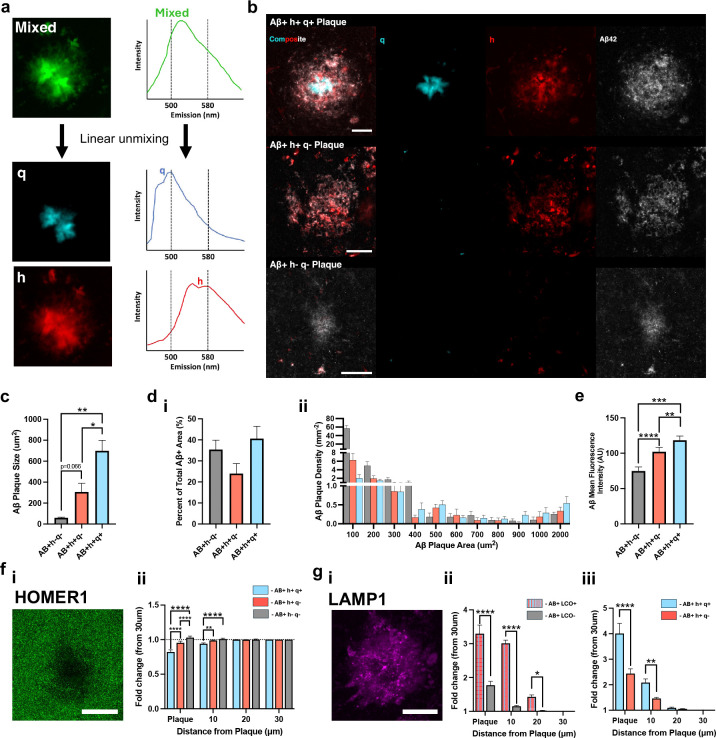 Figure 4
Peer Reviews
No public reviews on file for this paper yet. If you reviewed it on a platform where reviews are public (OpenReview, ICLR, NeurIPS, ICML), you can paste yours below so the community can read it here.
Videos
No videos yet. Explain this paper in a talk, walkthrough, or lecture? Add one.
Taxonomy
TopicsAlzheimer's disease research and treatments · Bioinformatics and Genomic Networks · Dementia and Cognitive Impairment Research