Performance of Molecular Inversion Probe DR23K and Paragon MAD4HatTeR Amplicon Sequencing Panels for Detection of Plasmodium falciparum Mutations Associated with Antimalarial Drug Resistance
Thomas Katairo, Victor Asua, Bienvenu Nsengimaana, Stephen Tukwasibwe, Francis D Semakuba, Innocent Wiringilimaana, Shreeya Garg, Shahiid Kiyaga, Monica Mbabazi, Kisakye D Kabbale, Alisen Ayitewala, Samuel L Nsobya, Moses R Kamya, Issac Ssewanyana, Jeffrey A Bailey

TL;DR
This study compares two sequencing tools for detecting drug-resistant malaria parasites, finding that MAD4HatTeR is more sensitive at low parasite levels.
Contribution
The study provides a direct comparison of two targeted sequencing platforms for detecting Plasmodium falciparum drug resistance mutations, focusing on performance metrics like sensitivity and sequencing depth.
Findings
MAD4HatTeR showed higher sequencing depth and sensitivity for SNP detection at lower parasite densities compared to DR23K.
Both assays demonstrated high concordance in genotyping resistance mutations in field samples with mixed infections.
MAD4HatTeR is recommended for low-density and microhaplotype studies, while DR23K is suitable for high-density samples where minority alleles are not prioritized.
Abstract
Molecular surveillance of drug-resistant Plasmodium falciparum is crucial for malaria control in endemic regions. Two targeted-resequencing tools, the Molecular Inversion Probe (MIP) drug resistance panel DR23K and the Multiplexed Amplicons for Drugs, Diagnostics, Diversity, and Differentiation using High-Throughput Targeted Resequencing (MAD4HatTeR) panel, are widely used to detect resistance genotypes. However, comparisons of their performance for genotyping drug resistance polymorphisms in malaria parasites and their comparative utility for other use cases is lacking. To compare the performance of DR23K and MAD4HatTeR in terms of sequencing depth, sensitivity to minor alleles, and precision, each platform was used to evaluate SNP alleles and microhaplotypes in double- and triple-strain mixtures of well-characterized laboratory parasites at densities of 10, 100, 1,000, and 10,000…
Genes, proteins, chemicals, diseases, species, mutations and cell lines named across the full text — each resolved to its canonical identifier and authoritative record.
Click any figure to enlarge with its caption.
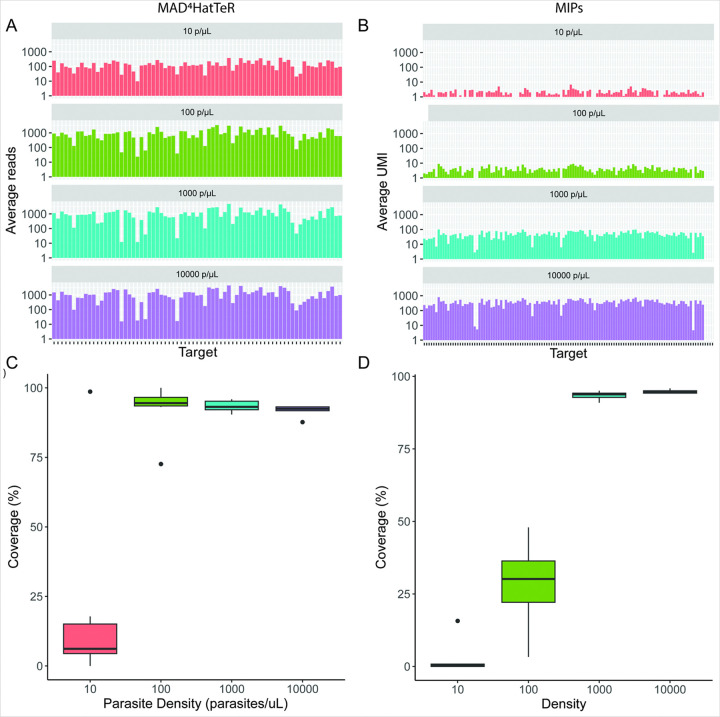 Figure 1
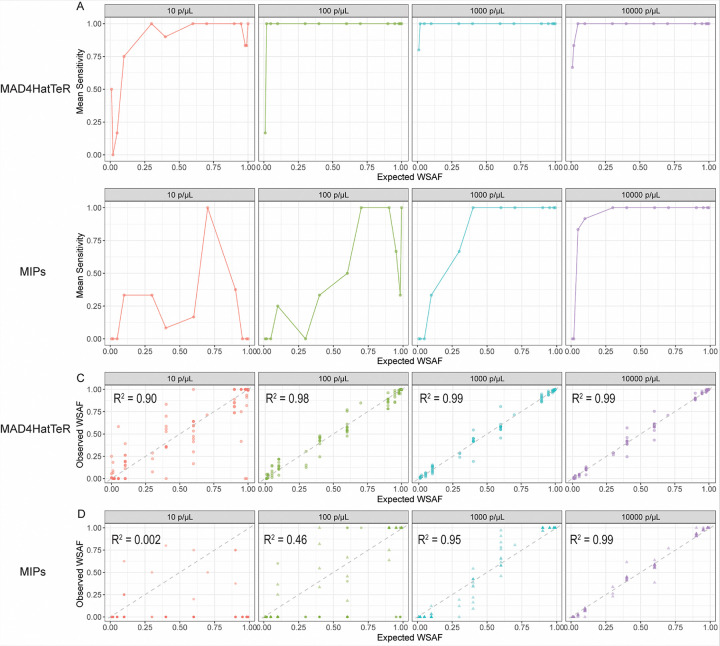 Figure 2
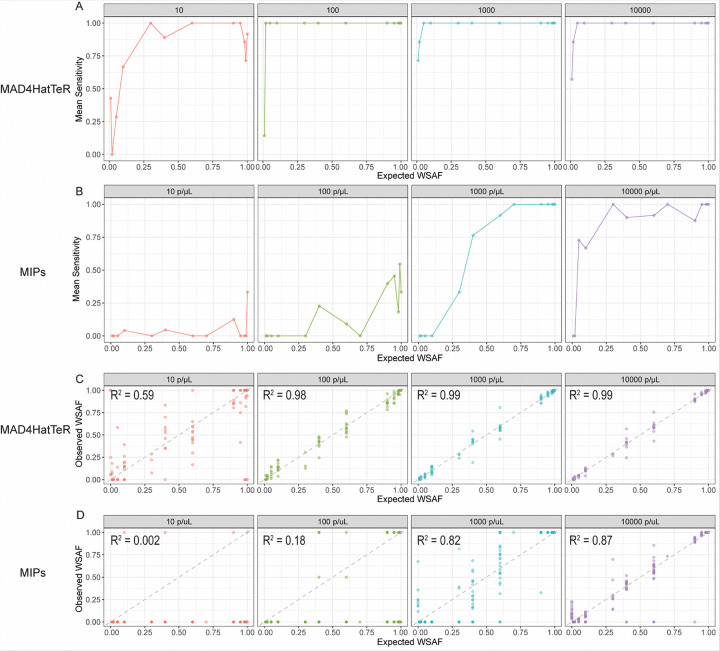 Figure 3
Peer Reviews
No public reviews on file for this paper yet. If you reviewed it on a platform where reviews are public (OpenReview, ICLR, NeurIPS, ICML), you can paste yours below so the community can read it here.
Videos
No videos yet. Explain this paper in a talk, walkthrough, or lecture? Add one.
Taxonomy
TopicsMalaria Research and Control · vaccines and immunoinformatics approaches · Antibiotic Resistance in Bacteria