Feedback control over plasma drug concentrations achieves rapid and accurate control over solid-tissue drug concentrations
Nicole Emmons, Zeki Duman, Murat Erdal, Tod Kippin, Joao Hespanha, Kevin Plaxco

TL;DR
Researchers show that controlling drug levels in the blood using real-time sensors can accurately maintain drug levels in tissues where the drug works.
Contribution
This study demonstrates that feedback-controlled plasma drug concentrations can effectively regulate drug levels in solid tissues.
Findings
Maintaining constant plasma drug concentrations leads to stable drug levels in interstitial fluid (ISF).
ISF drug concentrations rapidly match and remain close to plasma concentrations under feedback control.
EAB sensors in ISF show high precision and consistency, matching prior in vitro validation.
Abstract
Electrochemical aptamer-based (EAB) sensors enable the continuous, real-time monitoring of drugs and biomarkers in situ in the blood, brain, and peripheral tissues of live subjects. The real-time concentration information produced by these sensors provides unique opportunities to perform closed-loop, feedback-controlled drug delivery, by which the plasma concentration of a drug can be held constant or made to follow a specific, time-varying profile. Motivated by the observation that the site of action of many drugs is the solid tissues and not the blood, here we experimentally confirm that maintaining constant plasma drug concentrations also produces constant concentrations in the interstitial fluid (ISF). Using an intravenous EAB sensor we performed feedback control over the concentration of doxorubicin, an anthracycline chemotherapeutic, in the plasma of live rats. Using a second…
Genes, proteins, chemicals, diseases, species, mutations and cell lines named across the full text — each resolved to its canonical identifier and authoritative record.
Click any figure to enlarge with its caption.
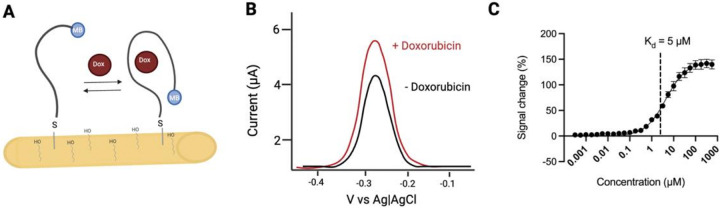 Figure 1
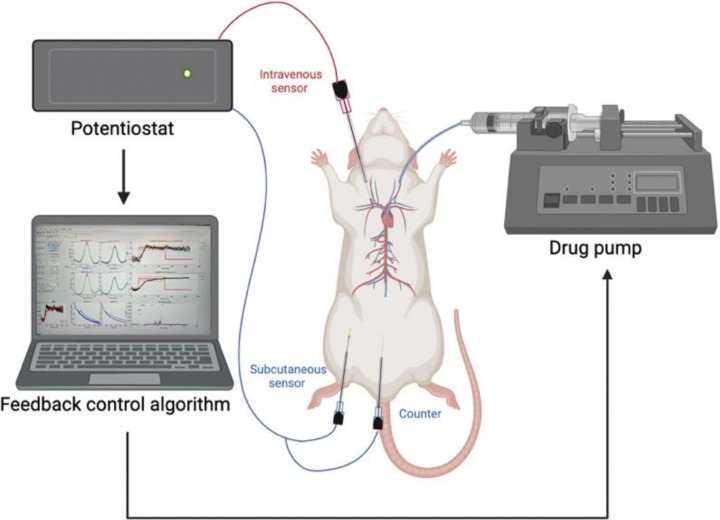 Figure 2
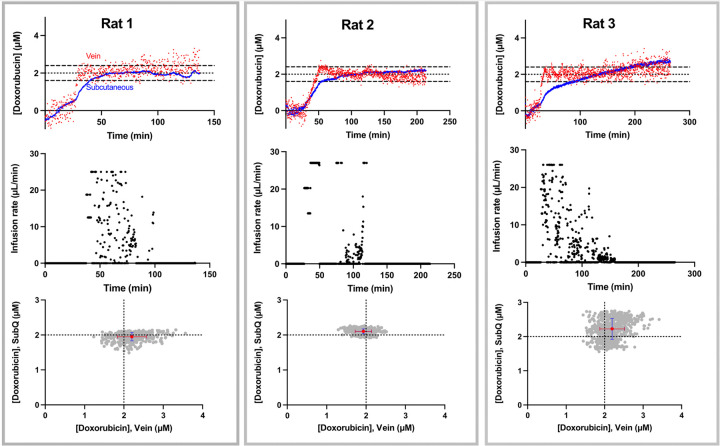 Figure 3
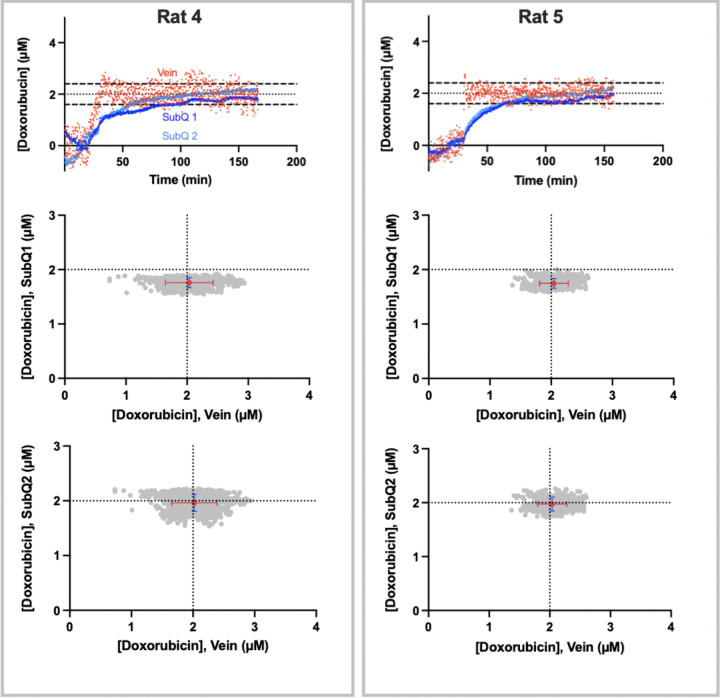 Figure 4
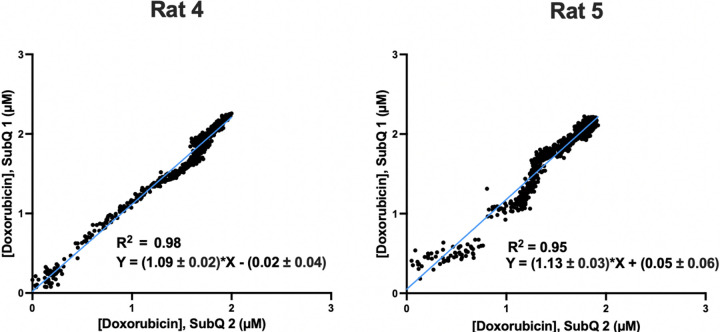 Figure 5
Peer Reviews
No public reviews on file for this paper yet. If you reviewed it on a platform where reviews are public (OpenReview, ICLR, NeurIPS, ICML), you can paste yours below so the community can read it here.
Videos
No videos yet. Explain this paper in a talk, walkthrough, or lecture? Add one.
Taxonomy
TopicsElectrochemical Analysis and Applications · Advanced biosensing and bioanalysis techniques · Microfluidic and Capillary Electrophoresis Applications