Structural basis of collagen glucosyltransferase function and its serendipitous role in kojibiose synthesis
Jeong Seon Kim, Zhenhang Chen, Sara Andrea Espinosa Garcia, Christoph Buhlheller, Stephen J. Richards, Tingfei Chen, Jingjing Wu, Ronald C. Bruntz, Marisa E. Gilliam, Mitsuo Yamauchi, Bo Liang, Houfu Guo

TL;DR
This study reveals the structure and function of a collagen glucosyltransferase, showing how it works and unexpectedly produces a prebiotic sugar.
Contribution
The study provides the first structural insights into collagen glucosyltransferase dimerization and its unexpected role in kojibiose synthesis.
Findings
The enzyme functions as a homodimer, with dimerization enabling UDP-glucose binding cooperativity and activity.
The enzyme can synthesize the prebiotic disaccharide kojibiose using UDP-glucose and glucose.
Structural analysis reveals an induced fit model for UDP interaction and a mechanism for collagen recognition.
Abstract
Collagen glucosyltransferases catalyze a unique type of collagen glucosylation that is critical for biological processes and disease mechanisms. However, the structural regulation of collagen glucosyltransferases remains poorly understood. Here, we report the crystal structures of a mimiviral collagen glucosyltransferase in its apo form and in complexes with uridine diphosphate (UDP) and the disaccharide product. Our findings reveal that the enzyme functions as a homodimer, stabilized by a loop from one subunit locking into a cleft on the opposite subunit. This dimerization enables UDP-glucose binding cooperativity and enzymatic activity, a property conserved in the human homolog. Further structural analyses suggest an induced fit model for UDP interaction, mediated by Lysine 222. The dimerization also forms an extended cleft flanked by two active sites, which likely facilitates…
Genes, proteins, chemicals, diseases, species, mutations and cell lines named across the full text — each resolved to its canonical identifier and authoritative record.
Click any figure to enlarge with its caption.
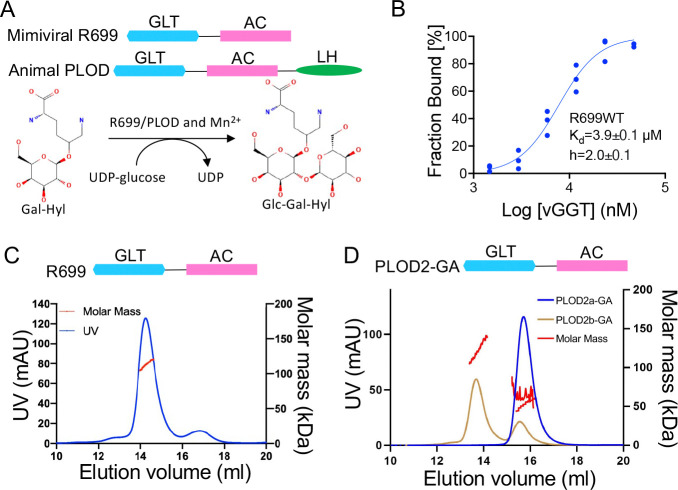 Figure 1
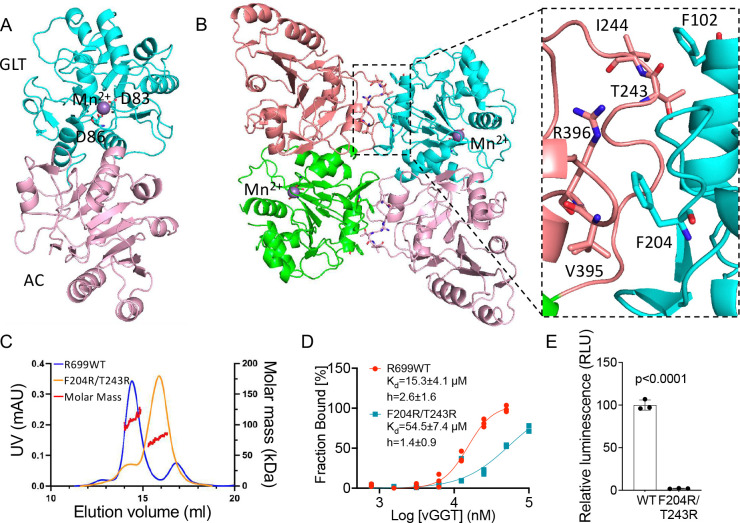 Figure 2
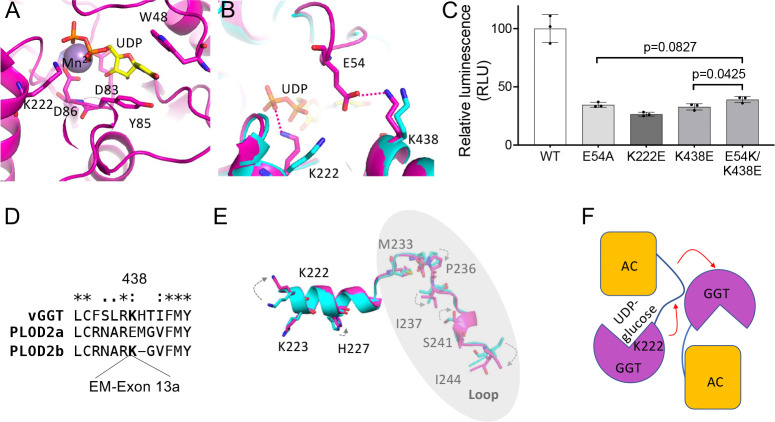 Figure 3
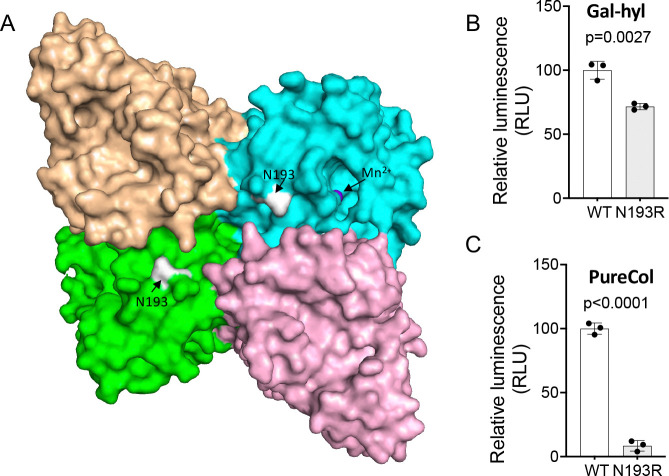 Figure 4
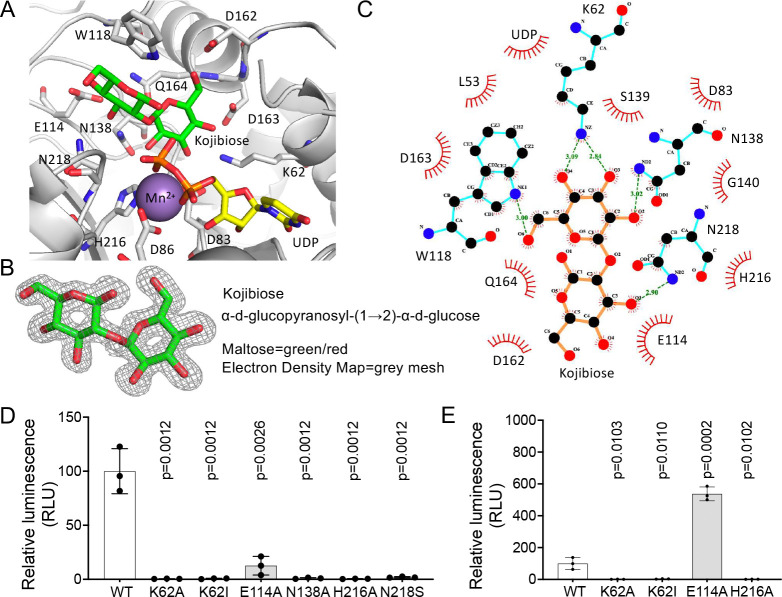 Figure 5
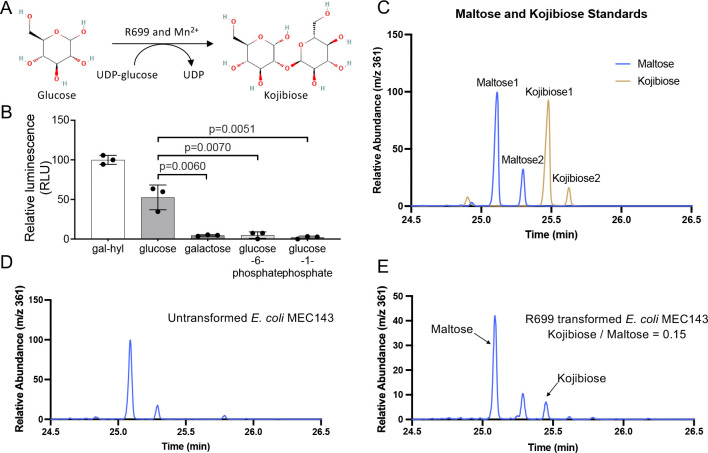 Figure 6
Peer Reviews
No public reviews on file for this paper yet. If you reviewed it on a platform where reviews are public (OpenReview, ICLR, NeurIPS, ICML), you can paste yours below so the community can read it here.
Videos
No videos yet. Explain this paper in a talk, walkthrough, or lecture? Add one.
Taxonomy
TopicsBiochemical and Molecular Research · Transgenic Plants and Applications · T-cell and Retrovirus Studies