Biocompatible Sulfonium-Based Covalent Probes For Endogenous Tubulin Fluorescence Nanoscopy In Live And Fixed Cells
Gražvydas Lukinavičius, Marie Auvray, Tanja Koenen, Olexandr Dybkov, Henning Urlaub

TL;DR
This paper introduces a new biocompatible fluorescent probe for imaging tubulin in live and fixed cells with high resolution.
Contribution
A novel covalent probe with a cleavable sulfonium linker enables non-disruptive, high-resolution imaging of endogenous tubulin.
Findings
The probe 6-SiR-o-C9-CTX shows excellent cell permeability and fluorogenic properties.
Tubulin staining is preserved after washing out the targeting moiety, minimizing functional disruption.
The technique is compatible with STED nanoscopy in both live and fixed cells.
Abstract
Fluorescent probes enable the visualization of dynamic cellular processes with high precision, particularly when coupled with super-resolution imaging techniques that surpass the diffraction limit. Traditional methods include fluorescent protein fusion (e.g., GFP) or organic fluorophores linked to ligands targeting the protein of interest. However, these approaches often introduce functional disruptions or ligand-associated biological effects. Herein, we address these challenges by developing covalent fluorescent probes for endogenous tubulin, a critical cytoskeletal protein involved in processes such as cell movement, division, and biomolecule trafficking. Using well-known tubulin binder cabazitaxel and cell permeable fluorophore silicon-rhodamine as a basis, we introduce a novel biocompatible cleavable linker containing a sulfonium center. This allowed the construction of the…
Genes, proteins, chemicals, diseases, species, mutations and cell lines named across the full text — each resolved to its canonical identifier and authoritative record.
Click any figure to enlarge with its caption.
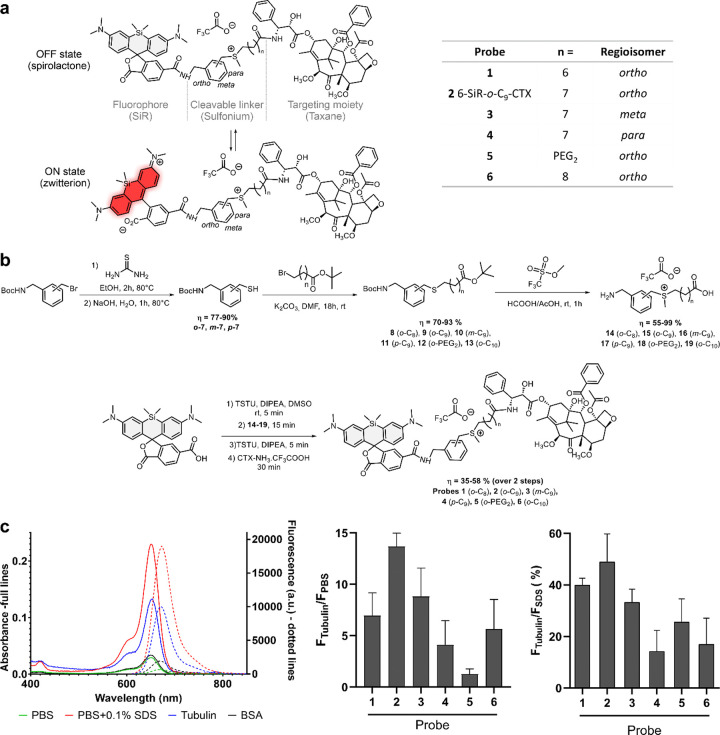 Figure 1
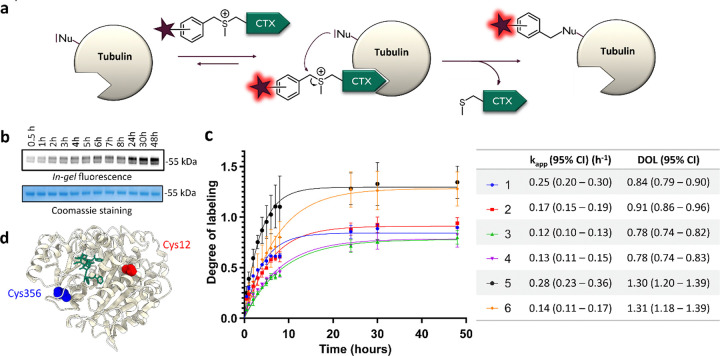 Figure 2
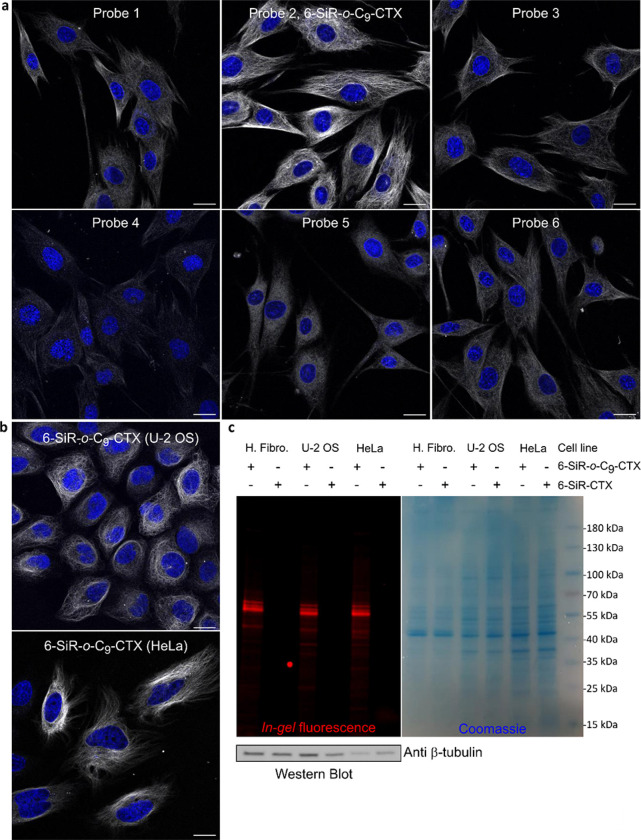 Figure 3
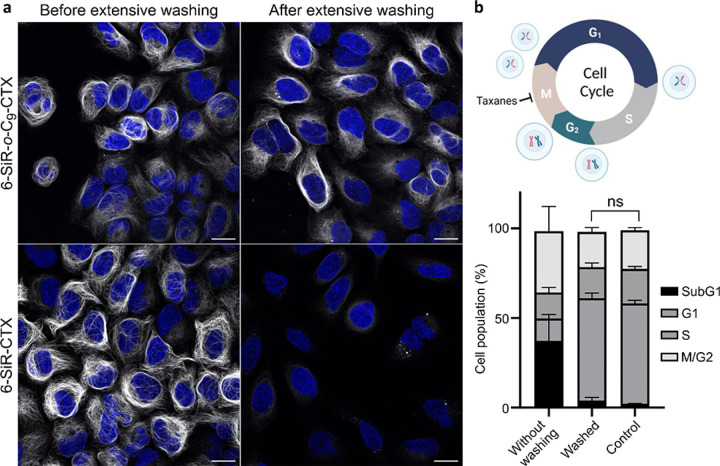 Figure 4
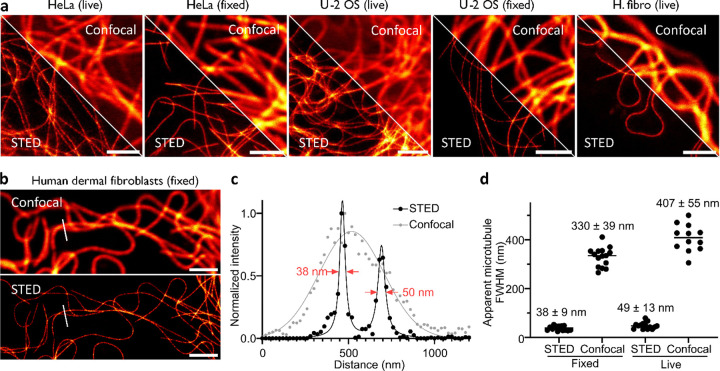 Figure 5
Peer Reviews
No public reviews on file for this paper yet. If you reviewed it on a platform where reviews are public (OpenReview, ICLR, NeurIPS, ICML), you can paste yours below so the community can read it here.
Videos
No videos yet. Explain this paper in a talk, walkthrough, or lecture? Add one.
Taxonomy
TopicsClick Chemistry and Applications · Microtubule and mitosis dynamics · Advanced Fluorescence Microscopy Techniques