Regularized win ratio regression for variable selection and risk prediction, with an application to a cardiovascular trial
Lu Mao

TL;DR
This paper introduces a new method for analyzing complex health outcomes in trials by combining win ratio analysis with regularization techniques, improving prediction accuracy.
Contribution
The paper proposes an elastic net-type regularization approach for win ratio regression, enabling variable selection and risk prediction in high-dimensional settings.
Findings
The wrnet method outperforms regularized Cox regression in scenarios with differing covariate effects on mortality and nonfatal events.
Application to the HF-ACTION trial showed superior predictive accuracy compared to traditional models.
The method is implemented in the wrnet R-package, offering a user-friendly interface for clinical researchers.
Abstract
The win ratio has been widely used in the analysis of hierarchical composite endpoints, which prioritize critical outcomes such as mortality over nonfatal, secondary events. Although a regression framework exists to incorporate covariates, it is limited to low-dimensional datasets and may struggle with numerous predictors. This gap necessitates a robust variable selection method tailored to the win ratio framework. We propose an elastic net-type regularization approach for win ratio regression, extending the proportional win-fractions (PW) model in low-dimensional settings. The method addresses key challenges, including adapting pairwise comparisons to penalized regression, optimizing model selection through subject-level cross-validation, and defining performance metrics via a generalized concordance index. The procedures are implemented in the wrnet R-package, publicly available at…
Genes, proteins, chemicals, diseases, species, mutations and cell lines named across the full text — each resolved to its canonical identifier and authoritative record.
Click any figure to enlarge with its caption.
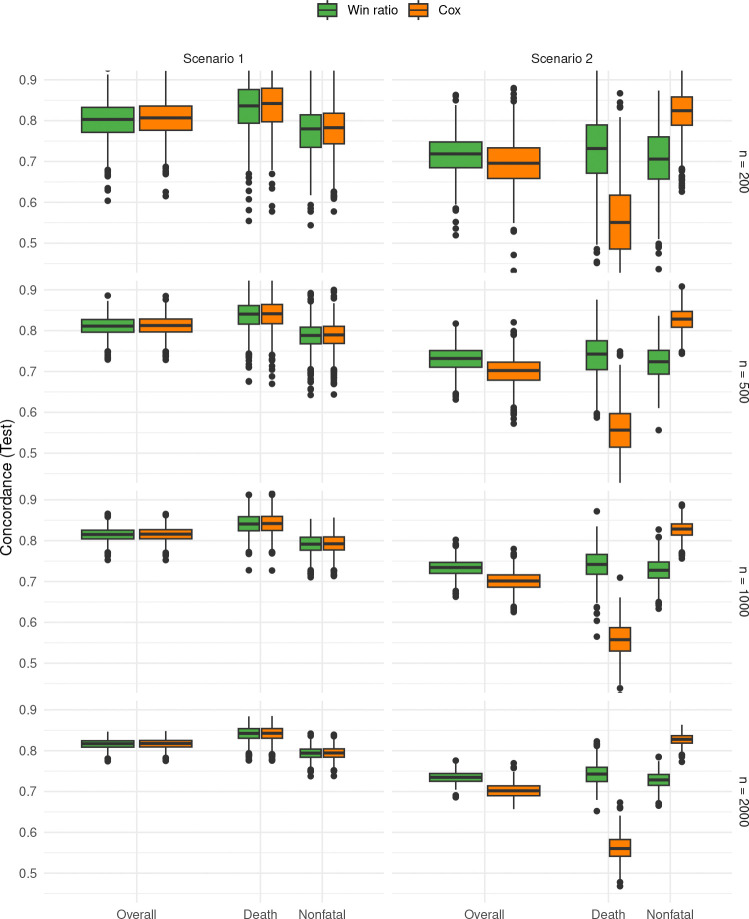 Figure 1
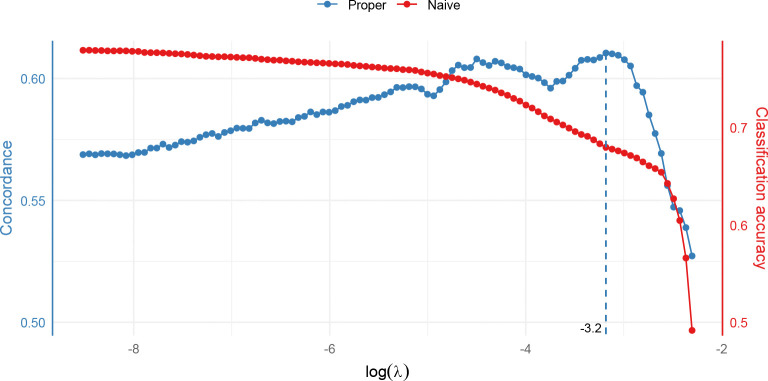 Figure 2
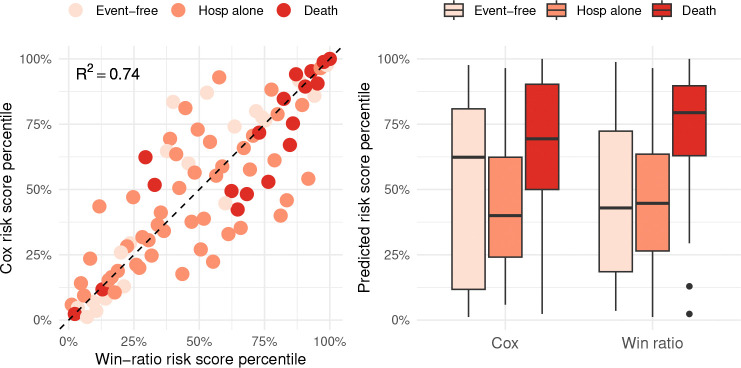 Figure 3
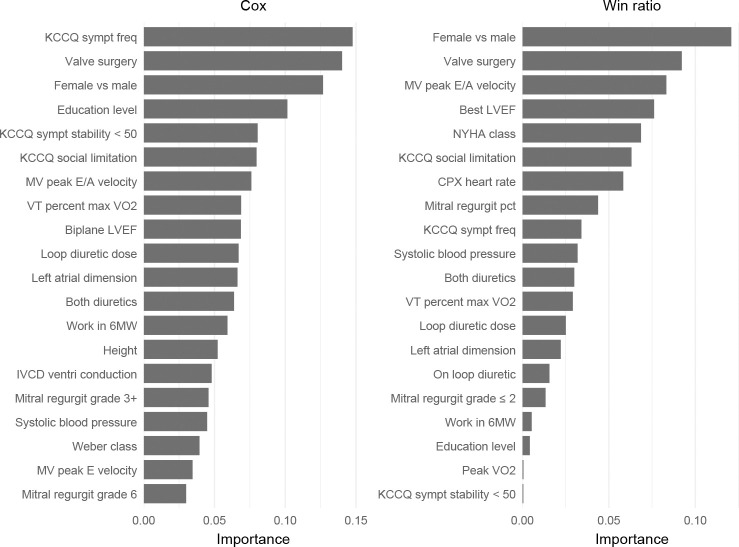 Figure 4
Peer Reviews
No public reviews on file for this paper yet. If you reviewed it on a platform where reviews are public (OpenReview, ICLR, NeurIPS, ICML), you can paste yours below so the community can read it here.
Videos
No videos yet. Explain this paper in a talk, walkthrough, or lecture? Add one.
Taxonomy
TopicsStatistical Methods in Clinical Trials · Health Systems, Economic Evaluations, Quality of Life · Advanced Causal Inference Techniques