Human Organ Chips Reveal New Inflammatory Bowel Disease Drivers
Alican Özkan, Gwenn E. Merry, David B. Chou, Ryan R. Posey, Anna Stejskalova, Karina Calderon, Megan Sperry, Viktor Horvath, Lorenzo E. Ferri, Emanuela Carlotti, Stuart A. C. McDonald, Douglas J. Winton, Rocco Riccardi, Liliana Bordeianou, Sean Hall, Girija Goyal

TL;DR
Human Organ Chips lined with IBD patient cells reveal that fibroblasts, hormones, and mechanical movements drive inflammation and disease progression in inflammatory bowel disease.
Contribution
Demonstrates that IBD fibroblasts, sex hormones, and peristalsis-like motions are key drivers of IBD symptoms using human Organ Chip technology.
Findings
IBD fibroblasts are primary drivers of inflammation and fibrosis in Organ Chips.
Pregnancy hormones and peristalsis-like motions worsen IBD symptoms in female Organ Chips.
Carcinogen exposure increases inflammation and mutations in IBD Chips but not in healthy ones.
Abstract
Inflammatory bowel disease (IBD) patients exhibit compromised intestinal barrier function and decreased mucus accumulation, as well as increased inflammation, fibrosis, and cancer risk, with symptoms often being exacerbated in women during pregnancy. Here, we show that these IBD hallmarks can be replicated using human Organ Chips lined by IBD patient-derived colon epithelial cells interfaced with matched fibroblasts cultured under flow. Use of heterotypic tissue recombinants revealed that IBD fibroblasts are the primary drivers of multiple IBD symptoms. Inflammation and fibrosis are accentuated by peristalsis-like motions in IBD Chips and when exposed to pregnancy-associated hormones in female IBD Chips. Carcinogen exposure also increases inflammation, gene mutations, and chromosome duplication in IBD Chips, but not in Healthy Chips. These data enabled by human Organ Chip technology…
Genes, proteins, chemicals, diseases, species, mutations and cell lines named across the full text — each resolved to its canonical identifier and authoritative record.
Click any figure to enlarge with its caption.
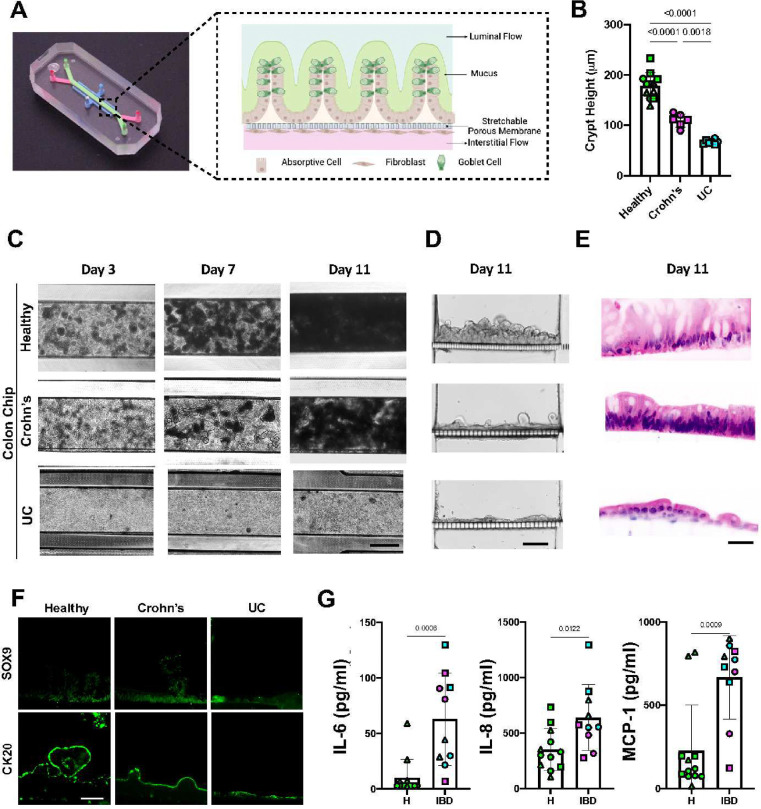 Figure 1
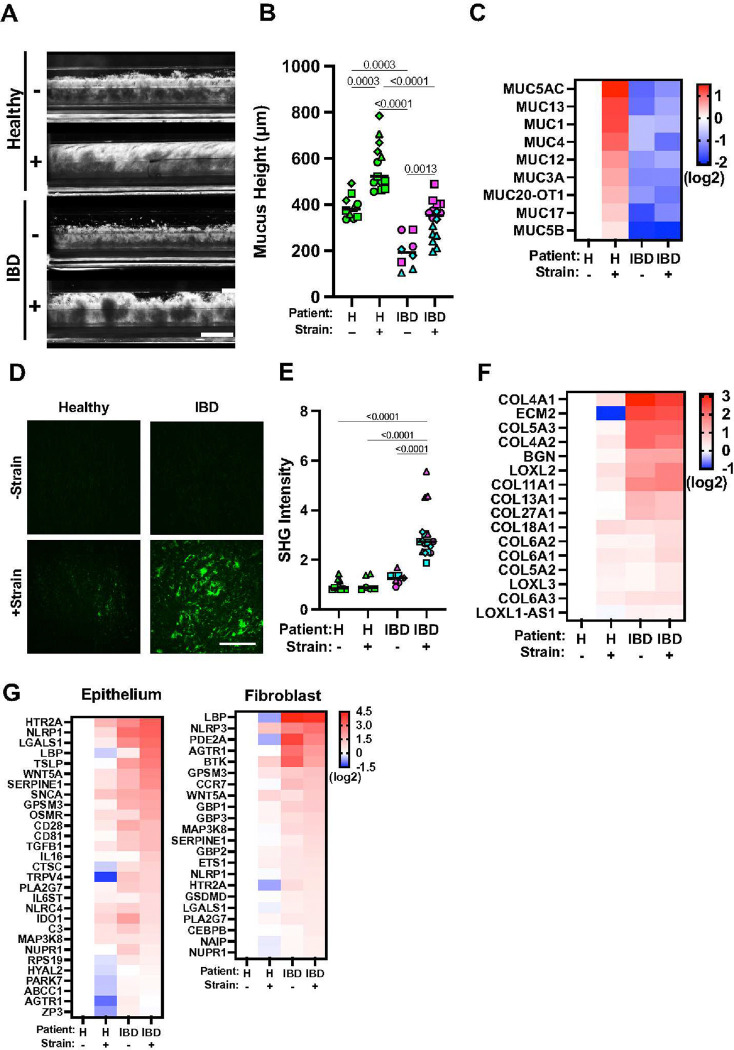 Figure 2
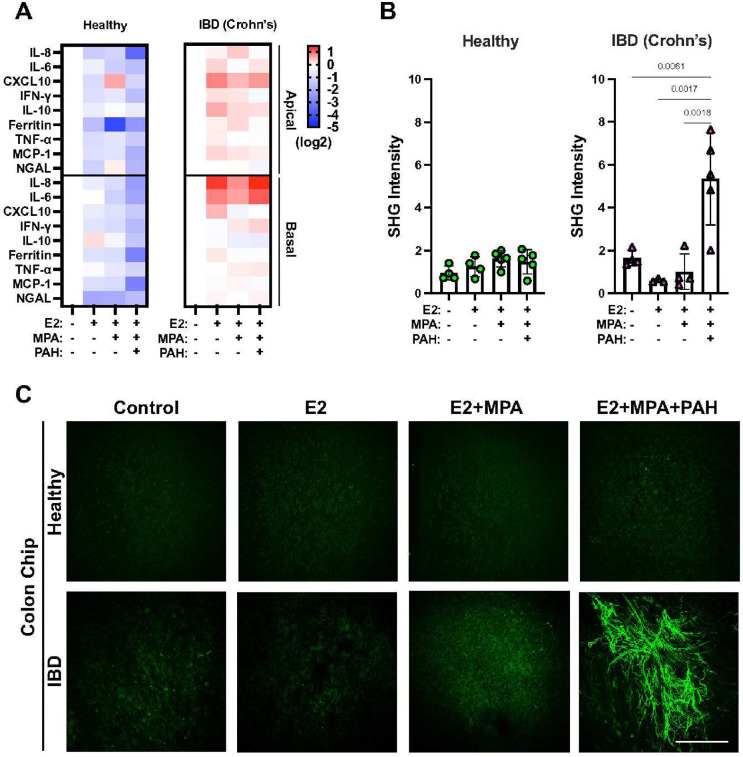 Figure 3
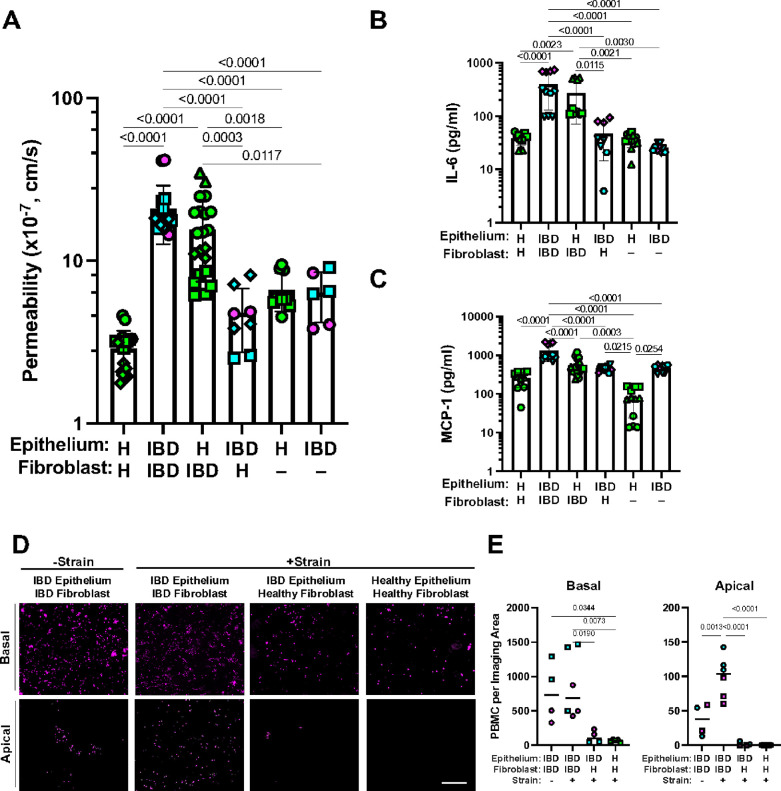 Figure 4
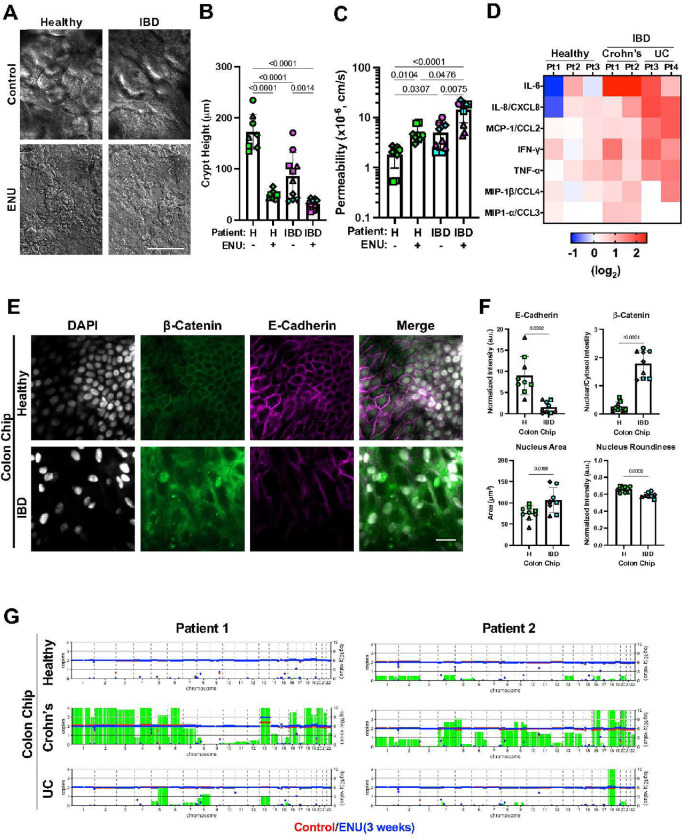 Figure 5
Peer Reviews
No public reviews on file for this paper yet. If you reviewed it on a platform where reviews are public (OpenReview, ICLR, NeurIPS, ICML), you can paste yours below so the community can read it here.
Videos
No videos yet. Explain this paper in a talk, walkthrough, or lecture? Add one.
Taxonomy
TopicsTherapeutic Uses of Natural Elements