A Comparison of Three Techniques in Neonatal Circumcision: Artery Forceps, Bone-cutter, and Gomco Clamp Methods
Victor Ifeanyichukwu Modekwe, Chukwubunna Ezeifedikwa, Evan Therese Nwosu, Ezekiel Uchechukwu Nwankwo, Okechukwu Hyginus Ekwunife, Jideofor Okechukwu Ugwu, Charles Chidiebele Maduba, Ugochukwu Uzodimma Nnadozie, Ugochukwu Stanley Ezidiegwu, Chuka Abunike Ugwunne

TL;DR
This study compares three methods for neonatal circumcision and finds the bone-cutter method to be the fastest, safest, and best for cosmetic outcomes.
Contribution
The study provides a direct comparison of three surgical techniques for neonatal circumcision, focusing on safety, speed, and outcomes.
Findings
The bone-cutter method was the fastest and had the least bleeding.
The Gomco method was the slowest and had the worst cosmetic outcomes.
The artery-forceps method had the highest rates of primary and reactionary bleeding.
Abstract
Neonatal circumcision is the oldest and most common surgical procedure The safety, ease, and outcomes of various methods of surgical procedures for neonatal circumcision have become increasingly the focus in the reviews of this procedure. This study aimed to identify the easy, safe and acceptable method for neonatal circumcision. This prospective study involved 357 male neonates, divided into three groups based on the methods used for neonatal circumcision: artery-forceps, bone-cutter, and Gomco methods. Clamps were uniformly applied for 7 minutes (420 seconds). The study assessed procedure time, primary and reactionary bleeding, and outcomes using the adapted Paediatric Penile Perception (PPP) score. Data were analyzed using SPSS version 23, with a p-value set at <0.05. Each group consisted of 119 neonates. The bone-cutter method was the fastest (590.2 ± 60.14 seconds), while the…
Genes, proteins, chemicals, diseases, species, mutations and cell lines named across the full text — each resolved to its canonical identifier and authoritative record.
Click any figure to enlarge with its caption.
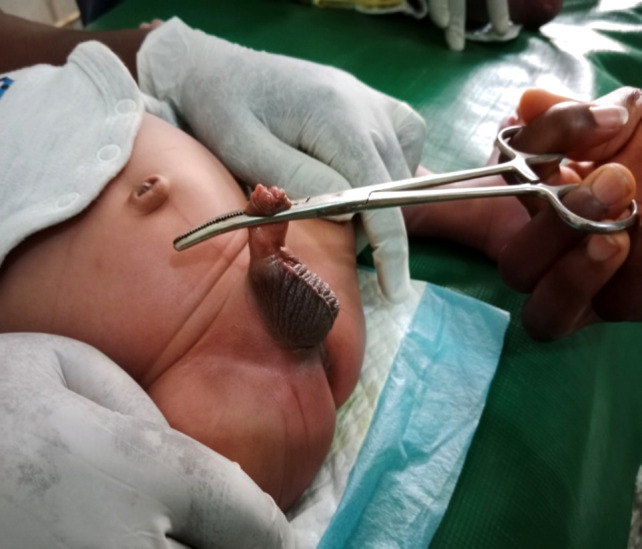 Figure 1
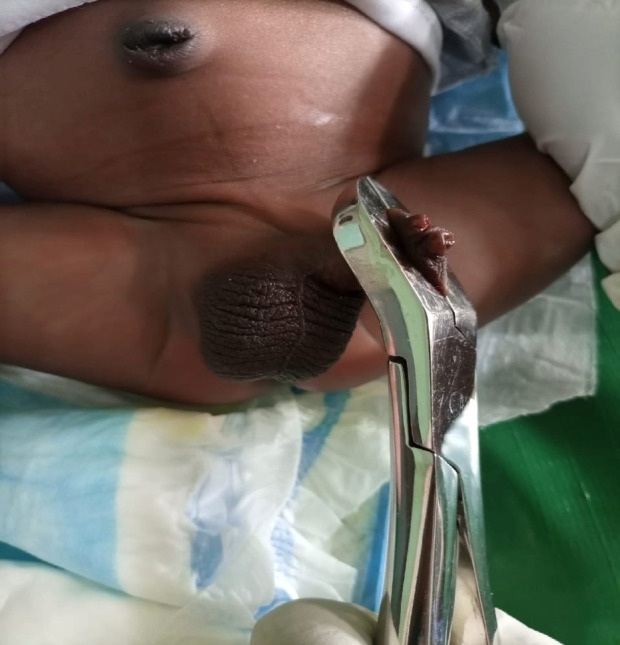 Figure 2
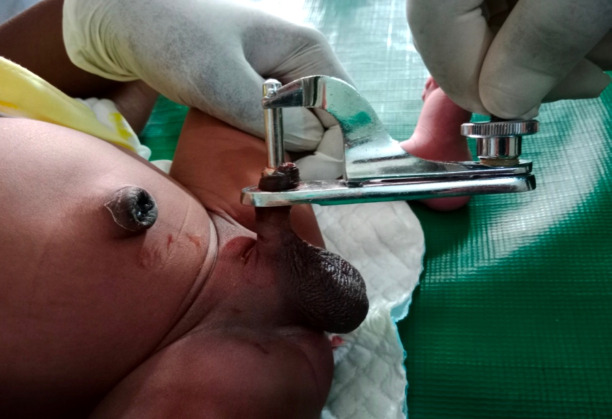 Figure 3
Peer Reviews
No public reviews on file for this paper yet. If you reviewed it on a platform where reviews are public (OpenReview, ICLR, NeurIPS, ICML), you can paste yours below so the community can read it here.
Videos
No videos yet. Explain this paper in a talk, walkthrough, or lecture? Add one.
Taxonomy
TopicsGenital Health and Disease · Urological Disorders and Treatments · Urologic and reproductive health conditions