A Computational Study on the Neck‐Stem Rectangular Tapered Connection: Effects of Angular Mismatch, Assembly, and Cyclic Loading
R. Cromi, L. Ciriello, F. Berti, L. La Barbera, T. Villa, G. Pennati

TL;DR
This study uses a 3D model to explore how design and loading factors affect the durability of hip implants, finding that certain design changes and patient factors can significantly improve implant performance.
Contribution
The paper introduces a 3D FEM analysis of a bi-modular hip prosthesis's neck-stem connection, revealing novel insights into fatigue strength under various conditions.
Findings
A positive angular mismatch improves fatigue life by reducing stress up to 33%.
Higher assembly force increases neck stability and reduces overstressed areas.
Implant fatigue resistance is directly proportional to the patient's BMI.
Abstract
The bi‐modular hip prosthesis is characterized by two tapered connections: a circular cross‐section at the head–neck interface and a rectangular cross‐section at the neck‐stem interface. Even if the latter guarantees customization, it concerns a high rate of early failure. The connection resistance is relatable to machining (tolerances cause angular mismatch), implantation (hammering force or manual), and usage (Body Mass Index [BMI]). Due to the lack of literature about the neck‐stem coupling, this work aims to investigate how the geometry of the rectangular taper connection and the external loads affect the fatigue strength of a bi‐modular hip prosthesis through a 3D Finite Element Model (FEM). Nine combinations of neck‐stem coupling are obtained considering the tolerances' limits on frontal and lateral angles as . The CoCr neck and the Ti6Al4V stem, studied in their halved, are…
Genes, proteins, chemicals, diseases, species, mutations and cell lines named across the full text — each resolved to its canonical identifier and authoritative record.
Click any figure to enlarge with its caption.
 Figure 1
 Figure 2
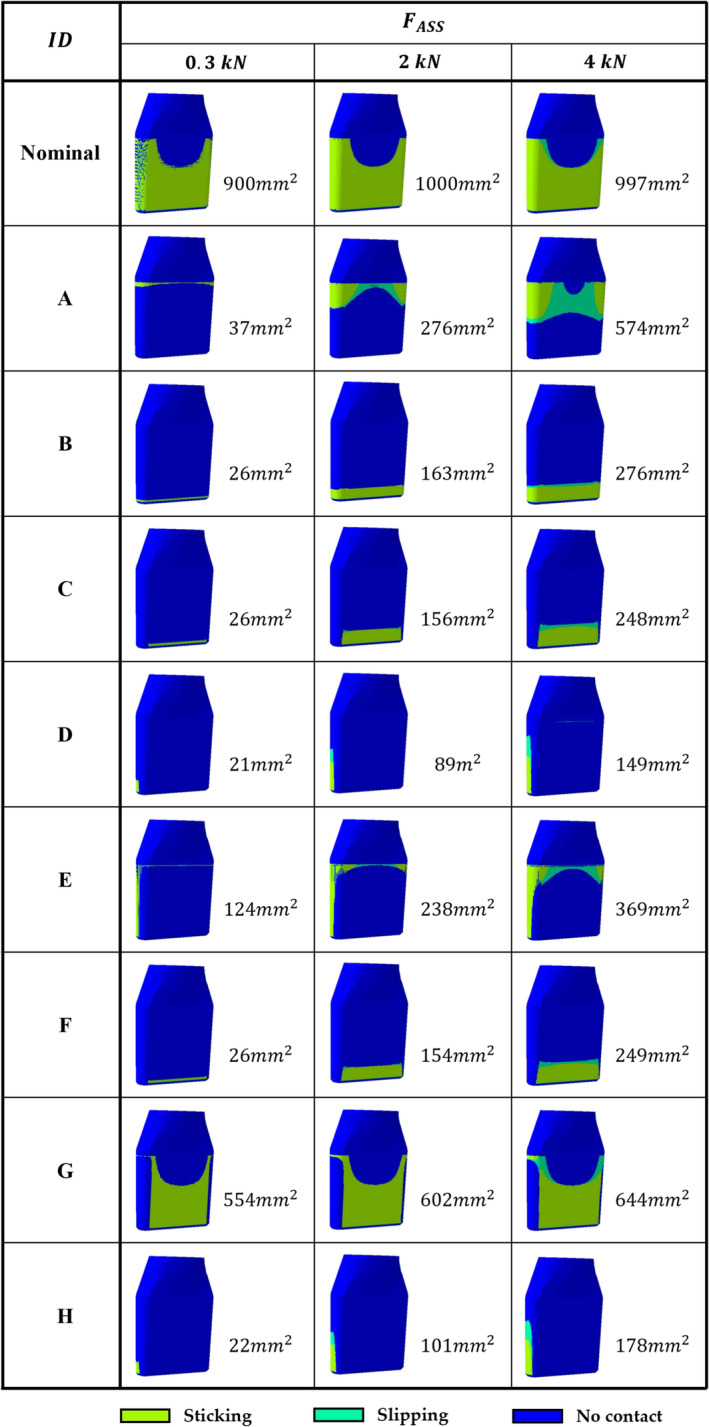 Figure 3
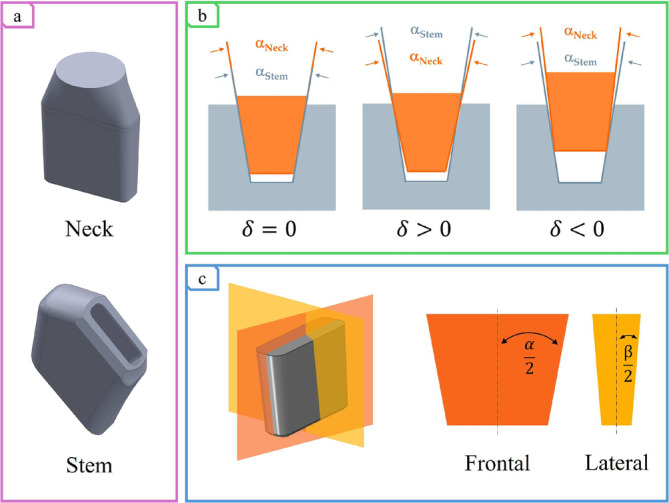 Figure 4
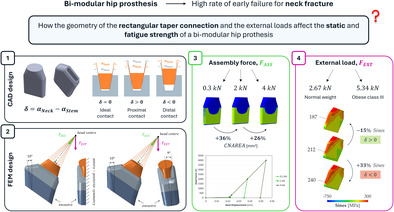 Figure 5
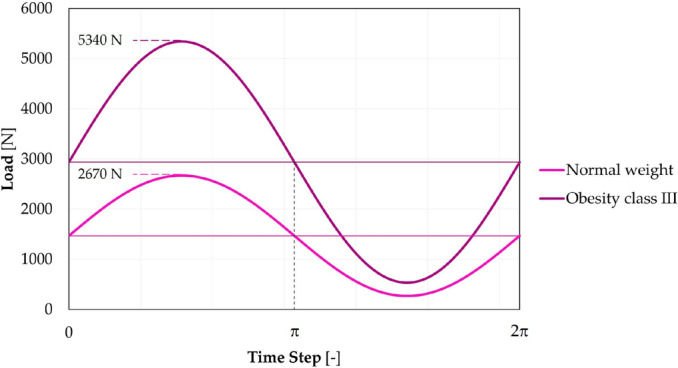 Figure 6
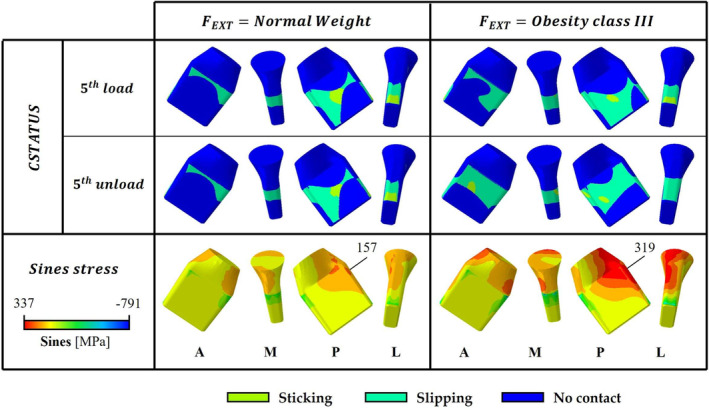 Figure 7
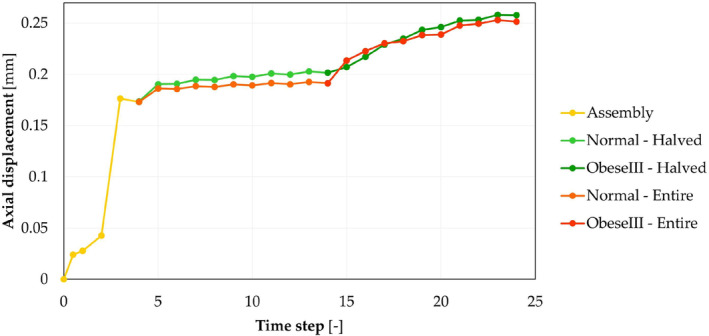 Figure 8
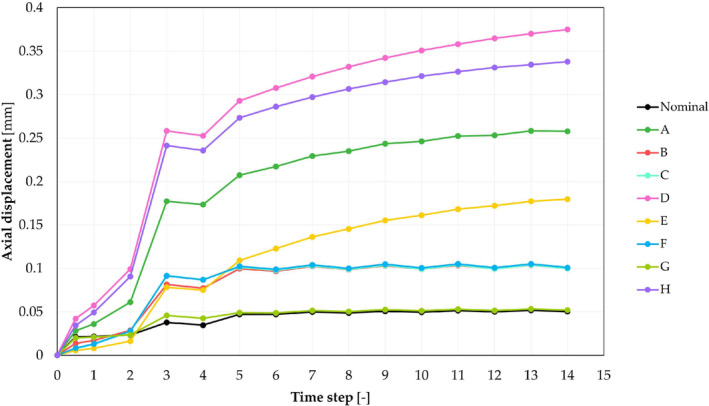 Figure 9
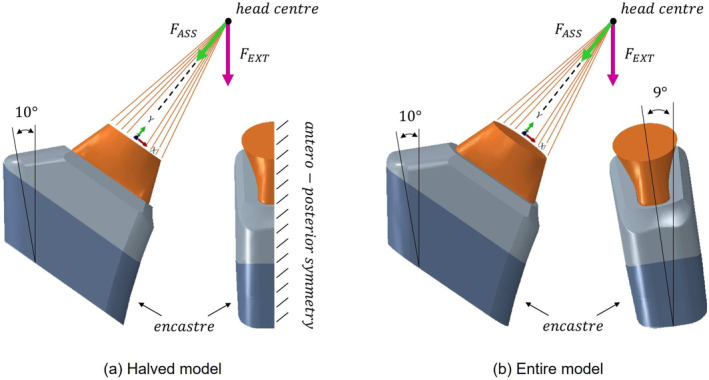 Figure 10
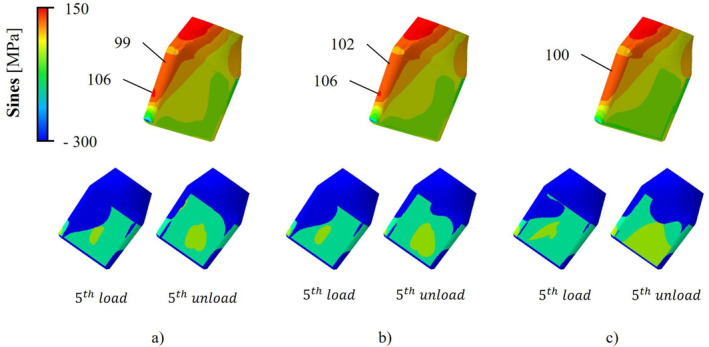 Figure 11
Peer Reviews
No public reviews on file for this paper yet. If you reviewed it on a platform where reviews are public (OpenReview, ICLR, NeurIPS, ICML), you can paste yours below so the community can read it here.
Videos
No videos yet. Explain this paper in a talk, walkthrough, or lecture? Add one.
Taxonomy
TopicsOrthopaedic implants and arthroplasty · Titanium Alloys Microstructure and Properties · Total Knee Arthroplasty Outcomes