Sympatric non-biting flies serve as potential vectors of zoonotic protozoan parasites on pig farms in China
Yufeng Liu, Pitambar Dhakal, Wenyan Hou, Fa Shan, Nanhao Wang, Bin Yang, Huikai Qin, Xiaoying Li, Rongjun Wang, Longxian Zhang, Sumei Zhang, Junqiang Li

TL;DR
Non-biting flies on Chinese pig farms may spread zoonotic parasites like Cryptosporidium, Enterocytozoon, and Blastocystis, which can infect both pigs and humans.
Contribution
This study identifies non-biting flies as potential vectors of zoonotic protozoan parasites on pig farms in China.
Findings
Five species of non-biting flies were identified, with Musca domestica being the most common.
E. bieneusi and Blastocystis sp. were found on the body surface and in lysates of non-biting flies.
Zoonotic parasites in flies matched those in pig feces, suggesting transmission potential.
Abstract
Cryptosporidium spp., Enterocytozoon bieneusi, and Blastocystis sp. are common enteric parasites in humans and pigs. Ascertaining whether non-biting flies (NBFs) serve as potential vectors of these parasites on pig farms is a crucial aspect of disease control. Non-biting flies were collected and identified by morphology analysis together with sequence analysis of the mitochondrial cytochrome c oxidase I (CO1) gene as confirmation. In a cross-sectional study, the small-subunit ribosomal RNA (SSU rRNA) gene of Cryptosporidium spp., the internal transcribed spacer region (ITS) region of E. bieneusi and the SSU rRNA gene of Blastocystis sp. were investigated in fresh pig fecal samples and sympatric NBFs. The results revealed the occurrence of five species of NBFs (Musca domestica, 91.2%; Lucilia sericata, 5.8%; Chrysomya megacephala, 1.7%; Aldrichina grahami, 0.6%; Helicophagella…
Genes, proteins, chemicals, diseases, species, mutations and cell lines named across the full text — each resolved to its canonical identifier and authoritative record.
Click any figure to enlarge with its caption.
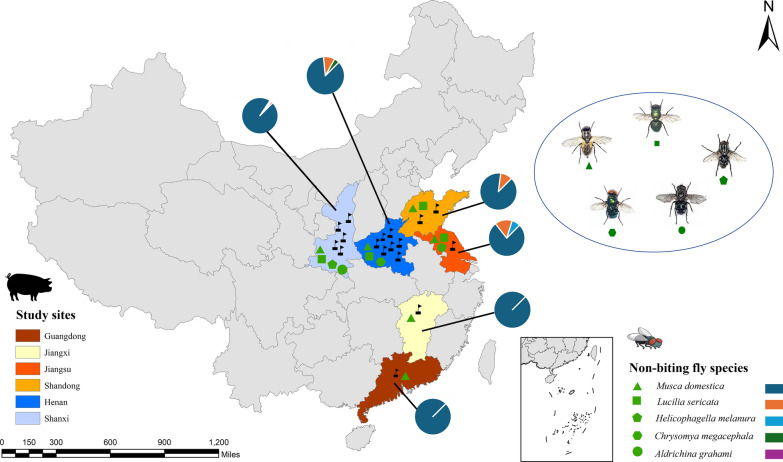 Figure 1
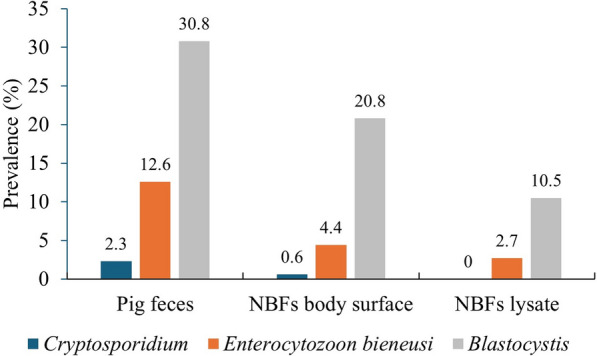 Figure 2
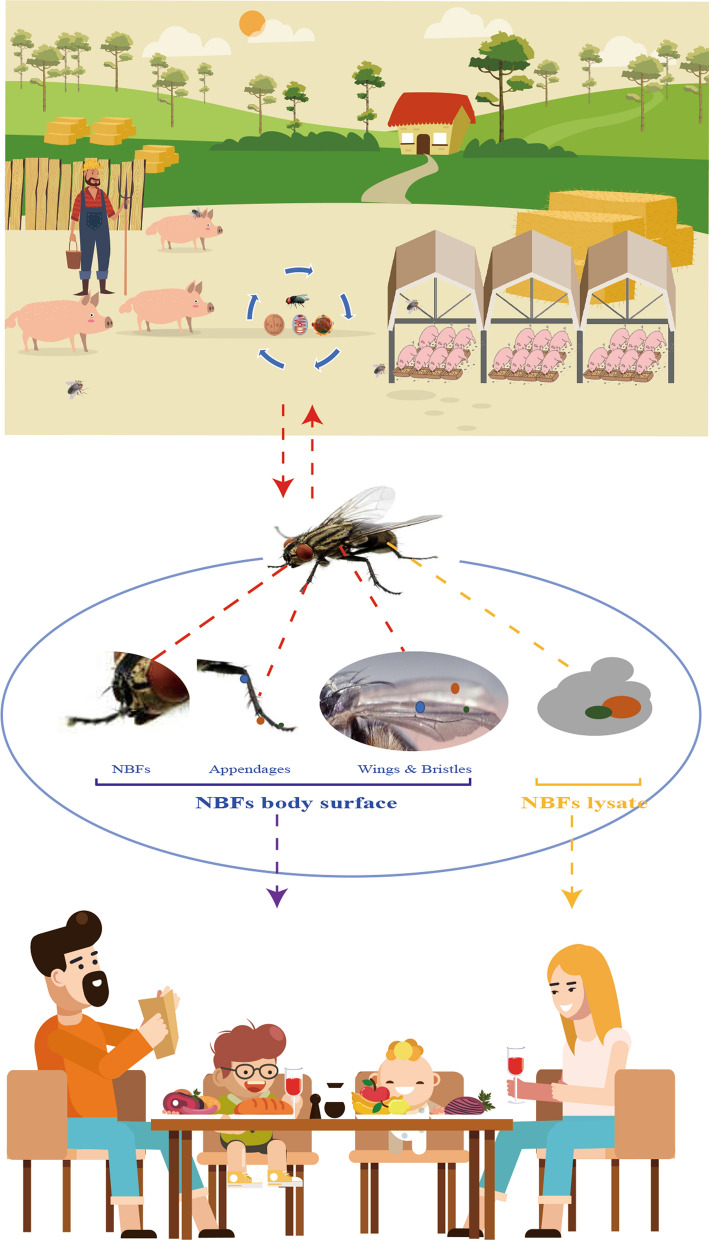 Figure 3
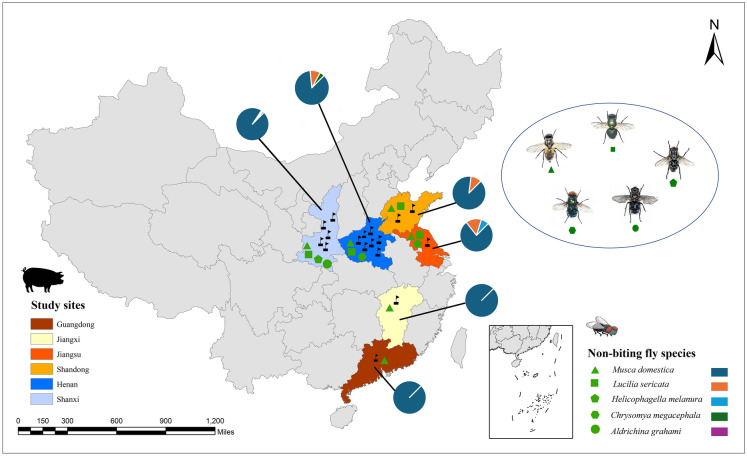 Figure 4
Peer Reviews
No public reviews on file for this paper yet. If you reviewed it on a platform where reviews are public (OpenReview, ICLR, NeurIPS, ICML), you can paste yours below so the community can read it here.
Videos
No videos yet. Explain this paper in a talk, walkthrough, or lecture? Add one.
Taxonomy
TopicsParasitic Infections and Diagnostics · Forensic Entomology and Diptera Studies · Dermatological diseases and infestations