A Dirichlet-multinomial mixed model for determining differential abundance of mutational signatures
Lena Morrill Gavarró, Dominique-Laurent Couturier, Florian Markowetz

TL;DR
The paper introduces a statistical model to analyze how mutational processes differ between groups of cancer samples, revealing patterns in clonal and subclonal mutations.
Contribution
A novel Dirichlet-multinomial mixed model is proposed to assess differential abundance of mutational signatures while accounting for within-patient correlations and group-specific variability.
Findings
Clonal and subclonal mutational signatures show differential abundance across 23 cancer types.
Subclonal signatures exhibit higher dispersion, suggesting greater variability due to diverse active mutational processes.
The model is implemented in the R package CompSign for analyzing compositional data.
Abstract
Mutational processes of diverse origin leave their imprints in the genome during tumour evolution. These imprints are called mutational signatures and they have been characterised for point mutations, structural variants and copy number changes. Each signature has an exposure, or abundance, per sample, which indicates how much a process has contributed to the overall genomic change. Mutational processes are not static, and a better understanding of their dynamics is key to characterise tumour evolution and identify cancer cell vulnerabilities that can be exploited during treatment. However, the structure of the data typically collected in this context makes it difficult to test whether signature exposures differ between conditions or time-points when comparing groups of samples. In general, the data consists of multivariate count mutational data (e.g. signature exposures) with two…
Genes, proteins, chemicals, diseases, species, mutations and cell lines named across the full text — each resolved to its canonical identifier and authoritative record.
Click any figure to enlarge with its caption.
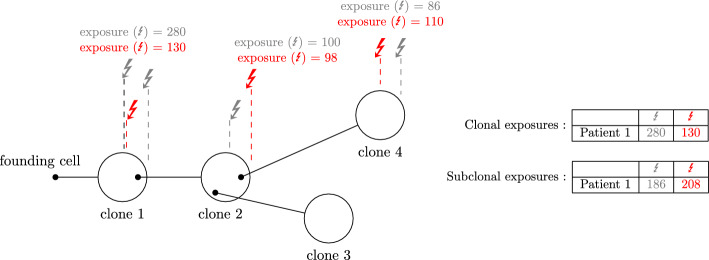 Figure 1
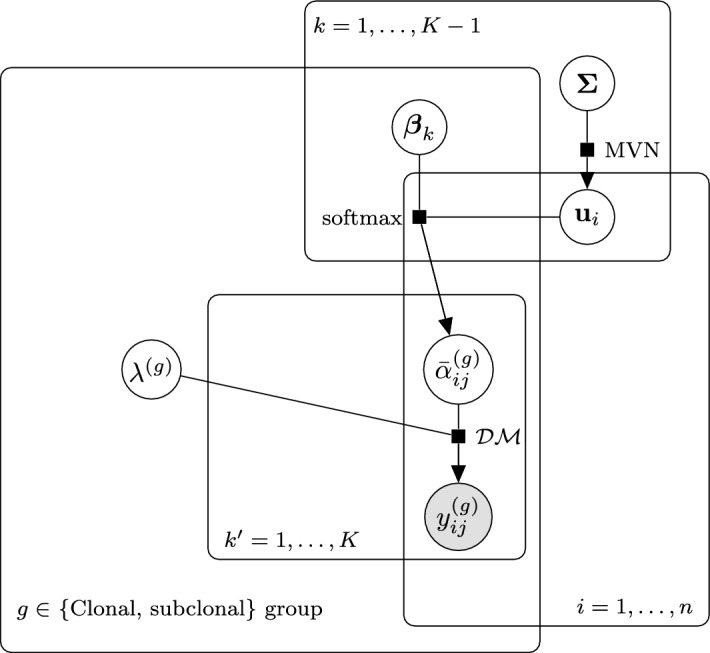 Figure 2
 Figure 3
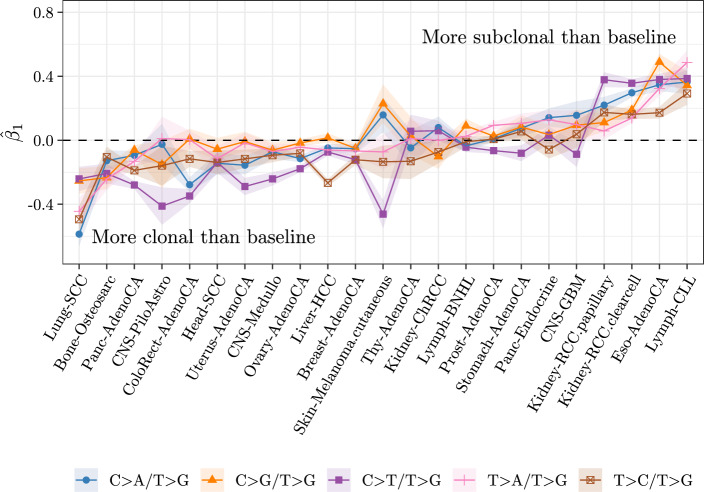 Figure 4
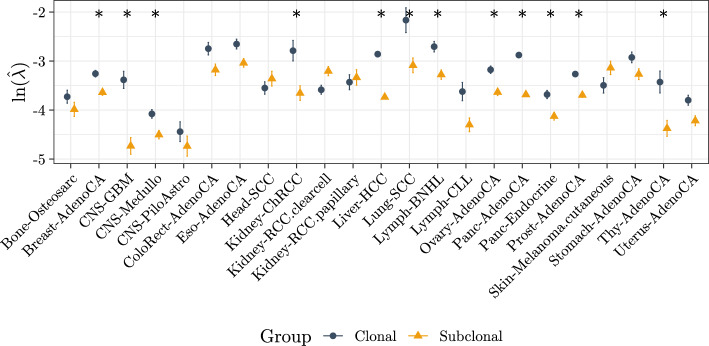 Figure 5
 Figure 6
 Figure 7
Peer Reviews
No public reviews on file for this paper yet. If you reviewed it on a platform where reviews are public (OpenReview, ICLR, NeurIPS, ICML), you can paste yours below so the community can read it here.
Videos
No videos yet. Explain this paper in a talk, walkthrough, or lecture? Add one.
Taxonomy
TopicsCancer Genomics and Diagnostics · Gene expression and cancer classification · Genetic factors in colorectal cancer