Adaptation of clinical bacteriology techniques for remote polar research
Scott J. C. Pallett, Bill K. Kwok, Stephanie M. Y. Wong, Luke S. P. Moore

TL;DR
Researchers adapted clinical bacteriology methods to work in extreme cold, enabling AMR studies in remote polar regions.
Contribution
The study demonstrates practical adaptations for core bacteriology techniques in extreme cold without infrastructure.
Findings
Solar-powered incubators and gas-powered water baths enabled bacterial culture in −21.5 to −41.0°C.
Lateral flow devices detected carbapenemase-producing genes with 100% sensitivity and specificity.
Modified centrifuges and DNA extraction kits functioned effectively in extreme cold.
Abstract
Remote polar regions offer unique opportunities and significant challenges for antimicrobial resistance research in a near-pristine environment. While core microbiology techniques continue to have an important role in supporting environmental research, the severe cold climate presents considerable challenges to laboratory research. We explore adaptations required for core bacteriology investigations in polar regions on an unsupported remote expedition c. 600 km north of the Arctic Circle utilizing the National Collection of Type Culture bacterial strains. Methods of culture, microscopy, biochemical and phenotypic testing, vortex, and centrifuge techniques are explored. Across −21.5 to −41.0°C, culture was satisfactorily enabled using a solar-powered USB incubator and an electricity-free water-bath option utilizing white gas for a variety of standard culture media. Microscopy and…
Click any figure to enlarge with its caption.
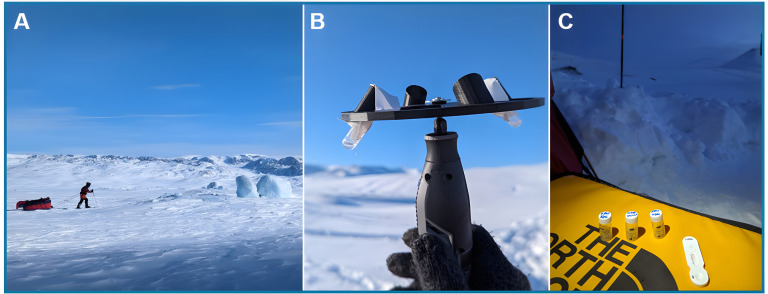 Figure 1
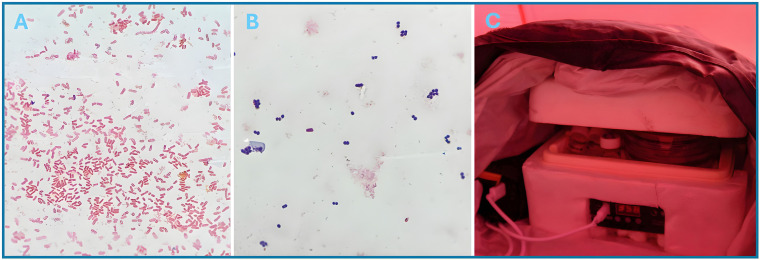 Figure 2
Peer Reviews
No public reviews on file for this paper yet. If you reviewed it on a platform where reviews are public (OpenReview, ICLR, NeurIPS, ICML), you can paste yours below so the community can read it here.
Videos
No videos yet. Explain this paper in a talk, walkthrough, or lecture? Add one.
Taxonomy
TopicsMicrobial Community Ecology and Physiology · Gut microbiota and health · Genomics and Phylogenetic Studies