Two NADPH-dependent 2-ketogluconate reductases involved in 2-ketogluconate assimilation in Gluconobacter sp. strain CHM43
Sakura Nakashima, Minenosuke Matsutani, Naoya Kataoka, Osao Adachi, Riku Yamashita, Kazunobu Matsushita, Uraiwan Tippayasak, Gunjana Theeragool, Toshiharu Yakushi

TL;DR
This study identifies two enzymes in Gluconobacter that are essential for consuming 2-ketogluconate, a compound used in the food industry.
Contribution
The study identifies two NADPH-dependent 2-ketogluconate reductases in Gluconobacter sp. strain CHM43 and their role in 2KG metabolism.
Findings
The double-deletion mutant of GLF_0478 and GLF_1777 failed to consume 2KG, confirming their essential role.
Both 2KGRs showed high activity at neutral pH and lower KM values for NADPH than NADH.
GLF_0478 is constitutively expressed and inducible by 2KG, while GLF_1777 is inducible but repressed without an inducer.
Abstract
Incomplete oxidation of glucose by Gluconobacter sp. strain CHM43 produces gluconic acid and then 2- or 5-ketogluconic acid. Although 2-keto-D-gluconate (2KG) is a valuable compound, it is sometimes consumed by Gluconobacter itself via an unknown metabolic pathway. We anticipated that 2KG reductase (2KGR) would be a key enzyme in 2KG metabolism. GLF_0478 and GLF_1777 were identified in the genome of strain CHM43, which encode proteins with 70% and 48% amino acid sequence identity, respectively, to the 2KGR of Gluconobacter oxydans strain 621H. Constructed mutant derivatives of strain CHM43 lacking GLF_0478, GLF_1777, or both were examined for their 2KG consumption ability. Strains ∆GLF_0478 and ∆GLF_1777 consumed 2KG like the parental strain. However, the double-deletion (∆∆) strain did not consume 2KG at all, although it produced 2KG like the parental strain. Strains ∆GLF_0478 and…
Genes, proteins, chemicals, diseases, species, mutations and cell lines named across the full text — each resolved to its canonical identifier and authoritative record.
Click any figure to enlarge with its caption.
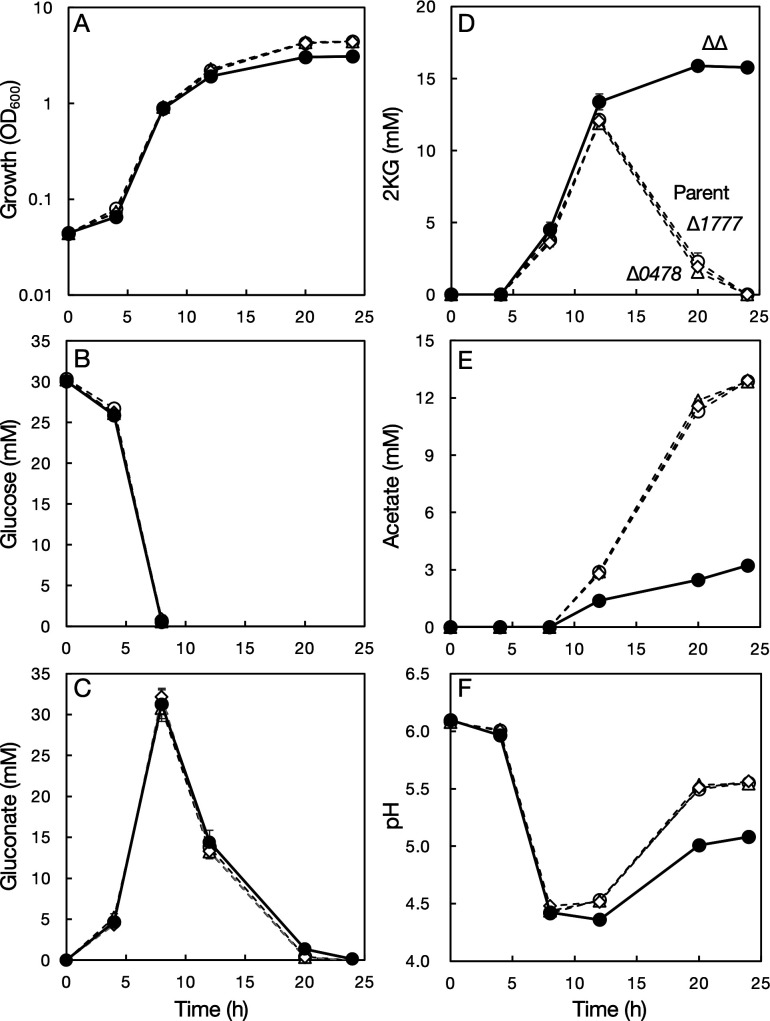 Figure 1
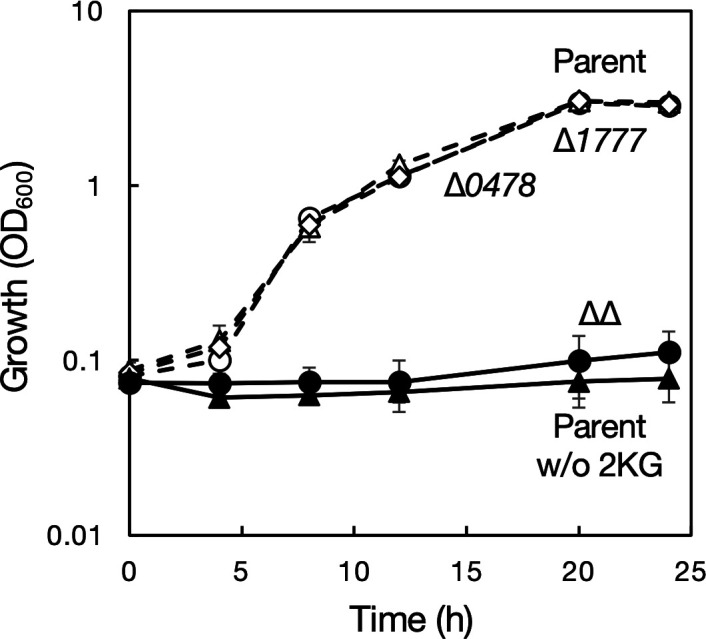 Figure 2
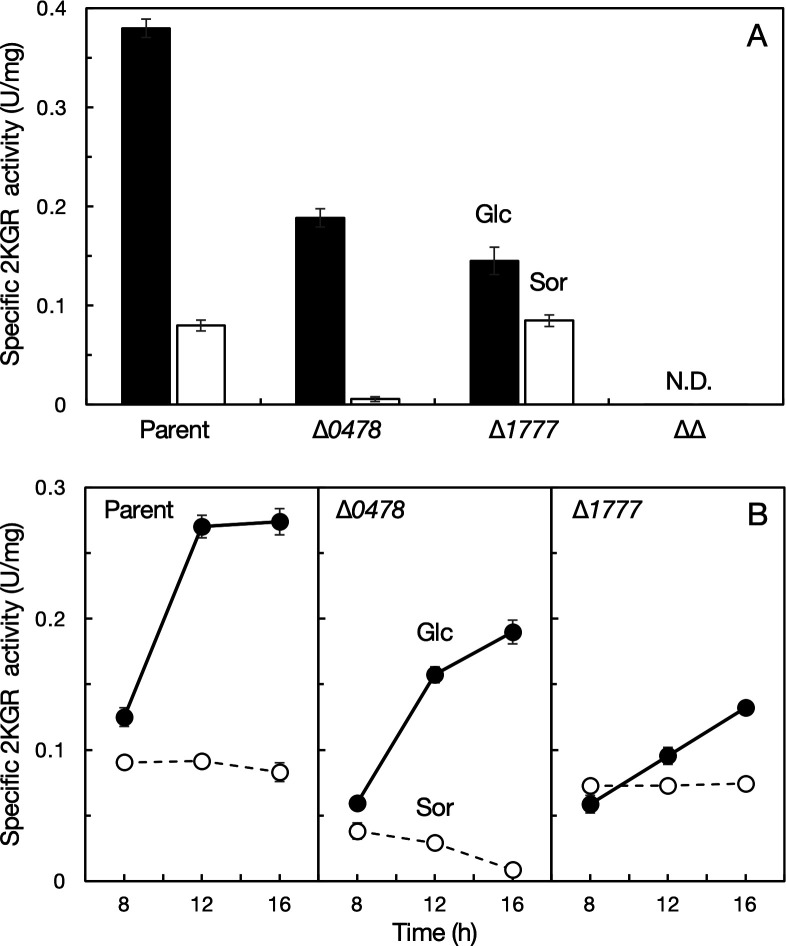 Figure 3
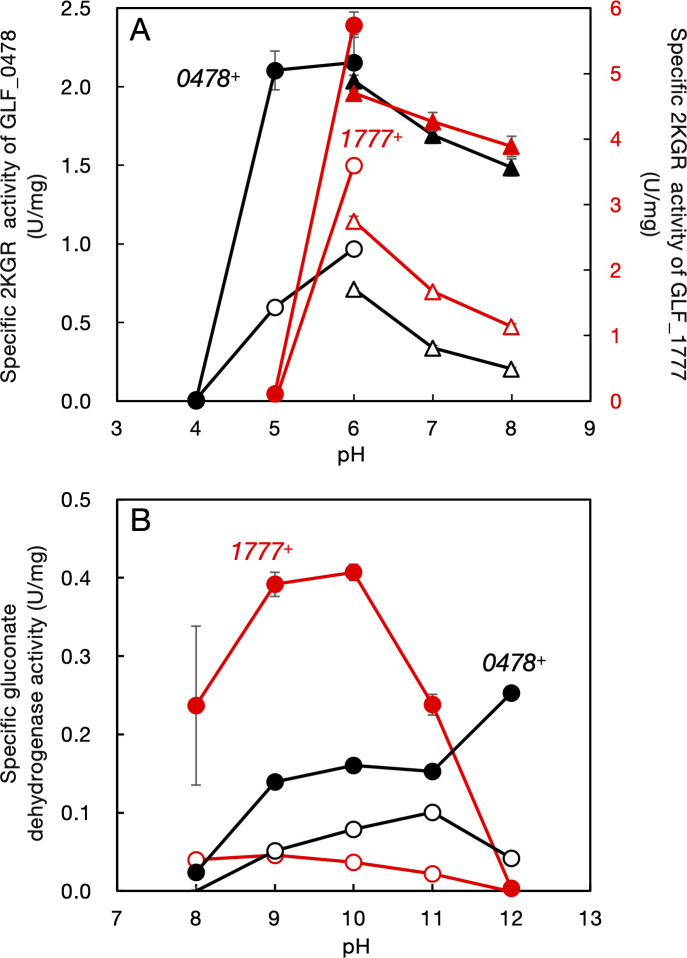 Figure 4
Peer Reviews
No public reviews on file for this paper yet. If you reviewed it on a platform where reviews are public (OpenReview, ICLR, NeurIPS, ICML), you can paste yours below so the community can read it here.
Videos
No videos yet. Explain this paper in a talk, walkthrough, or lecture? Add one.
Taxonomy
TopicsMicrobial metabolism and enzyme function · Biochemical Acid Research Studies · Porphyrin Metabolism and Disorders