Male Circumcision Utilising an Ultrasonic Dissection Scalpel in an Adult
Sarah K Whitehouse, Christian Beardsley

TL;DR
An older man with medical issues successfully had a circumcision using a new ultrasonic tool that may reduce risks and recovery time.
Contribution
The paper introduces ultrasonic dissection scalpel as a novel technique for circumcision in medically complex adult patients.
Findings
The patient recovered well and resumed anticoagulation quickly after surgery.
Ultrasonic dissection may reduce operative time and postoperative complications in older patients.
This technique could be beneficial for patients with comorbidities.
Abstract
A man in his 70s presented to surgical outpatients for phimosis and recurrent balanitis after previously receiving topical steroid treatment and a dorsal slit. He was medically comorbid including atrial fibrillation for which he was anticoagulated. He underwent a circumcision with an ultrasonic dissection scalpel (UDS). He recovered unremarkably and was able to recommence his anticoagulation on day 1 postoperatively. With the increasing age and comorbidities of many patients, this novel technique may be utilised to reduce operative time, postoperative bleeding risk and penile oedema.
Genes, proteins, chemicals, diseases, species, mutations and cell lines named across the full text — each resolved to its canonical identifier and authoritative record.
Click any figure to enlarge with its caption.
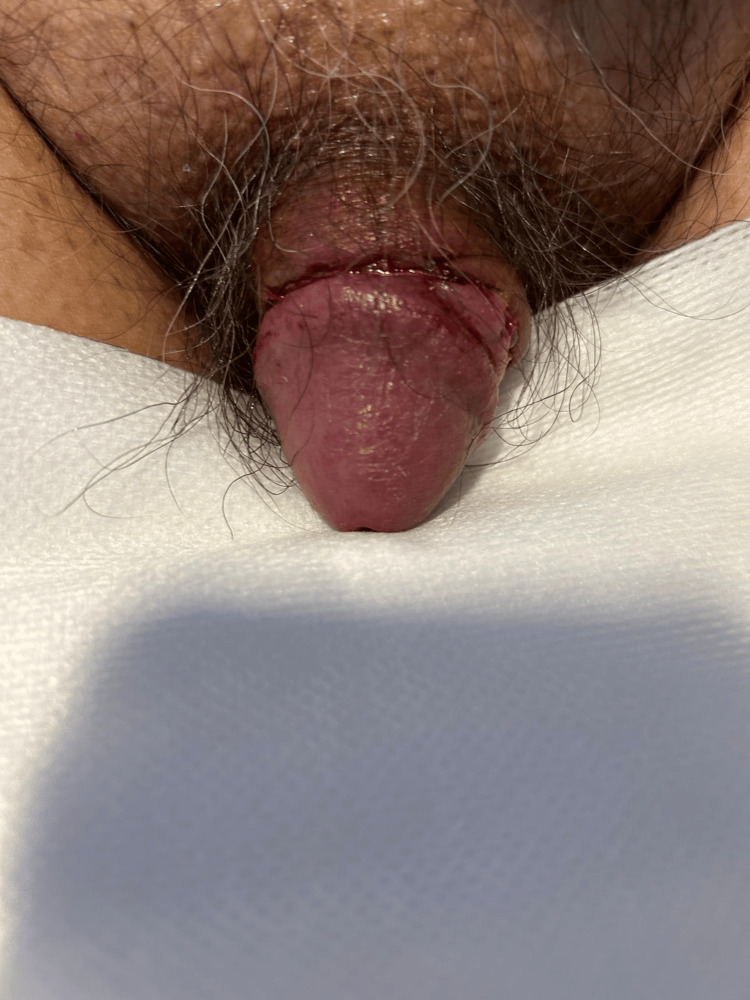 Figure 1
Peer Reviews
No public reviews on file for this paper yet. If you reviewed it on a platform where reviews are public (OpenReview, ICLR, NeurIPS, ICML), you can paste yours below so the community can read it here.
Videos
No videos yet. Explain this paper in a talk, walkthrough, or lecture? Add one.
Taxonomy
TopicsGenital Health and Disease · Urologic and reproductive health conditions · Urological Disorders and Treatments