Global Prevalence of Anaplasma phagocytophilum in Cattle: A One Health Perspective, Meta‐Analysis and Future Predictions (up to 2035)
Amir Abdoli, Meysam Olfatifar, Leila Zaki, Farhad Nikkhahi, Fatemeh Fardsanei, Sona Sobhani, Hamid Sadeghi, Aida Vafae Eslahi, Milad Badri

TL;DR
This study finds that 8.5% of cattle worldwide are infected with Anaplasma phagocytophilum, a tick-borne disease, with the highest rates in Mongolia and Guatemala.
Contribution
The study provides the first global meta-analysis and future predictions of A. phagocytophilum prevalence in cattle up to 2035.
Findings
The global pooled prevalence of A. phagocytophilum in cattle is 8.5%.
Mongolia and Guatemala had the highest prevalence rates at over 50%.
The disease is most common in the African region and hot-summer Mediterranean climates.
Abstract
Anaplasma phagocytophilum is an emerging tick‐borne zoonotic bacterium, which is considered a significant risk to the health and industry of cattle in tropical and sub‐tropical regions worldwide. This research focuses on examining the worldwide occurrence of A. phagocytophilum in cattle. Several databases, including Scopus, PubMed, ProQuest, Web of Science, ScienceDirect, and Google Scholar, were searched for publications spanning October 2004 to November 2024. The pooled prevalence was calculated with a 95% confidence interval (CI) using a random‐effects model based on the Freeman‐Tukey double arcsine transformation. A total of 72 studies satisfied the inclusion criteria, revealing a global prevalence of A. phagocytophilum in cattle estimated at 8.5% (5.9%–11.5%). Mongolia (51.9%, 45.9%–56.2%) and Guatemala (51%, 41.2%–60.7%) were countries that accounted for the highest prevalence.…
Genes, proteins, chemicals, diseases, species, mutations and cell lines named across the full text — each resolved to its canonical identifier and authoritative record.
Click any figure to enlarge with its caption.
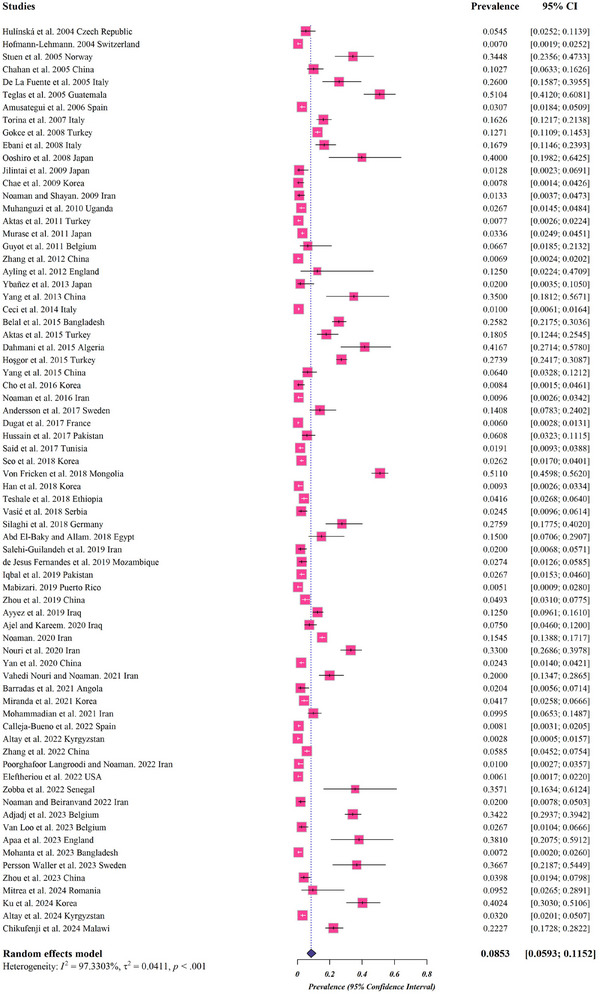 Figure 1
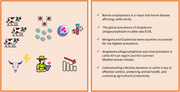 Figure 2
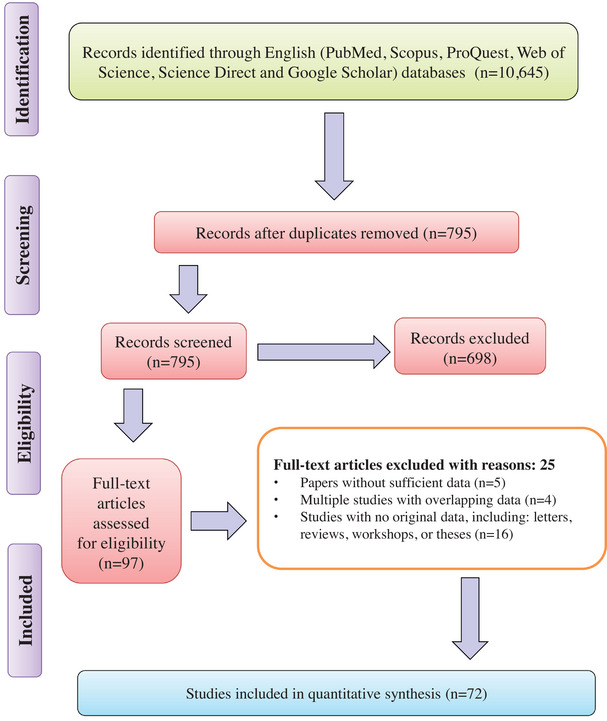 Figure 3
 Figure 4
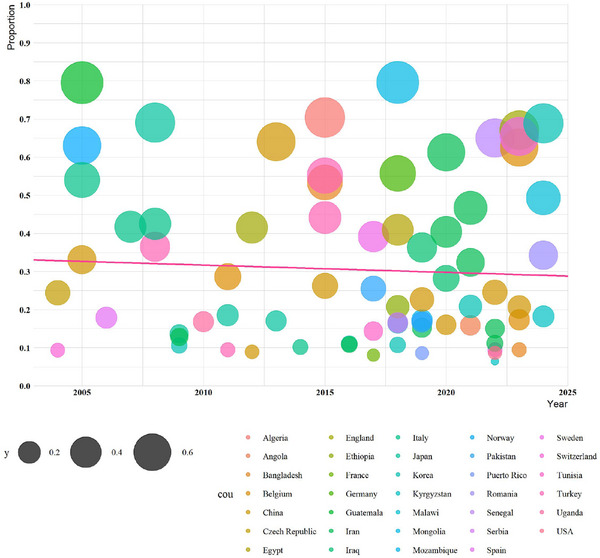 Figure 5
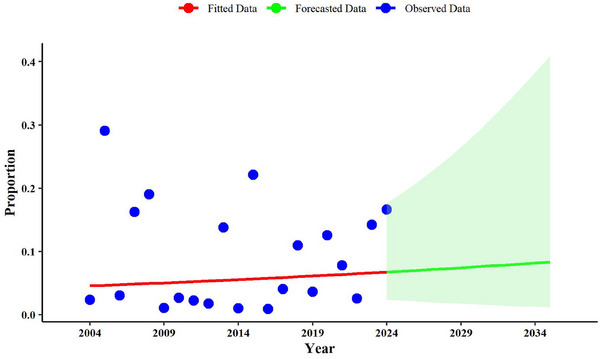 Figure 6
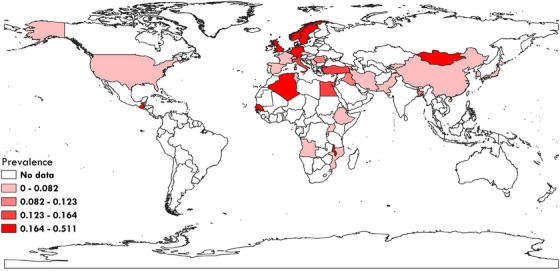 Figure 7
Peer Reviews
No public reviews on file for this paper yet. If you reviewed it on a platform where reviews are public (OpenReview, ICLR, NeurIPS, ICML), you can paste yours below so the community can read it here.
Videos
No videos yet. Explain this paper in a talk, walkthrough, or lecture? Add one.
Taxonomy
TopicsVector-borne infectious diseases · Viral Infections and Vectors · Vector-Borne Animal Diseases