Evaluation of confirmatory data following the Article 12 MRL review for terbuthylazine
Giulia Bellisai, Giovanni Bernasconi, Luis Carrasco Cabrera, Irene Castellan, Monica del Aguila, Lucien Ferreira, Luna Greco, Samira Jarrah, Renata Leuschner, Andrea Mioč, Stefanie Nave, Hermine Reich, Silvia Ruocco, Alessia Pia Scarlato, Andrea Simonati, Marta Szot

TL;DR
This paper evaluates confirmatory data for terbuthylazine, confirming maximum residue levels in some crops but not others, with no consumer risk identified.
Contribution
The study confirms tentative maximum residue levels for terbuthylazine in specific crops and livestock, while identifying data gaps in others.
Findings
Tentative MRLs for terbuthylazine are confirmed in sweet corn and sunflower seeds.
Consumer risk assessment shows no concerns with current MRLs.
Metabolism in ruminants remains partially unclear due to data shortcomings.
Abstract
The applicant Syngenta Crop Protection AG submitted a request to the competent national authority in Spain to evaluate the confirmatory data that were identified for the active substance terbuthylazine in the framework of the maximum residue level (MRL) review under Article 12 of Regulation (EC) No 396/2005 as not available. Based on the information provided by the applicant and assessed by Spain, EFSA concludes that the tentative MRL is confirmed in sweet corn and sunflower seeds, but not in lupins/lupini beans and cotton seeds. Regarding livestock metabolism study, EFSA acknowledges that a new goat metabolism study was submitted. However, due to the shortcomings identified, the metabolism in ruminants cannot be fully depicted. Despite these deficiencies, it can be concluded that at the calculated maximum dietary burdens significant transfer of residues in bovine tissues and milk is…
Genes, proteins, chemicals, diseases, species, mutations and cell lines named across the full text — each resolved to its canonical identifier and authoritative record.
Click any figure to enlarge with its caption.
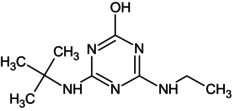 Figure 1
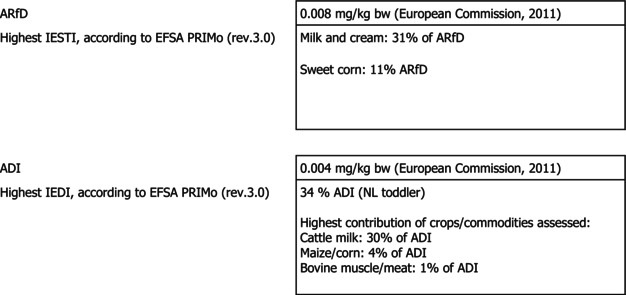 Figure 2
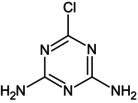 Figure 3
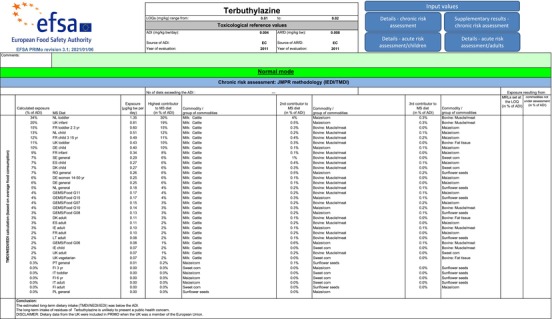 Figure 4
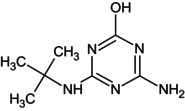 Figure 5
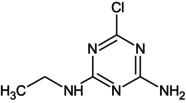 Figure 6
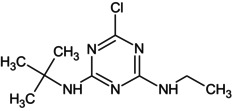 Figure 7
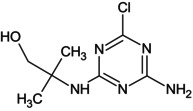 Figure 8
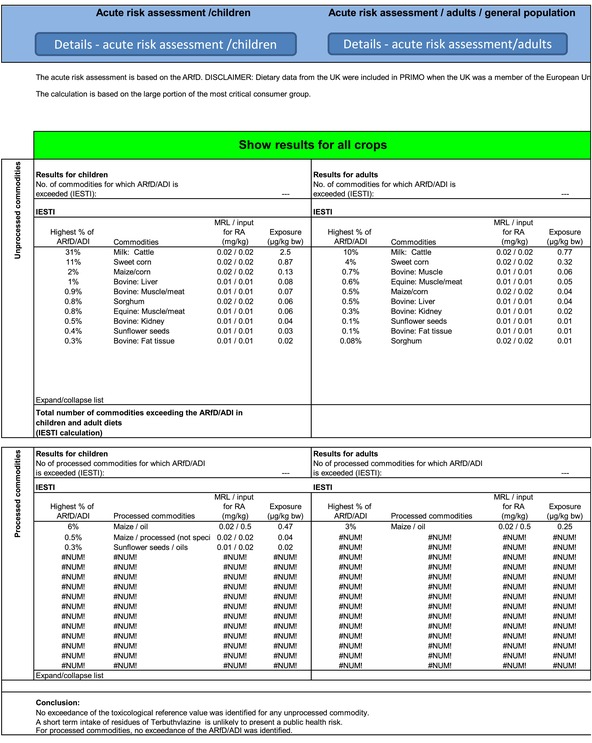 Figure 9
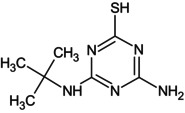 Figure 10
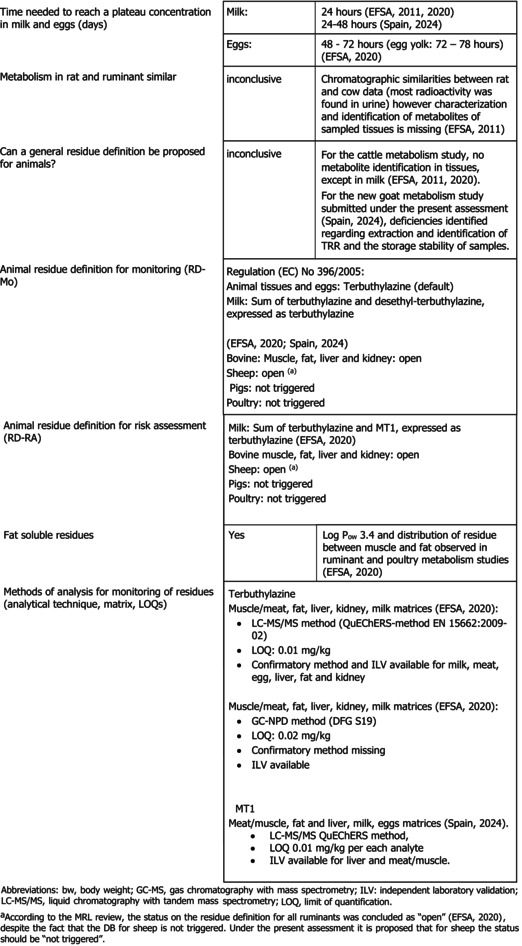 Figure 11
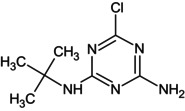 Figure 12
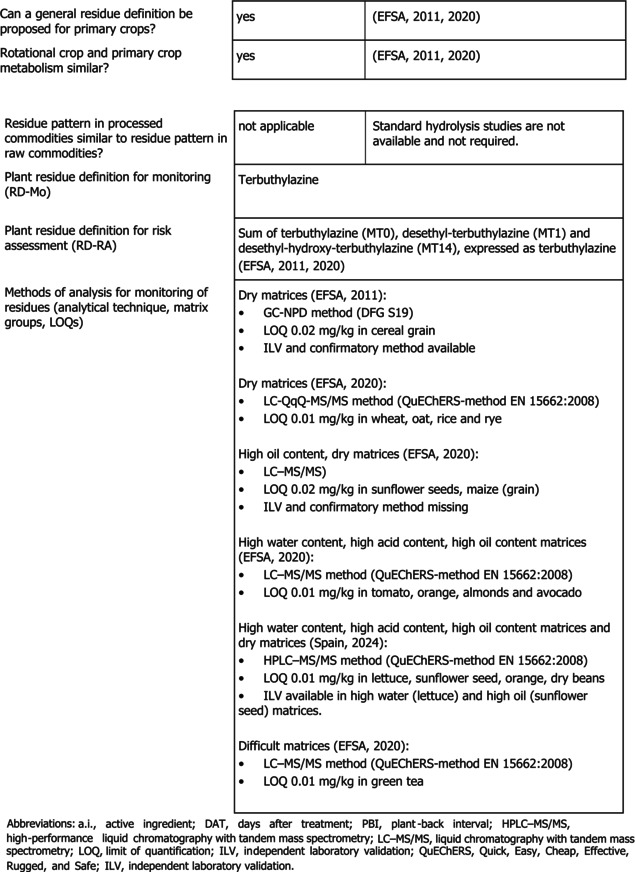 Figure 13
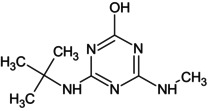 Figure 14
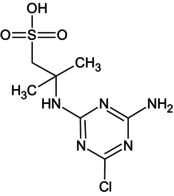 Figure 15
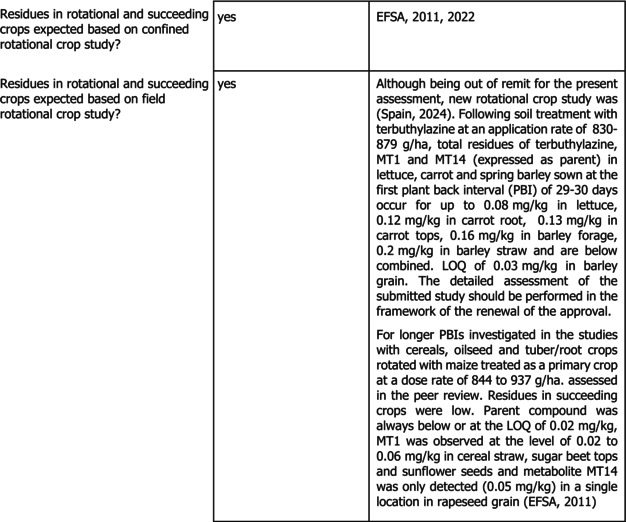 Figure 16
Peer Reviews
No public reviews on file for this paper yet. If you reviewed it on a platform where reviews are public (OpenReview, ICLR, NeurIPS, ICML), you can paste yours below so the community can read it here.
Videos
No videos yet. Explain this paper in a talk, walkthrough, or lecture? Add one.
Taxonomy
TopicsAgricultural safety and regulations · Pesticide Residue Analysis and Safety · Genetically Modified Organisms Research
SUMMARY
In 2019, when the European Food Safety Authority (EFSA) reviewed the existing maximum residue levels (MRLs) for terbuthylazine according to Article 12 of Regulation (EC) No 396/2005, EFSA identified some information as unavailable (data gaps) and derived tentative MRLs for those uses which were not fully supported by data but for which no risk to consumers was identified. The following data gaps were noted:
- A confirmatory method and an independent laboratory validation (ILV) for the method for enforcement in high‐water and high‐oil content plant commodities.
- A representative study investigating storage stability of terbuthylazine in high‐water (terbuthylazine, MT1 and MT14) and high‐protein (terbuthylazine and MT1) content commodities (this data gap is applicable to sweet corn and lupins/lupini beans and to animal commodities as forage was the main contributor of the livestock exposure).
- Additional residue trials on lupins/lupini beans and maize stover, supporting the critical Good Agricultural Practices (GAPs) of terbuthylazine on lupins/lupini beans and maize (this data gap is also relevant for animal commodities).
- A representative metabolism study to characterise metabolites in ruminant tissues.
- Depending on the results of the required metabolism study, representative feeding studies in ruminants supported by storage stability information might also be required.
- A fully validated method for enforcement for metabolite M1 in milk.
- A representative storage stability study in ruminant tissues and milk.
Tentative MRL proposals have been implemented in the MRL legislation by Commission Regulation (EU) No 2021/618, including footnotes related to data gaps number 2, 3, 4, 5 and 7, indicating the type of confirmatory data that should be provided by a party having an interest in maintaining the proposed tentative MRL by 16 April 2023. Data gaps number 1 and 6 were not implemented in the MRL regulation and the data gap number 3 was not implemented for maize, while it was implemented for sunflower seeds and cotton seeds.
In accordance with the agreed procedure set out in the working document SANTE/10235/2016, Syngenta Crop Protection AG submitted an application to the competent national authority in Spain (rapporteur Member State, RMS) to evaluate the confirmatory data gaps identified during the MRL review.
The application, alongside the dossier containing the supporting data in IUCLID format, was submitted through the EFSA Central Submission System on 3 April 2023. The appointed RMS Spain assessed the dossier and declared its admissibility on 1 June 2023. Subsequently, following the implementation of the EFSA's confidentiality decision, the non‐confidential version of the dossier was published by EFSA and a public consultation launched on the dossier. The consultation aimed to consult stakeholders and the public on the scientific data, studies and other information part of, or supporting, the submitted application, in order to identify whether other relevant scientific data or studies are available. The consultation run from 13 July 2023 to 3 August 2023. No additional data nor comments were submitted in the framework of the consultation.
At the end of the commenting period, the RMS proceeded drafting the evaluation report, in accordance with Article 8 of Regulation (EC) No 396/2005, which was submitted to the European Commission and EFSA on 3 May 2024.
On 15 May 2024 the European Commission sent a mandate to EFSA to assess the application and the evaluation report as required by Article 10 of the MRL regulation. When assessing the evaluation report, EFSA identified some data gaps and requested the RMS to address them. On 16 October 2024 the applicant provided the statement that no further Article 12 confirmatory data will be submitted, therefore an update to the IUCLID dossier was not required.
The consumer risk assessment performed in the framework of the MRL review was updated using revision 3.1. of the PRIMo, taking into account the actual MRL values implemented in Regulation (EU) 2021/1795 and excluding the crops on which the uses are not supported by Article 12 confirmatory data (cotton seed and lupins/lupini beans). No consumer intake concerns were identified.
The summary table below provides an overview of the assessment of confirmatory data and the recommended MRL modifications to Regulation (EC) No 396/2005.Codea CommodityExisting MRLb Data gap(s) Art.12 reviewProposed MRLConclusion/recommendation Enforcement residue definition: Terbuthylazine0234000Sweet corn 0.02*
(ft 1) Data gap No 2 [storage stability]0.02*
The data gap identified by EFSA concerning storage stability is addressed The tentative MRL is confirmed Risk for consumers unlikely 0300040Lupins/lupini beans 0.01*
(ft 2)
Footnote related to data gaps No 2 and 3 [storage stability and residue trials] 0.01*
The data gap identified by EFSA concerning storage stability is addressed. The data gap identified by EFSA concerning residue trials is not addressed; new residue trials have not been submitted. No alternative GAP or CXL is available The tentative MRL is not confirmed 0401050Sunflower seeds 0.01*
(ft 3) Footnote related to data gap No 3 [residue trials]0.01*
New residue trials have not been submitted. Since residue levels in seeds were lower than the limit of quantification (LOQ), the reduced number of three GAP‐compliant residue trials and two overdosed residue trials is sufficient according to guidelines SANTE/2019/12752 The tentative MRL is confirmed Risk for consumers unlikely 0401090Cotton seeds 0.01*
(ft3) Footnote related to data gap No 3 [residue trials]0.01*
The authorised SEU use assessed in the MRL review no longer complies with approval restrictions of terbuthylazine implemented in Regulation (EU) 2021/824 regarding the application rate No alternative GAP or CXL is available The tentative MRL is not confirmed
Enforcement residue definition: Terbuthylazine(F) ^,^ c 1012010Bovine muscle 0.01*
(ft 4) Footnote related to data gap No 4 and 5 [metabolism and feeding studies studies]0.01*
The data gap identified by EFSA concerning metabolism studies is not fully addressed. Deficiencies were identified for the submitted new metabolism study in goats which will be further considered in the framework of the EU pesticides peer review for the renewal of the approval of terbuthylazine Nevertheless, the metabolism studies indicate that total residues in bovine tissues (and milk) at the maximum dietary burden exposure remain far below the LOQ, indicating that at the current stage feeding studies are not required The tentative MRL is confirmed Risk for consumers unlikely 1015010Equine muscle 0.01*
(ft 4) 0.01* 1012020Bovine fat 0.01*
(ft4) 0.01* 1015020Equine fat 0.01*
(ft4) 0.01* 1012030Bovine liver 0.01*
(ft4) 0.01* 1015030Equine liver 0.01*
(ft4) 0.01* 1012040Bovine kidney 0.01*
(ft4) 0.01* 1015040Equine kidney 0.01*
(ft4) 0.01*
Enforcement residue definition: Sum of terbuthylazine and desethyl‐terbuthylazine, expressed as terbuthylazine(F) 1020010Cattle milk 0.02*
(ft5) Footnote related to data gap No 7 [storage stability]0.02*
The data gap identified by EFSA concerning storage stability is not addressed However, the MRL review concluded that, based on the metabolism study in cattle no quantifiable residues are expected in milk from the authorised uses. This conclusion is still valid Thus, the tentative MRL is confirmed Risk for consumers unlikely 1020040Horse milk 0.02*
(ft5) 0.02* Abbreviations: GAP, Good Agricultural Practice; MRL, maximum residue level; NEU, northern Europe; SEU, southern Europe.*Indicates that the MRL is set at the limit of analytical quantification (LOQ). ^a^ Commodity code number according to Annex I of Regulation (EC) No 396/2005. ^b^ Existing EU MRL and corresponding footnote on confirmatory data. ^c^ Setting of a residue definition in animal matrices has not been considered necessary by the EU pesticides peer review for the representative uses due to low livestock exposure (EFSA, 2011). ^F^ Fat‐soluble. ^ft1^ The European Food Safety Authority identified some information on storage stability as unavailable. When re‐viewing the MRL, the Commission will take into account the information referred to in the first sentence, if it is submitted by 16 April 2023, or, if that information is not submitted by that date, the lack of it. ^ft2^ The European Food Safety Authority identified some information on residue trials and storage stability as unavailable. When re‐viewing the MRL, the Commission will take into account the information referred to in the first sentence, if it is submitted by 16 April 2023, or, if that information is not submitted by that date, the lack of it. ^ft3^ The European Food Safety Authority identified some information on residue trials as unavailable. When re‐viewing the MRL, the Commission will take into account the information referred to in the first sentence, if it is submitted by 16 April 2023, or, if that information is not submitted by that date, the lack of it. ^ft4^ The European Food Safety Authority identified some information on livestock metabolism and feeding studies as unavailable. When re‐viewing the MRL, the Commission will take into account the information referred to in the first sentence, if it is submitted by 16 April 2023, or, if that information is not submitted by that date, the lack of it. ^ft5^ The European Food Safety Authority identified some information on storage stability as unavailable. When re‐viewing the MRL, the Commission will take into account the information referred to in the first sentence, if it is submitted by 16 April 2023, or, if that information is not submitted by that date, the lack of it.
ASSESSMENT
The review of existing maximum residue level (MRLs) for the active substance terbuthylazine according to Article 12 of Regulation (EC) No 396/20051 (MRL review) has been performed in 2019 (EFSA, 2020). The European Food Safety Authority (EFSA) identified some information as unavailable (data gaps) and derived tentative MRLs for those uses not fully supported by data but for which no risk to consumers was identified.
Following the review of existing MRLs, the legal limits have been modified by Commission Regulation (EU) No 2021/618,2 including footnotes for tentative MRLs that specified the type of information that was identified as missing. Any party having an interest in maintaining the proposed tentative MRL was requested to address the confirmatory data by 16 April 2023.
EFSA notes that according to Regulation (EU) 2021/8243 the approval conditions have been recently modified for terbuthylazine (European Commission, 2021), limiting the uses to one application every 3 years on the same field at a maximum dose of 850 g terbuthylazine per hectare. A period of grace for withdrawing all uses not complying with this restriction expired on 14 June 2022. Some uses assessed by the MRL review are no longer compliant with the use restrictions.
In accordance with the specific provisions set out in the working document of the European Commission SANTE/10235/2016 (European Commission, 2020) and those set by the ‘Transparency Regulation’ (EU) 2019/1381,4 the applicant Syngenta Crop Protection AG submitted on 3 April 2023 an application to the competent national authority in Spain, alongside the dossier containing the supporting data using the IUCLID format.
To support the tentative MRL proposals implemented in the MRL legislation, the applicant provided new storage stability studies in plant commodities and a new metabolism study in goats. It is noted that the applicant also provided a rotational crop study and validation data for the enforcement method in plant commodities and milk to address the data gaps identified by EFSA, but which were not implemented in the MRL legislation (Spain, 2024).
The RMS assessed the new information in an evaluation report, which was submitted to the European Commission and forwarded to EFSA on 3 May 2024 (Spain, 2024). EFSA assessed the application as requested by the European Commission in accordance with Article 10 of Regulation (EC) No 396/2005. During the detailed assessment, EFSA identified data gaps and requested the RMS to address them. On 8 October 2024 the applicant provided the statement that no further Article 12 confirmatory data will be submitted, therefore an update to the IUCLID dossier was not required.
EFSA based its assessment on the evaluation report submitted by the RMS (Spain, 2024), the EFSA conclusion on the peer review of the pesticide risk assessment of the active substance terbuthylazine (EFSA, 2011; including the assessment report drafted by the RMS United Kingdom, 2010a, 2010b) and the reasoned opinion on the MRL review according to Article 12 of Regulation (EC) No 396/2005 (EFSA, 2020).
For this application, the data requirements established in Regulation (EU) No 544/20115 and the relevant guidance documents at the date of implementation of the confirmatory data requirements by Regulation (EU) No 2021/618 are applicable (European Commission, 1997a, 1997b, 1997c, 1997d, 1997e, 1997f, 1997g, 2010, 2020, 2023a, 2023b; OECD, 2011, 2013). The assessment is performed in accordance with the legal provisions of the Uniform Principles for the Evaluation and the Authorisation of Plant Protection Products adopted by Commission Regulation (EU) No 546/2011.6
An updated list of end points, including the end points of relevant studies assessed previously and the confirmatory data evaluated in this application, is presented in Appendix B.
Some of the conclusions reported in this reasoned opinion might need to be reconsidered in the light of the outcome of the upcoming peer review for renewal of approval of the active substance in accordance with Regulation (EC) No 1107/2009, which has not yet started.
The evaluation report submitted by the RMS (Spain, 2024) is made publicly available as a background document to this reasoned opinion.7
RESIDUES IN PLANTS
1
Nature of residues and methods of analysis in plants
1.1
Nature of residues in primary crops
1.1.1
Not relevant for the present assessment.
Nature of residues in rotational crops
1.1.2
Not relevant for the present assessment.
Nature of residues in processed commodities
1.1.3
Not relevant for the present assessment.
Analytical methods for enforcement purposes in plant commodities
1.1.4
In order to address the data gap number 18 of the MRL review, which was not implemented in Regulation (EU) No 2021/618, the applicant provided validation data for the enforcement of parent terbuthylazine in maize grain (dry matrix), lettuce (high‐water content matrix), dry beans (dry matrix), orange (high‐acid content matrix) and sunflower seed (high‐oil content matrix) (Spain, 2024).
The residues in the multi‐residue Quick, Easy, Cheap, Effective, Rugged, and Safe (analytical method) (QuEChERs) method were determined using high performance liquid chromatography with tandem mass spectrometry (HPLC–MS/MS). Two mass transitions were employed for quantification and confirmation. For each fortification level five samples were tested for recovery. Sufficient recoveries have been demonstrated for all matrices at both fortification levels. Matrices for which the method was inter‐laboratory validated were those identified in the data gap: high‐oil (sunflower) and high‐water (lettuce) content.
According to the data requirements applicable for the present assessment, EFSA concludes that the provided method is sufficiently validated to enforce residues of terbuthylazine in matrices of high‐water, high‐acid, high‐oil content and in dry matrices at the validated LOQ of 0.01 mg/kg.
EFSA concludes that the data gap identified in the framework of the MRL review is addressed.
Stability of residues in plants
1.1.5
In order to address the data gap number 29 of the MRL review which was implemented in Regulation (EU) No 2021/618 with footnote 1 and 2, the applicant provided a new study where the freezer storage stability was investigated of:
- – parent terbuthylazine and metabolites MT1 and MT14 in lettuce (high‐water content matrix).
- – parent terbuthylazine and metabolite MT1 in dried beans (high‐protein/dry matrix).
- – metabolite MT14 in oranges (high‐acid content matrix).
The fortification level tested in the storage stability study was 0.1 mg/kg (10× the LOQ) for each analyte. Spiked samples were stored at ≤ −18°C for 2 years. Samples were analysed at intervals of 0, 1, 3, 6, 12, 18 and 24 months. Analytes were extracted using methanol/ultra‐pure water (80/20 v/v) and quantified using HPLC–MS/MS. The analytical method was sufficiently validated at the LOQ of 0.01 mg/kg for the active substance and the metabolite/matrix combinations tested in the storage stability study (Spain, 2024).
It is concluded that parent terbuthylazine and metabolite MT1 are stable in high‐water and dry/high‐protein content commodities for at least 24 months when stored frozen at ≤ −18°C. Metabolite MT14 is stable in high‐water content and high‐acid content commodities for at least 24 months when stored at ≤ −18°C.
EFSA concluded that the data gap identified in the framework of the MRL review was addressed.
Proposed residue definitions
1.1.6
The previously derived residue definitions for primary and rotational crops (EFSA, 2011, 2020) are still applicable:
- – For enforcement: Terbuthylazine.
- – For risk assessment: Sum of terbuthylazine (MT0), desethyl‐terbuthylazine (MT1) and desethyl‐hydroxy‐terbuthylazine (MT14), expressed as terbuthylazine.
To be noted that investigation to elucidate the nature of residues in processed products (hydrolysis study) is not triggered for plant commodities since according to the authorised uses no significant or no analytically determinable residues were observed (EFSA, 2020).
Magnitude of residues in plants
1.2
In order to address the data gap number 310 of the MRL review, no additional information was provided.
Lupins/lupini beans: This data gap was implemented in Regulation (EU) No 2021/618 with footnote 2. The applicant did not submit the four additional GAP‐compliant trials analysed simultaneously according to the residue definitions for enforcement and risk assessment. The tentative MRL is therefore not confirmed.
Maize stover: This data gap was not formally implemented in Regulation (EU) No 2021/618. The applicant did not submit the additional GAP‐compliant trials analysed simultaneously according to the residue definitions for enforcement and risk assessment. Terbuthylazine is approved for uses on maize in northern Europe (NEU) and southern Europe (SEU). The NEU use is fully supported by residue data on grain, forage and stover according to the guidelines SANTE/2019/12752 (European Commission, 2020). The SEU use assessed in the MRL review, however, does not anymore comply with approval restrictions in terms of application rate according to Regulation (EU) 2021/824.11
Cotton seeds: This data gap was set by Regulation (EU) No 2021/618 with footnote 3. The applicant did not submit additional trials. The use of terbuthylazine on cotton is authorised only in SEU for which the MRL review concluded that the three Good Agricultural Practice (GAP)‐compliant residue trials on sunflowers (used to extrapolate results) were not strictly complying with applicable data requirements in terms of a minimum number of trials, but since residues in all trials were below the limit of quantification (LOQ), a reduced number of trials was considered sufficient (EFSA, 2020). EFSA notes, however, that after the entry into force of Regulation (EU) 2021/824, the SEU use assessed in the MRL review does not anymore comply with approval restrictions regarding the application rate. No alternative GAP is available or was submitted within the present application. The tentative MRL is therefore not confirmed.
Sunflower seeds: This data gap was set by Regulation (EU) No 2021/618 with footnote 3. The applicant did not submit additional trials. For the authorised SEU use the MRL concluded that the number of five GAP‐compliant trials on sunflower (3) and cotton seeds (2) was not compliant with applicable data requirements in terms of a minimum number of trials, but, since residues in all trials were below the LOQ, a reduced number of trials was considered sufficient (EFSA, 2020). EFSA concludes that the data package is sufficient and according to the guidelines SANTE/2019/12752, where the ‘< LOQ residue’ situation is further detailed (European Commission, 2020). The tentative MRL is therefore confirmed.
Magnitude of residues in rotational crops
1.2.1
Not relevant for the present assessment.
The applicant in the framework of the present assessment provided a new rotational crop field study, investigating magnitude of residues of terbuthylazine, MT1 and MT14 in lettuce, carrot and spring barley grown in soil treated with terbuthylazine at an application rate of 830–879 g/ha at PBIs of 29–30 days (Spain, 2024). The study was not further assessed as not relevant for the present assessment. The detailed assessment should be performed in the framework of the renewal of the approval of terbuthylazine.
Magnitude of residues in processed commodities
1.2.2
Not relevant for the present assessment.
RESIDUES IN LIVESTOCK
2
Confirmatory data were requested for terbuthylazine EU uses authorised on crops that can be used as animal feeds and therefore livestock exposure was further assessed. However, when calculating the dietary burden (DB), the following needs to be taken into consideration for the crops/commodities subject to the present assessment:
- – For lupins/lupini beans, for which the gap was identified in the MRL review and implemented in the Regulation (EU) No 2021/618, new residue data have not been provided. Thus, the related feed commodities – lupin seeds and meal – can be excluded from the livestock exposure calculation.
- – For cotton seeds, the SEU use assessed in the MRL review is not compliant with the restrictions related to application rate introduced with Regulation (EU) 2021/824 which entered into force after the MRL review. In the absence of an alternative GAP on this crop, cotton seeds and their by‐product (meal) were excluded from the livestock exposure calculation. EFSA is not aware, but it cannot be excluded that other, less critical in terms of application rate, GAPs are authorised at national level on cotton. However, considering that no residues above the LOQ were present in cotton seeds at the critical GAP reported for the MRL review, it is unlikely that higher residues could occur from potential less critical authorised uses of terbuthylazine on cotton in Europe.
- – For sunflower seeds, the data available show that residues above the LOQ are not expected. The contribution of residues in these crops to the livestock dietary burden remains unchanged.
- – For maize stover, it is noted that the NEU use on maize is sufficiently supported by residue data. For the SEU use, the MRL review noted that full residue data set for maize stover is not available, but the data gap was not further implemented in Regulation (EU) No 2021/618. Moreover, the SEU use is no longer compliant with the restrictions introduced with Regulation (EU) 2021/824. The period of grace to withdraw the national authorisations expired on 14 June 2022. Since the use on NEU in maize is supported, the contribution of residues in maize grain and stover to the livestock exposure remains unchanged.
The dietary burden which was calculated by the MRL review and triggered only for cattle (maximum DB of 0.17 and 0.14 mg/kg DM for beef and dairy cattle, respectively) was now updated, by excluding the data on lupins and cotton (seeds and meal). The input values are summarised in Appendix D.1.
The result of the DB remains unchanged, e.g. the maximum DB calculated for cattle is still 0.17 mg/kg DM for beef cattle and 0.14 mg/kg DM for dairy cattle with maize forage/silage being the main contributor. EFSA notes that the exclusion of lupins and cotton (seeds and meal) from the DB calculation has no impact on the livestock exposure.
Nature of residues and methods of analysis in livestock
2.1
In order to address the data gap number 412 of the MRL review implemented in the Regulation (EU) No 2021/618 with footnote 4, instead of characterising residues from the available cow metabolism study,13 the applicant submitted a new metabolism study investigating the nature of terbuthylazine residues in goats (Spain, 2024). The experimental phase of the study was completed in 1995; the study report finally issued in 2018. Samples of tissues and milk from the radiolabelled study were stored for up to 12 and 7 months, respectively. The same study is now submitted for the renewal of approval of terbuthylazine.
Four goats were dosed with 4.22 and 5.31 mg/bw per day, corresponding to 147 and 164 mg/kg (DM) in feed (corresponding to ca. 900N and 1167N the calculated maximum dietary burden for dairy cattle and beef cattle, respectively, the only species for which the dietary burden is triggered) for 4 consecutive days. The dosage length of the study is in line with applicable guidelines (European Commission, 1997e). The mean total recovery of the administered radioactivity was 93%. Most of the radioactivity (about 68%) was excreted in urine and faeces with low levels in tissues and milk: 0.624 mg eq./kg in milk (mean 0–78 h), 6.75 mg eq./kg in liver, 4.95 mg eq./kg in kidney, 0.49 mg eq./kg in muscle and 2.24 mg eq./kg in fat. The non‐extracted residue fraction accounts for more than 10% total radioactive residue (TRR) in liver (18.8%), kidney (20.8%) and muscle (18.5%). No further attempts to release this radioactivity were performed.
Parent terbuthylazine was extensively metabolised. It was identified above 10% TRR only in muscle (10.3% TRR; 0.05 mg eq./kg) and fat (33.1% TRR; 0.736 mg eq./kg). Metabolite MT1 was the major component of the TRR in all matrices, except in milk, accounting for 21.7% TRR in milk (0.135 mg eq./kg), 18.3% TRR in liver (1.24 mg eq./kg), 10.7% TRR in kidney (0.53 mg eq./kg), 40% TRR in muscle (0.196 mg eq./kg) and 58.8% TRR in fat (1.31 mg eq./kg). In milk the major component was metabolite 2M (MT4), accounting for 28.3% TRR (0.177 mg eq./kg). Other metabolites found at more than 10% TRR were metabolite 1L in liver (15.5% TRR, 1.047 mg eq./kg) and metabolite 2MU (MT14) in muscle (11.8% TRR, 0.058 mg eq./kg, including its glutathione conjugation and subsequent degradation to the corresponding SH‐triazine (1MU)).
Overall, the metabolism study provides additional information on the characterisation of residues in ruminant tissues as requested by the MRL review. However, data gaps were identified and further requested from the applicant on the non‐extracted radioactivity after microwave assisted extraction in liver, kidney and muscle and on the level of non‐identified radioactivity in goat kidney, liver and muscle. Moreover, the samples were stored frozen for longer periods than 6 months (12 and 7 months for tissues and milk, respectively), and therefore the impact of the storage on residue composition could not be fully assessed.
The investigation of the storage stability was performed by comparing the chromatographic profiles of liver and milk samples from metabolism studies after certain intervals of storage (2 weeks, 6 and 32 months) and the results were assessed in the evaluation report (Spain, 2024). Comparison was done among various fractions of ‘polar phase’ without quantification of individual metabolites. No data is available for other matrices (kidney, muscle, fat). Applicant therefore was requested to provide any further justification or additional data to prove that the identity of residues of terbuthylazine and the metabolites identified did not change during the period between sample collection and final analysis exceeding 6 months. The applicant confirmed that additional information on extraction and storage stability will not be submitted within present assessment. The RMS concluded that, despite some deviations identified in the metabolism study, the MRL review confirmatory data gap is deemed addressed, considering that at the calculated dietary burden significant residues are not expected in ruminant edible commodities.
EFSA acknowledges that a new goat metabolism study as requested in the data gap number 4 identified by the MRL review was submitted. In view of the deficiencies identified regarding extraction and identification of TRR and because the sample integrity during storage cannot be reliably determined, the metabolism in ruminants cannot be fully depicted. Thus, on the basis of the available data, residue definition in ruminant tissues could not be proposed. The shortcomings of the metabolism study should be further considered in the framework of the peer review for the renewal of the approval of terbuthylazine, where a comprehensive discussion on the validity of this study could be taken and consensus on the most appropriate residue definitions in product of animal origin will be eventually reached.
In order to address the data gap number 614 of the MRL review, not implemented in the MRL legislation, the applicant submitted method validation data for the enforcement of the metabolite MT1 in milk and in other animal products (eggs, meat/muscle, fat and liver). The MT1 (desethyl‐terbuthylazine) in the QuEChERS method was determined by high performance liquid chromatography with mass‐spectrometric detection (LC–MS/MS). Extraction of residues was performed with acetonitrile. The method was sufficiently validated at the LOQ of 0.01 mg/kg in all matrices tested, including milk. An ILV was performed to test performance of proposed enforcement method in liver and meat/muscle. EFSA confirms that residues of terbuthylazine and MT1 can be enforced in milk at the combined LOQ of 0.02 mg/kg.
Magnitude of residues in livestock
2.2
The applicant did not address the data gap number 515 on a representative feeding study in ruminants (implemented in the Regulation (EU) No 2021/618 with footnote 4), which was associated by the MRL review with the outcome of the representative metabolism study (as required under the Article 12 confirmatory data gap number 4) (EFSA, 2020). Also data gap number 716 on the related storage stability in tissues and milk, implemented in the Regulation (EU) No 2021/618 as footnote 5 only for milk, was not addressed.
According to the updated calculation, the livestock dietary burden is above the trigger value of 0.1 mg/kg DM only for beef and dairy cattle (see Section 2). Based on the results of the metabolism study in goats conducted at more than 900N the maximum calculated dietary burden in bovine, it can be confirmed that residues in bovine tissues remain far below 0.01 mg/kg and no further feeding studies are currently required. Appropriate storage stability data on livestock commodities (footnote number 5 of the MRL regulation for milk) will be generated to support the results from feeding studies, once these studies are conducted.
The MRL review concluded that no quantifiable residues were expected in bovine milk as a result of the authorised uses based on the results of the metabolism study in cattle. This conclusion is still valid. The metabolism study was deemed adequate to support the proposed residue definition for enforcement and risk assessment in milk (EFSA, 2020). The tentative MRLs for bovine and, by extrapolation, for equine tissues and milk, all set at the LOQ of the enforcement methods, are confirmed.
EFSA notes that these conclusions might need to be reconsidered in light of the outcome of the upcoming EU pesticides peer review on the renewal of the approval of terbuthylazine.
CONSUMER RISK ASSESSMENT
3
The risk assessment performed in the framework of the MRL review was now updated by using the revision 3.1. of the PRIMo (EFSA, 2018; EFSA, 2019), considering the actual MRL values implemented in Regulation (EU) 2021/1795 and excluding the crops on which the uses are not supported by Art.12 confirmatory data (cotton seed and lupins/lupini beans). Crops on which the uses were not reported for the MRL review were not included in the exposure calculation.
The input values are summarised in Appendix D.2.
No chronic intake concerns were identified; the maximum calculated exposure is 34% of the acceptable daily intake (ADI) (NL toddler diet). The highest acute exposure is still identified for residues in milk, accounting for 31% of the acute reference dose (ARfD).
CONCLUSION AND RECOMMENDATIONS
4
To address the data gaps identified in the framework of the MRL review and implemented in the Regulation (EU) No 2021/618, the applicant provided:
- – a storage stability study investigating the stability of parent terbuthylazine in high‐water content and high‐protein/dry matrix, of metabolite MT1 in high‐water and high‐protein/dry matrix and of MT14 in high‐water and high‐acid matrices
- – a metabolism study investigating the nature of terbuthylazine in goats.
Furthermore, the applicant provided additional information to address data gaps not officially implemented in the Regulation (EU) No 2021/618, concerning method validation data for the enforcement of parent terbuthylazine in plant commodities and of metabolite MT1 in animal commodities and milk. The submitted data confirm that methods are sufficiently validated to enforce parent in plant commodities at the validated LOQ of 0.01 mg/kg and terbuthylazine and metabolite MT1 in milk at the validated combined LOQ of 0.02 mg/kg.
Since new residue trials were not provided, EFSA concluded that the Art.12 confirmatory data implemented in the Regulation (EU) No 2021/618 regarding residue trials is not addressed and the tentative MRL in lupins/lupini beans is not confirmed. For cotton seeds, the existing SEU use is supported by residue data, but it does not comply with approval restrictions regarding application rate introduced with Regulation (EU) 2021/824. No alternative use was available or submitted with the present application. Thus, the tentative MRL in cotton seeds is not confirmed. Finally, the tentative MRLs for sweet corn and sunflower seeds are confirmed.
Regarding livestock metabolism, EFSA acknowledges that a new goat metabolism study was submitted. However, in a view of the shortcomings identified, the metabolism in ruminant tissues cannot be fully depicted. A representative feeding studies in ruminants at more realistic dose rates adequately supported by storage stability data is anyway depending on the full elucidation of the metabolic pathway and the proposal for residue definitions in animal commodities. By the time, based on the results of metabolism studies, residues in products of bovine origin are expected to be far below the LOQ at the calculated livestock dietary burdens and no further feeding studies are currently required. The investigation of storage stability of residues in milk is also not necessary as long as the feeding study is not performed. Therefore, these data gaps do not affect the existing authorisations on crops used as feed items. The tentative MRLs in bovine and equine tissues and milk can be confirmed.
EFSA notes that these conclusions might need to be reconsidered in light of the outcome of the upcoming EU pesticides peer review on the renewal of the approval of terbuthylzine.
The risk assessment performed in the framework of the MRL review was updated by using the revision 3.1. of the PRIMo and excluding the crops on which the uses are not supported by Art.12 confirmatory data (cotton seed and lupins/lupini beans). No chronic intake concerns were identified; the maximum calculated exposure is 34% of the ADI (NL toddler diet). The highest acute exposure is still identified for residues in milk, accounting for 31% of the ARfD.
The overview of the assessment of confirmatory data and the recommended MRL modifications are summarised in Appendix B.4.ABBREVIATIONSa.s.active substanceADIacceptable daily intakeARfDacute reference doseBBCHgrowth stages of mono‐ and dicotyledonous plantsBwbody weightDMdry matterDwdry weightEMSevaluating Member StateEqresidue expressed as a.s. equivalentFAOFood and Agriculture Organization of the United NationsGAPGood Agricultural PracticeGC–MSgas chromatography with mass spectrometryGC‐NPDgas chromatography with nitrogen/phosphorous detectorGLPGood Laboratory PracticeHPLC–MS/MShigh performance liquid chromatography with tandem mass spectrometryHRhighest residueIEDIinternational estimated daily intakeIESTIinternational estimated short‐term intakeILVindependent laboratory validationISOInternational Organisation for StandardisationIUPACInternational Union of Pure and Applied ChemistryLCliquid chromatographyLOQlimit of quantificationMRLmaximum residue levelMSMember StatesMS/MStandem mass spectrometry detectorMWmolecular weightNEUnorthern EuropeOECDOrganisation for Economic Co‐operation and DevelopmentPBIplant back intervalPFprocessing factorPHIpre‐harvest intervalP_ow_ partition coefficient between n‐octanol and waterPRIMo(EFSA) Pesticide Residues Intake ModelQuEChERSQuick, Easy, Cheap, Effective, Rugged, and Safe (analytical method)RMSrapporteur Member StateSEUsouthern EuropeSTMRsupervised trials median residueTRRtotal radioactive residueWHOWorld Health Organization
REQUESTOR
European Commission
QUESTION NUMBER
EFSA‐Q‐2023‐00388
COPYRIGHT FOR NON‐EFSA CONTENT
EFSA may include images or other content for which it does not hold copyright. In such cases, EFSA indicates the copyright holder and users should seek permission to reproduce the content from the original source.
The reference list from the paper itself. Each links out to its DOI / PubMed record.
- 1EFSA (European Food Safety Authority) . (2011). Conclusion on the peer review of the pesticide risk assessment of the active substance terbuthylazine. EFSA Journal, 9(1), 1969. 10.2903/j.efsa.2011.1969 · doi ↗
- 2EFSA (European Food Safety Authority) , Brancato, A. , Brocca, D. , Ferreira, L. , Greco, L. , Jarrah, S. , Leuschner, R. , Medina, P. , Miron, I. , Nougadere, A. , Pedersen, R. , Reich, H. , Santos, M. , Stanek, A. , Tarazona, J. , Theobald, A. , & Villamar‐Bouza, L. (2018). Guidance on use of EFSA pesticide residue intake model (EFSA PRI Mo revision 3). EFSA Journal, 16(1), 5147. 10.2903/j.efsa.2018.5147 PMC 700936132625691 · doi ↗ · pubmed ↗
- 3EFSA (European Food Safety Authority) , Anastassiadou, M. , Brancato, A. , Carrasco Cabrera, L. , Ferreira, L. , Greco, L. , Jarrah, S. , Kazocina, A. , Leuschner, R. , Magrans, J. O. , Miron, I. , Pedersen, R. , Raczyk, M. , Reich, H. , Ruocco, S. , Sacchi, A. , Santos, M. , Stanek, A. , Tarazona, J. , … Verani, A. (2019). Pesticide residue intake model‐ Efsa primo revision 3.1 (update of efsa primo revision 3) . EFSA supporting publication 2019:EN‐1605. 15 pp. 10.2903/sp.e · doi ↗
- 4EFSA (European Food Safety Authority) , Anastassiadou, M. , Bernasconi, G. , Brancato, A. , Carrasco Cabrera, L. , Greco, L. , Jarrah, S. , Kazocina, A. , Leuschner, R. , Magrans, J. O. , Miron, I. , Nave, S. , Pedersen, R. , Reich, H. , Rojas, A. , Sacchi, A. , Santos, M. , Stanek, A. , Theobald, A. , … Verani, A. (2020). Reasoned opinion on the review of the existing maximum residue levels for terbuthylazine according to Article 12 of Regulation (EC) No 396/2005. EFSA Journ · doi ↗ · pubmed ↗
- 5European Commission . (1997 a). Appendix A. Metabolism and distribution in plants. 7028/iv/95‐rev., 22 July 1996.
- 6European Commission . (1997 b). Appendix B. General recommendations for the design, preparation and realization of residue trials. Annex 2. Classification of (minor) crops not listed in the appendix of council directive 90/642/EEC. 7029/VI/95‐rev. 6, 22 July 1997.
- 7European Commission . (1997 c). Appendix C. Testing of plant protection products in rotational crops. 7524/VI/95‐rev. 2, 22 July 1997.
- 8European Commission . (1997 d). Appendix E. Processing studies. 7035/VI/95‐rev. 5, 22 July 1997.