Multi-omic signatures of host response associated with presence, type, and outcome of enterococcal bacteremia
Charlie Bayne, Dominic McGrosso, Concepcion Sanchez, Leigh-Ana Rossitto, Maxwell Patterson, Carlos Gonzalez, Courtney Baus, Cecilia Volk, Haoqi Nina Zhao, Pieter Dorrestein, Victor Nizet, George Sakoulas, David J. Gonzalez, Warren Rose

TL;DR
This study uses multi-omics to explore how the body responds to enterococcal bacteremia, identifying key proteins and metabolites linked to infection presence, species, and survival.
Contribution
The study introduces a novel multi-omic approach to distinguish EcB infection, species, and survival outcomes with high accuracy using plasma proteomics and metabolomics.
Findings
Significant differences in acute phase response and inflammatory proteins/metabolites were found between healthy and EcB patients.
Histidine-rich glycoprotein and fetuin-B were identified as strong predictors of survival in EcB patients.
EcB caused by E. faecium showed reduced immunoglobulin abundances compared to E. faecalis.
Abstract
Despite the prevalence and severity of enterococcal bacteremia (EcB), the mechanisms underlying systemic host responses to the disease remain unclear. Here, we present an extensive study that profiles molecular differences in plasma from EcB patients using an unbiased multi-omics approach. We performed shotgun proteomics and metabolomics on 105 plasma samples, including those from EcB patients and healthy volunteers. Comparison between healthy volunteer and EcB-infected patient samples revealed significant disparities in proteins and metabolites involved in the acute phase response, inflammatory processes, and cholestasis. Several features distinguish these two groups with remarkable accuracy. Cross-referencing EcB signatures with those of Staphylococcus aureus bacteremia revealed shared reductions in cholesterol metabolism proteins and differing responses in platelet alpha granule and…
Genes, proteins, chemicals, diseases, species, mutations and cell lines named across the full text — each resolved to its canonical identifier and authoritative record.
Click any figure to enlarge with its caption.
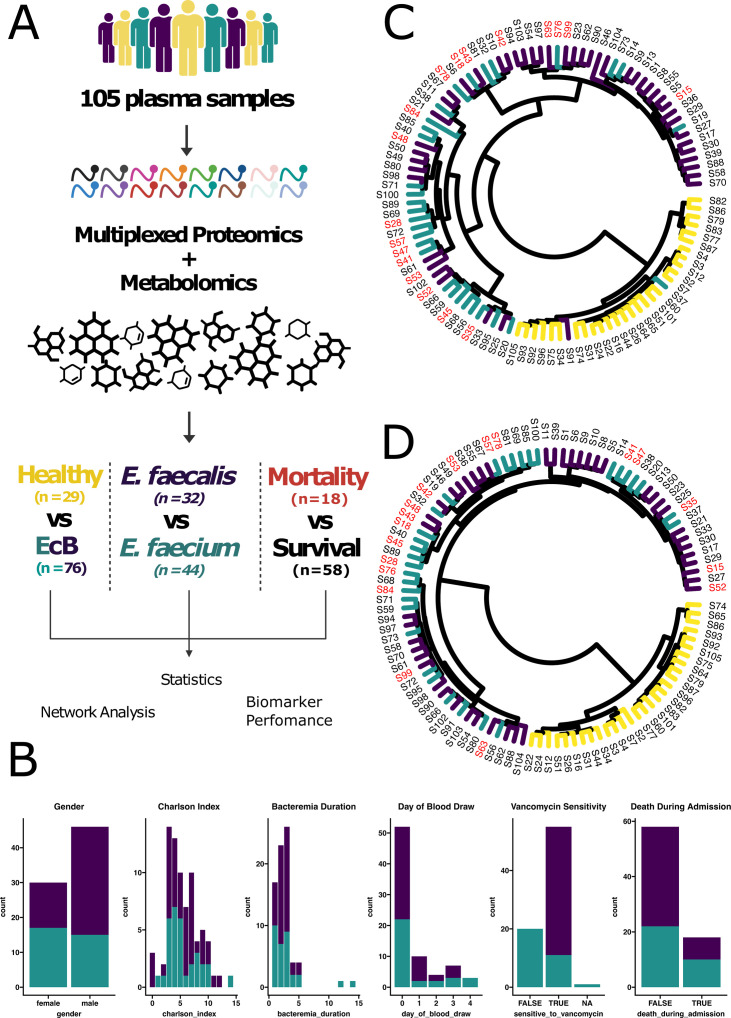 Figure 1
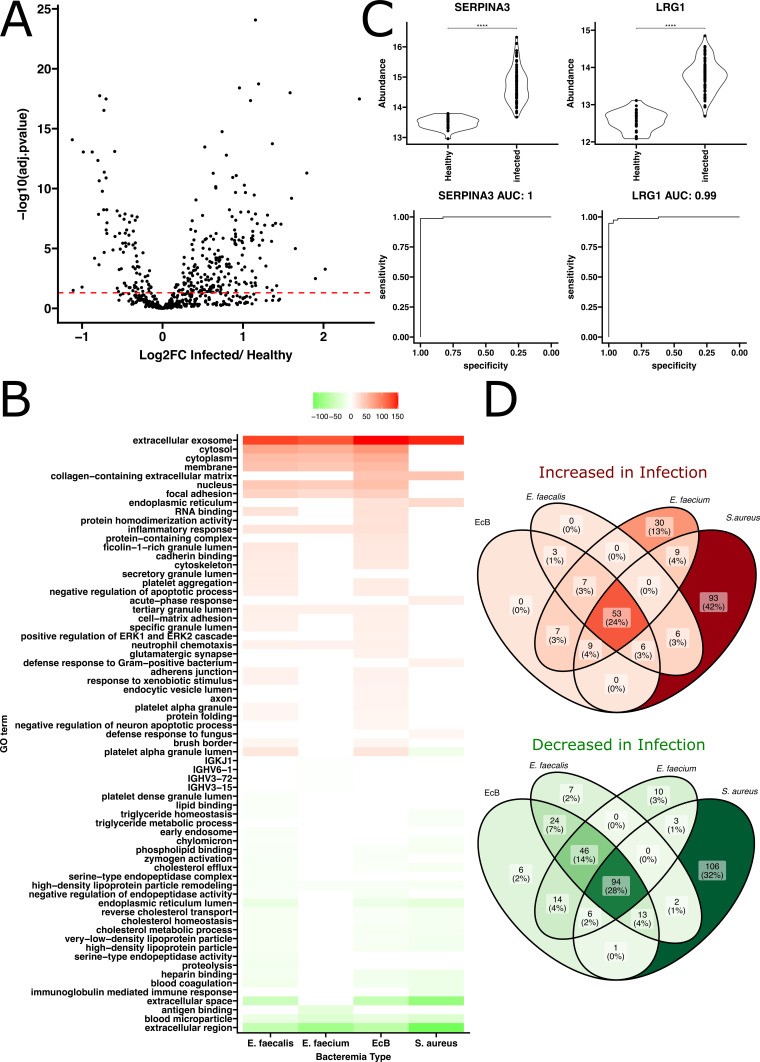 Figure 2
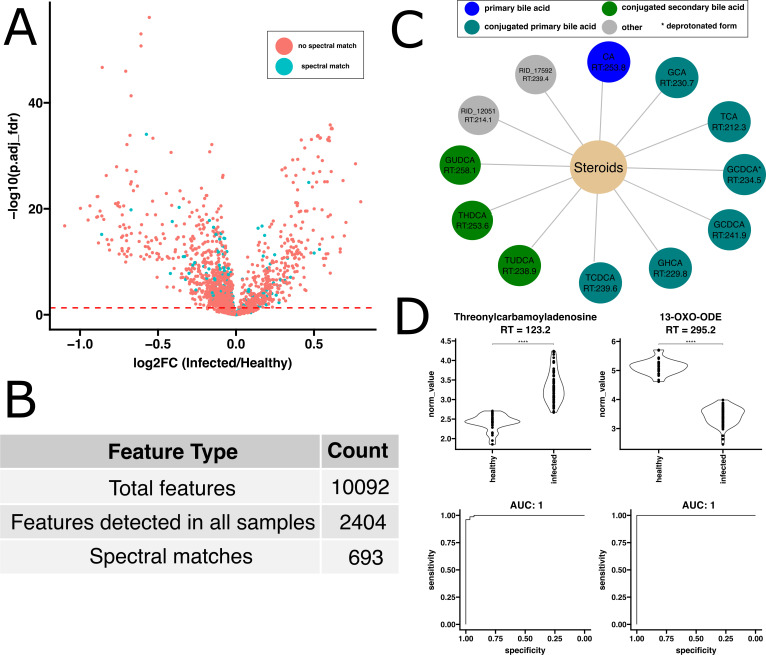 Figure 3
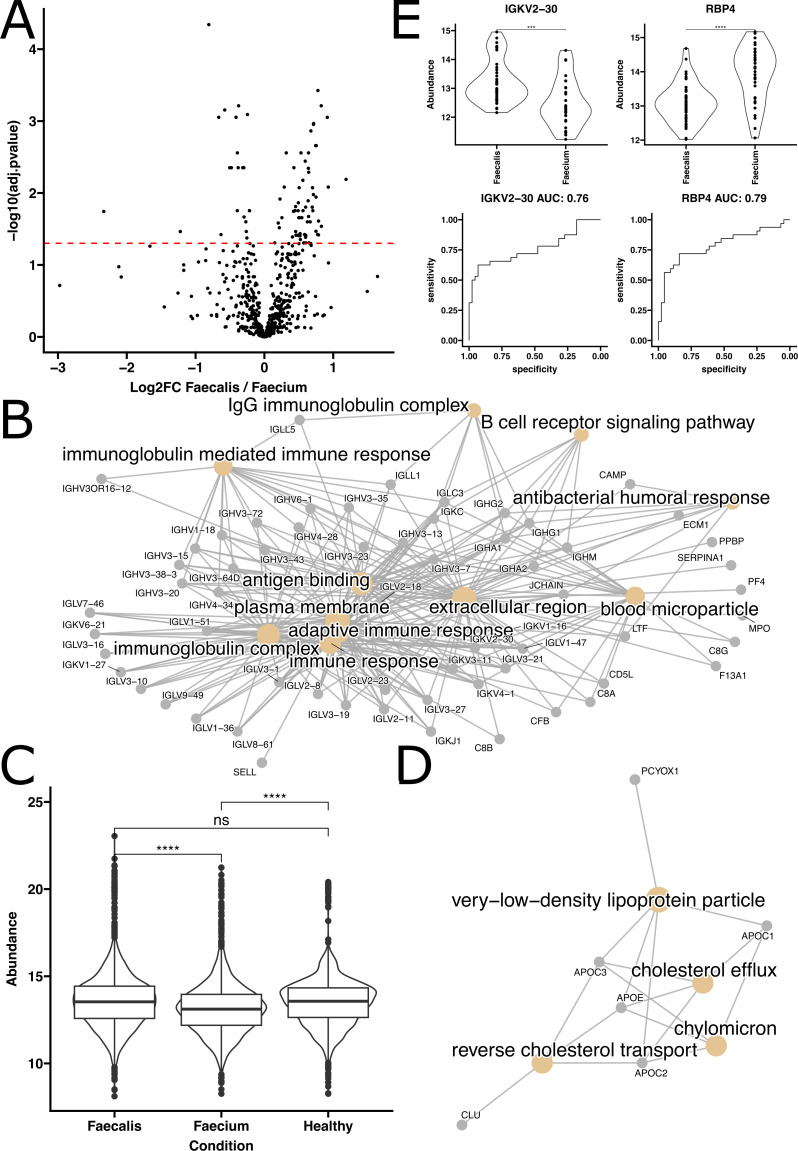 Figure 4
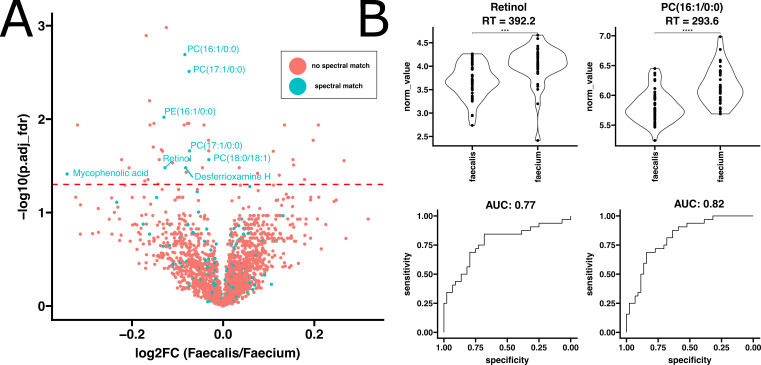 Figure 5
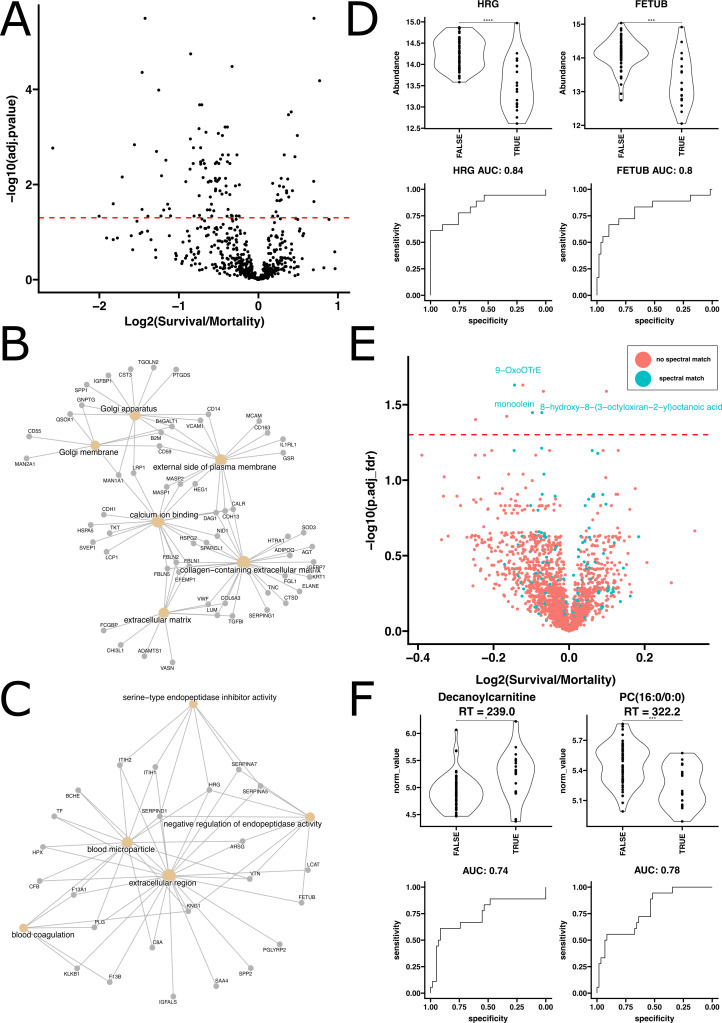 Figure 6
Peer Reviews
No public reviews on file for this paper yet. If you reviewed it on a platform where reviews are public (OpenReview, ICLR, NeurIPS, ICML), you can paste yours below so the community can read it here.
Videos
No videos yet. Explain this paper in a talk, walkthrough, or lecture? Add one.
Taxonomy
TopicsBacterial Identification and Susceptibility Testing · Antimicrobial Resistance in Staphylococcus · Genomics and Phylogenetic Studies