How Light at Night Sets the Circalunar Clock in the Marine Midge Clunio marinus
Carolina M. Peralta, Eric Feunteun, Julien Guillaudeau, Dušica Briševac, Tobias S. Kaiser

TL;DR
This study explores how moonlight at night influences the biological clocks of a marine insect, helping it synchronize with lunar and tidal cycles.
Contribution
The study reveals strain-specific and complex integration of moonlight's timing, duration, and intensity to synchronize circalunar rhythms in Clunio marinus.
Findings
Moonlight timing, not intensity alone, shifts the phase of lunar rhythms in C. marinus.
Strain-specific sensitivity windows and durations of moonlight exposure exist.
Natural moonlight patterns at field intensities provide optimal synchronization of rhythms.
Abstract
Many organisms inhabiting the interface between land and sea have evolved biological clocks corresponding to the period of the semilunar (14.77 days) or the lunar (29.53 days) cycle. Since tidal amplitude is modulated across the lunar cycle, these circasemilunar or circalunar clocks not only allow organisms to adapt to the lunar cycle, but also to specific tidal situations. Biological clocks are synchronized to external cycles via environmental cues called zeitgebers. Here, we explore how light at night sets the circalunar and circasemilunar clocks of Clunio marinus, a marine insect that relies on these clocks to control timing of emergence. We first characterized how moonlight intensity is modulated by the tides by measuring light intensity in the natural habitat of C. marinus. In laboratory experiments, we then explored how different moonlight treatments set the phase of the clocks of…
Genes, proteins, chemicals, diseases, species, mutations and cell lines named across the full text — each resolved to its canonical identifier and authoritative record.
Click any figure to enlarge with its caption.
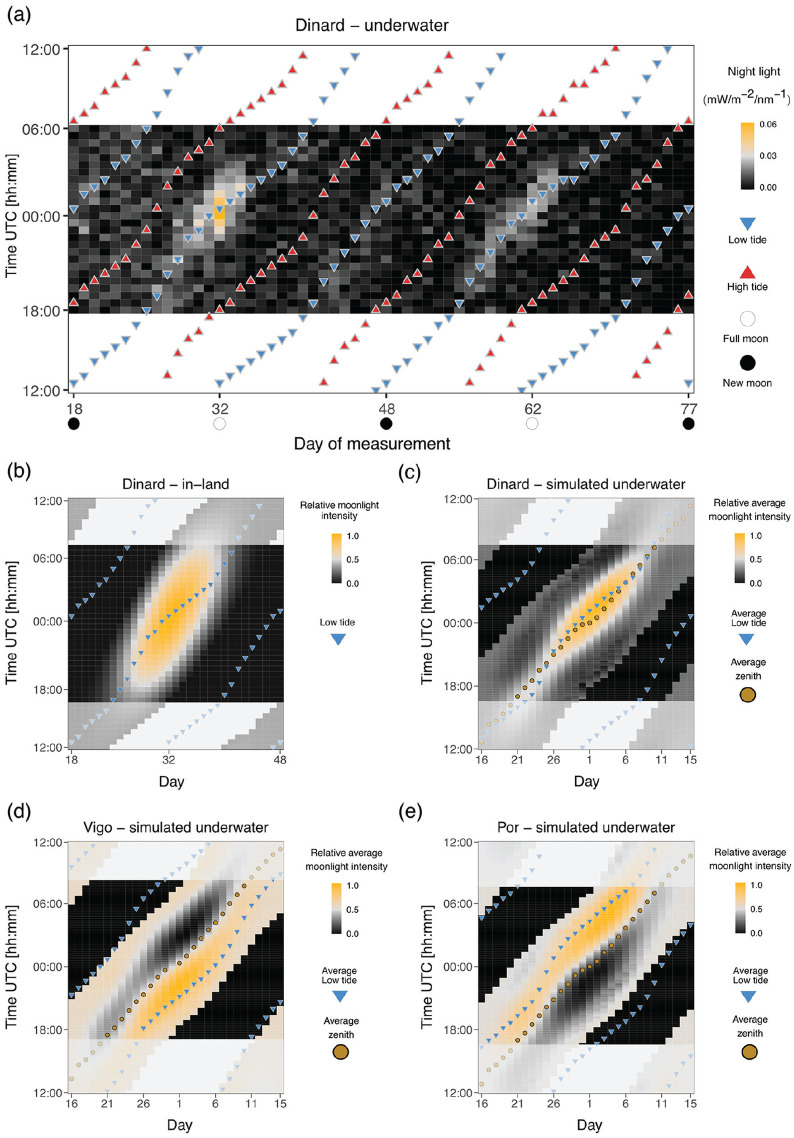 Figure 1
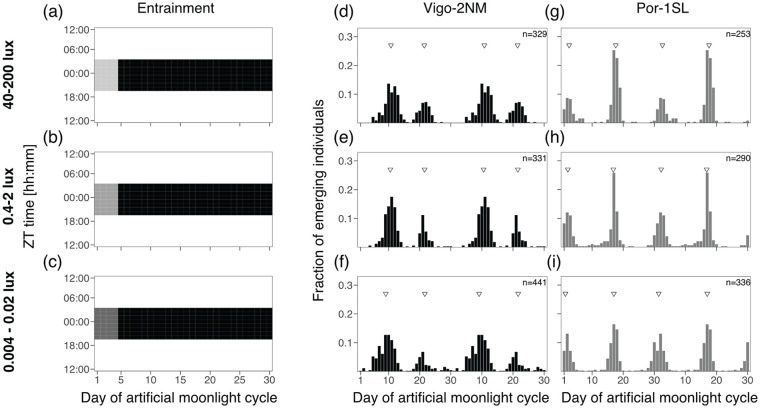 Figure 2
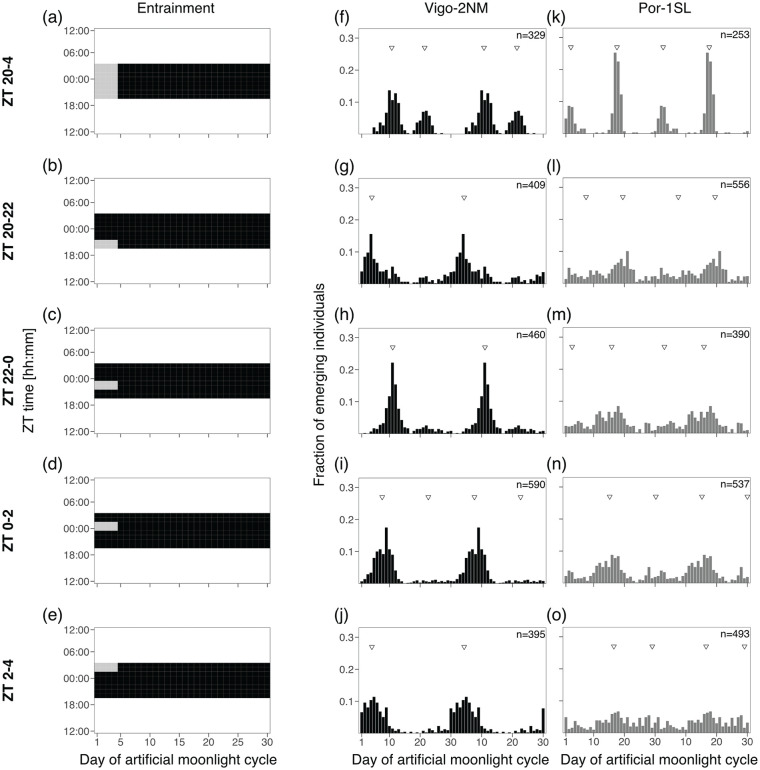 Figure 3
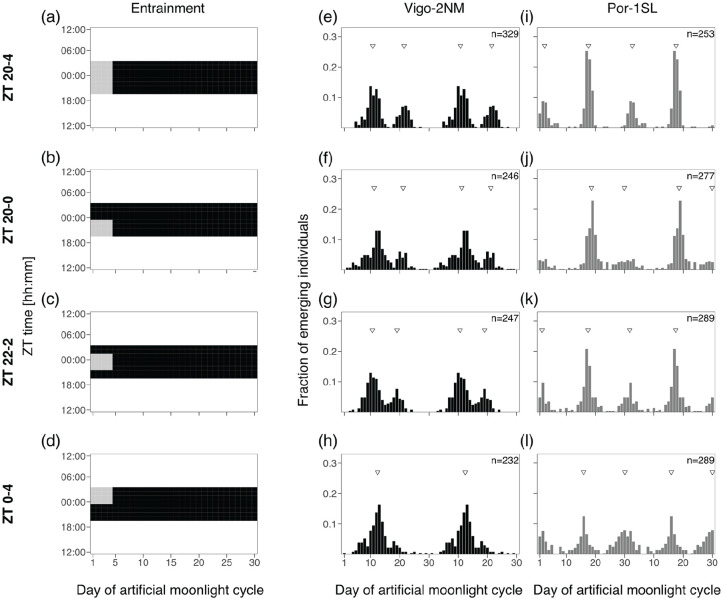 Figure 4
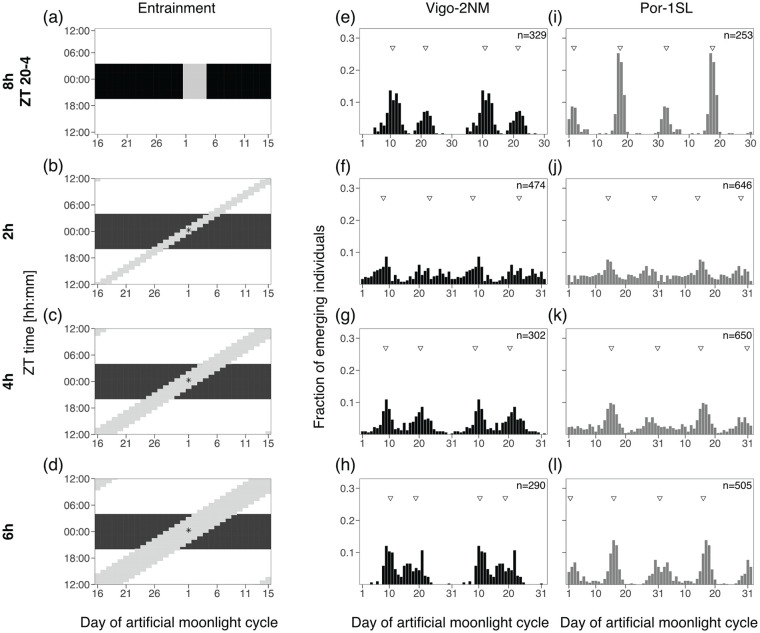 Figure 5
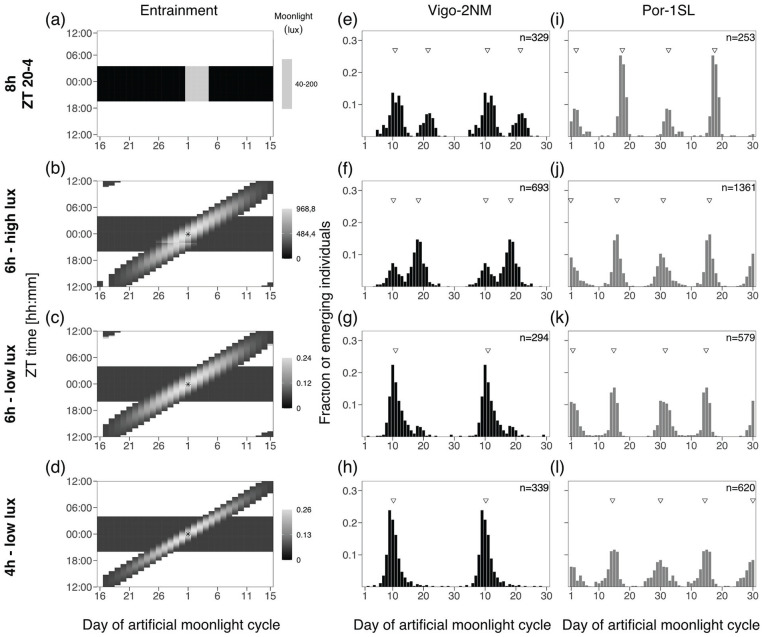 Figure 6
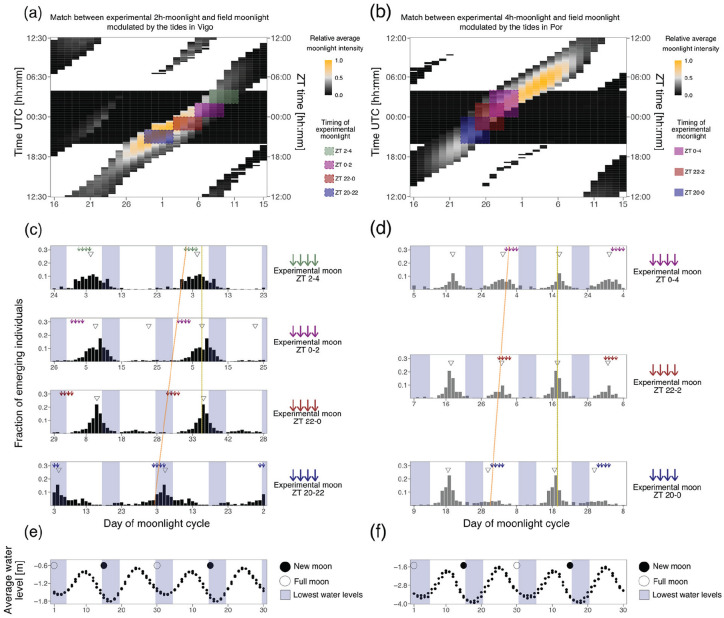 Figure 7
 Figure 8
Peer Reviews
No public reviews on file for this paper yet. If you reviewed it on a platform where reviews are public (OpenReview, ICLR, NeurIPS, ICML), you can paste yours below so the community can read it here.
Videos
No videos yet. Explain this paper in a talk, walkthrough, or lecture? Add one.
Taxonomy
TopicsHistorical Astronomy and Related Studies