Management of First-Time Anterior Shoulder Dislocation—A Systematic Review and Meta-analysis: Arthroscopy Association of Canada Position Statement
Hassaan Abdel Khalik, Danielle Dagher, Darius Luke Lameire, Eva Gusnowski, Michaela Kolpka, Marie-Eve LeBel, Bogdan A. Matache, R. Kyle Martin, Mark Sommerfeldt, Ivan Wong, Jarret Woodmass, Moin Khan

TL;DR
This study compares surgical and non-surgical treatments for first-time shoulder dislocations, finding that surgery reduces future instability and improves return to sports.
Contribution
The study provides a systematic review and meta-analysis showing early arthroscopic surgery is more effective than nonoperative care for first-time shoulder dislocations.
Findings
Arthroscopic Bankart repair reduces cumulative shoulder instability compared to nonoperative management.
Patients undergoing surgery are more likely to return to sports at pre-injury levels.
Surgery lowers the odds of needing further stabilization procedures.
Abstract
While surgical stabilization is typically recommended for patients with recurrent shoulder instability, the management of first-time shoulder dislocation (FTSD) presents a unique challenge for health care providers. To assess the efficacy of arthroscopic Bankart repair (ABR) compared with nonoperative management for FTSDs. Review. MEDLINE, EMBASE, and CENTRAL were searched from inception to December 26, 2023, for comparative studies assessing ABR versus nonoperative management of FTSDs. Outcomes of interest included rates of shoulder redislocation, cumulative shoulder instability (redislocation, subluxation, and/or subjective instability), subsequent shoulder stabilization surgery, return-to-sport rates, and patient-reported outcomes (Western Ontario Shoulder Instability [WOSI] score and Rowe score). Meta-analyses were performed on outcomes reported across a minimum of 3 comparative…
Genes, proteins, chemicals, diseases, species, mutations and cell lines named across the full text — each resolved to its canonical identifier and authoritative record.
Click any figure to enlarge with its caption.
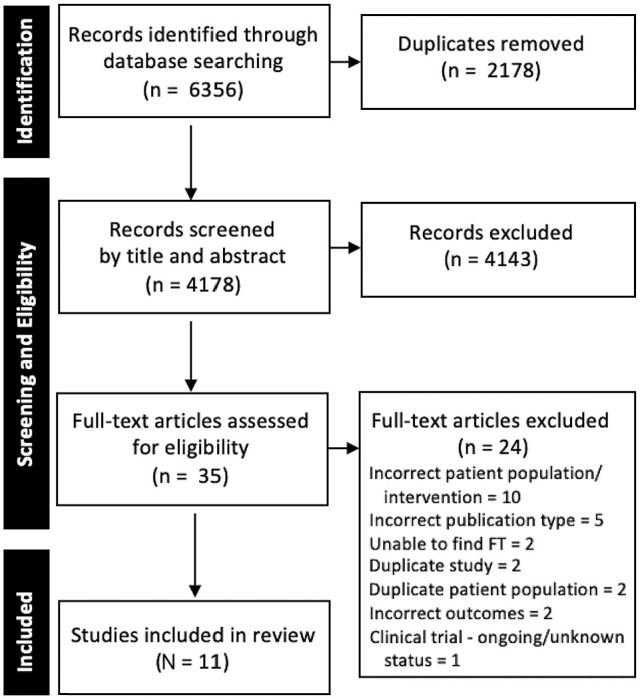 Figure 1
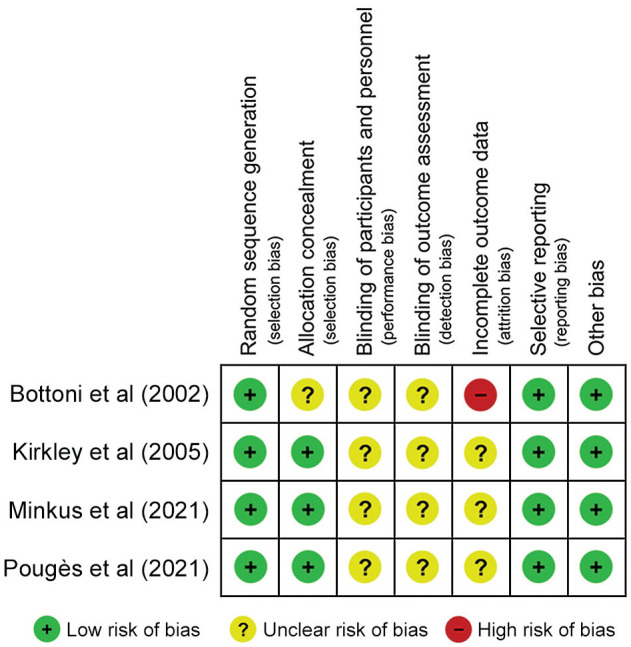 Figure 2
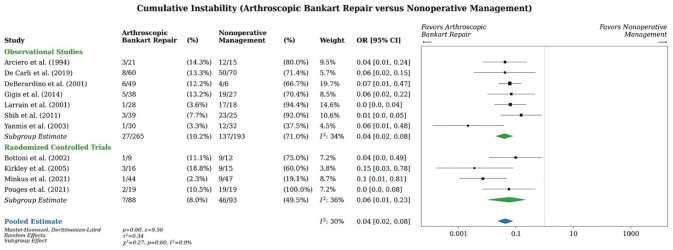 Figure 3
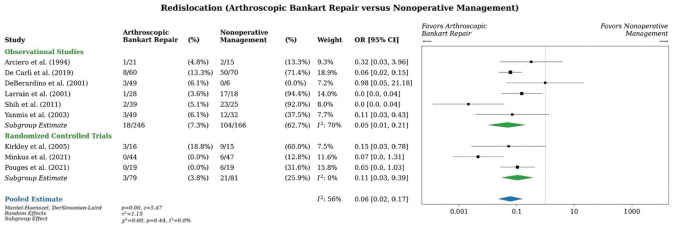 Figure 4
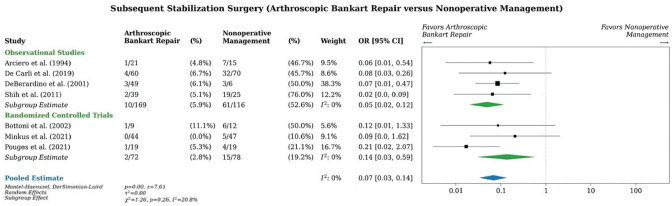 Figure 5
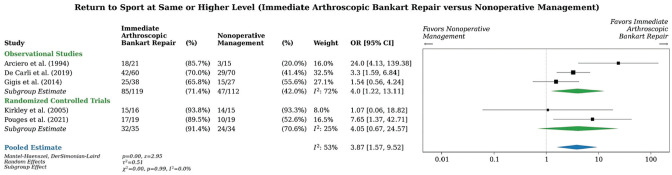 Figure 6
 Figure 7
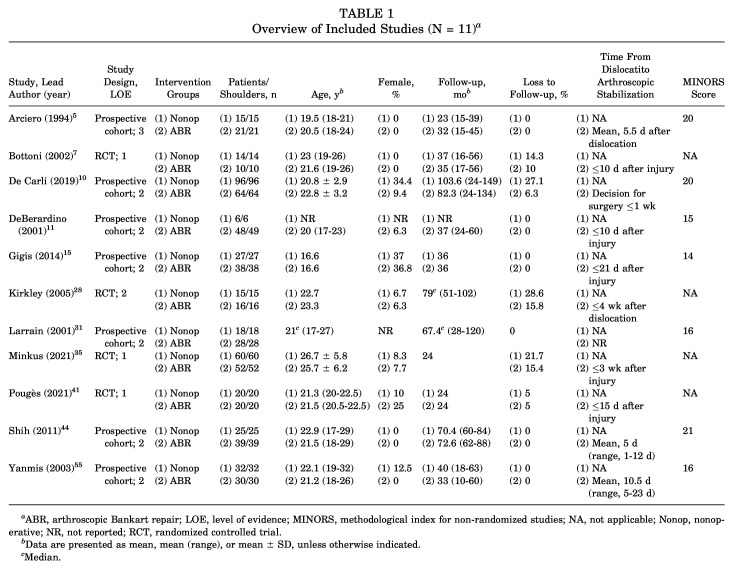 Figure 8
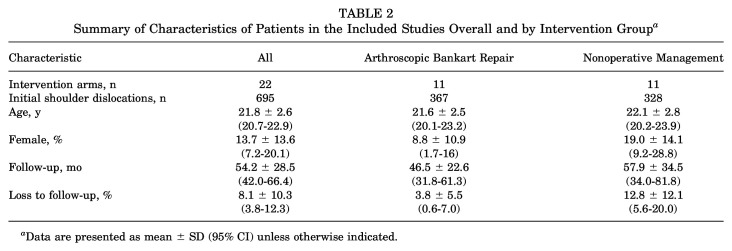 Figure 9
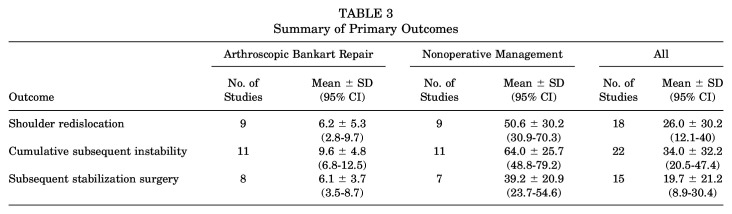 Figure 10
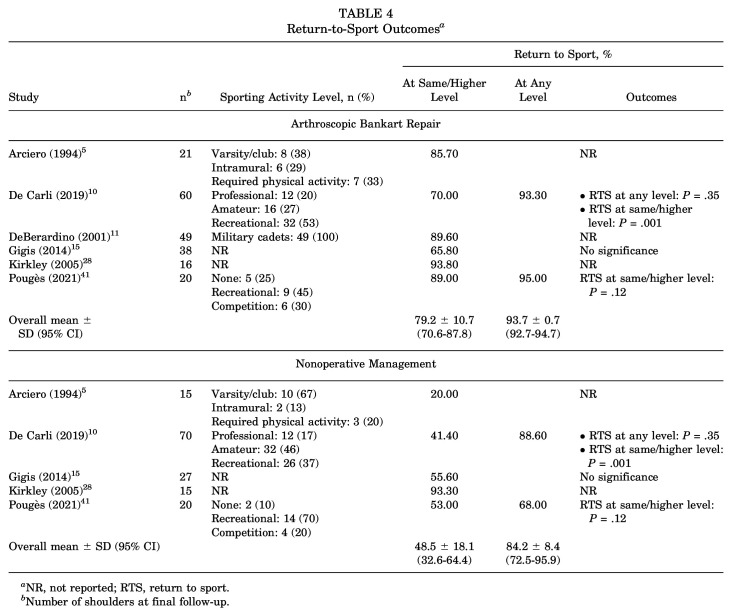 Figure 11
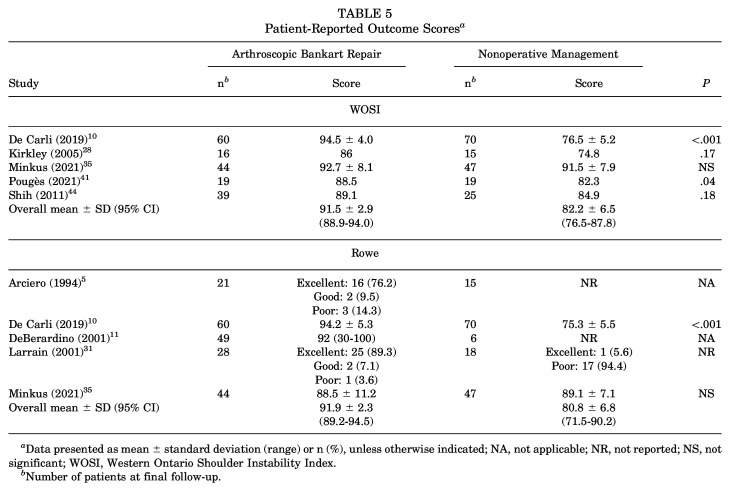 Figure 12
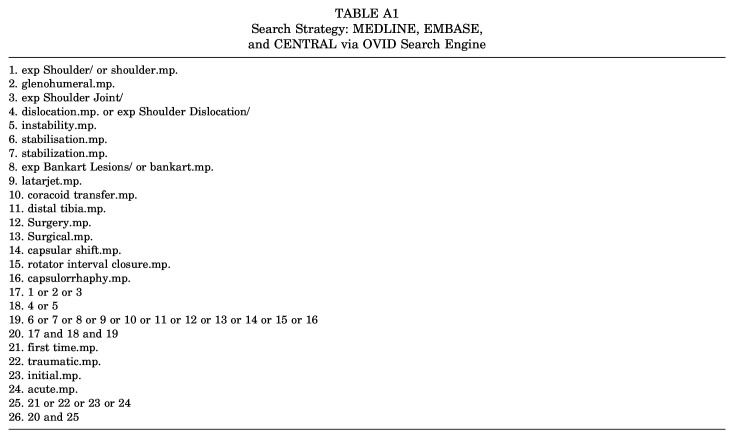 Figure 13
Peer Reviews
No public reviews on file for this paper yet. If you reviewed it on a platform where reviews are public (OpenReview, ICLR, NeurIPS, ICML), you can paste yours below so the community can read it here.
Videos
No videos yet. Explain this paper in a talk, walkthrough, or lecture? Add one.
Taxonomy
TopicsShoulder Injury and Treatment · Shoulder and Clavicle Injuries · Musculoskeletal pain and rehabilitation