The association between hospital volume and overall survival in adult AML patients treated with intensive chemotherapy
Z.L.R. Kaplan, N. van Leeuwen, D. van Klaveren, F. Eijkenaar, O. Visser, E.F.M. Posthuma, S. Zweegman, G. Huls, A. van Rhenen, N.M.A. Blijlevens, J.J. Cornelissen, A.A. van de Loosdrecht, J.H.F.M. Pruijt, M.D. Levin, M. Hoogendoorn, V.E.P.P. Lemmens, H.F. Lingsma, A.G. Dinmohamed

TL;DR
Hospitals that treat more adult AML patients with intensive chemotherapy are linked to better long-term survival rates.
Contribution
This study identifies a volume–outcome relationship in AML treatment, suggesting higher hospital volumes correlate with improved long-term patient survival.
Findings
An increase of 10 ICT-treated patients annually was associated with an 8% lower mortality risk.
The volume–outcome association became significant after 100-day overall survival but not at 30-day or 42-day survival.
Centralizing AML care is complex and requires balancing healthcare provider and patient implications.
Abstract
Acute myeloid leukemia (AML) requires specialized care, particularly when administrating intensive remission induction chemotherapy (ICT). High-volume hospitals are presumed more adept at delivering this complex treatment, resulting in better overall survival (OS) rates. Despite its potential implications for quality improvement, research on the volume–outcome relationship in ICT administration for AML is scarce. This nationwide, population-based study in the Netherlands explored the volume–outcome relationship in AML. Data from the Netherlands Cancer Registry on adult (≥18 years of age) ICT-treated AML patients, diagnosed between 2014 and 2018, were analyzed. Hospital volume was assessed against OS using mixed-effects Cox regression, adjusting for patient and disease characteristics (i.e. case mix), with hospital as a random effect. Our study population consisted of a total of 1761…
Genes, proteins, chemicals, diseases, species, mutations and cell lines named across the full text — each resolved to its canonical identifier and authoritative record.
Click any figure to enlarge with its caption.
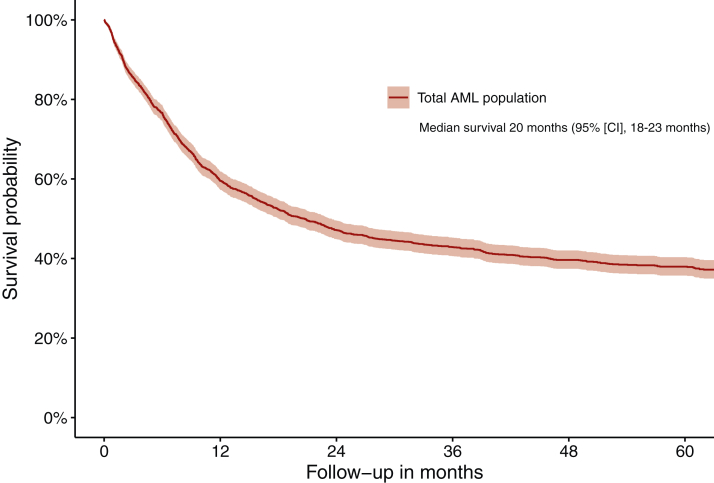 Figure 1
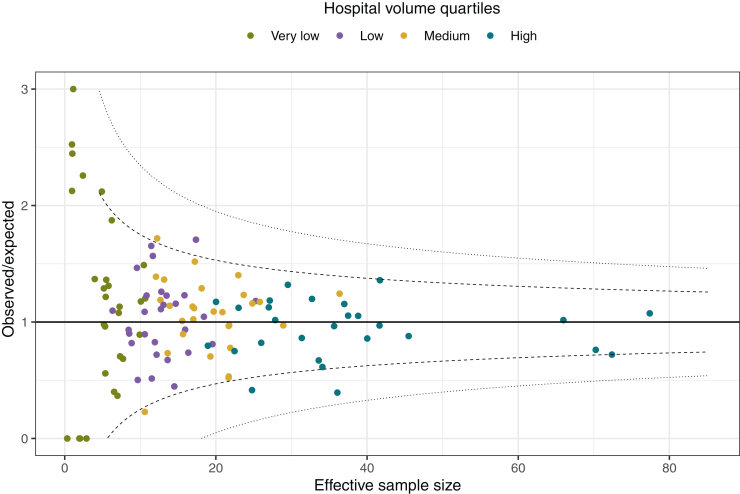 Figure 2
Peer Reviews
No public reviews on file for this paper yet. If you reviewed it on a platform where reviews are public (OpenReview, ICLR, NeurIPS, ICML), you can paste yours below so the community can read it here.
Videos
No videos yet. Explain this paper in a talk, walkthrough, or lecture? Add one.
Taxonomy
TopicsAcute Myeloid Leukemia Research · Acute Lymphoblastic Leukemia research · Hematopoietic Stem Cell Transplantation