Effectiveness of Integrated Trauma System Implementation on Road Traffic Fatalities and Injuries in the North of Iran Using an Interrupted Time Series Analysis
Enayatollah Homaie Rad, Farideh Sadeghian, Zahra Ghodsi, Shahrokh Yousefzadeh-Chabok, Mohammad Hosein Ranjbar Hameghavandi, Shahriar Ghashghaee, Zahra Mohtasham-Amiri, Hamid Heidari, Gerard O’Reilly, Seyed Mohammad Ghodsi, Vafa Rahimi-Movaghar

TL;DR
This study shows that implementing an integrated trauma system in Guilan, Iran, significantly reduced road traffic crashes, injuries, and deaths compared to a neighboring province without such a system.
Contribution
The study provides empirical evidence of the effectiveness of integrated trauma systems in reducing road traffic fatalities and injuries in Iran.
Findings
Guilan's daily road traffic crashes decreased significantly after ITS implementation, while the control province saw an increase.
Mortality rates in Guilan declined marginally, whereas they rose sharply in the control province.
Statistical analysis confirmed a significant reduction in injuries and deaths in Guilan post-intervention.
Abstract
Background: Integrated trauma systems (ITS) have shown potential in reducing traffic crash-related injuries and mortality, although their structure and impact can vary. This study assessed the effectiveness of ITS in Guilan, Iran. Study Design: A retrospective observational study. Methods: Utilizing a cross-sectional analysis, this descriptive-analytical study was conducted in Northern Iran from 2015 to 2019 to compare road traffic crash (RTC) data in Guilan (with ITS) against Mazandaran (without ITS), considering weather as a confounder. The study involved pre- and post-ITS intervention analyses to evaluate changes in RTC, injury, and mortality rates. Results: Before ITS implementation, Guilan’s daily RTC mean was 38.4 (SD=16.7), which significantly decreased to 30.8 (SD=13.7) after the intervention. Conversely, in the control province of Mazandaran, the daily average number of RTCs…
Genes, proteins, chemicals, diseases, species, mutations and cell lines named across the full text — each resolved to its canonical identifier and authoritative record.
Click any figure to enlarge with its caption.
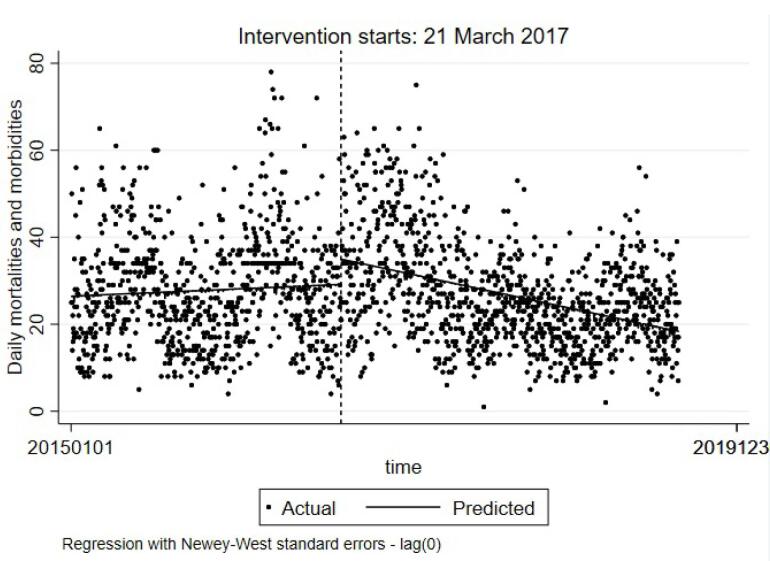 Figure 1
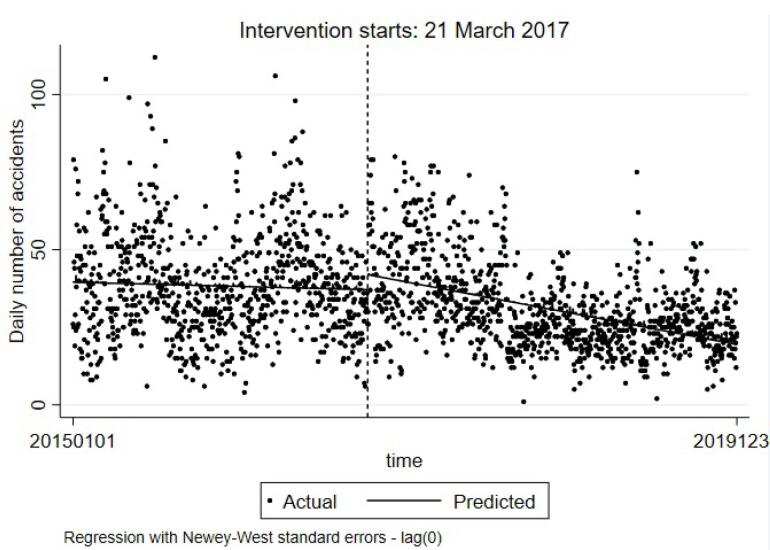 Figure 2
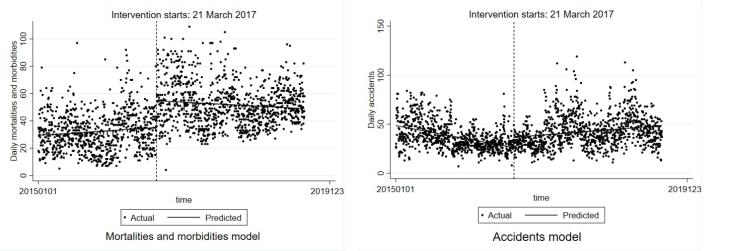 Figure 3
Peer Reviews
No public reviews on file for this paper yet. If you reviewed it on a platform where reviews are public (OpenReview, ICLR, NeurIPS, ICML), you can paste yours below so the community can read it here.
Videos
No videos yet. Explain this paper in a talk, walkthrough, or lecture? Add one.
Taxonomy
TopicsTrauma and Emergency Care Studies · Traffic and Road Safety · Injury Epidemiology and Prevention