Optimizing the thermostability of triketone dioxygenase for engineering tolerance to mesotrione herbicide in soybean and cotton
Stephen M. G. Duff, Lei Shi, Danqi Chen, Xiaoran Fu, Mingsheng Peng, Clayton T. Larue, Janice Weihe, Jessica Koczan, Brian Krebel, Qungang Qi

TL;DR
Researchers improved the heat stability of an enzyme in crops to make them more resistant to a specific herbicide, helping farmers control weeds more effectively.
Contribution
The study introduces a novel method to enhance the thermostability of triketone dioxygenase without significantly compromising its activity.
Findings
Engineered TDO variants showed improved temperature stability with a melting point higher than wild-type.
Some optimized TDO variants retained herbicide efficacy comparable to wild-type in greenhouse and field tests.
Kcat values of the best variants were reduced, but Km values remained largely unchanged.
Abstract
Optimized triketone dioxygenase (TDO) variants with enhanced temperature stability parameters were engineered to enable robust triketone tolerance in transgenic cotton and soybean crops. This herbicide tolerance trait, which can metabolize triketone herbicides such as mesotrione and tembotrione, could be useful for weed management systems and provide additional tools for farmers to control weeds. TDO has a low melting point (~39°C–40°C). We designed an optimization scheme using a hypothesis-based rational design to improve the temperature stability of TDO. Temperature stabilization resulted in enzymes with Kcat values less than half of wild-type TDO. The best variant TDO had a Kcat of 1.2 min−1 compared to wild-type TDO, which had a Kcat of 2.7 min−1. However Km values did not change much due to temperature stabilization. Recovery of the Kcat without losing heat stability was the focus…
Genes, proteins, chemicals, diseases, species, mutations and cell lines named across the full text — each resolved to its canonical identifier and authoritative record.
Click any figure to enlarge with its caption.
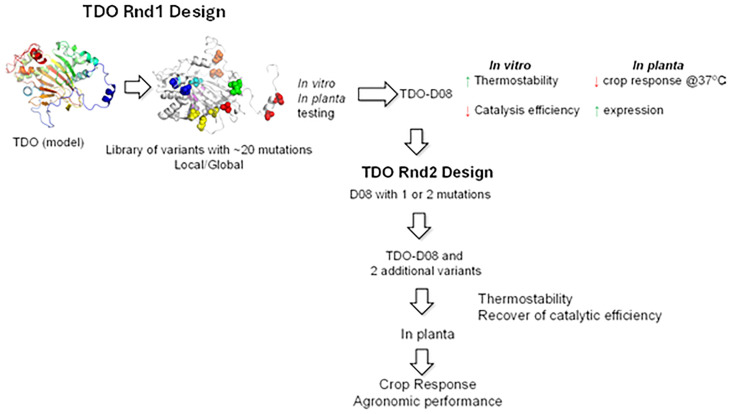 Figure 1
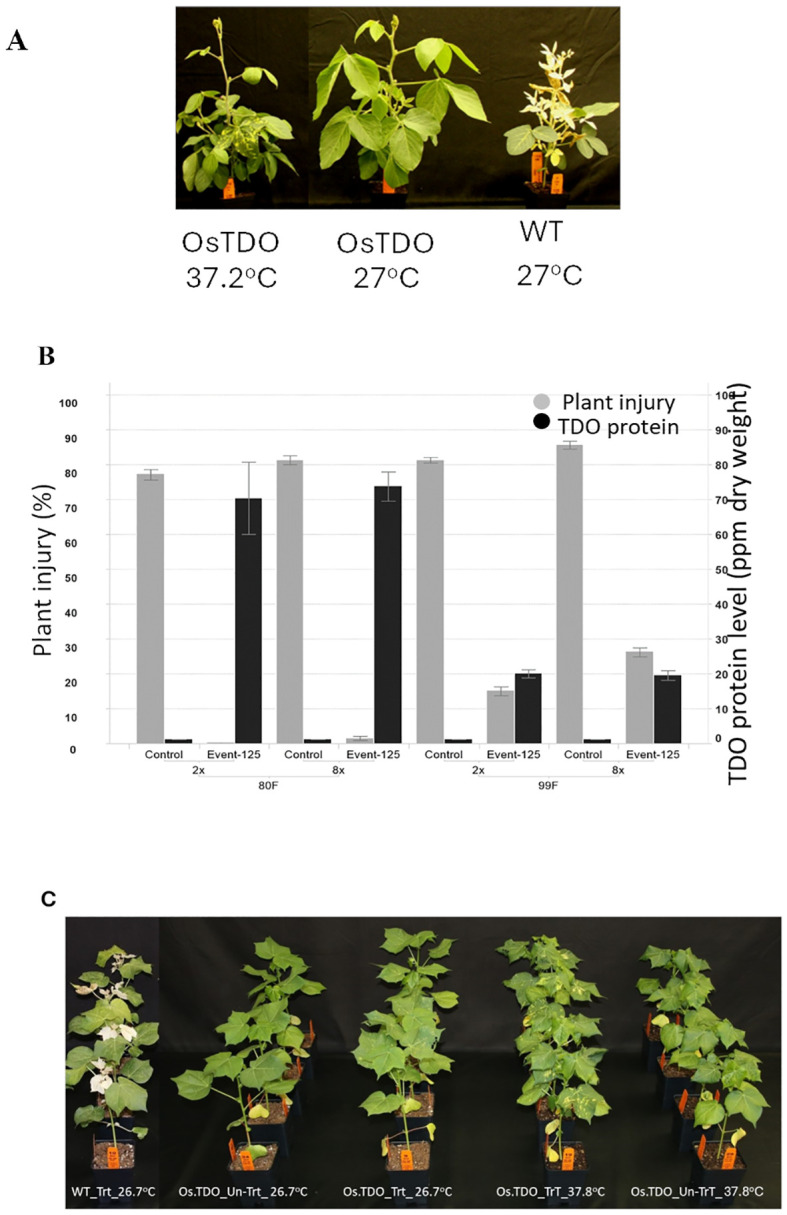 Figure 2
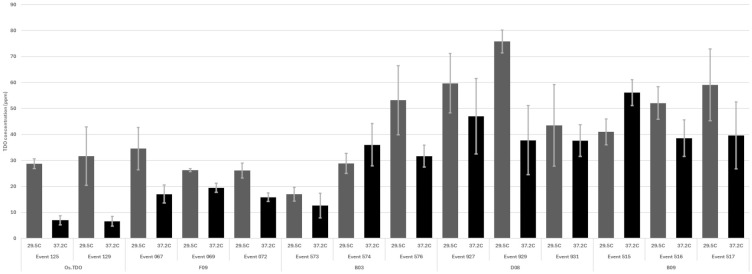 Figure 3
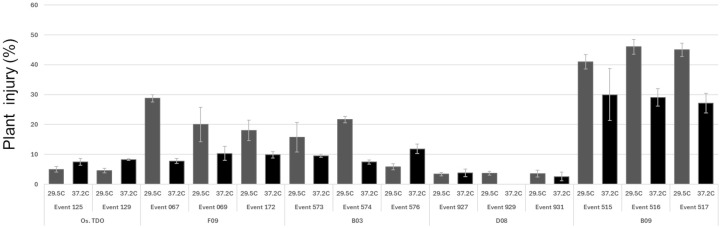 Figure 4
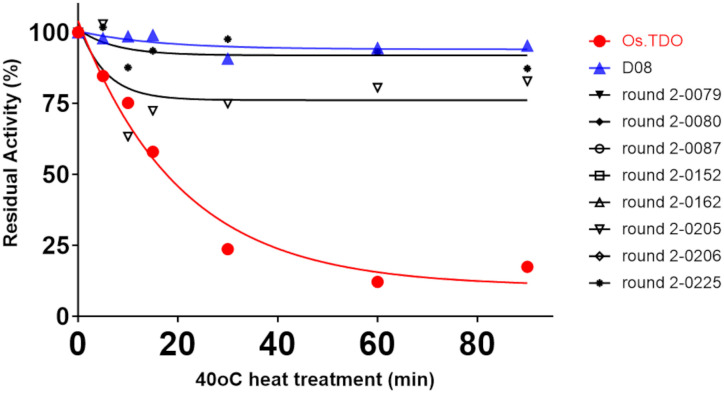 Figure 5
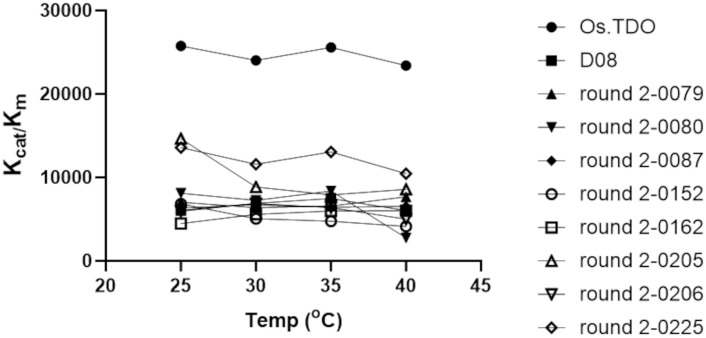 Figure 6
Peer Reviews
No public reviews on file for this paper yet. If you reviewed it on a platform where reviews are public (OpenReview, ICLR, NeurIPS, ICML), you can paste yours below so the community can read it here.
Videos
No videos yet. Explain this paper in a talk, walkthrough, or lecture? Add one.
Taxonomy
TopicsWeed Control and Herbicide Applications · Pesticide and Herbicide Environmental Studies · Nematode management and characterization studies