Versatile Features of an Antibody Mimetic Peptide and Its Variants
Simon Dolles, Simon Leukel, Sabrina Gensberger‐Reigl, Anette Rohrhofer, Lena Rauch‐Wirth, Kübra Kaygisiz, Christopher V. Synatschke, Jan Münch, Barbara Schmidt, Monika Pischetsrieder, Jutta Eichler

TL;DR
Researchers designed a versatile antibody-like peptide that can neutralize HIV and enhance gene transfer, with variants showing different useful properties.
Contribution
A proteolytically stable variant and a modified variant that enhances retroviral infection are introduced.
Findings
Cross-linking mass spectrometry confirmed the CD4 binding site interaction of H1H3s with HIV-1 gp120.
A D-amino acid variant of the peptide is stable against proteolytic degradation while retaining binding and neutralizing properties.
A lysine-to-aspartate variant enhances retroviral infection and gene transfer.
Abstract
Antibody mimetic peptides have evolved as versatile tools for biomedical applications, based on their ability to interfere with protein–protein interactions. We had previously designed a functional mimic of the broadly neutralizing HIV‐1 antibody b12 that recognizes the CD4 binding site of the HIV‐1 envelope glycoprotein gp120. The molecular details of the interaction of a linear variant of this peptide (H1H3s) with gp120 have now been characterized through cross‐linking mass spectrometry, confirming the proposed involvement of the CD4 binding site of gp120 in the interaction. In addition, a variant of the b12 mimetic peptide composed mostly of D‐amino acids was shown to be stable towards proteolytic degradation, while the binding and HIV‐1 neutralizing properties were largely preserved. Furthermore, a peptide variant in which aspartate residues were replaced with lysine was shown to…
Genes, proteins, chemicals, diseases, species, mutations and cell lines named across the full text — each resolved to its canonical identifier and authoritative record.
Click any figure to enlarge with its caption.
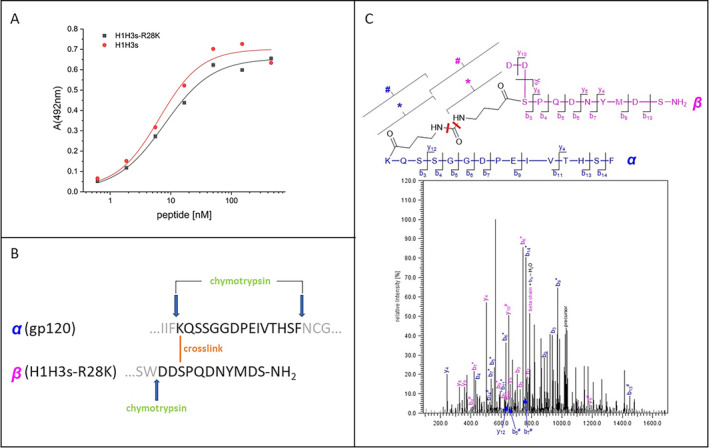 Figure 1
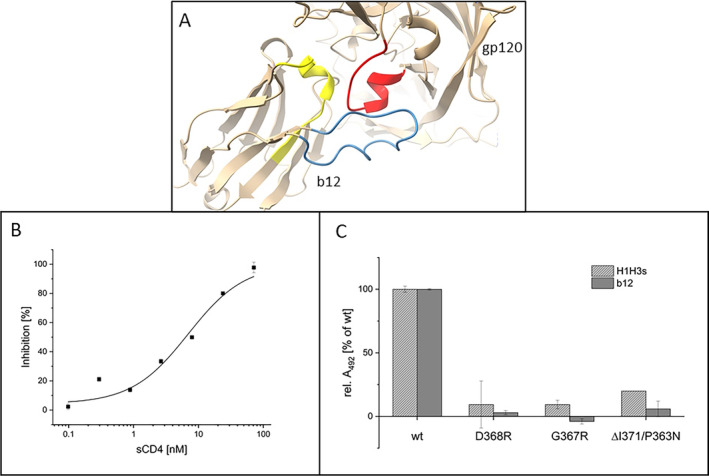 Figure 2
 Figure 3
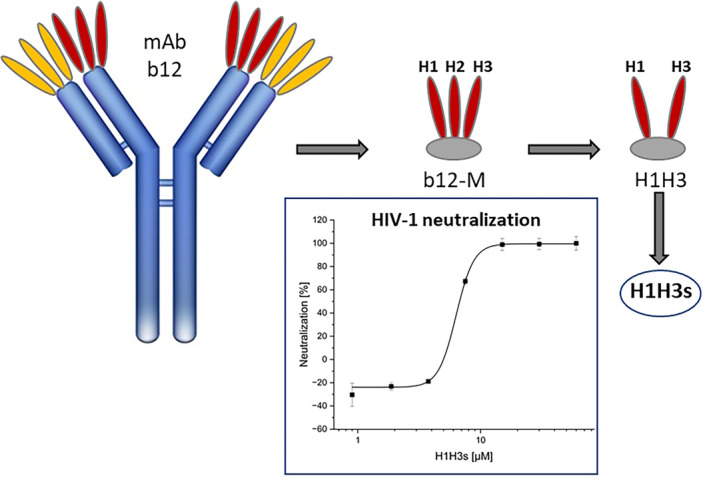 Figure 4
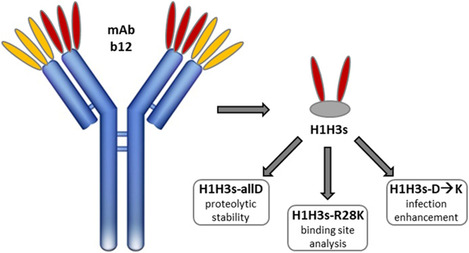 Figure 5
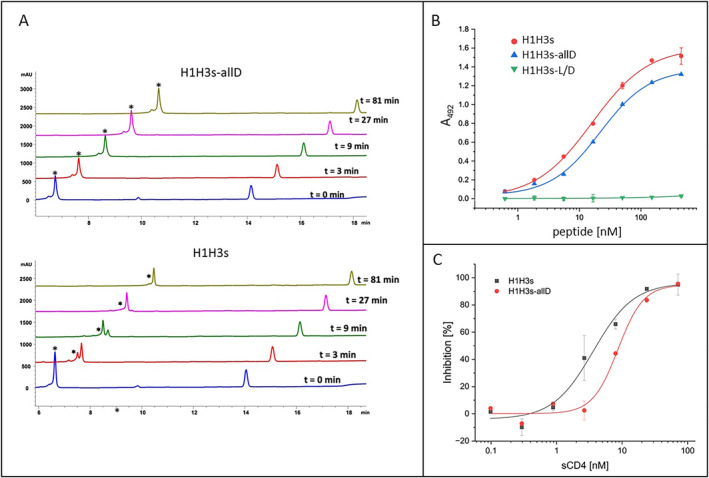 Figure 6
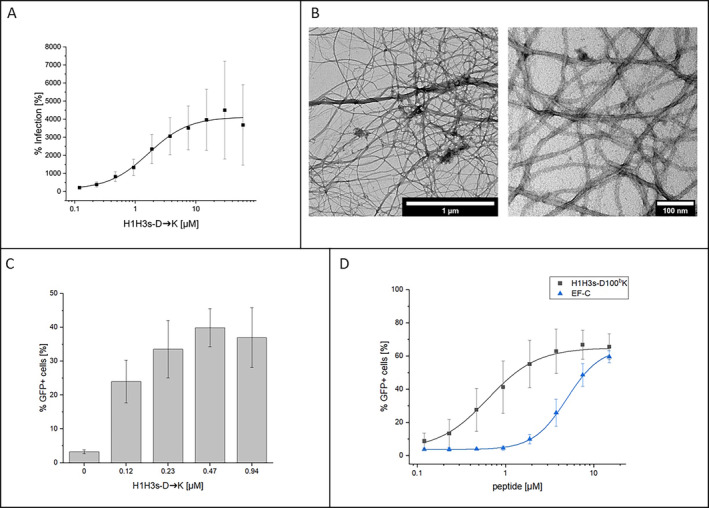 Figure 7
Peer Reviews
No public reviews on file for this paper yet. If you reviewed it on a platform where reviews are public (OpenReview, ICLR, NeurIPS, ICML), you can paste yours below so the community can read it here.
Videos
No videos yet. Explain this paper in a talk, walkthrough, or lecture? Add one.
Taxonomy
TopicsMonoclonal and Polyclonal Antibodies Research · HIV Research and Treatment · Click Chemistry and Applications