Impact of Minimal Incision Repair of Rectus Abdominis Diastasis on Quality of Life and Stress Incontinence: A Prospective Study
Asmatullah Katawazai, Göran Wallin, Anna Ärlebäck, Gabriel Sandblom

TL;DR
A new surgical method for repairing abdominal muscle separation in postpartum women significantly improves physical strength, daily activities, and urinary issues.
Contribution
The MIRRAD procedure is introduced as an effective surgical treatment for postpartum rectus abdominis diastasis, with measurable improvements in physical and urinary health.
Findings
MIRRAD significantly improved physical activity levels, including vigorous activity and steps per minute.
The procedure enhanced back and abdominal muscle strength and trunk stability.
Urinary symptoms like frequency and leakage were significantly reduced post-surgery.
Abstract
This study evaluates the impact of the minimal incision repair of rectus abdominis diastasis (MIRRAD) procedure on physical activity, muscle strength, quality of life, and overall satisfaction in women with postpartum rectus abdominis diastasis (PP-RAD). A cohort of 31 female patients, aged 20–50 years, diagnosed with PP-RAD unresponsive to conservative treatment, underwent the MIRRAD procedure. Assessments were conducted preoperatively and 1 year postoperatively, these included the Modified Abdominal Trunk Function Protocol (MATFP), Disability Rating Index (DRI), and Urinary Disability Index (UDI) questionnaires. Physical activity intensity was monitored using accelerometers. Significant improvements were observed in vigorous physical activities (Z = −2.352, p = 0.019), vector magnitude counts per minute (Z = −2.163, p = 0.031), and steps per minute (Z = −3.131, p = 0.002). DRI…
Genes, proteins, chemicals, diseases, species, mutations and cell lines named across the full text — each resolved to its canonical identifier and authoritative record.
Click any figure to enlarge with its caption.
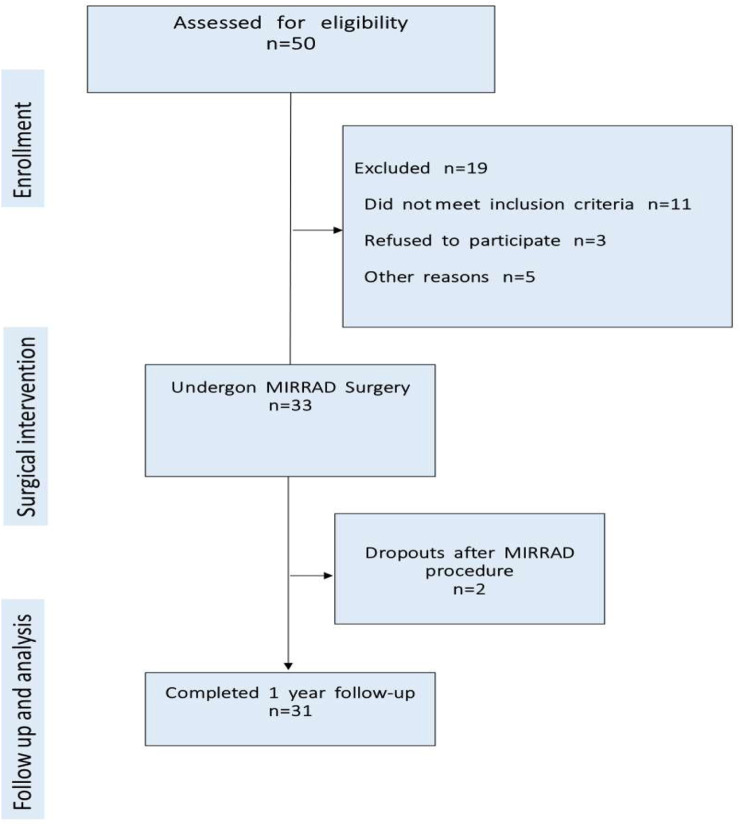 Figure 1
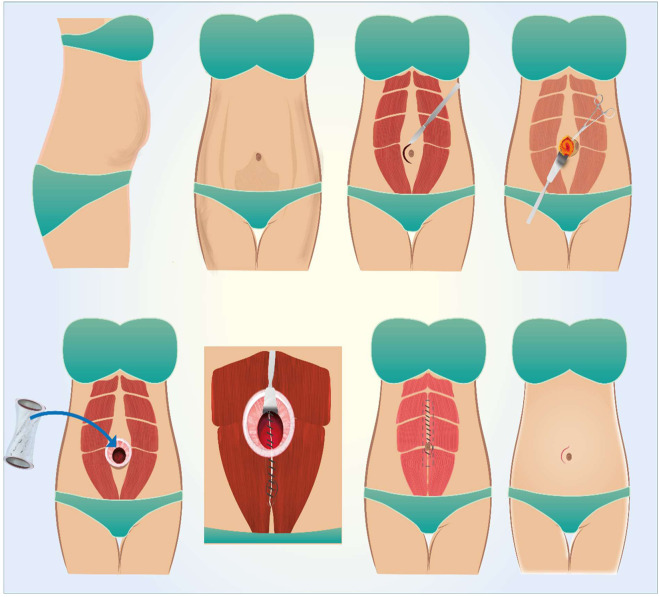 Figure 2
Peer Reviews
No public reviews on file for this paper yet. If you reviewed it on a platform where reviews are public (OpenReview, ICLR, NeurIPS, ICML), you can paste yours below so the community can read it here.
Videos
No videos yet. Explain this paper in a talk, walkthrough, or lecture? Add one.
Taxonomy
TopicsPelvic floor disorders treatments · Hernia repair and management · Pelvic and Acetabular Injuries