Surrogate sensitivity analysis of facet optical coatings produced without and with in situ design reoptimization
Daniel Poitras, Penghui Ma

TL;DR
This paper evaluates how optical coatings for waveguide devices can be made more robust to fabrication errors using a mathematical model and a re-optimization strategy.
Contribution
The novel contribution is using in-situ design reoptimization to reduce the impact of thickness errors in optical coatings.
Findings
The polynomial chaos expansion method effectively evaluates coating design robustness.
In-situ reoptimization significantly reduces thickness error effects on coating yield and performance.
Abstract
Optoelectronic and photonic waveguide-based devices often require the control of the exit/entrance facet reflectance to a high degree of precision on a relatively large wavelength range. Fabricating facet optical coatings for that purpose can be challenging due to thickness errors. In this work, a surrogate approach, the polynomial chaos expansion method, is used to evaluate the robustness of optical coating designs to experimental errors, and the Sobol’ sensitivity indices of their individual layers. The effect of a fabrication strategy involving successive in-situ design re-optimizations after completion of each individual layer deposition is simulated and shown to reduce significantly the detrimental effect of thickness errors on the yield and performance of coatings.
Genes, proteins, chemicals, diseases, species, mutations and cell lines named across the full text — each resolved to its canonical identifier and authoritative record.
Click any figure to enlarge with its caption.
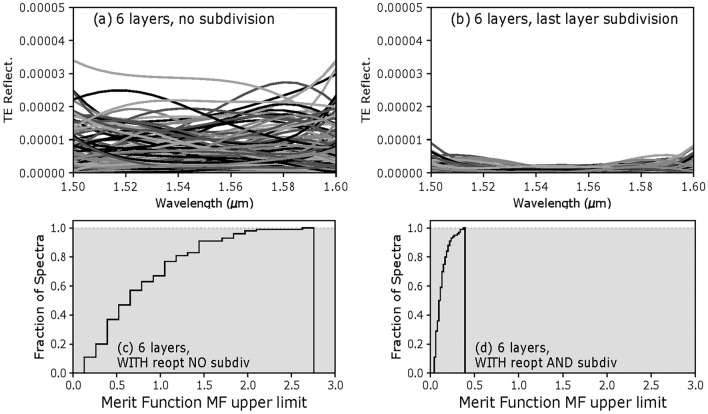 Figure 10
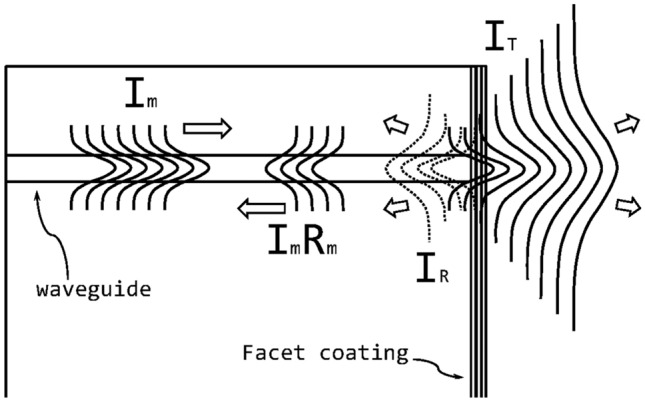 Figure 1
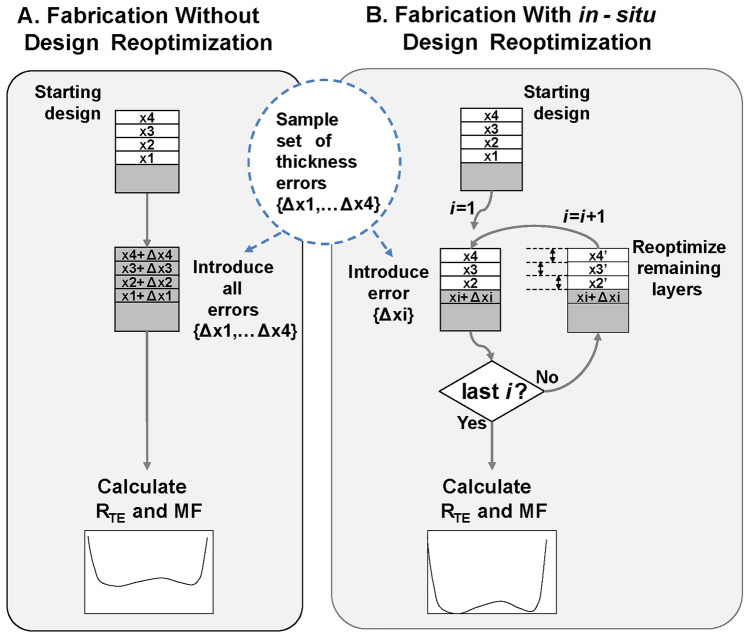 Figure 2
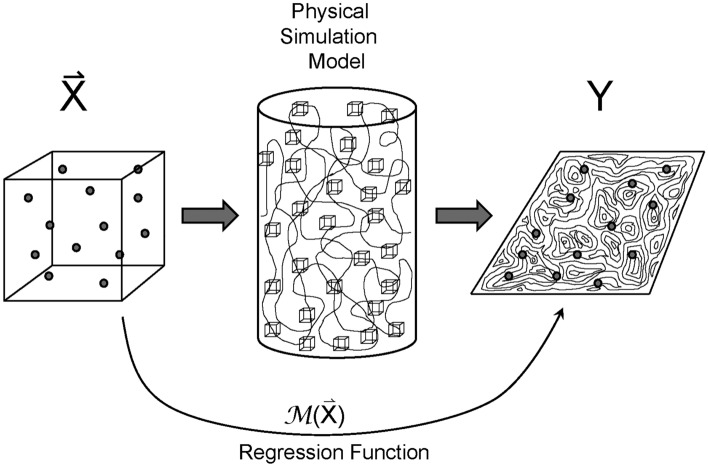 Figure 3
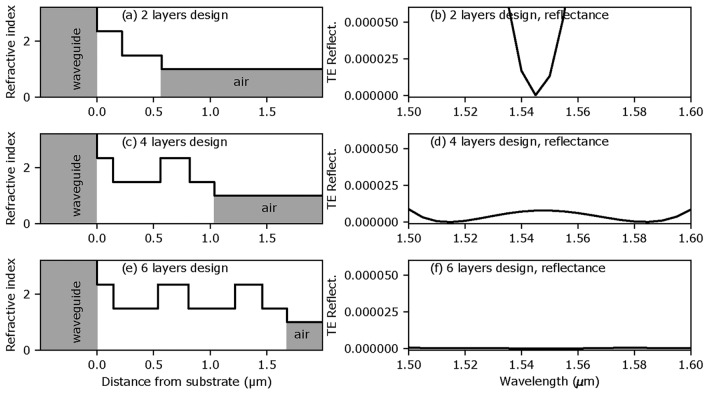 Figure 4
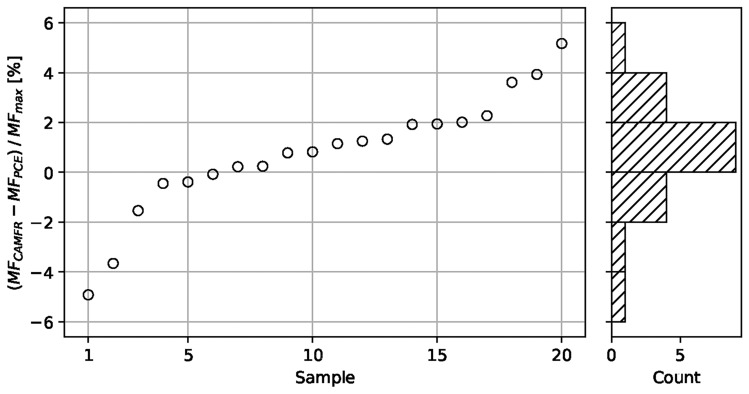 Figure 5
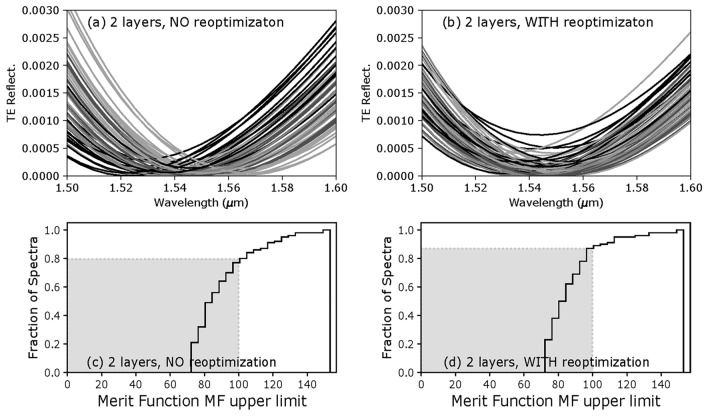 Figure 6
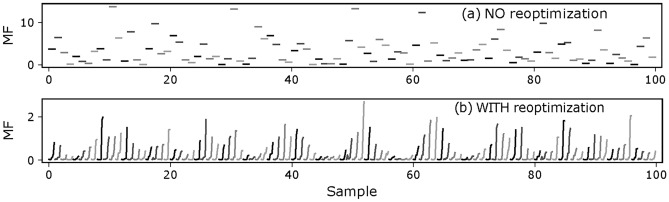 Figure 7
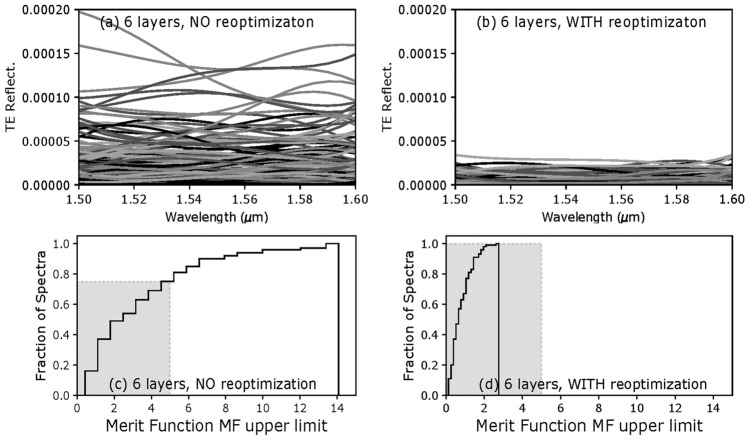 Figure 8
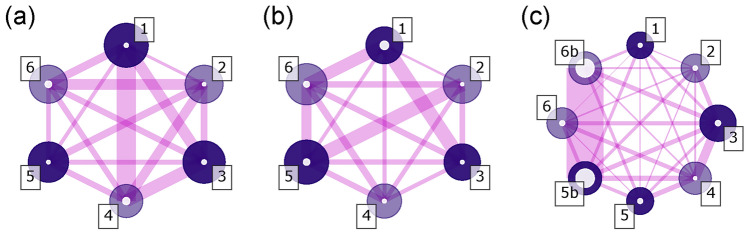 Figure 9
Peer Reviews
No public reviews on file for this paper yet. If you reviewed it on a platform where reviews are public (OpenReview, ICLR, NeurIPS, ICML), you can paste yours below so the community can read it here.
Videos
No videos yet. Explain this paper in a talk, walkthrough, or lecture? Add one.
Taxonomy
TopicsProbabilistic and Robust Engineering Design · Optimal Experimental Design Methods · Advanced Multi-Objective Optimization Algorithms