First experience in employing a complex digital support system accompanied by personal assistance to improve aftercare in patients with stroke or transient ischemic attack – results of the PostStroke-Manager feasibility study
Dominik Michalski, Joseph Classen, Daniela Geisler, Daniela Urban, Max Schreiber, Jean-Baptiste Tylcz, Richard Schmidt, Alexander Prost, Till Handel, Andreas Schneider, Stefan Lippmann, Markus Bleckwenn, Galina Ivanova

TL;DR
This study tested a digital support system with personal assistance for stroke and TIA patients, showing it is feasible and beneficial for some aspects of aftercare.
Contribution
The study is the first to evaluate a complex digital support system with personal assistance for stroke and TIA aftercare.
Findings
The digital system and personal assistance received positive patient ratings, meeting feasibility criteria.
Improvements were observed in impairments, blood pressure, and LDL cholesterol levels over time.
Psychometric measurements like anxiety and depression remained stable during the study period.
Abstract
Stroke aftercare is widely acknowledged as crucial yet challenging. Digital tools offer a promising strategy to improve aftercare and, thus, patients’ quality of life. However, it has not yet been investigated whether digital tools addressing different aspects of aftercare at the same time can be utilized in stroke patients. This study was intended to gain first experience in employing a complex patient-centered digital support system (i.e., the PostStroke-Manager) in individuals with stroke or transient ischemic attack (TIA) and thus examined its feasibility accompanied by personal assistance. This cohort study was carried out to enroll patients with stroke or TIA. Digital support was realized through an application installed on a tablet, a smartwatch, and a blood pressure monitor. Trained nurses, referred to as stroke pilots, provided personal assistance. After 6 or 12 months,…
Genes, proteins, chemicals, diseases, species, mutations and cell lines named across the full text — each resolved to its canonical identifier and authoritative record.
Click any figure to enlarge with its caption.
 Figure 1
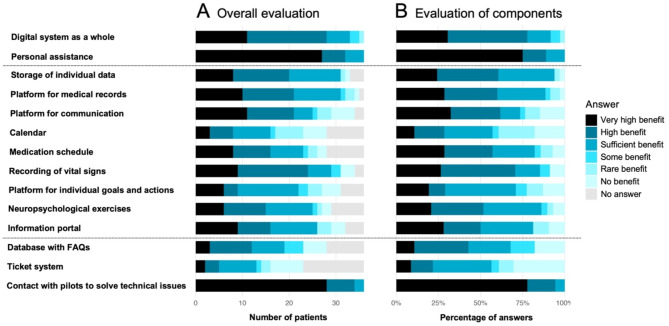 Figure 2
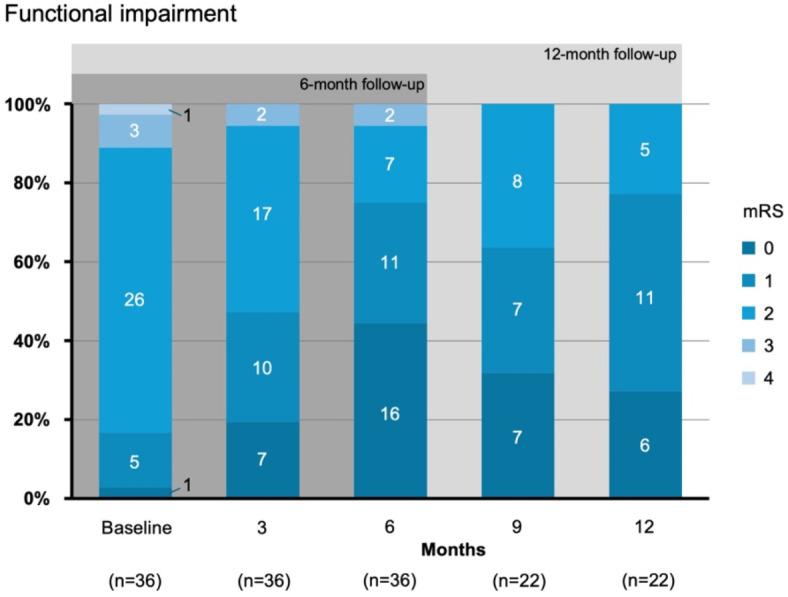 Figure 3
Peer Reviews
No public reviews on file for this paper yet. If you reviewed it on a platform where reviews are public (OpenReview, ICLR, NeurIPS, ICML), you can paste yours below so the community can read it here.
Videos
No videos yet. Explain this paper in a talk, walkthrough, or lecture? Add one.
Taxonomy
TopicsStroke Rehabilitation and Recovery · Acute Ischemic Stroke Management · Dementia and Cognitive Impairment Research