Low-latency hierarchical routing of reconfigurable neuromorphic systems
Samalika Perera, Ying Xu, André van Schaik, Runchun Wang

TL;DR
This paper introduces a new routing architecture for FPGA-based spiking neural network simulations that reduces latency and improves performance.
Contribution
A novel hierarchical tree-based routing architecture with stochastic arbitration is proposed to reduce latency in multi-FPGA systems.
Findings
The hierarchical tree-based architecture maintains constant local bandwidth while being scalable.
Stochastic arbitration reduces FIFO congestion and improves worst-case latency compared to round-robin methods.
Performance measurements confirm lower latency and better overall performance with the proposed routing scheme.
Abstract
A reconfigurable hardware accelerator implementation for spiking neural network (SNN) simulation using field-programmable gate arrays (FPGAs) is promising and attractive research because massive parallelism results in better execution speed. For large-scale SNN simulations, a large number of FPGAs are needed. However, inter-FPGA communication bottlenecks cause congestion, data losses, and latency inefficiencies. In this work, we employed a hierarchical tree-based interconnection architecture for multi-FPGAs. This architecture is scalable as new branches can be added to a tree, maintaining a constant local bandwidth. The tree-based approach contrasts with linear Network on Chip (NoC), where congestion can arise from numerous connections. We propose a routing architecture that introduces an arbiter mechanism by employing stochastic arbitration considering data level queues of First In,…
Genes, proteins, chemicals, diseases, species, mutations and cell lines named across the full text — each resolved to its canonical identifier and authoritative record.
Click any figure to enlarge with its caption.
 Figure 1
 Figure 2
 Figure 3
 Figure 4
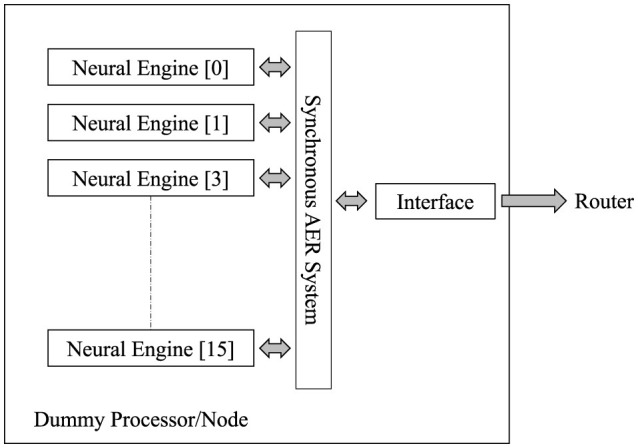 Figure 5
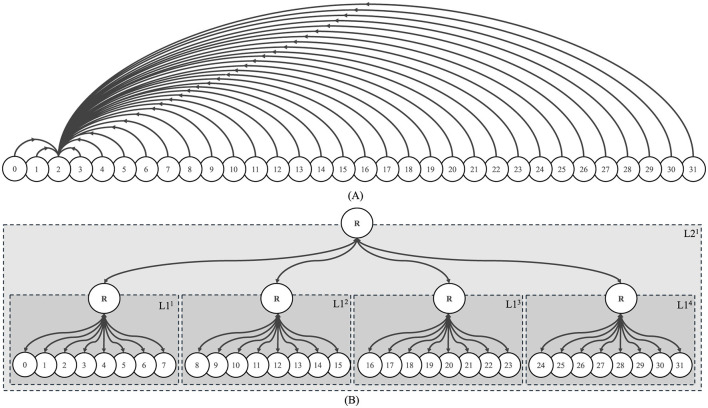 Figure 6
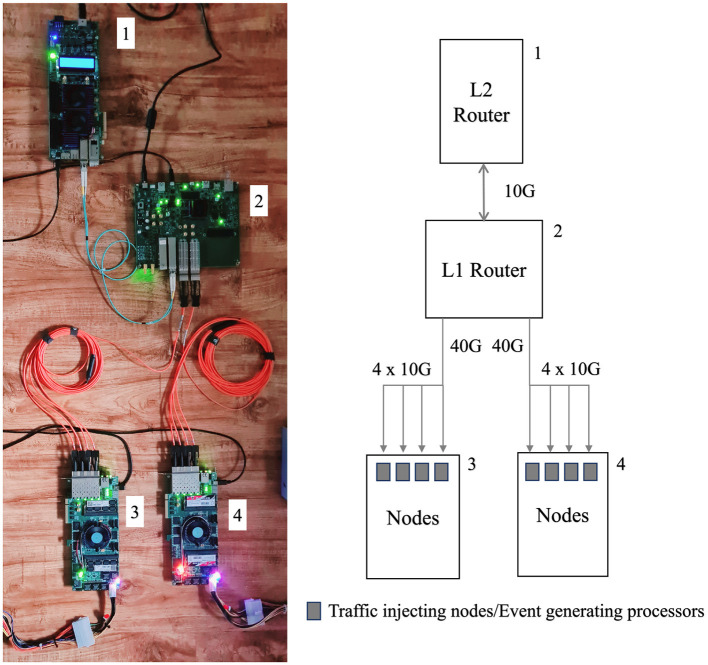 Figure 7
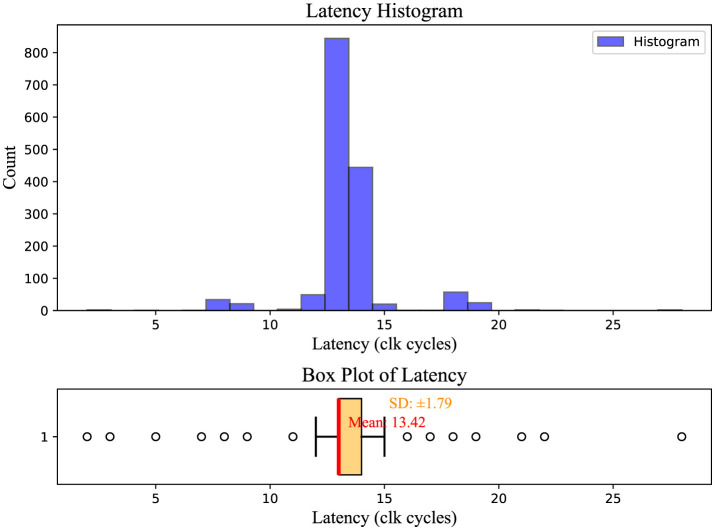 Figure 8
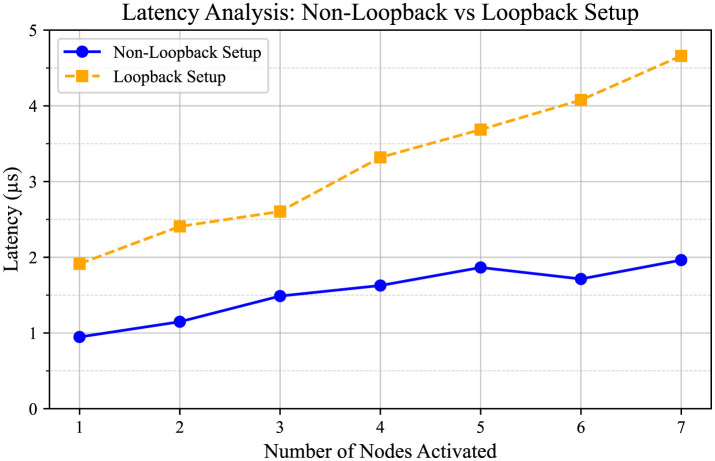 Figure 9
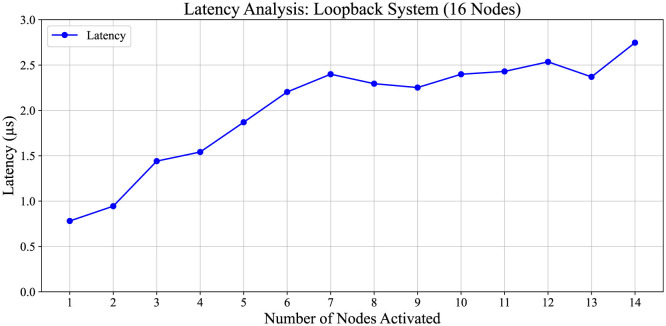 Figure 10
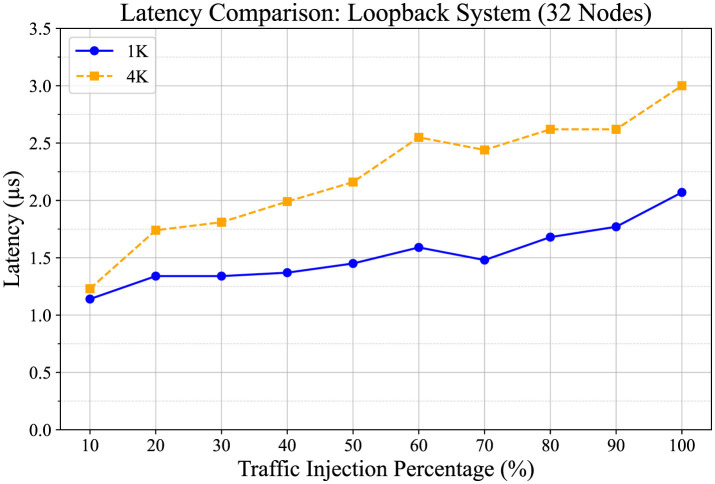 Figure 11
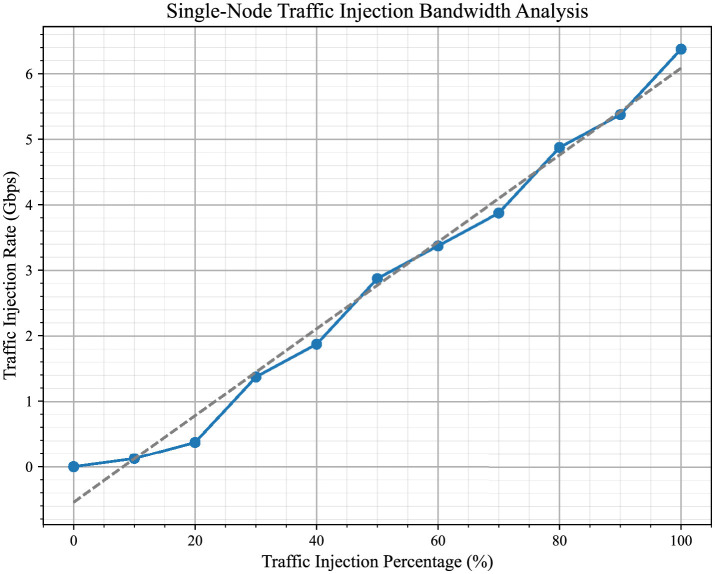 Figure 12
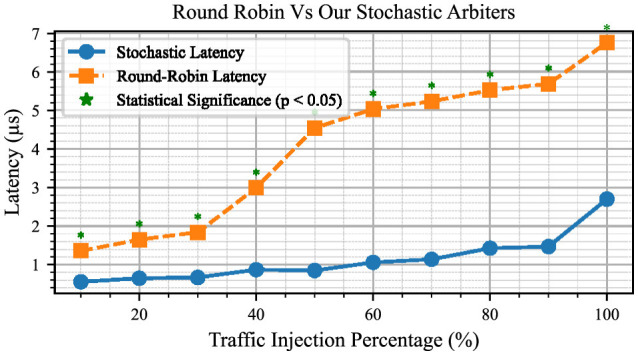 Figure 13
Peer Reviews
No public reviews on file for this paper yet. If you reviewed it on a platform where reviews are public (OpenReview, ICLR, NeurIPS, ICML), you can paste yours below so the community can read it here.
Videos
No videos yet. Explain this paper in a talk, walkthrough, or lecture? Add one.
Taxonomy
TopicsAdvanced Memory and Neural Computing · Neuroscience and Neural Engineering · Ferroelectric and Negative Capacitance Devices