Reduction of orexin-expressing neurons and a unique sleep phenotype in the Tg-SwDI mouse model of Alzheimer’s disease
Yan Wu, Narayan R. Bhat, Meng Liu

TL;DR
This study finds that Tg-SwDI mice, a model for Alzheimer’s disease, show changes in sleep patterns and a reduction in orexin neurons, which may contribute to sleep disturbances seen in Alzheimer’s.
Contribution
The study identifies a unique sleep phenotype and selective loss of orexin neurons in a mouse model of cerebral amyloid angiopathy.
Findings
Tg-SwDI mice spent more time in NREM sleep and had shorter wake bouts compared to wild-type controls.
Tg-SwDI mice showed a significant decrease in orexin-IR neuron number and soma size.
Orexin-IR neurons in Tg-SwDI mice had higher levels of apoptotic cell death marker cleaved caspase-3.
Abstract
Sleep disturbances are common in Alzheimer’s disease (AD) and AD-related dementia (ADRD). We performed a sleep study on Tg-SwDI mice, a cerebral amyloid angiopathy (CAA) model, and age-matched wild-type (WT) control mice. The results showed that at 12 months of age, the hemizygous Tg-SwDI mice spent significantly more time in non-rapid eye movement (NREM) sleep (44.6 ± 2.4% in Tg-SwDI versus 35.9 ± 2.5% in WT) and had a much shorter average length of wake bout during the dark (active) phase (148.5 ± 8.7 s in the Tg-SwDI versus 203.6 ± 13.0 s in WT). Histological analysis revealed stark decreases of orexin immunoreactive (orexin-IR) neuron number and soma size in these Tg-SwDI mice (cell number: 2187 ± 97.1 in Tg-SwDI versus 3318 ± 137.9 in WT. soma size: 109.1 ± 8.1 μm2 in Tg-SwDI versus 160.4 ± 6.6 μm2 in WT), while the number and size of melanin-concentrating hormone (MCH)…
Genes, proteins, chemicals, diseases, species, mutations and cell lines named across the full text — each resolved to its canonical identifier and authoritative record.
Click any figure to enlarge with its caption.
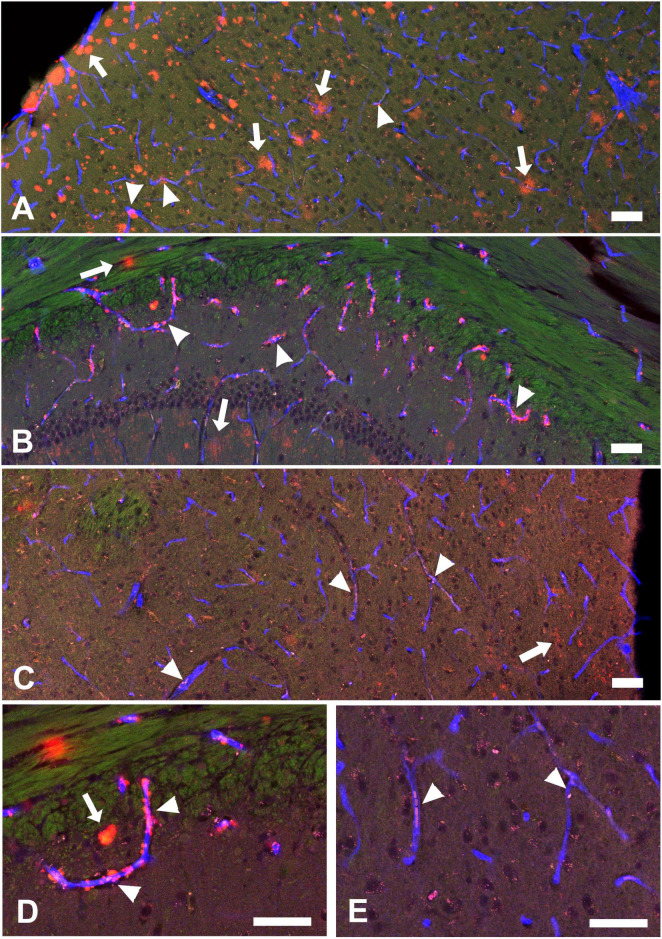 Figure 1
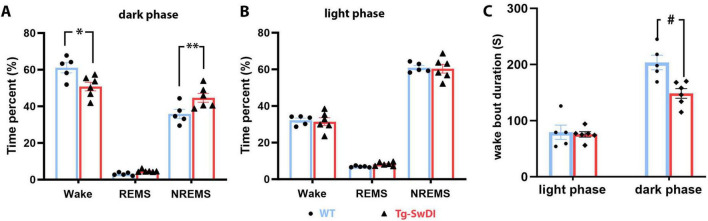 Figure 2
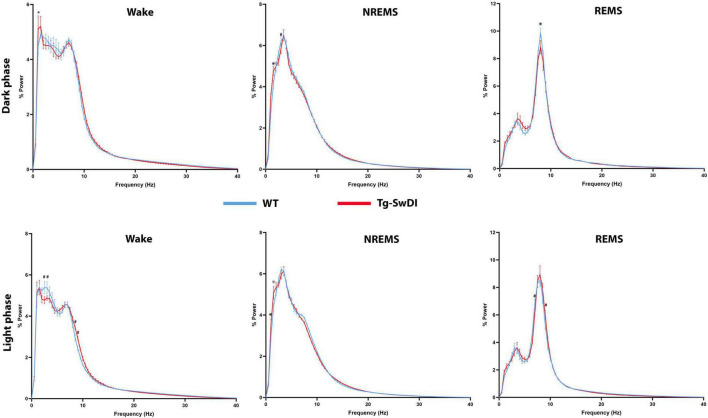 Figure 3
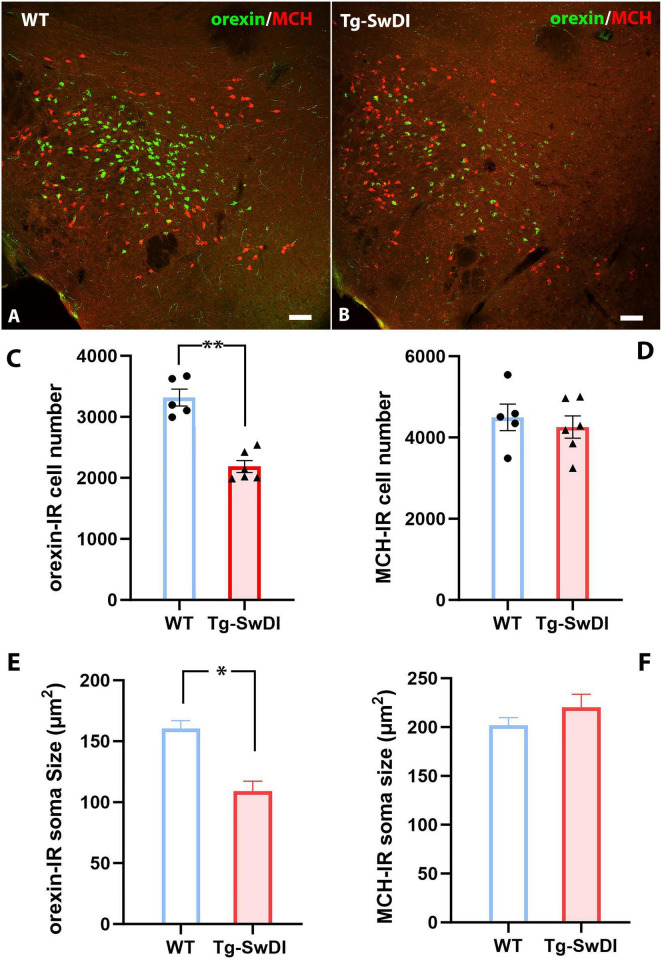 Figure 4
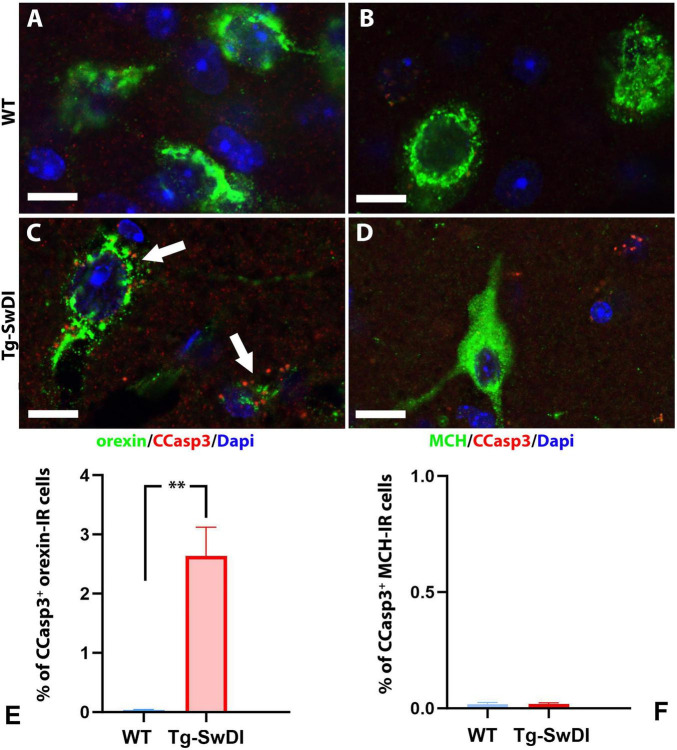 Figure 5
Peer Reviews
No public reviews on file for this paper yet. If you reviewed it on a platform where reviews are public (OpenReview, ICLR, NeurIPS, ICML), you can paste yours below so the community can read it here.
Videos
No videos yet. Explain this paper in a talk, walkthrough, or lecture? Add one.
Taxonomy
TopicsSleep and Wakefulness Research · Neuroinflammation and Neurodegeneration Mechanisms · Sleep and related disorders