Assessing Enamel Thickness to Estimate Interproximal Reduction: A CBCT‐Based Study
Enrique González‐García, Nasib Balut‐Chahin, Claudia Daniela Rojo‐Arce, María Eugenia Jiménez Corona, Luis Pablo Cruz‐Hervert, Jean Marc Retrouvey

TL;DR
This study uses CBCT scans to measure enamel thickness and determine safe limits for interproximal reduction in dental treatments.
Contribution
The study introduces a CBCT-based method to assess enamel thickness and associated risks for individualized interproximal reduction planning.
Findings
Mean proximal enamel thickness ranged from 0.96 to 1.29 mm (mesial) and 0.98 to 1.25 mm (distal).
Exceeding a 0.20 mm single-site IPR increases the risk of enamel reduction, especially in teeth with thinner enamel.
CBCT evaluations are recommended for IPRs over 0.20 mm to improve precision and reduce risk.
Abstract
The aims of this study were to (1) estimate the mesial and distal proximal enamel thickness available (PETa), (2) estimate the proximal enamel thickness remaining (PETr) on the basis of planned IPR, and (3) assess PETr‐associated risks with varying IPR amounts. A cross‐sectional study was conducted using CBCT scans. PETa was estimated using on‐demand software. Mesial and distal PET were measured at the middle third of the crown. The means and 95% confidence intervals (CIs) of the PETa and PETr data are reported. Differences between the mesial and distal PETa values were compared. A total of 1615 teeth were analyzed via CBCT. The mean PETa values ranged from 0.96 to 1.29 mm (mesial) and from 0.98 to 1.25 mm (distal). Differences between mesial and distal PETa were statistically significant, averaging 0.10 mm proximally (p < 0.050). In particular, these differences were observed in…
Genes, proteins, chemicals, diseases, species, mutations and cell lines named across the full text — each resolved to its canonical identifier and authoritative record.
Click any figure to enlarge with its caption.
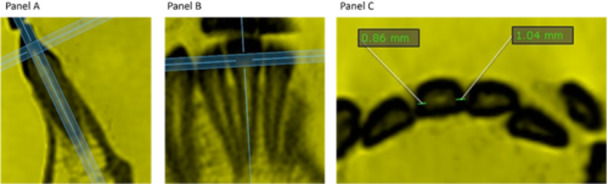 Figure 1
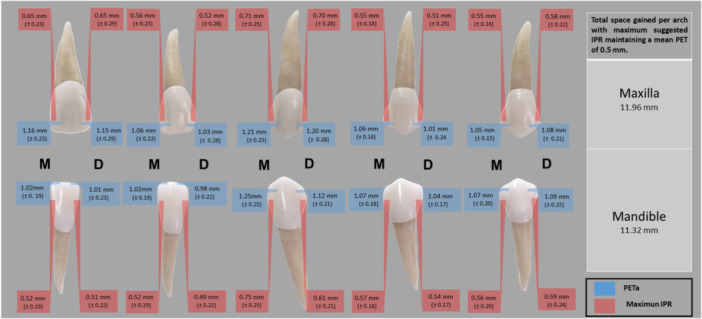 Figure 2
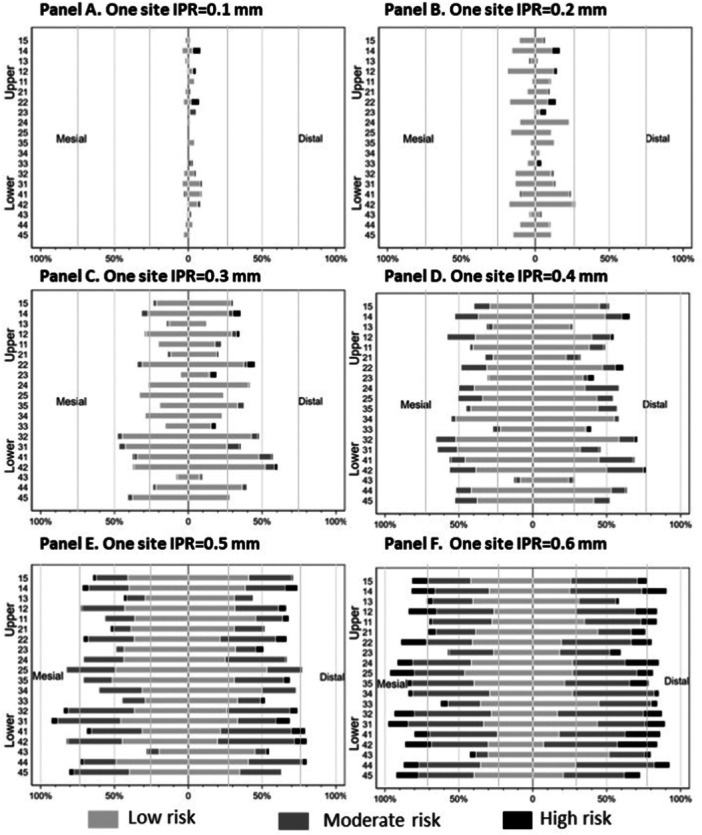 Figure 3
Peer Reviews
No public reviews on file for this paper yet. If you reviewed it on a platform where reviews are public (OpenReview, ICLR, NeurIPS, ICML), you can paste yours below so the community can read it here.
Videos
No videos yet. Explain this paper in a talk, walkthrough, or lecture? Add one.
Taxonomy
TopicsOrthodontics and Dentofacial Orthopedics · Dental Erosion and Treatment · Dental materials and restorations