Impact of fluoxetine exposure on Lymnaea stagnalis and its developing eggs: integrating untargeted lipidomics, targeted metabolomics, and classical risk assessment
Diana Ilyaskina, Yumi Nakadera, Marja H. Lamoree, Joris M. Koene, Pim E. G. Leonards

TL;DR
This study explores how fluoxetine, an antidepressant, affects freshwater snails and their eggs, using multiple analytical methods to uncover potential risks in aquatic environments.
Contribution
The study integrates untargeted lipidomics, targeted metabolomics, and classical risk assessment to reveal fluoxetine's effects on Lymnaea stagnalis.
Findings
Fluoxetine exposure impaired egg development in a dose-dependent manner, reducing hatching rates with an EC50 of 126 µg L⁻¹.
Molecular analysis revealed neurochemical and lipidomic alterations, including elevated catecholamines and disrupted lipid classes in the CNS and albumen gland.
Egg removal from contaminated environments partially reversed developmental effects, suggesting potential recovery if fluoxetine levels decrease.
Abstract
Pharmaceuticals such as selective serotonin reuptake inhibitors (SSRIs), are increasingly detected in aquatic environments, posing potential risks to non-target organisms, because many of those substances are widely shared neuromodulator. In this study, we investigated the effects of SSRI antidepressant, namely, fluoxetine, exposure on the freshwater snail L. stagnalis, focusing on egg development, neurochemical pathways, and lipid metabolism. Snails were exposed to a range of 51–434 µg fluoxetine L⁻1 for 7 days, followed by analysis of survival, feeding behaviour, reproduction, and metabolomic changes in the central nervous system (CNS), albumen gland, and eggs. Although no significant effects were observed on survival or fecundity, fluoxetine exposure significantly impaired egg development in a dose-dependent manner, reducing hatching rates with an EC50 of 126 µg fluoxetine L⁻1.…
Genes, proteins, chemicals, diseases, species, mutations and cell lines named across the full text — each resolved to its canonical identifier and authoritative record.
Click any figure to enlarge with its caption.
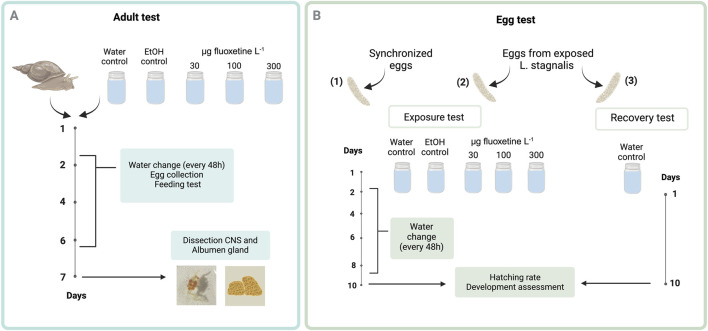 Figure 1
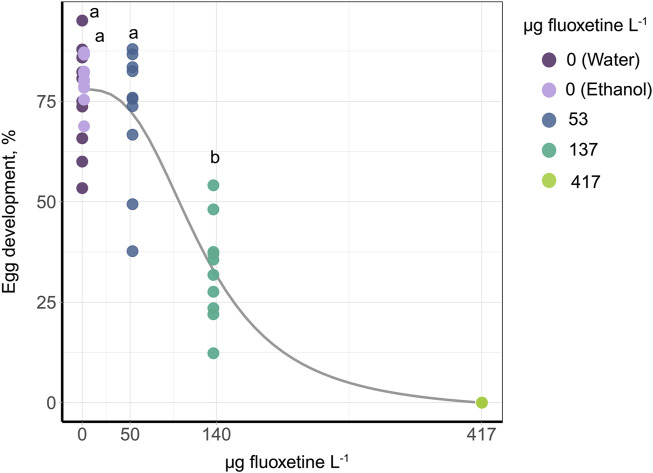 Figure 2
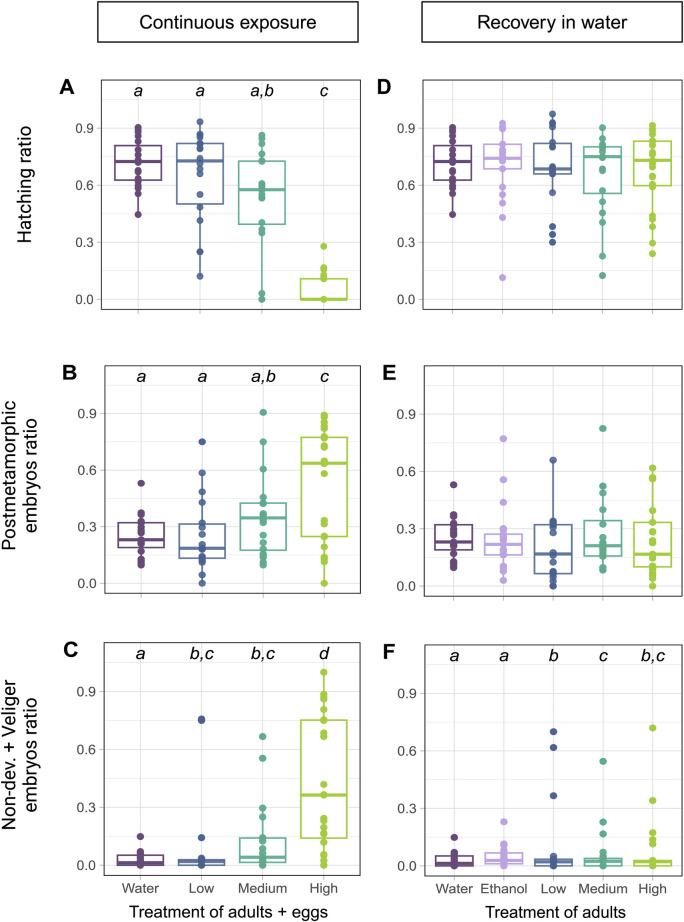 Figure 3
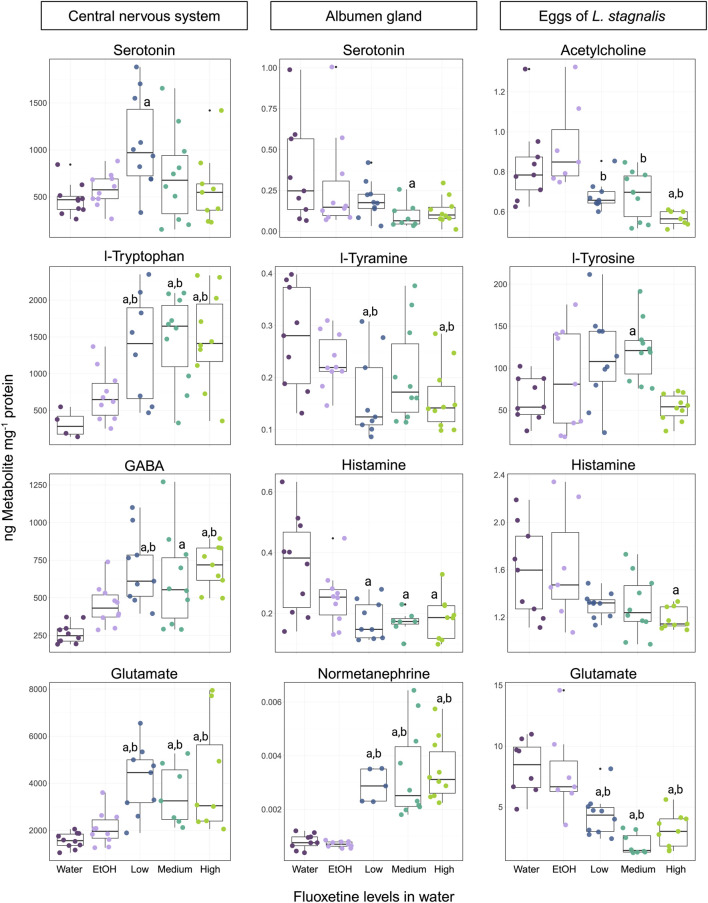 Figure 4
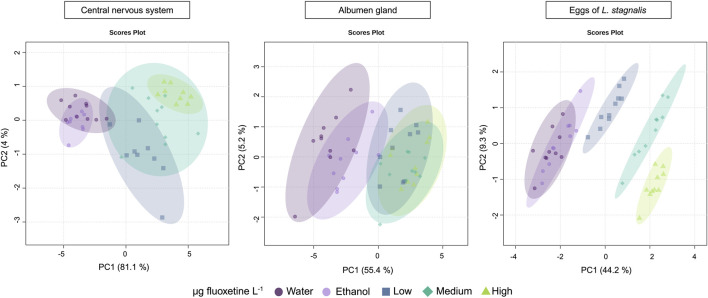 Figure 5
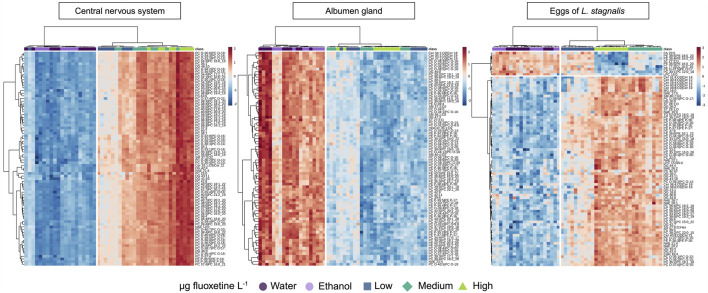 Figure 6
Peer Reviews
No public reviews on file for this paper yet. If you reviewed it on a platform where reviews are public (OpenReview, ICLR, NeurIPS, ICML), you can paste yours below so the community can read it here.
Videos
No videos yet. Explain this paper in a talk, walkthrough, or lecture? Add one.
Taxonomy
TopicsPhysiological and biochemical adaptations · Aquaculture Nutrition and Growth · Environmental Toxicology and Ecotoxicology