Optimization of Intercropping Modes in Placodon grandiflorus
Pengfei Liu, Jiannan Ma, Juan Yu, Meixi Zhang, E. Qiao, Yang Cao, Ying Zhang, Xiaoqin Wang, Xin Jia

TL;DR
This study explores how intercropping affects the growth and quality of Platycodon grandiflorus, a medicinal herb, and identifies optimal planting combinations.
Contribution
The study provides new insights into the optimal intercropping modes for Platycodon grandiflorus to enhance growth and saponin content.
Findings
Intercropping with Zea mays and Adenophora stricta improved the quality of P. grandiflorus.
JG-SS intercropping maintained high platycodin D content in P. grandiflorus.
Intercropping increased biomass and antioxidant enzyme activity compared to monoculture.
Abstract
Intercropping enhances plant growth, increases yield, and boosts the accumulation of secondary metabolites. Platycodon grandiflorus ( P. grandiflorus ), a traditional Chinese medicinal herb, has limited research available regarding its intercropping practices. We aimed to (1) examine the changes in the physiological and biochemical indicators of plant growth during the intercropping process of P. grandiflorus , (2) assess the quality of P. grandiflorus when intercropped with different crops, and (3) evaluate the optimal intercropping mode for P. grandiflorus. This study utilized the two‐year seedlings of P. grandiflorus as the test material in a field study. The intercropping treatments included P. grandiflorus monoculture (JG‐JG), intercropping with Achyranthes bidentata (JG‐NX), Saposhnikovia divaricata (JG‐FF), Adenophora stricta (JG‐SS), Zea mays (JG‐YM), Setaria…
Genes, proteins, chemicals, diseases, species, mutations and cell lines named across the full text — each resolved to its canonical identifier and authoritative record.
Click any figure to enlarge with its caption.
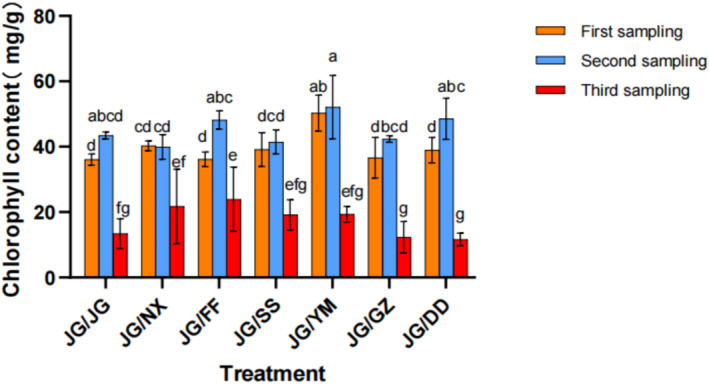 FIGURE 1
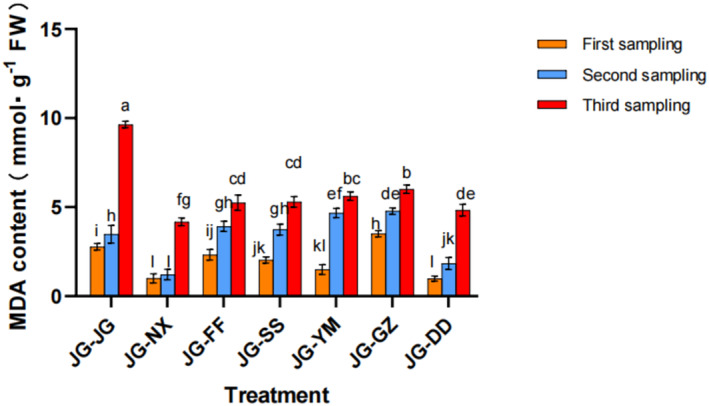 FIGURE 2
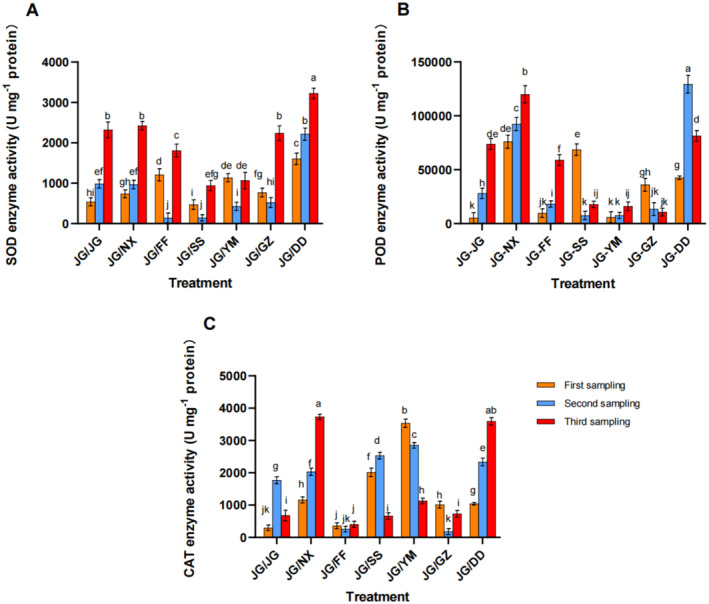 FIGURE 3
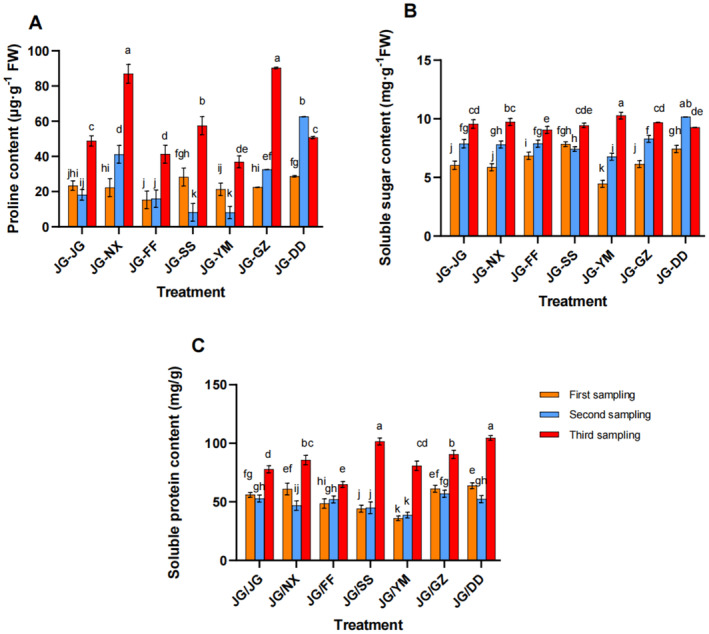 FIGURE 4
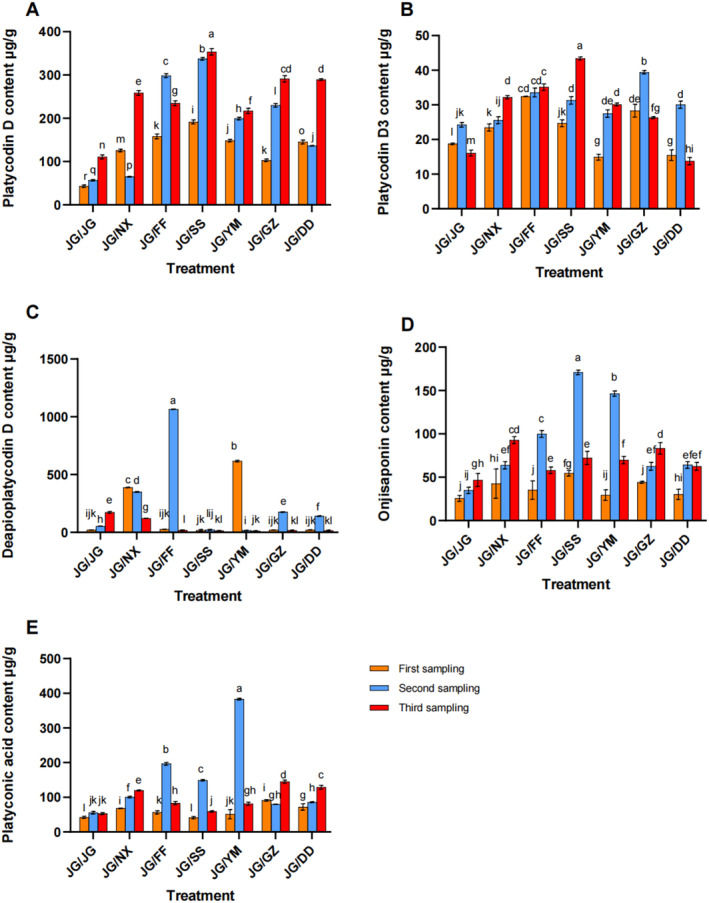 FIGURE 5
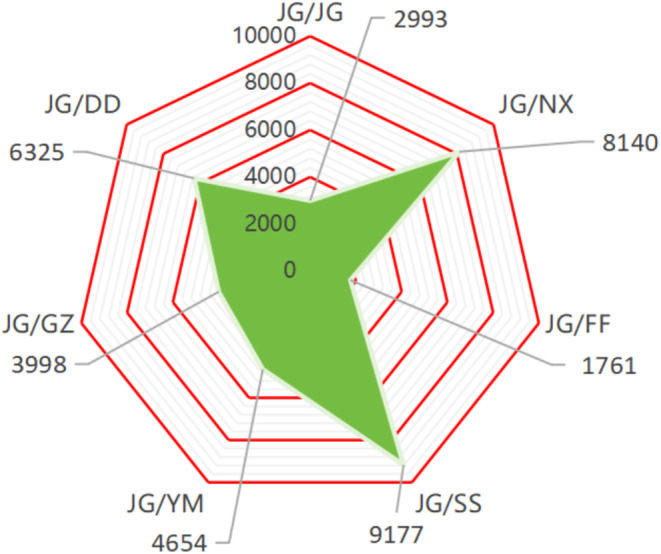 FIGURE 6
| Growth indexes | |||||||
|---|---|---|---|---|---|---|---|
| Sampling times | Treatment | Seedling height (cm) | Root length (cm) | Aboveground part fresh weight (g/plant) | Underground part fresh weight (g/plant) | Aboveground plant dry weight (g/plant) | Underground plant dry weight (g/plant) |
| The first sampling | JG‐JG | 55.46 ± 7.13ab | 20.58 ± 1.63b | 13.02 ± 3.84b | 9.87 ± 1.86b | 3.07 ± 0.89c | 2.91 ± 0.75c |
| JG‐NX | 58.74 ± 0.68a | 21.91 ± 3.09ab | 14.45 ± 1.66a | 11.88 ± 1.91a | 3.76 ± 0.63a | 2.86 ± 0.36c | |
| JG‐FF | 51.61 ± 3.08b | 20.48 ± 1.40b | 12.41 ± 0.75c | 10.81 ± 2.02ab | 3.03 ± 0.09c | 3.02 ± 0.18b | |
| JG‐SS | 55.01 ± 6.19ab | 19.67 ± 0.44c | 13.61 ± 3.62b | 9.79 ± 2.06b | 3.35 ± 1.22b | 2.83 ± 0.63c | |
| JG‐YM | 52.71 ± 2.40b | 20.26 ± 3.58b | 14.33 ± 2.34b | 9.63 ± 1.25b | 3.59 ± 0.59ab | 3.47 ± 0.41b | |
| JG‐GZ | 52.66 ± 3.57b | 21.45 ± 2.14ab | 12.83 ± 1.67c | 10.49 ± 0.30ab | 3.06 ± 0.55c | 3.07 ± 0.06b | |
| JG‐DD | 51.68 ± 1.36b | 24.05 ± 0.42a | 14.87 ± 1.31a | 11.79 ± 1.94a | 3.72 ± 0.38a | 3.51 ± 0.64a | |
| The second sampling | JG‐JG | 69.27 ± 2.92ab | 22.81 ± 1.70b | 19.95 ± 5.83b | 15.45 ± 2.42c | 6.12 ± 1.60c | 4.35 ± 0.76b |
| JG‐NX | 75.87 ± 3.60a | 22.60 ± 0.38b | 27.57 ± 0.65a | 20.61 ± 0.52a | 8.72 ± 1.31a | 6.29 ± 0.39a | |
| JG‐FF | 63.66 ± 6.79c | 20.87 ± 1.68c | 21.00 ± 14.27b | 17.08 ± 9.15b | 6.05 ± 3.74c | 4.80 ± 2.11b | |
| JG‐SS | 68.19 ± 17.30b | 23.08 ± 1.47ab | 24.01 ± 9.96ab | 17.67 ± 2.28b | 7.54 ± 3.89b | 5.26 ± 0.82ab | |
| JG‐YM | 69.89 ± 8.14ab | 21.35 ± 1.54b | 17.43 ± 4.31c | 13.25 ± 3.64d | 5.46 ± 2.08d | 4.21 ± 0.80b | |
| JG‐GZ | 63.34 ± 10.61c | 20.46 ± 2.46c | 17.22 ± 3.80c | 14.49 ± 2.77c | 5.51 ± 1.51d | 4.32 ± 0.74b | |
| JG‐DD | 69.94 ± 5.06a | 23.93 ± 2.58a | 25.33 ± 2.17a | 20.84 ± 1.32a | 8.02 ± 0.88ab | 6.22 ± 0.18a | |
| The third sampling | JG‐JG | 64.49 ± 3.20b | 21.38 ± 0.15c | 13.61 ± 1.03b | 21.10 ± 1.40b | 5.48 ± 0.59b | 6.65 ± 0.70b |
| JG‐NX | 71.76 ± 6.66a | 26.08 ± 1.91a | 21.79 ± 6.14a | 20.78 ± 4.26b | 7.98 ± 1.42a | 8.44 ± 1.21a | |
| JG‐FF | 63.42 ± 3.47b | 22.72 ± 0.82b | 12.68 ± 7.10b | 19.03 ± 6.93b | 5.02 ± 2.49b | 6.48 ± 1.38b | |
| JG‐SS | 64.25 ± 13.75b | 24.88 ± 5.20ab | 15.73 ± 7.44b | 23.96 ± 3.77a | 6.07 ± 2.21ab | 6.76 ± 2.16b | |
| JG‐YM | 64.32 ± 12.49b | 23.08 ± 2.71b | 9.24 ± 3.99c | 17.65 ± 5.70c | 4.06 ± 1.99b | 5.86 ± 1.90c | |
| JG‐GZ | 63.83 ± 9.08b | 22.50 ± 2.66b | 8.45 ± 4.84c | 14.67 ± 2.38d | 3.97 ± 1.92c | 4.93 ± 1.00c | |
| JG‐DD | 69.40 ± 0.39a | 24.46 ± 1.25ab | 19.12 ± 6.03a | 25.25 ± 5.08a | 7.19 ± 2.69a | 7.72 ± 1.38a | |
- —Youth Science and Technology Talent Program for Higher Education Institutions
- —Natural Science Foundation of Inner Mongolia Autonomous Region 10.13039/501100004763
- —Foundation for Innovative Research Groups of the National Natural Science Foundation of China
Peer Reviews
No public reviews on file for this paper yet. If you reviewed it on a platform where reviews are public (OpenReview, ICLR, NeurIPS, ICML), you can paste yours below so the community can read it here.
Videos
No videos yet. Explain this paper in a talk, walkthrough, or lecture? Add one.
Taxonomy
TopicsAgronomic Practices and Intercropping Systems · Plant pathogens and resistance mechanisms · Natural product bioactivities and synthesis
Introduction
1
Continuous cropping involves planting the same crop in the same field for consecutive years. Despite normal management practices, this method can lead to the reduction in yield, the deterioration in quality, and the decline in soil fertility after repeated planting of the same or closely related crops (Ma et al. 2023). Continuous cropping obstacles have become a widespread issue globally, affecting various crops, from the grain crops such as wheat, corn, rice, and soybeans to the economic crops including vegetables, fruits, and flowers in facility agriculture, each experiencing varying degrees of these obstacles. However, over 40% of Chinese medicinal materials require manual cultivation, and approximately 70% of rhizome‐based Chinese medicinal materials encounter significant obstacles to continuous cropping during cultivation (Miao et al. 2024). The challenges primarily include the decrease in germination rate, the increase in mortality rate, and the rise in disease incidence during the growth period. Consequently, there is a decline in the quality of traditional Chinese medicine, which can adversely affect the effectiveness of medicinal ingredients and may even increase toxicity, thereby influencing the overall efficacy.
Several methods can mitigate the obstacles to continuous cropping, including crop rotation and intercropping. As a cornerstone of traditional Chinese agriculture, intercropping has offered certain benefits such as increased yield, enhanced nutrient resource utilization, and improved pest and disease control through biodiversity, which also bolsters the ecological stability of farmlands (Zeeshan Ul Haq et al. 2023; Zhang et al. 2008). Studies have indicated that intercropping enhances the growth and biomass accumulation of Hibiscus cannabinus and G. max compared to monoculture and increases the antioxidant enzyme activities while reducing the malondialdehyde (MDA) content (Rehman et al. 2023). Additionally, intercropping Pinellia ternata with Sedum alfredii has been reported to promote its growth, with optimal leaf area, leaf length, leaf width, plant height, and stem thickness observed (Wang, Han, et al. 2024). The chlorophyll content of Pinellia ternata increases with the crown width, peaking at the crown width of 200 cm (Xue et al. 2008). Replacing and intercropping Taizi ginseng with local main varieties effectively reduces the replant disease and improves both the yield and quality of Taizi ginseng under repeated cropping conditions (Liu et al. 2022). However, research on P. grandiflorus remains limited, with most studies focusing on the soil analysis after continuous cropping.
Belonging to the Campanulaceae family and Platycodon A. DC, Platycodon grandiflorus (Jacq.) A. DC is a widely used perennial herbaceous plant in China (Feng et al. 2024). This plant is valued for its medicinal and edible properties, with P. grandiflorus saponins, particularly platycodin D, being the key components specified in the 2020 edition of the Chinese Pharmacopeia (Zhang et al. 2015). Recent increases in the cultivation areas for P. grandiflorus , driven by its diverse uses, have led to the conflicts with traditional food crop production lands (Ji et al. 2020). Consequently, the year‐round continuous planting in P. grandiflorus production areas has caused the inreased incidences of diseases and pests, significantly reducing the yield and quality, and compromising the authenticity of medicinal materials. This has created substantial obstacles to continuous cropping and has caused considerable losses in the production of medicinal materials (Jiang et al. 2023).
This study combined the practical research with prior studies conducted in Chengzi Township, Chifeng City, a major production area for P. grandiflorus in China. It focused on intercropping three local medicinal herbs, including A. bidentata , S. divaricata , A. stricta , and three crops, namely Z. mays , S. italica , and G. max . This study examined the effects of the intercropping on P. grandiflorus by evaluating the growth, photosynthetic characteristics, antioxidant enzyme activity, osmoregulatory substance content, and the accumulation of five saponins at various growth stages. The objective of this study was to identify the most effective intercropping methods for providing a theoretical foundation for standardized planting of P. grandiflorus under different intercropping modes.
Material and Methods
2
Materials and Testing Sites
2.1
The test materials consisted of the two‐year‐old seedlings of P. grandiflorus . The seedlings were cultivated in the experimental field situated in Chengzi Township, Songshan District, Chifeng City, Inner Mongolia Autonomous Region, China, at 118.69°N and 42.14°E, with the elevation of 872 m. The site is characterized by a temperate continental monsoon climate featuring ample sunlight, high accumulated temperature efficiency, low precipitation, and frequent droughts and winds. The average annual precipitation at this location is 355 mm.
Experimental Design
2.2
This study utilized a field experimental design featuring seven intercropping modes: single cropping of P. grandiflorus (JG‐JG), intercropping of P. grandiflorus and A. bidentata (JG‐NX), P. grandiflorus and S. divaricata (JG‐FF), P. grandiflorus and A. stricta (JG‐SS), P. grandiflorus and Z. mays (JG‐YM), P. grandiflorus and S. italica (JG‐GZ), P. grandiflorus and G. max (JG‐DD). Each treatment was replicated three times, resulting in 21 plots, each with an area of 18.75 m^2^ (3 m × 6.25 m). The experiment commenced in April 2023, with P. grandiflorus transplanted as one‐year‐old seedlings at a row spacing of 25 cm and plant spacing of 10 cm. Other crops were seeded with the following specifications: A. bidentata at 25 cm row spacing and 15 cm plant spacing, A. stricta at 30 cm row spacing and 20 cm plant spacing, S. divaricata at 25 cm row spacing and 20 cm plant spacing, Z. mays at 30 cm row spacing and 25 cm plant spacing, G. max at 30 cm row spacing and 20 cm plant spacing, and S. italica at 25 cm row spacing and 10 cm plant spacing. The normal field management practices were applied throughout the study period. The root samples of P. grandiflorus were collected during the seedling stage (the first sampling), vigorous growth period (the second sampling), and optimal harvesting period (the third sampling). Each plot employed a 5‐point sampling method, with 10–15 fresh samples collected for the physiological and biochemical analyses, while the remaining roots were dried and crushed for saponin content determination.
Biomass Measurement
2.3
The soil from the seedlings of P. grandiflorus was washed with tap water six times using six plants. Subsequently, the seedlings were wiped with a filter and absorbent paper to remove excess water. Both the aboveground and underground parts of each plant were placed into the same cowhide bag and then oven‐dried at 105°C to terminate the green color. Once the oven temperature (DL‐101‐3PS, Tianjin Zhonghuan Electric Furnace Experimental Instrument Company, China) decreased, the samples were dried at 65°C until they reached a constant weight. The samples were removed, and their dry weights were recorded (Wang, Zhu, and Pan 2024).
Chlorophyll Content Determination
2.4
The chlorophyll content in the leaves was determined using the Lynd intelligent chlorophyll analyzer (LD‐YE ± 0.3 SPAD, Shandong Leiente Intelligent Technology Co. Ltd., China). For each sampling period, three P. grandiflorus plants from each plot were selected, and three healthy leaves from each plant were measured (Dąbrowski et al. 2024).
Determination of Antioxidant Enzymes and Malondialdehyde Content
2.5
The malondialdehyde (MDA) content was determined using the thiobarbituric acid method (Heath and Packer 1968). The superoxide dismutase (SOD) activity was measured using the nitrogen blue tetrazolium (NBT) method (Minami and Yoshikawa 1979). The peroxidase (POD) activity was assessed using the guaiacol method (Castro et al. 2017). The catalase (CAT) activity was measured using the ultraviolet absorption method (Berger 2010).
Determination of Osmotic Regulatory Substances in
P. grandiflorus
2.6
The proline content was determined using the acidic ninhydrin method (Bates 1976). The soluble sugar content was measured using the anthrone colorimetric method (Irigoyen et al. 2010). The soluble protein content was assessed using the Coomassie Brilliant Blue method (Kielkopf et al. 2020).
Determination of Contents of Five Saponin Components in
P. grandiflorus
2.7
The HPLC‐ELSD (1260 infinity II, Agilent Technologies Co. Ltd., America) method was utilized to quantify the five saponins: platycodin D3, deapoplatycodin D, platycodin D, onjisaponin, and platyconic acid (Kwon et al. 2017). The analysis utilized a Hypersil GOLD C18 selective HPLC column (4.6 mm × 250 mm, 5 μm). The mobile phase comprised 1% formic acid aqueous solution (A) and acetonitrile (B), with gradient elution conditions as follows: 0–15 min, 80%–78% A; 15–60 min, 78%–78% A; 60–65 min, 78%–70% A; 65–70 min, 70%–80% A; and 70–80 min, 80%–0% A. The flow rate was 1.0 mL·min^−1^, and the column temperature was maintained at 35°C. The ELSD detection was performed with a drift tube temperature of 110°C and a gas flow rate of 2.5 L·min^−1^.
Data Analysis
2.8
The statistical analyses and data plotting were performed using Microsoft Excel 2019 and GraphPad Prism 9 (2018). The significant differences were analyzed using SPSS 22.0. The comprehensive competitiveness was assessed using the principal component analysis (PCA).
Results
3
Roots Biomass of
P. grandiflorus at Different Growth Stages
3.1
The results indicated the significant differences in the biomass between intercropping systems and monoculture modes. The measurements of seedling height, root length, aboveground fresh weight, underground fresh weight, aboveground dry weight, and underground dry weight of P. grandiflorus under various intercropping modes are presented in Table 1. In the first sampling, the intercropping treatment JG‐DD significantly increased the root length, aboveground fresh weight, and underground fresh weight compared to the monoculture JG‐JG treatment, with the notable increases in the root length (from 20.58 to 24.05 cm) and the aboveground fresh weight (from 13.02 to 14.87 g/plant). No significant differences were observed between other intercropping modes and the control group, nor in the seedling height among the treatments. In the second sampling, JG‐NX exhibited the highest values for most indicators, except the root length, followed by JG‐DD and JG‐SS. In the third sampling period, the JG‐NX and JG‐DD treatments significantly increased the seedling height, and all the intercropping treatments resulted in the significant increases in the root length. The fresh weights of the aboveground parts, underground parts, and dry weights of both parts were significantly higher under JG‐DD, with the increases of 28.88%, 16.43%, 23.78%, and 13.86%, respectively. Overall, the biomass indicators for JG‐DD, JG‐NX, and JG‐SS demonstrated better performance, indicating that these intercropping modes enhanced the growth of P. grandiflorus .
TABLE 1: Effects of different intercropping patterns on the biomass of P. grandiflorus at different growth stages.
Chlorophyll Content of
P. grandiflorus Leaves at Different Growth Stages
3.2
In the first sampling, the chlorophyll content for the JG‐JG treatment was the lowest among the seven treatments, while the JG‐YM treatment exhibited the highest chlorophyll content at 50.26 mg·g^−1^. In the second sampling, JG‐YM maintained the highest chlorophyll content, followed by JG‐DD, which showed the increases of 16.64% and 10.56%, respectively, compared with the JG‐JG control group. However, neither treatment significantly differed from the control group (p > 0.05). In the third sampling, the chlorophyll content significantly decreased across all the treatments. Overall, the chlorophyll indicators in JG‐YM, JG‐DD, and JG‐FF were superior (Figure 1).
The effects of different intercropping patterns on chlorophyll content of P. grandiflorus at different growth stages activity. Different letters indicate significant differences between treatments (p < 0.05), the same below.
Content of Malondialdehyde (MDA) in Roots of
P. grandiflorus at Different Growth Stages
3.3
As sampling time increased, the MDA content increased progressively under each treatment. In the third sampling, the JG‐JG treatment exhibited the highest MDA content, whereas other six treatments demonstrated the significantly reduced levels compared to JG‐JG. Among these, JG‐NX had the lowest MDA content, with the reductions of 63.75%, 65.21%, and 56.70% compared to JG‐JG, followed by JG‐DD. The results indicated that the MDA content remained relatively stable under the JG‐NX and JG‐DD treatments throughout the three sampling periods, demonstrating strong stability (Figure 2).
The effects of different intercropping modes on the content of malondialdehyde (MDA) in P. grandiflorus at different growth stages.
Antioxidant Enzymes in Roots of
P. grandiflorus at Different Growth Stages
3.4
Overall, the SOD enzyme activity exhibited an upward trend in the JG‐JG, JG‐NX, and JG‐DD treatments, while the JG‐FF, JG‐SS, JG‐YM, and JG‐GZ treatments initially decreased and then increased. The JG‐DD treatment demonstrated a significant overall increase compared to JG‐JG, with the SOD enzyme activity being the highest among the seven treatments in the first and second sampling, presenting the increases of 83.38% and 55.51%, respectively, compared to JG‐JG (Figure 3A). A gradual increase in the POD content helped mitigate the damage from elevated peroxides and decelerated the plant aging. In the first sampling, the POD enzyme activity was the highest under JG‐NX, followed by JG‐SS. In the second sampling, JG‐DD exhibited the highest POD enzyme activity, which increased by 78.34% compared to JG‐JG. In the third sampling, the highest POD content was observed in JG‐NX (Figure 3B). CAT contributed to the antioxidant enzyme system in plants and offered the protective benefits. Compared to JG‐JG, the JG‐NX, JG‐YM, and JG‐DD treatments had significantly higher CAT enzyme activities. In the third sampling period, the highest CAT activity was observed in JG‐NX, followed by JG‐DD (Figure 3C). Overall, the antioxidant enzyme activity of P. grandiflorus roots was significantly higher in the JG‐NX, JG‐DD, JG‐SS, and JG‐YM treatments than in the JG‐JG control, without significant difference between the JG‐GZ and JG‐FF treatments.
The effects of different intercropping modes on antioxidant enzymes in P. grandiflorus at different growth stages. (A) The superoxide dismutase (SOD) activity, (B) the peroxidase (POD) activity, (C) the catalase (CAT) activity.
Osmotic Regulation Content in Roots of
P. grandiflorus at Different Growth Stages
3.5
With the extension of sampling time, the proline content significantly increased under each treatment. In the third sampling, the highest proline content was observed in the JG‐NX and JG‐GZ treatments, followed by JG‐SS, with the increases of 43.94%, 46.01%, and 15.32%, respectively, compared with the JG‐JG treatment (Figure 4A). The overall change in soluble sugar content was not significant compared to the JG‐JG treatment. In the second sampling, the JG‐DD treatment exhibited the highest soluble sugar content, with the 22.53% increase compared to JG‐JG. In the third sampling, the highest soluble sugar content was identified in the JG‐YM treatment, which increased by 7.01% compared to the control group (Figure 4B). Among the different intercropping modes, the soluble protein content generally increased over time, with the JG‐SS, JG‐DD, and JG‐NX treatments demonstrating more significant increases. In the third sampling, these treatments exhibited the increases of 23.38%, 25.59%, and 9.20%, respectively, compared to JG‐JG (Figure 4C).
The effects of different intercropping modes on the osmotic regulatory substance content in roots of P. grandiflorus at different growth stages. (A) The proline content, (B) the soluble sugar content, (C) the soluble protein content.
Five Saponin Components in Roots of
P. grandiflorus at Different Growth Stages
3.6
The results indicated that different intercropping methods could enhance the content of various platycodon saponins, with platycodin D being the primary active ingredient of P. grandiflorus . Except for the JG‐FF treatment group, all other treatments significantly increased platycodin D content during the harvest period. Specifically, compared to the JG‐JG treatment, the JG‐NX, JG‐SS, JG‐YM, JG‐GZ, and JG‐DD treatments increased the platycodin D content by 57.09%, 68.91%, 48.90%, 61.93%, and 61.69%, respectively (Figure 5A). Furthermore, the platycodin D3 content significantly increased in the JG‐NX, JG‐FF, JG‐SS, and JG‐GZ treatments compared to that in JG‐JG. In the third sampling, JG‐SS presented the highest platycodin D3 content among the seven treatments, with the 62.96% increase compared to the control group, followed by JG‐FF, which increased by 54.24% compared to the control group (Figure 5B).
The effects of different intercropping methods on the five saponin components of P. grandiflorus at different growth stages. (A) The platycodin D content, (B) the platycodin D3 content, (C) the deapoplatycodin D content, (D) The onjisaponin content, (E) the platyconic acid content.
The deapoplatycodin D content was measured under different intercropping modes. In the first sampling, JG‐YM resulted in the highest deapoplatycodin D content in the P. grandiflorus roots, with the 96.67% increase compared to the control group, followed by JG‐NX, with a 94.71% increase. The contents in JG‐SS and JG‐DD were lower than that in the control group. In the second sampling, JG‐FF had the highest deapoplatycodin D content among the treatments, with the 95.03% increase compared to the control group. In the third sampling, the JG‐JG control group showed the highest deapoplatycodin D content among all treatments (Figure 5C).
Overall, the onjisaponin content was higher in all the six intercropping treatments than in the control group. In the second sampling, JG‐SS had the highest onjisaponin content among the seven treatments, with the 79.60% increase compared to the control group, followed by the JG‐YM treatment (Figure 5D).
The results suggested that compared to the JG‐JG treatment, the content of platyconic acid in the roots of P. grandiflorus increased under all the six intercropping modes. In the second sampling, JG‐YM exhibited the highest platyconic acid content among the seven treatments, with an 85.70% increase compared to the control group, followed by the JG‐FF and JG‐SS treatments (Figure 5E).
Comparison of Comprehensive Competitiveness of Multi‐Index Components
3.7
The principal component analysis (PCA) was performed to derive a comprehensive score based on two indicators: the component score and variance explained rate, which incorporated the biomass, physiological, and biochemical indicators, and five saponin components to evaluate the overall competitiveness. The results revealed that the comprehensive competitiveness score was the highest for the JG‐SS treatment, followed by JG‐NX and JG‐DD, with the scores of 9177, 8140, and 6325, respectively. The JG‐FF treatment exhibited the lowest comprehensive competitiveness score (Figure 6).
The comprehensive competitiveness of multi index components. 0–10,000 represents the score of comprehensive competitiveness under different treatment groups. The green part represents the proportion of comprehensive competitiveness, and the green area is positively correlated with comprehensive competitiveness.
Discussion
4
Intercropping can enhance the ecosystem balance and stability, promote the interactions between different plants, improve the plant quality, and increase the resistance to diseases and stress (Zhu et al. 2024). This study utilized various intercropping modes to measure the biomass, chlorophyll, antioxidant enzyme levels, osmoregulatory substance content, and saponin components of P. grandiflorus at different growth and development stages, offering diverse insights into the effects of intercropping on plants.
Plant biomass represents the total amount of organic matter per unit area at a specific time and is a crucial parameter for studying vegetation production, carbon cycling, and nutrient allocation in terrestrial ecosystems (Roberts et al. 1985). Research has indicated that intercropping rice with banana can reduce the rice plant height during the late tillering and heading stages of early rice, while increasing the chlorophyll content in rice leaves during the early, mature, and late tillering stages (Shahidullah et al. 2024). In our study, intercropping P. grandiflorus with other crops led to the increases in the root length, aboveground fresh weight, belowground fresh weight, and aboveground dry weight. However, the differences were observed at various growth stages. During the seedling stage, only the JG‐DD treatment group demonstrated the significant improvements in various indicators compared with the control group, whereas other intercropping treatments did not exhibit significant changes. This may be attributed to the short duration of intercropping, as the effects between crops were not fully understood. With the prolonged intercropping time, the effects became more pronounced, as reflected in the superior biomass indicators of JG‐DD, JG‐NX, and JG‐SS compared to other treatments.
The chlorophyll content is a crucial indicator for diagnosing crop nutrition and studying photosynthesis. Higher chlorophyll content in plant leaves can enhance the photosynthetic capacity and promote the greater dry matter accumulation. The three‐dimensional structure created by intercropping can significantly improve temperature, humidity, and lighting conditions, which directly affects chlorophyll synthesis (Xhu et al. 2018). Intercropping Avena sativa with Vicia sativa can increase the chlorophyll content of both species (Wang, Zhu, and Pan 2024). Similarly, our study discovered that intercropping P. grandiflorus with various crops generally increased the chlorophyll content in its leaves, with the JG‐YM treatment demonstrating the highest chlorophyll levels. This improvement could be due to the reduced high temperatures and intense light in intercropping systems compared to the monoculture areas, which mitigated the stress‐induced decline in chlorophyll synthesis (Szymańska et al. 2017).
MDA can damage the cell membrane system, proteins, and DNA, leading to the membrane degradation and the loss of cell function. Consequently, the MDA content can reflect the extent of oxidative damage to plants (Bao et al. 2020). In this study, as the cultivation cycle progressed, the MDA content in various P. grandiflorus intercropping treatments generally decreased, indicating a strong stability.
Plant antioxidant enzymes are crucial biomolecules that help eliminate reactive oxygen species and mitigate oxidative stress in plants. SOD widely distributed in plants can catalyze the dismutation of superoxide anion radicals into oxygen and hydrogen peroxide and thus plays a vital role in maintaining the balance between the oxidation and antioxidant activities (Zhao et al. 2024). CAT, along with SOD and POD, forms the plant antioxidant enzyme system and provides protection (Huang et al. 2023). POD is involved in various physiological processes and produces the hydrolytic enzymes that resist pathogens, inhibit the reproduction, and enhance the plant disease resistance (Cai et al. 2021). Previous research has demonstrated that the POD, SOD, and CAT enzyme activities in Oryza sativa leaves increase under intercropping compared to monoculture. In this study, the overall antioxidant enzyme activity was higher under the JG‐NX and JG‐DD treatments.
Osmotic regulation is crucial for plant growth and development (Xu et al. 2020). Investigations have indicated that continuous cropping obstacles can lead to the deficiencies in multiple trace elements in Melilotus officinalis , which can restrict its growth and reproduction (Zeeshan Ul Haq et al. 2023). The reduction in soil elements can cause lower osmotic potential, creating osmotic stress in plants (Zhao et al. 2021). Plants mitigate this stress by synthesizing osmotic regulatory substances, such as proline, soluble sugars, and soluble proteins (Ozturk et al. 2021). In addition, studies have demonstrated that intercropping Prunus triloba with Beta vulgaris can enhance the accumulation of soluble sugars and proteins in Beta vulgaris leaves, with the increases in the soluble proteins, proline, and soluble sugars observed as intercropping time increases (Li et al. 2021). Consistent with these findings, our study indicated that various intercropping modes generally increased the content of osmoregulatory substances in P. grandiflorus at different growth stages, where certain differences among treatments were observed. Overall, the intercropping modes JG‐NX, JG‐SS, and JG‐DD effectively mitigated the damage caused by continuous cropping and promoted the growth and development of P. grandiflorus plants.
Saponins are a major class of active ingredients in the roots of P. grandiflorus , and triterpenoid saponins are the primary compounds studied in plants. Their biosynthesis has been extensively studied (Nyakudya et al. 2014). P. grandiflorus , certain triterpenoid saponins such as platycodin D3, deapioplatycodin D, and platycodin D are present, with platycodin D being the principal active ingredient. Platycodin D can exhibit various pharmacological effects, including anti‐inflammatory, hypoglycemic, lipid‐lowering, antitumor, immune‐regulating, and anti‐allergic properties (Jolly et al. 2024). Onjisaponin and platyconic acid also possess pharmacological effects, such as antioxidant and anti‐aging properties (Zhang et al. 2015). In this study, the content of platycodin D3, platycodin D, onjisaponin, and platyconic acid in the roots of P. grandiflorus significantly increased after the JG‐SS and JG‐YM treatments, suggesting that these treatments enhanced the quality of medicinal materials. This finding aligned with previous studies. However, in the JG‐SS, JG‐DD, and JG‐GZ treatments, the deapoplatycodin D content was notably reduced. This reduction may be attributed to the alterations in the downstream biosynthetic pathways of platycodin D, D3, and deapoplatycodin D, most of which can be synthetic (Ma et al. 2016). Further research is needed to elucidate the mechanisms behind the low content of deapoplatycodin D.
Conclusions
5
This study thoroughly examined the effects of various intercropping modes on P. grandiflorus across different growth and development stages, offering valuable insights into the standardized cultivation of P. grandiflorus with other crops. The results demonstrated that intercropping enhanced the biomass indicators, increased the chlorophyll content, reduced the MDA content, and elevated both the antioxidant enzyme activity and osmoregulatory substance content at various growth stages of P. grandiflorus . Moreover, the overall content of platycodon saponin components, particularly platycodin D, was higher in intercropping modes, indicating that intercropping with different crops effectively improved the P. grandiflorus quality. It was recommended to intercrop P. grandiflorus with A. stricta (JG‐SS), A. bidentata (JG‐NX), G. max (JG‐DD), Z. mays (JG‐YM), and S. italica (JG‐GZ) in production practices, with A. stricta providing the best results for achieving maximum yield and optimal quality. Conversely, intercropping P. grandiflorus with S. divaricata was not recommended.
Conflicts of Interest
The authors declare no conflicts of interest.
The reference list from the paper itself. Each links out to its DOI / PubMed record.
- 1Bao, G. , W. Tang , Q. An , et al. 2020. “Physiological Effects of the Combined Stresses of Freezing‐Thawing, Acid Precipitation and Deicing Salt on Alfalfa Seedlings.” BMC Plant Biology 20, no. 1: 204. 10.1186/s 12870-020-02413-4.32393175 PMC 7216480 · doi ↗ · pubmed ↗
- 2Bates, C. J. 1976. “Prolyl Hydroxylase in Platelets.” FEBS Letters 72, no. 2: 235–237. 10.1016/0014-5793(76)80976-3.16386030 · doi ↗ · pubmed ↗
- 3Berger, R. 2010. “Methods of Enzymatic Analysis (3rd Edition). Volume iii Enzyme 1: Oxidoreductases, Transferases. Weinheim/Deerfield Beach, Florida/Basel: Verlag Chemie 1983. 605 s. 18 Abb. 43 Tab. 224 DM (wenn alle bnde), 258 dm (Einzelband).” Acta Biotechnologica 4, no. 4: 346. 10.1002/abio.370040407. · doi ↗
- 4Cai, K. , H. Liu , S. Chen , Y. Liu , X. Zhao , and S. Chen . 2021. “Genome‐Wide Identification and Analysis of Class III Peroxidases in Betula pendula .” BMC Genomics 22, no. 1: 314. 10.1186/s 12864-021-07622-1.33932996 PMC 8088069 · doi ↗ · pubmed ↗
- 5Castro, D. , L. M. Contreras , L. Kurz , and J. Wilkesman . 2017. “Detection of Guaiacol Peroxidase on Electrophoretic Gels.” Methods in Molecular Biology 1626: 199–204. 10.1007/978-1-4939-7111-4_18.28608212 · doi ↗ · pubmed ↗
- 6Dąbrowski, P. , Ł. Jełowicki , Z. M. Jaszczuk , S. Maihoub , J. Wróbel , and H. M. Kalaji . 2024. “Relationship Between Photosynthetic Performance and Yield Loss in Winter Oilseed Rape (Brassica napus L.) Under Frost Conditions.” Photosynthetica 62, no. 3: 240–251. 10.32615/ps.2024.025.39649356 PMC 11622556 · doi ↗ · pubmed ↗
- 7Feng, L. , Y. Shi , J. Zou , et al. 2024. “Recent Advances in Platycodon grandiflorum Polysaccharides: Preparation Techniques, Structural Features, and Bioactivities.” International Journal of Biological Macromolecules 259, no. Pt 1: 129047. 10.1016/j.ijbiomac.2023.129047.38171434 · doi ↗ · pubmed ↗
- 8Heath, R. L. , and L. Packer . 1968. “Photoperoxidation in Isolated Chloroplasts. I. Kinetics and Stoichiometry of Fatty Acid Peroxidation.” Archives of Biochemistry and Biophysics 125, no. 1: 189–198. 10.1016/0003-9861(68)90654-1.5655425 · doi ↗ · pubmed ↗