Peroral Endoscopic Myotomy (POEM) for Achalasia Cardia: A Report of Two Cases
Mukesh S Paudel, Dibas Khadka, Kumud Bhattarai, Bhupendra K Basnet, Ashish Agarwal

TL;DR
This paper reports the first successful use of a new esophageal procedure in Nepal for treating a swallowing disorder.
Contribution
The first successful implementation of POEM for achalasia cardia in a resource-limited country.
Findings
POEM was successfully performed on two patients with achalasia cardia in Nepal.
The procedure was safe and effective in a resource-limited setting.
This marks the first use of POEM in Nepal.
Abstract
Achalasia cardia is a motility disorder of the esophagus characterized by a lack of esophageal peristalsis and failure of lower esophageal sphincter opening during swallowing. Symptomatic patients present with a long history of difficulty swallowing, along with chest pain and vomiting. Two male patients, 55 and 24 years old, with proven achalasia cardia by high-resolution esophageal manometry (HRM), underwent a successful peroral endoscopic myotomy (POEM) procedure at our center. This was the first time this procedure was done in Nepal. In this case report, we have demonstrated that a novel third-space procedure like POEM can be safely performed in a resource-limited country.
Genes, proteins, chemicals, diseases, species, mutations and cell lines named across the full text — each resolved to its canonical identifier and authoritative record.
Click any figure to enlarge with its caption.
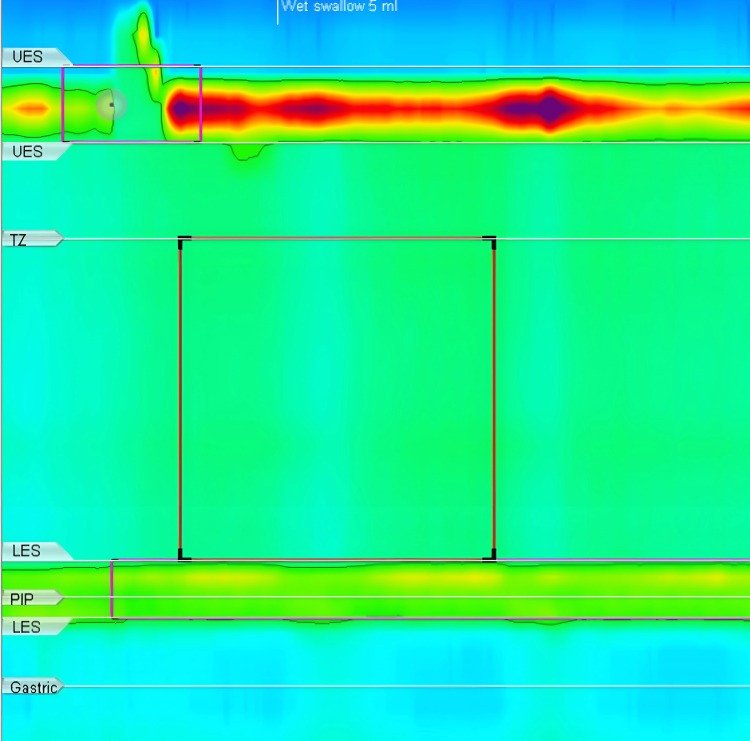 Figure 1
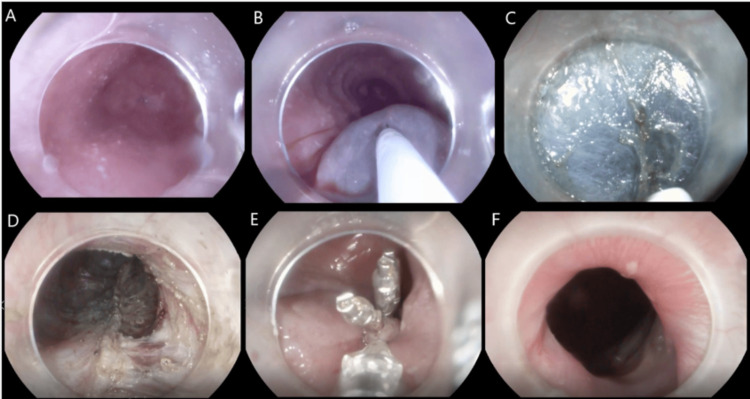 Figure 2
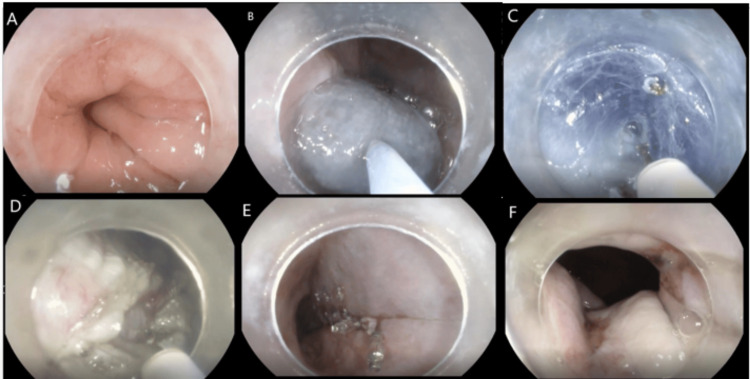 Figure 3
Peer Reviews
No public reviews on file for this paper yet. If you reviewed it on a platform where reviews are public (OpenReview, ICLR, NeurIPS, ICML), you can paste yours below so the community can read it here.
Videos
No videos yet. Explain this paper in a talk, walkthrough, or lecture? Add one.
Taxonomy
TopicsGastroesophageal reflux and treatments · Dysphagia Assessment and Management · Esophageal and GI Pathology
Introduction
Achalasia originates from the Greek word a-khalasis, meaning lack of relaxation. Achalasia cardia is a motility disorder of the esophagus where there are abnormal contractions of the esophageal body with failure of relaxation of the lower esophageal sphincter (LES) during swallowing.
There are many treatments for achalasia cardia, including oral calcium channel blockers, endoscopic balloon dilation, botulinum toxin injection, surgical Heller’s Myotomy, and peroral endoscopic myotomy (POEM). In a resource-limited country like ours, balloon dilation has been the most common procedure for this disease [1]. However, few centers in the country are also equipped to perform laparoscopic Heller’s myotomy [2]. No facility in Nepal has provided POEM procedures for such patients.
In this case report, we report the outcomes of two patients with achalasia cardia who underwent POEM procedures for the first time in Nepal.
Case presentation
Case 1
The first patient was a 55-year-old male. He complained of progressive dysphagia for the last 35 years, and his Eckardt's symptom score was five out of twelve. An endoscopic examination revealed a tight LES. Esophageal high-resolution manometry (HRM) examination showed a median integrated relaxation pressure (IRP) of 12.6 mmHg with all failed swallows (Figure 1).
HRM image of case 1.HRM: high-resolution manometry, UES: upper esophageal sphincter, TZ: transition zone, LES: lower esophageal sphincter, PIP: pressure inversion point.
A diagnosis of achalasia cardia type 1 was made. The patient was advised to undergo a POEM procedure. The procedure was performed under anesthesia with a Pentax EG29i10 therapeutic gastroscope (Pentax Medical, Tokyo, Japan). A submucosal bleb was created with a solution of normal saline and indigo carmine approximately 10 cm above the gastroesophageal junction. A longitudinal incision of about 1.5 cm was made over the bleb, and a submucosal space was entered with the help of a gastroscope fitted with a transparent distal attachment cap. Submucosal fibers were dissected with a triangle-tip knife beyond the gastroesophageal junction. Circular muscle myotomy was done up to the lower esophageal sphincter and any vessels encountered during the procedure were coagulated with the help of a coagrasper. The mucosal incision was closed with the help of hemoclips (Figure 2).
POEM procedure of case 1.(A) pre-POEM esophagogastric junction; (B) submucosal injection; (C) submucosal dissection; (D) myotomy; (E) mucosal defect closure; and (F) post-POEM esophagogastric junction. POEM: peroral endoscopic myotomy.
The POEM procedure was done without any intra-procedural and post-procedural complications. A gastrografin swallow was done the next day, which did not show any leakage of contrast, and the patient was discharged with advice to take a liquid diet for one week. Because the patient lives in the far-western part of Nepal, an in-person follow-up was not possible. He was contacted via telephone after two months and reported a significant improvement in his symptoms with a gain in weight and an Eckardt score of one out of twelve.
Case 2
The second patient was a 24-year-old male with a seven-month history of dysphagia more to liquids than solids and had a weight loss of five kilograms. His Eckardt symptom score was eight out of twelve. HRM showed a median IRP of 24.4 mmHg with panesophageal pressurization.
A diagnosis of achalasia cardia type 2 was made. POEM was done following the steps outlined for case 1, and the patient was discharged the next day after his gastrografin swallow, which demonstrated no leakage (Figure 3).
POEM procedure for case 2.(A) pre-POEM esophagogastric junction; (B) submucosal injection; (C) submucosal dissection; (D) myotomy; (E) mucosal defect closure; (F) post-POEM esophagogastric junction. POEM: peroral endoscopic myotomy.
His follow-up HRM done at three months after the procedure showed improvement with a median IRP of 4.3 mmHg. His post-procedure Eckardt score was zero out of twelve.
Discussion
Achalasia cardia is a rare disease with a reported incidence of one per 1,00,000 population. Peroral endoscopic myotomy is a novel procedure for the management of achalasia cardia, which was first performed in Japan in 2008 [3]. A randomized controlled trial (RCT) has shown that laparoscopic hellers myotomy, compared to balloon dilation, is not associated with superior rates of therapeutic success in these patients [4]. POEM has also been shown to be non-inferior to the laparoscopic Heller’s myotomy with Dor’s fundoplication in patients with achalasia cardia [5].
The main symptoms of achalasia cardia are gradually progressive dysphagia, more to liquids than solids, weight loss, vomiting, and chest pain. These symptoms were present in both of our cases.
Diagnosis of achalasia relies on the symptoms, barium swallow examination, and endoscopy findings. High-resolution manometry measures the function and pressure of esophageal muscles. Chicago version 4 classification of esophageal motility disorders requires a high median IRP and either 100% failed peristalsis with ≥20% swallows showing pan esophageal pressurization or spastic/premature contractions [6]. It has been shown that patients with longer duration of achalasia symptoms and those who are old may have achalasia with normal IRP [7]. A normal IRP was seen in case 1.
POEM can be performed via either an anterior or posterior tunnel orientation, with comparable efficacy, safety, and rate of post-procedure reflux between these two approaches [8]. Both of our patients had undergone posterior tunneling. Post POEM, many patients may develop mild esophagitis with reflux symptoms; however, most of these can be managed by proton pump inhibitors [9]. Both of our patients received daily proton pump inhibitors for six weeks post-treatment and didn’t have reflux symptoms at the end of three months.
Conclusions
Third-space endoscopic procedures like POEM have been labeled as the future of treating gastrointestinal dysmotility disorders. In this case report, we have described the first two cases of patients with achalasia cardia managed by POEM procedure in Nepal. The major hindrances faced in starting a POEM procedure in a limited resource setting are the rarity of the disease, the unavailability of manometry machines for the diagnosis of achalasia cardia, the unavailability of the standard equipment for the procedure, and the lack of trained manpower. Both POEM procedures were performed by the authors under the supervision of a trained expert. Future POEM procedures are planned to be done similarly and also on animal models. In this case report, we have demonstrated that even in a resource-limited country like Nepal, POEM can be performed safely.
The reference list from the paper itself. Each links out to its DOI / PubMed record.
- 1Outcome of pneumatic balloon dilatation in achalasia cardia J Adv Intern Med Baral S Paudel BN Khanal A 813102021
- 2Achalasia cardia: a case series JNMA J Nepal Med Assoc Chapagain N Adhikari N Acharya BP Limbu Y Ghimire R 4744776220243936941810.31729/jnma.8649 PMC 11455629 · doi ↗ · pubmed ↗
- 3Endoscopic treatment for esophageal achalasia: per-oral endoscopic myotomy (POEM)Jpn J Thorac Cardiovasc Surg Inoue H Onimaru M Yokoyama N 896901772024 https://www.pieronline.jp/content/article/0021-5252/77100/89639617391 · pubmed ↗
- 4Pneumatic dilation versus laparoscopic Heller's myotomy for idiopathic achalasia N Engl J Med Boeckxstaens GE Annese V des Varannes SB 1807181636420112156134610.1056/NEJ Moa 1010502 · doi ↗ · pubmed ↗
- 5Endoscopic or surgical myotomy in patients with idiopathic achalasia N Engl J Med Werner YB Hakanson B Martinek J 2219222938120193180098710.1056/NEJ Moa 1905380 · doi ↗ · pubmed ↗
- 6Esophageal motility disorders on high-resolution manometry: Chicago classification version 4.0(©)Neurogastroenterol Motil Yadlapati R Kahrilas PJ Fox MR 033202110.1111/nmo.14058 PMC 803424733373111 · doi ↗ · pubmed ↗
- 7Characteristics of a subset of achalasia with normal integrated relaxation pressure J Neurogastroenterol Motil Kim E Yoo IK Yon DK Cho JY Hong SP 2742802620203210213910.5056/jnm 19130 PMC 7176497 · doi ↗ · pubmed ↗
- 8AGA clinical practice update on advances in per-oral endoscopic myotomy (POEM) and remaining questions-what we have learned in the past decade: expert review Gastroenterology Yang D Bechara R Dunst CM Konda VJ 1483149016720243942573710.1053/j.gastro.2024.08.038 · doi ↗ · pubmed ↗