Orbital Resizing
Fernando Procianoy, Antonio Augusto Velasco e Cruz

Abstract
Genes, proteins, chemicals, diseases, species, mutations and cell lines named across the full text — each resolved to its canonical identifier and authoritative record.
Click any figure to enlarge with its caption.
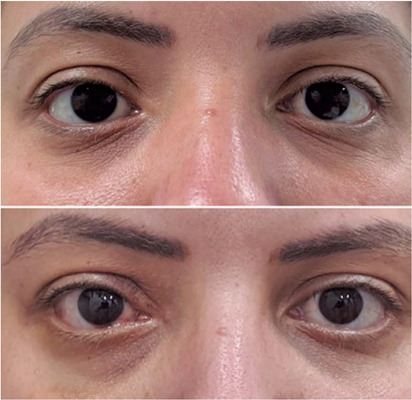 Figure 1
Peer Reviews
No public reviews on file for this paper yet. If you reviewed it on a platform where reviews are public (OpenReview, ICLR, NeurIPS, ICML), you can paste yours below so the community can read it here.
Videos
No videos yet. Explain this paper in a talk, walkthrough, or lecture? Add one.
Taxonomy
TopicsFacial Trauma and Fracture Management · Meningioma and schwannoma management · Head and Neck Surgical Oncology
Orbital decompression is a recognized oculoplastic surgery procedure, initially used for treating compressive optic neuropathy and facial disfigurement in thyroid eye disease^(1,2,3,4,5)^. The advancement of techniques and integration of technology have resulted in safer, more efficient procedures. Currently, surgeons can choose to remove orbital fat and/or reshape several orbital bone walls in different ways and combinations to achieve desired outcomes. These advancements have ushered in a new era of orbital surgery, targeting exophthalmos reduction in patients with or without thyroid eye disease (Figure 1), even without compressive orbitopathy^(6,7)^.
Figure 1.Cosmetic pre- and post-orbital resizing (ethmoidectomy) performed to correct residual right eye exophthalmos in a patient with a history of ethmoidal sinus mucocele drainage.
Despite alterations in patient profiles and indications, surgeons persist in using the term “orbital decompression” to refer to this wide variety of diseases and surgical indications. In an era where monoclonal antibody treatments also address exophthalmos reduction, it might be time to rethink the naming of surgical procedures based on their main indications. The term “orbital decompression” seems incorrect when used for a procedure conducted in an orbit without any compression Symptoms such as optic neuropathy or vascular congestion.
Most of the orbital surgeries we perform today on patients with thyroid eye disease aim to reduce exophthalmos, without any actual orbital compression. For this patient profile, expectations and concerns differ from patients with sight-threatening diseases or significant functional issues such as diplopia. The differences in surgeon and patient expectations, procedure selection, and postoperative care require distinguishing between these two types of procedures-for patient comprehension, accurate documentation, and even for billing purposes.
Therefore, we suggest using the term “orbital resizing” for exophthalmos-reduction procedures performed on patients without actual orbital compression, at the discretion of each surgeon.
The reference list from the paper itself. Each links out to its DOI / PubMed record.
- 1Baylis HI Call NB Shibata CS. The transantral orbital decompression (Ogura technique) as performed by the ophthalmologist: a series of 24 patients Ophthalmology 1980871010051012724319310.1016/s 0161-6420(80)35132-4 · doi ↗ · pubmed ↗
- 2Anderson RL Linberg JV. Transorbital approach to decompression in Graves’ disease Arch Ophthalmol 1981991120124689392910.1001/archopht.1981.03930010122016 · doi ↗ · pubmed ↗
- 3Hurwitz JJ Birt D. An individualized approach to orbital decompression in Graves’ orbitopathy Arch Ophthalmol 19851035660665383889010.1001/archopht.1985.01050050052016 · doi ↗ · pubmed ↗
- 4Shorr N Seiff SR. The four stages of surgical rehabilitation of the patient with dysthyroid ophthalmopathy Ophthalmology 1986934476483370352210.1016/s 0161-6420(86)33712-6 · doi ↗ · pubmed ↗
- 5Fells P. Orbital decompression for severe dysthyroid eye disease Br J Ophthalmol 1987712107111382826210.1136/bjo.71.2.107PMC 1041099 · doi ↗ · pubmed ↗
- 6Fatourechi V Garrity JA Bartley GB Bergstralh EJ De Santo LW Gorman CA. Graves ophthalmopathy. Results of transantral orbital decompression performed primarily for cosmetic indications Ophthalmology 199410159389428190484 · pubmed ↗
- 7Limongi RM FeijóED Rodrigues Lopes E Silva M Akaishi P Velasco E Cruz AA Christian Pieroni-Gonçalves A Orbital bone decompression for non-thyroid eye disease proptosis Ophthalmie Plast Reconstr Surg 2020361131610.1097/IOP.000000000000143531373985 · doi ↗ · pubmed ↗