Evaluation of carrot (Daucus carota L.) varieties for growth and yield as affected by NPSB fertilizer rates in Gondar district, Ethiopia
Abebaw Mulugeta, Fentahun Asrat, Derajew Asres, Shiferaw Mebrat

TL;DR
This study evaluates how different carrot varieties and fertilizer rates affect growth and yield in Ethiopia, finding that a specific variety and fertilizer rate produce the best results.
Contribution
The study identifies optimal NPSB fertilizer rates and carrot varieties for improved growth and yield in Gondar district, Ethiopia.
Findings
The highest root diameter, length, and volume were achieved with 162.3 kg ha-1 NPSB fertilizer.
The interaction of the Haramaya-I variety and 162.3 kg ha-1 NPSB produced the highest root fresh weight and dry matter yield.
The 2021 planting year showed the maximum number of leaves and root measurements.
Abstract
Carrot (Daucus carota L.) is one of the most important root crops grown worldwide and in Ethiopia. However, its production and productivity are low due to a lack of improved varieties and unbalanced fertilizer rates, among other factors. The field experiment was, therefore, conducted to determine the performance of carrot varieties through blended fertilizer rates at Gondar district for a consecutive period of two years. The treatment consisted of six rates of blended NPSB (Nitrogen, phosphorus, sulfur and Boron) fertilizer (0, 40.6, 81.3, 122, 162.3, and 203.4 kg ha-1) and two carrot varieties (Haramay-I and Nantes), which were laid out in a randomized complete block design with three replications. The main effect of blended NPSB received in 162.3 kg ha-1 obtained the highest root diameter (3.38 cm), root length (20.93 cm), and root volume (110.60 mm). The main effect of the year was…
Genes, proteins, chemicals, diseases, species, mutations and cell lines named across the full text — each resolved to its canonical identifier and authoritative record.
Click any figure to enlarge with its caption.
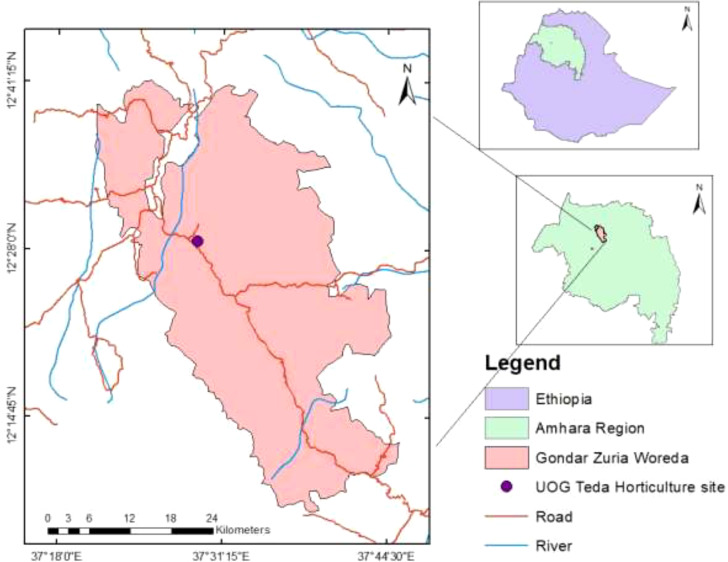 Figure 1
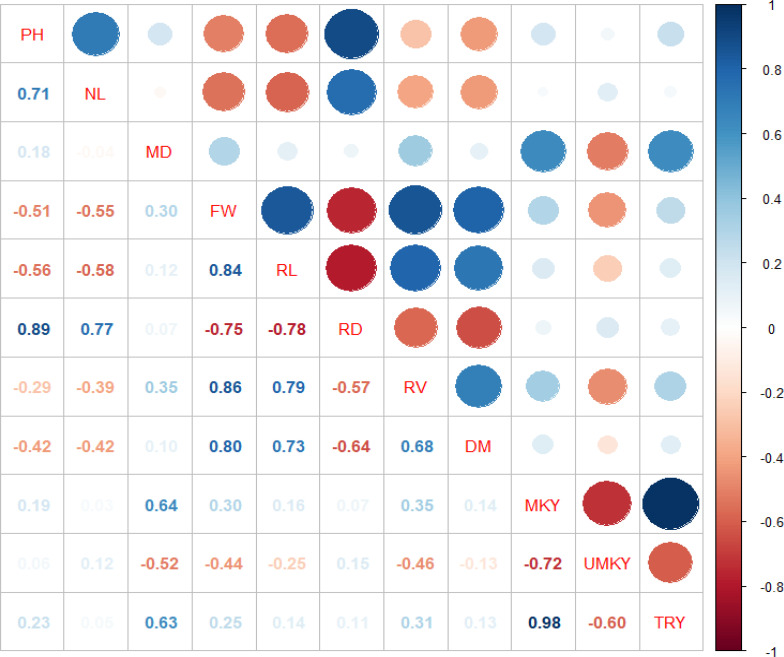 Figure 2
| No. | Varieties | Altitude | Fertilizer rate(kg ha−1) | Root color | Root weight (g) |
|---|---|---|---|---|---|
| 1 | Nantes | 1,600–2,400 | 46 P2O5 and 64 N | Orange | 107.2 |
| 2 | Haramaya–I (AUA-108) | 1,600–2,400 | 46 P2O5 and 64 N | Deep orange | 108 |
| Year | Number of leaf plant−1 | Root diameter | Root length | Root volume | Dry matter (%) | Marketable root yield (t ha−1) | Unmarketable yield (t ha−1) | Total root yield (t ha−1) |
|---|---|---|---|---|---|---|---|---|
| 2021 | 10.31a | 2.96a | 20.09a | 89.20a | 9.53a | 36.46a | 7.82a | 43.30a |
| 2022 | 8.53b | 2.26b | 16.41b | 85.88a | 7.20b | 27.98b | 6.84b | 36.80b |
| LSD | 0.73 | 0.12 | 1.31 | 8.9 | 0.37 | 1.23 | 0.32 | 1.31 |
| CV | 16.4 | 9.96 | 15.11 | 11.40 | 9.21 | 8.06 | 9.17 | 6.91 |
| Treatments | Maturity date plant−1 (2021) | Maturity date plant−1 (2022) | Plant height plant−1 (2021) | Plant height |
|---|---|---|---|---|
| NPSB kg ha−1 | ||||
| 0 | 93.95d | 91.55d | 28.90d | 29.57c |
| 40.6 | 97.74cd | 97.66c | 33.66c | 32.00b |
| 81.3 | 100.47bc | 101.91b | 35.40c | 32.90b |
| 122 | 103.85b | 105.28b | 37.03bc | 33.70ab |
| 162.3 | 110.22a | 112.32a | 39.97ab | 35.00a |
| 203.4 | 112.67a | 115.61a | 41.17a | 35.63a |
| LSD | 4.02 | 3.80 | 3.37 | 2.05 |
| Varieties | ||||
| Haramaya-1 | 101.55b | 102.82a | 37.45a | 33.96a |
| Nantes | 104.56a | 105.30a | 34.59b | 32.31b |
| LSD | 2.32 | 2.19 | 1.95 | 1.19 |
| CV (%) | 3.26 | 3.05 | 7.81 | 5.18 |
| Treatments | Number of leaves per plant−1 |
|---|---|
| NPSB kg ha−1 | |
| 0 | 8.57c |
| 40.6 | 8.84bc |
| 81.3 | 9.04bc |
| 122 | 9.67abc |
| 162.3 | 9.87ab |
| 203.4 | 10.51a |
| LSD | 1.27 |
| Varieties | |
| Haramaya-1 | 9.53a |
| Nantes | 9.26a |
| LSD | 0.73 |
| CV (%) | 16.4 |
| Treatments | Root fresh weight (g plant−1) | |
|---|---|---|
| NPSB rate Kg ha−1 | Haramaya-1 | Nantes |
| 0 | 61.55h | 57.13i |
| 40.6 | 81.35g | 83.41g |
| 81.3 | 93.72f | 91.30f |
| 122 | 132.24ab | 112.11e |
| 162.3 | 134.48a | 127.35cd |
| 203.4 | 130.00bc | 125.04d |
| LSD | 3.31 | |
| CV (%) | 2.77 | |
| Treatments | Root diameter plant−1 (cm) | Root length plant−1 (cm) | Root volume plant−1 (mm) |
|---|---|---|---|
| NPSB kg ha−1 | |||
| 0 | 1.78d | 13.09d | 50.50e |
| 40.6 | 1.97d | 17.27c | 76.50d |
| 81.3 | 2.27c | 18.15bc | 87.45cd |
| 122 | 3.17b | 19.58ab | 92.84bc |
| 162.3 | 3.38a | 20.93a | 110.60a |
| 203.4 | 3.27ab | 20.46a | 107.33ab |
| LSD | 0.21 | 2.27 | 15.41 |
| Varieties | |||
| Haramaya-1 | 2.75a | 19.20a | 93.26a |
| Nantes | 2.48b | 17.29b | 81.82b |
| LSD | 0.12 | 1.31 | 8.9 |
| CV (%) | 9.96 | 15.11 | 11.40 |
| Treatments | Root dry matter (%) | |
|---|---|---|
| NPSB rate Kg ha−1 | Haramaya-1 | Nantes |
| 0 | 5.168i | 4.748i |
| 40.6 | 6.701gh | 6.101h |
| 81.3 | 8.335ef | 7.068g |
| 122 | 9.228de | 7.56fg |
| 162.3 | 13.67a | 9.768cd |
| 203.4 | 11.87b | 10.20c |
| LSD | 0.89 | |
| CV (%) | 9.21 | |
| Treatments | Marketable root yield (t ha−1) | Unmarketable yield (t ha−1) | Total root yield (t ha−1) | ||||
|---|---|---|---|---|---|---|---|
| NPSB Kg ha−1 | Haramaya1 | Nantes | Haramaya1 | Nantes | Haramaya1 | Nantes | |
| 0 | 20.65g | 19.52g | 9.37b | 10.77a | 30.79g | 30.52g | |
| 40.6 | 26.52ef | 23.75f | 8.57cd | 8.87bc | 35.59ef | 32.79fg | |
| 81.3 | 31.25d | 27.35e | 7.90de | 8.54cd | 38.49de | 36.72e | |
| 122 | 42.55b | 34.15cd | 5.94g | 7.50ef | 48.99b | 39.960cd | |
| 162.3 | 50.77a | 34.85c | 4.04h | 5.34g | 55.32a | 42.56c | |
| 203.4 | 43.32b | 31.95cd | 4.37h | 6.74f | 48.19b | 40.69cd | |
| LSD | 3.02 | 0.77 | 3.22 | ||||
| CV (%) | 8.06 | 9.17 | 6.91 | ||||
Peer Reviews
No public reviews on file for this paper yet. If you reviewed it on a platform where reviews are public (OpenReview, ICLR, NeurIPS, ICML), you can paste yours below so the community can read it here.
Videos
No videos yet. Explain this paper in a talk, walkthrough, or lecture? Add one.
Taxonomy
TopicsAgricultural Science and Fertilization · Banana Cultivation and Research · Agricultural Practices and Plant Genetics
Introduction
1
Carrot (Daucus carota L.) belongs to the family Apiaceae, formerly Umbelliferae. Its root is valued as a food, mainly because of its high carotene content. Carrot is a biennial in the case of seed production, but it grows as an annual crop for root production. It belongs to the moderately hardy group of plants that are not particularly sensitive to winter cold or frost. It performs best under cool conditions, and its seeds germinate quite well (De Lannoy, 2001).
Carrot is an important vegetable crop that is widely used by humans, especially in children’s diets, owing to its high nutritional value (Heinonen, 1990). It is an important source of alpha- and beta-carotene, which are precursors of vitamin A, in human nutrition in many countries worldwide. They are weight loss-friendly foods that have been linked to lower cholesterol levels and improved eye health. Moreover, their antioxidant activity has been linked to reduced risk of cancer (Sharma et al., 2012).
Carrots are one of the major contributors to the world vegetable trade and are utilized in the fresh market and processing industries. The global annual production of carrots and turnips is estimated to be 44,762,859 tons (t), with a total production area of approximately 1,128,695 ha of land. China is the largest producer of carrot and turnip in the world, with an annual production of 2,148,297 tons on 455,656 ha of land. The total production volume in Africa is 236,301 tons, with the largest area, and the highest production is found in Nigeria and South Africa (FAO, 2019). According to the Ethiopian Central Statistical Agency (2020), the total production of carrots during the 2019/2020 cropping season in the country was 182,254.14 tons, with a total land area coverage of 4,073.63 ha.
In the Amhara region, the total production of carrot root was 3,578.10 tons, which was produced from 643.87 ha of land (CSA, 2020). In the study area of the Central Gondar zone, carrot production was estimated to be 35 tons, with a total area coverage of 12 ha (CGAO, 2021). The root yield of the Nantes carrot variety in Ethiopia ranges from 6 t ha^−1^ to 15 t ha^−1^ under farmer management, depending on agro-ecology (Tabor and Yesuf, 2012).
Application of NPK fertilizer at the recommended rates ensures successful production of carrot yields. The Haramaya-I variety was developed together with the Nantes variety by applying 100 kg DAP and 100 kg urea in a split application, which are recommended as a source of phosphorus and nitrogen, respectively, for root production (Wassu et al., 2014). N, P, and S play significant roles in the yield of carrots by enhancing photosynthesis and growth (Hart and Butler, 2003).
Carrot is among the top 10 most economically important vegetable crops in Ethiopia, yet its average productivity in the Amhara region is low at 5.5 t ha^−1^, significantly below the global average of 39 t ha^−1^ (CSA, 2020; FAO, 2019). Factors contributing to this low productivity include a shortage of improved varieties, lack of recommended fertilizer rates, low soil fertility, and pest and disease infestations (Alemayehu et al., 2015).
In the central Gondar zone, available phosphorous, available sulfur, and extractable boron are very low, whereas total nitrogen is low in the soil. Similarly, the soils of Lay Teda Kebele, where the study was conducted, contain very low available phosphorous, sulfur, extractable boron, and low total nitrogen (ATA, 2016). There was no shortage of extractable zinc in the study area. Hence, it is imperative to use blended NPSB fertilizers to increase the productivity of carrots in the study area. Ethiopian Agricultural Transformation Agency has also confirmed that N:P2O5:S:B (18.9N–37.7P2O5–6.95S–0.1B) fertilizer substituted DAP in all over part of crop growing area including carrot in Ethiopia. However, the response of carrot to the application rate of the newly introduced blended NPSB fertilizer under agro-ecological conditions in the central Gondar zone has not yet been studied.
In the Central Gondar Zone, particularly in the Gondar Zuria district, farmers primarily use urea and blended fertilizers but apply the same fertilizer amounts across different crop varieties. There is a notable absence of research on optimal blended fertilizer rates for improved carrot varieties under varying planting years in Northwest Ethiopia (ARARI, 2018). This research aims to address the information gap regarding blended fertilizer application for different carrot varieties, considering the crop’s nutritional and economic importance, with the objective of evaluating the effect of NPSB fertilizer on carrot varieties in a consecutive two-year planting season.
Materials and methods
2
Description of the study area
2.1
The evaluation was conducted in 2021 and 2022 for two consecutive years in the Gondar district under irrigation conditions. The experimental site is located at a latitude of 12°28′N, longitude of 37°29′E, and altitude of 1977 m.a.s. (GPS readings). The average long-term climate data showed that the study area receives a total annual rainfall of 1,058 mm. The study area had a subtropical climate. The minimum and maximum temperatures were 12.7 and 27.3, respectively (Ousman et al., 2018). The climate conditions and precipitation data for 2021 and 2022 in the study area are presented in Appendix Table 5 (Figure 1).
Geographical location of the study area, Gondar, Ethiopia.
Experimental materials and treatments
2.2
Two carrot varieties (Nantes and Haramaya-I) and blended fertilizer, NPSB (18.9 N-37.7 P2O5-6.95S-0.1B) and urea (46% N), were used. The varieties were collected from the Holeta Agricultural Research Center for Haramaya-I and the agricultural input delivery shop center for the Nantes varieties. The details of these varieties are presented in Table 1.
The experiment consisted of a factorial combination of two carrot varieties (Nantes and Haramaya-I) and six NPSB fertilizer levels (0 kg ha^−1^, 40.6 kg ha^−1^, 81.3 kg ha^−1^, 122 kg ha^−1^, 162.3 kg ha^−1^, and 203.4 kg ha^−1^), which were arranged in a randomized complete block design (RCBD) with three replications. The levels of blended fertilizers were set based on the recommended fertilizer for carrots (100 kg DAP and 100 kg urea ha^−1^) (Mohamed et al., 2014). There were a total of 36 experimental plots. Each plot measured 1.8 m2 (1.2 m × 1.5 m), with six rows per plot and 24 plants per row. The distances between the block and plot were 1.5 m and 1 m, respectively. The outer single row on both sides of the plot and one plant at both ends of the rows were considered as border plants. The net plot area was 1.1 m2 (1 m× 1.1 m).
Experimental procedure
2.3
The experimental land was oxen plowed three times and disked manually to make the land fine tilth, and the plots were measured and demarked; then, the beds were prepared for each plot. Before sowing, the seeds were mixed with sand (1:1) to increase the volume and avoid dropping too many seeds in one spot. Seeds were sown directly on the prepared land following the rows. Approximately 5 kg of carrot seeds per hectare was used for sowing.
All NPSB rates were applied during sowing. Because nitrogen is a mobile element, urea application was split in two: 50% of the dose during planting, and the remaining 50% was applied 35 days after emergence. Thinning was performed 30 and 40 days after emergence to maintain a spacing of 5 cm between plants (Mehedi et al., 2012; Vithwel and Kanaujia, 2013). Irrigation water was supplied from the beginning to the end by surface irrigation method at 2 days intervals until the seedling established well, and then at 7 days intervals during the experimental period. The plots were irrigated to refill field capacity. Earthing-up was performed every two weeks to cover and protect the roots from sunlight. All other management practices, including weeding and hoeing, were performed as per recommendations.
Data collected
2.4
The number of days between sowing and maturity was recorded. Plants showed yellowing of leaves at the time of reaching physiological maturity; carrot roots were harvested (Hailu et al., 2008). Plant height (cm) and 10 randomly selected and tagged plants were measured from ground level to the top of the shoot using a ruler. The number of leaves was counted from 10 randomly selected tagged plants from each experimental plot. Root fresh weight (g) was determined by measuring the fresh weight of 10 randomly collected carrot roots directly after harvesting. Root length (cm), the length of the root of 10 randomly selected and tagged plants, was measured from the base to the marked apex using a ruler, and the mean length of roots was calculated at harvest.
The root diameter (cm) and root diameter of 10 plant samples were measured approximately 2.0 cm below the shoulder using a Vernier caliper, and the average diameter of the root was recorded. Root volume (mm) and average root volume were obtained from 10 randomly selected plants for each treatment by immersing the roots in a beaker containing a known amount of water. The root volume was determined by observing the displacement of water by the root such that the difference was taken as the volume of the root.
Root dry matter (%) was determined by oven-drying the carrot root of 100 g of fresh root weight from each plot and oven-drying at a temperature of 80°C for 72 h or to constant weight, and the weight was measured using a balance.
Marketable yield (t ha^−1^), roots with no deformities such as cracks, forking, disease, or malformation, and roots without spots and weighing more than 40 g were selected from each net plot area, and the weight was recorded as marketable yield and converted to t ha^−1^ (Appiah et al., 2017). Unmarketable yield (t ha^−1^), roots that showed root cracks, forking, disease, and malformation, and weighed below 40 g were selected from each net plot area, and their weight was recorded as unmarketable yield and converted to t ha^−1^ (Appiah et al., 2017). Total root yield (t ha^−1^) after harvesting, topping, and cleaning of roots, the weight of roots was measured for each net plot. The total yield of the net plot area was converted into t ha^−1^.
Methods of data analysis
2.5
Data were subjected to Analysis of Variance (ANOVA) using R-version 4.4.1 software (R core team, 2024).Treatment means were separated by least significant difference (LSD) at the 1 or 5% level of significance, depending on the ANOVA result significance level. Correlation analysis was performed by calculating simple linear correlation coefficients between growth and yield.
Results and discussion
3
Levene’s test results for homogeneity of variances among years
3.1
Levene’s test for homogeneity of variances between 2021 and 2022 revealed no significant differences in plant height (PH) and days to maturity (DM). However, highly significant differences were observed in number of leaf (NL), fresh weight (FW), Root diameter (RD), and marketable root yield (MRY). Highly significant differences were observed in Root volume (RV) and Dry matter (DM), and significant differences were observed in from Root length (RL), unmarketable yield, and total root yield (TRY) (Appendix Table 1). Consequently, separate mean square ANOVA values were used for plant height and maturity dates in 2021 and 2022 (Appendix Table 2). In contrast, the combined mean square ANOVA values were used for NL, FW, RD, RV, DM, RL, MRY, UMRY, and TRY (Appendix Tables 3, 4).
Effect of planting year on growth, root characteristics, and yield of carrot
3.2
The analysis of the results revealed highly significant (P <0.001) influences of both NPSB fertilizer and carrot variety on all parameters except root volume, which was not statistically significant between plant seasons. The result of analysis observed that declines in carrot growth metrics, number of leaves (from 10.31 to 8.53), root length (from 20.09 cm to 16.41 cm), and root diameter (from 2.96 cm to 2.26 cm) between 2021 and 2022 can be attributed to several factors (Table 2). Variability in climate is a result of observed droughts in carrots. The compacted root diameter (2.96 cm to 2.26 cm) between 2021 and 2022 can be attributed to several factors. Water stress, soil compaction, and pest pressure are likely to play a significant role in the difference in root growth of carrots.
Compacted soils restrict root expansion, potentially explaining the reduced root diameter if soil conditions change owing to increased traffic or cultivation practices (Bengough et al., 2006). Additionally, the decrease in root volume from 89.2 mm in 2021 to 81.82 mm in 2022 could result from soil health issues, water management practices, and genetic variability as well as adverse environmental factors like temperature and light variations. Marketable, unmarketable, and total root yields were significantly different between the two planting seasons.
Higher marketable and total yields of carrot (36.46 t ha^−1^ and 43.30 t ha^−1^) were recorded from the planting year of 2021, respectively. Lower marketable and total yield (27.98 t ha^−1^ and 36.80 t ha^−1^) were revealed from the planting year of 2022, respectively. This indicated that carrot production performance was influenced by the production season (Tolessa, 2022).
Effect of planting year and NPSB fertilizer rates on plant height and days to maturity of carrot varieties
3.3
The analysis of the results highlights the significant influence of both NPSB fertilizer and carrot variety on days to maturity. NPSB fertilizer exhibited a highly significant effect (P <0.001), while the variety showed a significant effect (P <0.05). However, the interaction between these factors was not significant (P >0.05) across either planting year.
In 2022, the control group (no fertilizer) matured the earliest at 91.55 days, contrasting with the delayed maturity observed at higher NPSB rates, particularly 115.61 days at 203.4 kg ha^−1^ (Table 3). Similarly, in 2021, the control group matured in 93.95 days, with increasing fertilizer rates extending maturity by 24.04 days in 2022 and 18.72 days in 2021, likely due to nitrogen’s role in prolonging vegetative growth. Varietal differences were also evident, with ‘Haramaya-I’ maturing earlier than ‘Nantes,’ requiring 101.55 days and 102.82 days in 2021 and 2022, respectively. In contrast, ‘Nantes’ took longer, maturing at 104.56 days and 105.30 days for the same years. These variations are attributed to genetic differences and responses to environmental conditions, findings by Melese et al. (2018).
Plant height was significantly affected by both NPSB fertilizer application (P <0.001) and variety (P <0.05), but no interaction effect was observed (P >0.05). The tallest plants were recorded at the highest fertilizer rate of 203.4 kg ha^−1^ in both years, with heights of 41.47 cm in 2021 and 35.63 cm in 2022, compared with shorter heights in the control group. These increases in height are likely due to enhanced photosynthesis from nitrogen and phosphorus, which are crucial for growth during periods of high metabolic activity, as well as the roles of sulfur in chlorophyll formation (Hatwar et al., 2013). This aligns with previous research indicating that plant height was not significantly affected by the interaction between carrot variety and fertilization rates (Nikmatullah et al., 2021).
Effect of NPSB fertilizer on number of leaves of carrot varieties
3.4
The combined analysis of variance indicated that the number of leaves in plant^−1^ was significantly (P <0.001) affected by the main effect of NPSB fertilizer and variety. However, the interaction between these factors was not significant (P >0.05). The largest number of leaves per plant (10.51) was recorded in 203.4 NPSB kg ha^−1^, whereas the lowest number of leaves per plant (8.57) was recorded in the unfertilized plot (Table 4). The reduced leaf number at a lower level of fertilizer might be due to the lack of sufficient nutrients and assimilation for growth, whereas the increase in leaf number per plant at a higher rate of NPSB fertilizer could be attributed to the availability of macro- and micronutrients that permit vigorous growth of leaves. The current result is related to the findings of Hailu et al. (2008), who reported that the application of orga and urea had a significant effect on the number of leaves. Pongener et al. (2018) also showed that the maximum number of leaves (8) was obtained with 1.5% Zn + 2% B + 2% Cu t ha-1 and the minimum (6.5) was obtained from the control. A larger number of leaves per plant (9.53) was recorded in Haramaya-I, whereas a lower number of leaves per plant (9.26) was recorded in the Nantes variety, which was not a significant difference between varieties.
This result agrees with the findings of Biratu et al. (2020), who observed that the number of leaf plants was significantly influenced by variety.
Root characteristics
3.5
Root fresh weight
3.5.1
The combined analysis of variance revealed that the root weight of carrots was significantly (P <0.001) affected by different rates of NPSB fertilizer and variety, and their interaction showed a significant effect (P <0.05). The highest average root weight (134.48 g plant^−1^) was obtained from Haramaya-I variety and application of 162.3 NPSB kg ha^−1^, while the lowest average root weight (57.13 g plant^−1^) was recorded by the Nantes variety from the unfertilized plots, which was at par with the value (61.55 g plant^−1^) recorded by the Haramaya-I variety when it was unfertilized (Table 5).
The root weight of carrot had increased as blended fertilizer increased from 0 kg ha^−1^ to 162.3 kg ha^−1^ NPSB fertilizer. This could be due to increased vegetative growth and, hence, increased food production and assimilation into parts. However, with the excess application of nitrogen fertilizer, more aboveground vegetative growth is favored over root growth, resulting in low root weight. In line with this, Hailu et al. (2008) justified that the general trend of increasing and then decreasing carrot root weight was evident due to the increased rate of nitrogen fertilizer application.
The higher root weight per plant was due to the larger number of leaves for photosynthesis and efficient utilization of photosynthesis, which might have enhanced the weight of the root (Patel et al., 2015). This result was consistent with that reported by Ladumor et al. (2020). Variations in root weight among different carrot varieties might be due to varietal differences.
Root length
3.5.2
The combined analysis of the main effects of NPSB fertilizer rate and variety showed a highly significant (P <0.001) effect on the root length of carrots, and their interaction showed no significant effect (P <0.05).
The root length was increased as NPSB increased from 0 kg NPSB kg ha^−1^ to 162.3 kg NPSB kg ha^−1^ and fluctuated beyond 162.3 kg NPSB kg ha^−1^ in both varieties. In line with this, Kreuzmann et al. (2007) reported that the highest root length (17.19 cm) per plant was found with 100 kg ha^−1^ of nitrogen and the lowest root length (15.39 cm) was recorded in the untreated fertilizer.
The current experiment is also in agreement with Elwan et al. (2018) on the application of ammonium sulfate and spraying with a mixture of micronutrients that had the highest root length among the carrot varieties.
Root diameter
3.5.3
The analysis of variance indicated that NPSB fertilizer rates and varieties had highly significant (P <0.001) and highly significant (P <0.01) effects on root diameter, whereas the interaction of both factors did not significantly affect root diameter.
Significantly, the highest root diameter per plant (3.38 cm) was recorded from 162.3 kg NPSB kg ha^−1^, followed by 3.27 cm obtained from 203.4 kg NPSB kg ha^−1^, which are statistically similar, while the smallest root diameter of 1.78 cm was recorded from the control (Table 6). The highest root diameter per plant at higher rates of NPSB blended fertilizer might be due to the phosphorus fertilizer stimulating root diameter growth. The critical role of phosphorus in carrot plants is root diameter growth and root development (Roy et al., 2006). Carrots require adequate available phosphorus for normal growth. This result is in line with the findings of Pongener et al. (2018), who reported that the maximum root diameter recorded was 30.50 mm through the combined application of macro- and micronutrients, whereas the minimum was obtained through the control with 24.71 mm. Sultana et al. (2015) confirmed that a higher percentage application of micronutrient combination has the value of increasing the root diameter of carrot than without nutrients applied.
Regarding carrot varieties, a significantly higher root diameter (2.75 cm) was recorded from Haramaya-1, whereas a lower root diameter (2.48 cm) was obtained from the Nantes variety. This might be attributed to the inherent characteristics of the cultivars and environmental conditions. This result was similar to that of Biratu et al. (2020), who reported that the highest root diameter (3.05 cm) was recorded in the Haramaya-I variety.
Root volume
3.5.4
The analysis of variance revealed that root volume was highly significant (P <0.001), influenced by different levels of NPSB fertilizer, and highly (p <0.01) affected by variety, but their interaction did not.
The maximum root volume (110.60 ml) was obtained from carrot plants, which received 162.3 kg NPSB kg ha^−1^, whereas the minimum root volume (50.50 ml) was obtained from the control. Excess application of inorganic nitrogen fertilizer did not improve root volume. Conversely, a decrease in root volume was observed because of excess nitrogen fertilizer application above the recommended rate. Melese (2016) found a significant difference in the root volume of carrots due to the application of different rates of nitrogen and orga.
In contrast, the carrot varieties showed a significant difference in root volume. The highest root volume (93.26 mm) was recorded in the Haramaya-I variety, whereas a lower root volume (81.82 mm) was obtained in the Nantes variety.
Dry matter
3.5.5
The interaction effects of NPSB fertilizer and varieties on the dry matter of roots were highly significant (P <0.001). The maximum value of 13.67% was obtained at 162.3 kg ha^−1^ from the Haramaya-I variety and the minimum value of 5.17% was obtained in the control from the Nantes variety (Table 7). The root dry matter increased from 5.17% to 13.67% as NPSB fertilizer increased from 0 NPSB kg ha^−1^ to 162.3 NPSB kg ha^−^ * ^1^
- with the Haramaya-1 variety, while in the Nantes variety, the dry matter increased from 4.75% to 10.20% as NPSB fertilizer increased from 0 NPSB kg ha^−1^ to 203.4 NPSB kg ha^−^
^1^ *.
This might be due to the carrot plants’ uptake of more nutrients and accumulation of higher dry matter in the storage organ. The current results agree with the findings of Kreuzmann et al. (2007) that variety and nitrogen sources affect the dry matter content. Kumar et al. (2014) and Grubinger (1999) also reported that nitrogen and phosphorus fertilizers increased dry matter production. El-Sayed et al. (2011) found that phosphorus rate had a significant effect on the storage of root dry matter. Along with nitrogen and phosphorus, boron significantly increases the dry matter production of carrots (Solanki et al., 2018).
Yield parameters
3.6
The interaction effect of varieties with NPSB fertilizer rates resulted in highly significant (p <0.001) changes in the mean of the marketable, unmarketable, and total yield of carrots.
The Haramaya-I variety yielded the highest marketable (50.77 t ha^−1^) and total root yield (55.32 t ha^−1^) when treated with 162.3 kg NPSB ha^−1^) fertilizer (Table 8).
In contrast, untreated Nantes and Haramaya-I varieties produced the lowest yields (20.65 t ha^−^¹ and 30.79 t ha^−^¹, respectively). This suggests that increasing NPSB fertilizer enhances total root yield, likely because of the beneficial effects of nitrogen, phosphorus, sulfur, and boron on carrot growth.
Phosphorus is crucial for root development and energy transfer (Roy et al., 2006), which is consistent with the findings of Mubashir et al. (2010) and Ahmed (2014), who emphasized the significance of nitrogen and phosphorus on marketable yields. Additionally, sulfur improves nutrient absorption and photosynthesis, thereby contributing to higher yields (Zhou et al., 2005).
Micronutrient applications further enhance marketable yields (Tawfic et al., 2014). These results confirm that carrot yield is influenced by variety and fertilizer application rates (Nikmatullah et al., 2021).
The Haramaya-I variety outperformed Nantes, potentially due to genetic differences, climate, and cultural practices, supporting Wassu et al. (2014), who found Haramaya-I superior in root production. On the other hand, significantly the highest unmarketable root yield (10.77 t ha^−1^) was recorded from the control with the Nantes variety, while the smallest value (4.37 t ha^−1^) was recorded from the Haramaya I variety received with 203.4 kg NPSB ha^−1^. The increase in unmarketable yield may be linked to inadequate nitrogen, which is crucial for compounds such as chlorophyll and enzymes essential for plant growth (Brady and Weil, 2002). Additionally, low phosphorus levels can lead to poor root development, further reducing the carrot yield (Kreutzmann et al., 2007). Boron deficiency also plays a significant role by restricting stomatal opening and increasing solute leakage, which diminishes the photosynthetic potential and contributes to higher unmarketable yields (Subba et al., 2017).
Moreover, excess nitrogen fertilizer can lead to increased branching and cracking severity in carrots, resulting in higher unmarketable yields (Hartz et al., 2005). Mehedi et al. (2012) noted significant variations in cracked root percentages due to different nitrogen levels. Among the varieties, the Haramaya-I variety exhibited the lowest unmarketable yield, whereas the Nantes variety had the highest. This disparity may stem from a correlation between growth traits and unmarketable yield; varieties with more leaves and greater height tend to have lower unmarketable yields, as leaf number is strongly negatively correlated with unmarketable yield (Ahmed et al., 2014).
Correlation analysis
4
The correlation coefficient (r) values computed to determine the association between the growth parameters and root yield are shown in Figure 2. The correlation values explained the apparent association between the growth parameters and root yield, indicating the magnitude and direction of the association and relationships.
Simple correlations (r) among growth, root characteristics, and yield of carrot under different rates of NPSB fertilizer rate and varieties. PH, plant height; NL, number of leaf; MD, maturity date; FW, root fresh weight; RL, root length; RD, root diameter; RV, root volume; DM, dry matter; MRY, marketable root yield; UMRY, unmarketable root yield; TRY, total root yield.
Days to maturity and root volume had a strong positive correlation with marketable and total root yields (p <0.001), implying that an increase in root volume enhanced total root yield and marketable root yield (Figure 2).
Root fresh weight also showed a significant positive correlation with marketable (r = 0.3***) and total (r = 0.25***) root yield. However, it had a strong negative association with unmarketable root yield (r = −0.44***).
Conclusion
5
The results of this study showed an increase in yield when 162.3 NPSB kg ha^−1^ of fertilizer was combined with both varieties to obtain the maximum yield. A general trend of increased root yield of carrots due to the increased rate of NPSB fertilizer application was observed. Nevertheless, this was apparent only up to the rate of 162.3 NPSB kg ha^−1^. There was a significant difference between the two varieties. Producing the Haramya-I variety was better because it had a higher marketable and total yield than that of the Nantes variety. Year one (2021) was the best season for carrot production compared with year two (2022). As a result, carrot production performance is influenced by the production season and the inherent characteristics of the genotype. Therefore, it is essential to consider these aspects in carrot production regions.
The reference list from the paper itself. Each links out to its DOI / PubMed record.
- 1Ahmed A.Sambo B. E.Arunah U. L.Odion E. C. (2014). Response of farmyard manure and inorganic fertilizers for sustainable growth of carrot (Daucus carota L.) in Northern Nigeria. J. Agric. Vet. Sci. 7, 26–33. doi: 10.9790/2380-07221825 · doi ↗
- 2Alemayehu M.Tessafa F.Bizuayehu S.Ayele B. (2015). Amhara region horticulture development strategy (ARHDS) (2015-2019) (Bahir Dar, Ethiopia: College of Agriculture and Environmental Sciences Bahir Dar University).
- 3Appiah F. K.Addo S. J.Opoku A. (2017). Growth and yield response of carrot (Daucus carota L) to different green manures and plant spacing. J. Biol. Agric. Healthc. 7, 16–23.
- 4ARARI (Amhara Regional Agricultural Research Institute) (2018). Participatory Agricultural Production Systems Analysis of AGP-II Districts in North Gondar Zone: Implications for Research and Development (Amhara Regional office of agriculture Ethiopia: Gondar Agricultural Research Center).
- 5ATA (Agricultural Transformation Agency) (2016). Ethio SIS.Soil fertility and fertilizer recommendation atlas (Adiss Ababa, Ethiopia: Ministry of Agriculture (Mo A)).
- 6Bengough A. G.Mullins C. E.Waisel Y. (2006). The effect of soil compaction on root diameter of carrot (Daucus carota L.). Plant Soil 280, 1–10. doi: 10.1007/s 11104-005-9001-2 · doi ↗
- 7Biratu W.Molla B.Abebe H.Gebremeskel H. (2020). Evaluation of Carrot (Daucus carrota) Cultivarss for Growth, Root Yield and Yield Related Traits at Adigrat and Atsbi, Eastern Zone of Tigray Region. J. Natural Sci. Res. 10, 14–18.
- 8Brady Weil (2002). The nature and properties of soils. Thirteenth edition (Delhi, India: Pearson Education Asia).