Socioeconomic and academic consequences of COVID-19 pandemic on medical students from the University of Rwanda
Olga Nadege Uwera Ndamukunda, Marie Therese Mutuyimana, Fabiola Umubano, Eugene Tuyishime

TL;DR
This study examines how the COVID-19 pandemic affected the social, economic, and academic lives of medical students at the University of Rwanda.
Contribution
It provides insights into the specific impacts on medical students in Sub-Saharan Africa, a region underrepresented in pandemic research.
Findings
Most students experienced disruptions in routine activities and reduced social interactions.
Financial uncertainty and income loss were common economic consequences.
Academic progress was significantly affected, with many students facing the risk of repeating their year.
Abstract
Little is known about the consequences of the COVID-19 pandemic on the life of university students in Sub Saharan Africa (SSA). The objective of this study was to evaluate the socioeconomic and academic consequences of the COVID-19 pandemic on medical students studying at the University of Rwanda. This was a cross-sectional study. An online survey using google form was sent to medical students in clinical training (year 3 till year 5) using convenience sampling followed by snowball sampling method. We collected data on participants’ demographics, general knowledge on the COVID-19 pandemic and perception on mitigation measures, and socio-economic and academic consequences of the COVID-19 pandemic. Descriptive statistics were used in excel 2015 software to calculate participants’ responses and categorical data were presented using frequencies and percentages. A total 187 participants…
Genes, proteins, chemicals, diseases, species, mutations and cell lines named across the full text — each resolved to its canonical identifier and authoritative record.
Click any figure to enlarge with its caption.
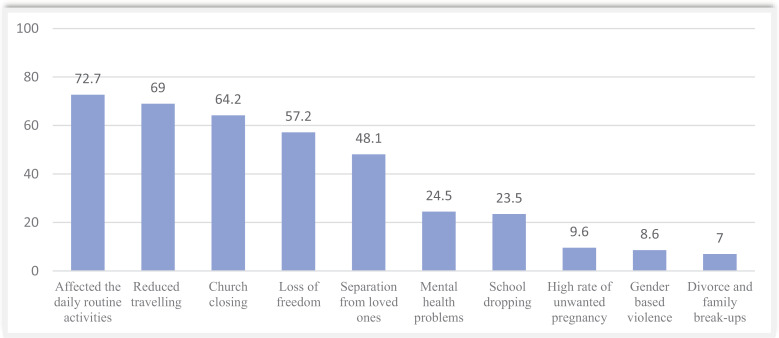 Fig 1
Fig 1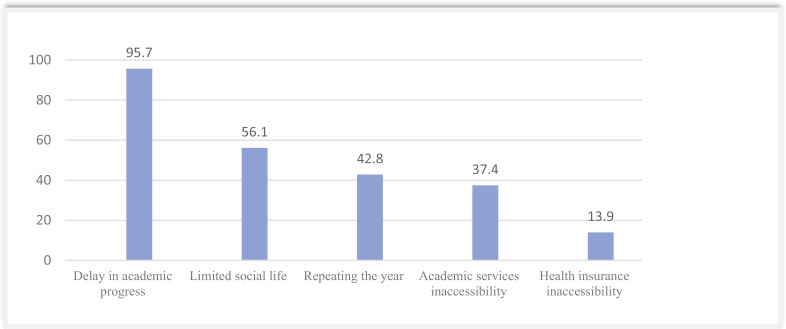 Fig 2
Fig 2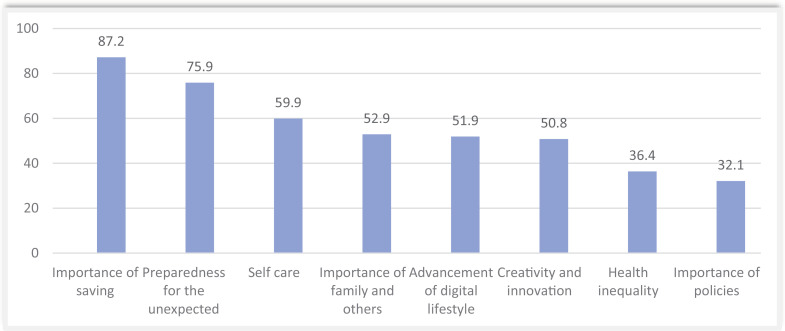 Fig 3
Fig 3Peer Reviews
No public reviews on file for this paper yet. If you reviewed it on a platform where reviews are public (OpenReview, ICLR, NeurIPS, ICML), you can paste yours below so the community can read it here.
Videos
No videos yet. Explain this paper in a talk, walkthrough, or lecture? Add one.
Taxonomy
TopicsCOVID-19 and Mental Health · COVID-19 Pandemic Impacts · COVID-19 epidemiological studies
Background
The Covid-19 pandemic has disrupted multiple sectors of the economy globally, but low-income countries were affected the most due to limited resources. Multiple negative socio-economic consequences have been described such as limited movement, job loss, financial instability, adverse effects on human communication and relationships, and suffering and feeling helpless, especially for vulnerable people like the poor, elderly, persons with disabilities, and homeless people [1–5]. Social life was severely affected with churches being closed; sports prohibited, and stadiums and gyms closed. As all leisure and relaxing places were closed to try to contain the pandemic, the fear of an uncertain future and the constant stress of illness caused intense psychological pressure that led to an increase in rates of depression, suicide, domestic violence (physical, emotional, or sexual), and other mental illnesses [2,6].
In addition, the COVID-19 caused specific socioeconomic and academic consequences to the education sector, especially in low resources settings. University students from different countries faced socio-economic challenges such as income loss, financial uncertainty, food insecurity, and mental health difficulties [1,5]. On top of that, university students faced academic consequences like missing classes, difficulty in academic progression, and repeating the academic year. This may have an even greater negative consequences on medical students who faced the dilemma to continue clinical rotations with the risk of exposure or taking time off clinical rotation with the risk of poor training and difficulty in academic progression [6–10]. This happened in the context of multiple consequences of the COVID-19 pandemic on key sectors of the Rwandan economy such as manufacturing, tourism, services, and agriculture; manufacturing faced supply chain disruptions, tourism suffered a big loss due to travel restrictions, most services were closed, and the agriculture output was reduced [11,12]. This led to the contraction of the economy by 3.4% in 2020 (first negative growth in the last 2 decades), however, Rwanda’s proactive measures facilitated a good recovery [11,12].
To our knowledge, there is no study which has been done in Rwanda to explore the socio-economic and academic consequences of the COVID-19 on medical students in Rwanda. To close this gap in knowledge, this study had the following objectives: 1) to evaluate the socio-economic consequences of the COVID-19 pandemic on medical students in clinical years at the University of Rwanda; 2) to evaluate the academic consequences of COVID-19 pandemic by medical students in clinical years at the University of Rwanda.
Methods
Study description
This was a cross-sectional study. Reporting followed the Strengthening the Reporting of Observational Studies in Epidemiology (STROBE) guidelines for reporting observational studies [13].
Study settings and population
This study was conducted at the University of Rwanda (UR), in the College of Medicine and Health Sciences (CMHS), in the School of Medicine and Pharmacy, which had approximately 700 medical students. Medical students in clinical training (year 3 up to year 5) were eligible to participate in this study. We excluded participants who did not provide their informed consent.
Data collection
Data were collected using an online survey (google form); the link was shared via WhatsApp and emails participants by convenience sampling followed by snowball recruitment method. Participants were requested to share the link to others so that it reaches as many participants as possible. The link was open on 20^th^ April 2022 and closed on 01^st^ July 2022.
The questionnaire had 4 groups of questions including demographic profile, general knowledge on COVID-19 pandemic, its socioeconomic consequences, and its academic consequences. The questionnaire was adapted from similar studies done in Pakistan and Liberia by respectively Ali et al. 2020 and Davis et al. 2021[1,6].
Statistical analysis
We used descriptive statistics in excel 2015 software to calculate participants’ responses and categorical data were presented using frequencies and percentages. No continuous variables were reported.
Ethical approval
Ethical approval was obtained from the College of Medicine and Health Sciences Institutional Review Board, IRB number: CMHS/IRB/242/2022. All participants provided written informed consent prior to participating in the study.
Results
In total, 187 medical students participated in the survey. Most participants were male (52.9%), aged between 24-29 years (75.4%), stayed with parents (44.9%), come from Kigali (50.2%), and were in Ubudehe category 3 (83.9%) (Table 1).
Table 1: Sociodemographic characteristics.
Table 2 describes participants’ general knowledge on COVID-19 pandemic and mitigation measures. Most participants were aware of COVID-19 pandemic (97.3%) and used appropriate mitigation measures like vaccination (89.3%), using face masks every day (82.9%), and washing their hands frequently (81.8%).
Table 2: General knowledge on COVID 19 pandemic of medical students from the University of Rwanda.
Fig 1 shows the social consequences of COVID-19 pandemic among medical students at the University of Rwanda. Most participants faced disruption of routine activities such church closure (64.2%), restricted travelling (69%). Other negative social consequences reported include separation from loved ones (48.1%), loss of freedom (57.2%), and dropping out from school (23.5%).
Social consequences of COVID-19 pandemic on medical students from the University of Rwanda.
Table 3 shows the economic consequence of the COVID-19 pandemic. 64.7% of participants said that financial uncertainty was the major immediate consequence of the COVID-19 on personal level, followed by a decrease in income at 49.7%, and fear of school dropout at 39%. At family level, 42.2% of participants showed that poverty is the main consequence while 38% faced business closure.
Table 3: Economic consequences of COVID-19 pandemic on medical students from the University of Rwanda.
Majority of participants showed their concern about academic progress (95.7%) and limited social life (56.1%) (Fig 2).
Academic consequences of the COVID-19 on medical students from the University of Rwanda.
Most participants understood the importance of saving (87.2%), learned to always be prepared for the unexpected (75.9%), learned the importance of self-care (59.9%), and value their family more than before (52.9%) (Fig 3).
Lessons learnt from the COVID-19 consequences by medical students from the University of Rwanda.
Discussion
The findings of this study showed that most participants faced different social consequences like disruption in routine activities (72.7%), reduced travelling (69%), church closing at (64.2%), and loss of freedom (57.2%). Those impacts were mainly attributed to the mitigation measures taken to contain the spread of the virus, specifically total lockdowns, and quarantines. Similar findings have been described in other countries.
For example, Amjad Ali et al., 2020 found that COVID-19 led to negative social consequences on people living in Gilgit-Baltistan mountains in Pakistan such as routine activities disturbance, limited social life, and reduced traveling [1]. Similarly, Tewodros Mulugeta et al., 2021 found similar findings in Addis Ababa/Ethiopia with most participants expressing how it was unbearable to stay at home leading to stress, boredom, and anxiety [2]. Furthermore, Busetta et al., 2021 showed that movements restriction has deeply impacted the social life of university students in Italy, with increased rate of anxiety and future uncertainty, however, that experience opened their eyes on a different aspect of university life specifically e-learning [14]. In Greece, K. Diamanti et al., 2021 showed that many students experienced social deprivation contacting only their parents and family members leading to a loss of live communication, isolation feeling, loss of freedom, and lack of personal space when at home. However, this study showed some positive impact like strengthening family relations [15].
Despite all the negative consequences experienced during the pandemic crisis, we cannot ignore the positive side it had on families. Alghamdi A.A., 2021 during the survey of Saudi university students; participants described that the COVID-19 pandemic helped them to build strong bond and connection with their families, to increase appreciation of life and death, and to set priorities [9]. Being at home maybe suffocating and depriving but it was proven that it is also an important element to rebuild family’s bond and communication. Parents should focus more on open communication with their children and spend enough time with them for their social and mental wellbeing.
Most participants reported financial uncertainty (64.7%), decrease in income (49.7%), and increase in poverty rate (42.2%) as the main economic consequences. Multiple studies have reported similar findings.
For example, Elvis et al., 2021 found that income loss, financial uncertainty and food insecurity were major burden faced by medical and pharmacy students in Liberia [6]. Cvetkovic et al., 2020 found that unemployment and fear of job loss were the major consequences among university students in Serbia [3]. Also, some countries faced limited economic consequences. For example, Wendy et al., 2021, showed that rural households in Kenya faced income decline, however, the food security was intact because people were consuming their home-grown foods which is an advantage for countries focusing on agriculture as a major source of income [16].
Our findings of high rates of reporting negative socioeconomic consequences may be explained by the fact that most medical students from the University of Rwanda come from low-income families living far from the University. Medical students may have had difficulties in getting financial and social support from their families. In addition, the government stipend even if it is helpful but it is still small. There are also limited opportunities for part-time jobs. More social protection measures for university students should be put in place at student level, family level, and government level.
The academic life was also impacted by the pandemic, as the study showed that 95.7% faced delay in the academic progress, 56.1% complained of limited social life and 42.8% repeated the year.
Similar findings have been described in the literature. For example, Maria et al., 2020 showed that university students in Bacau, Romania faced limited social life and poor communication with their lecturers affecting their accessibility to learning materials and mental health degradation [8]. Halis Sakiz, 2022 study on individuals with disability in Turkey showed that the pandemic caused significant delay in academic progress, poor access to mental health services and lack of socialization.
In contrast, Gonzalez et al., 2020 showed the positive impact of the COVID-19 pandemic on university students in Spain; their workload was not affected, the online study increased the assessment activities, and the learning strategy became more regular than before [17].
In the context of Rwanda, our findings of reporting high rates of negative academic consequences may be explained by lack of enough experience in using e-learning which was also limited by lack of access to high speed interned and computers for some students. Initiatives to promote easy access to online courses for medical students at the University of Rwanda should be encouraged.
Limitations
This study has different limitations to consider. First, this study was conducted in one medical school in Rwanda and used convenience sampling method; the results may not be generalizable to other medical schools in Rwanda with different characteristics or other countries with different context. In addition, our survey was distributed through WhatsApp and emails requiring access to internet, we may have missed some participants in rural areas without internet who may even have had higher negative socioeconomic and academic consequences. Moreover, there is a possibility of recall bias leading to under-reporting some consequences of the COVID-19 pandemic among some students. Finally, our analysis used only descriptive statistics which did not show factors associated with more consequences from the COVID-19 pandemic.
Conclusion
The results of this study suggest that the COVID-19 had a negative social, economic, and academic consequences on medical students at the University of Rwanda. These finding may guide the design of interventions to mitigate the consequences of the COVID-19 pandemic and to protect medical students against future pandemics and crises. Further studies should evaluate the feasibilities of potential interventions to improve pandemic preparedness among medical students in Rwanda.
Supporting information
S1 FileData collection tool.(XLSX)
The reference list from the paper itself. Each links out to its DOI / PubMed record.
- 1Ali A, Ahmed M, Hassan N. Socioeconomic impact of COVID-19 pandemic: evidence from rural mountain community in Pakistan. J Public Aff. 2021 Nov;21(4):e 2355. doi: 10.1002/pa.2355 32904946 PMC 7460993 · doi ↗ · pubmed ↗
- 2Mulugeta T, Tadesse E, Shegute T, Desta TT. COVID-19: socio-economic impacts and challenges in the working group. Heliyon. 2021;7(6):e 07307. doi: 10.1016/j.heliyon.2021.e 07307 34151042 PMC 8196481 · doi ↗ · pubmed ↗
- 3CvetkovićVM, NikolićN, NenadićUR, Öcal A, Noji EK, ZečevićM. Preparedness and preventive behaviors for a pandemic disaster caused by COVID-19 in Serbia. Int J Environ Res Public Health. 2020;17(11):1–23. doi: 10.3390/ijerph 17114124 32527056 PMC 7313005 · doi ↗ · pubmed ↗
- 4Osterrieder A, Cuman G, Pan-Ngum W, Cheah PK, Cheah PK, Peerawaranun P, et al. Economic and social impacts of COVID-19 and public health measures: results from an anonymous online survey in Thailand, Malaysia, the UK, Italy and Slovenia. BMJ Open. 2021;11(7):e 046863. doi: 10.1136/bmjopen-2020-046863 34285007 PMC 8295020 · doi ↗ · pubmed ↗
- 5Davis EJ, Amorim G, Dahn B, Moon TD. Perceived ability to comply with national COVID-19 mitigation strategies and their impact on household finances, food security, and mental well-being of medical and pharmacy students in Liberia. P Lo S One. 2021;16(7):1–13. doi: 10.1371/journal.pone.0254446 34242378 PMC 8270202 · doi ↗ · pubmed ↗
- 6Aristovnik A, KeržičD, Ravšelj D, TomaževičN, Umek L. Impacts of the COVID-19 pandemic on life of higher education students: global survey dataset from the first wave. Data Brief. 2021;39:107659. doi: 10.1016/j.dib.2021.107659 34869802 PMC 8634691 · doi ↗ · pubmed ↗
- 7Radu MC, Schnakovszky C, Herghelegiu E, Ciubotariu VA, Cristea I. The impact of the covid-19 pandemic on the quality of educational process: a student survey. Int J Environ Res Public Health. 2020;17(21):7770. doi: 10.3390/ijerph 17217770 33114192 PMC 7660608 · doi ↗ · pubmed ↗
- 8Alghamdi AA. Impact of the COVID-19 pandemic on the social and educational aspects of Saudi university students’ lives. P Lo S One. 2021;16(4):e 0250026. doi: 10.1371/journal.pone.0250026 33852627 PMC 8046245 · doi ↗ · pubmed ↗