Assessment of Formalin-Fixed Bovine Larynx Asymmetry Using Geometric Morphometry
Arcesio Salamanca-Carreño, Pere M. Parés-Casanova, Mauricio Vélez-Terranova, Néstor Ismael Monroy-Ochoa

TL;DR
This study uses geometric morphometry to find asymmetry in the larynx of calves, revealing differences between left and right sides and between sexes.
Contribution
This is the first study to detect larynx asymmetries in cattle using geometric morphometric techniques.
Findings
Significant differences in larynx morphology were found between right and left sides and between sexes.
The study demonstrates directional asymmetry in fixed structures of the larynx in calves.
The findings suggest that larynx asymmetry may contribute to vocal differences in cattle.
Abstract
The vibrations of the larynx produce the voice. Little is known about morphology and the size of cattle larynx. The aim of the study was to quantify the shape asymmetry of the larynx in calves obtained postmortem using a geometric morphometric approach. A sample of 14 larynges from calves (in an age range 335–625 days) belonging to “Bruna dels Pirineus” breed and its F1 crosses was obtained in an abattoir during the first semester of 2021. Laringes were dissected and preserved in the laboratory until their photograph was taken Landmark sets were superimposed on images of fixed transverse sections of larynges. Using geometric morphometric techniques, we analyzed the presence of asymmetries. Asymmetry between sexes was assessed by means of a Canonical Variate Analysis on regression residuals of asymmetric components using the Mahalanobis distance, which assumes a lack of isotropy.…
Genes, proteins, chemicals, diseases, species, mutations and cell lines named across the full text — each resolved to its canonical identifier and authoritative record.
Click any figure to enlarge with its caption.
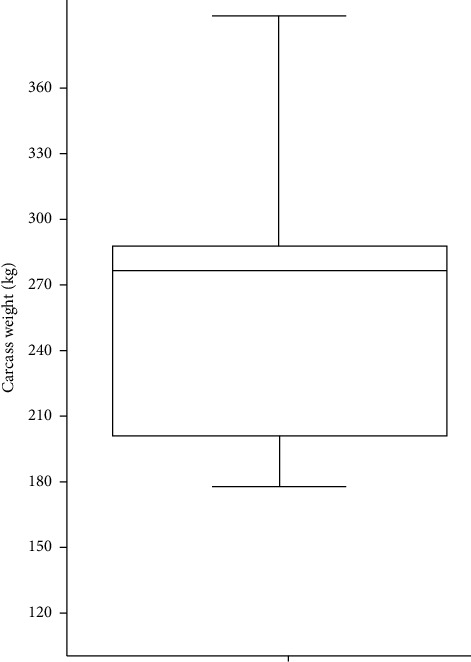 Figure 1
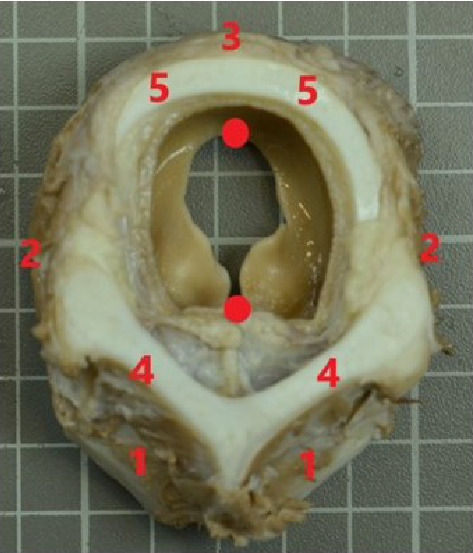 Figure 2
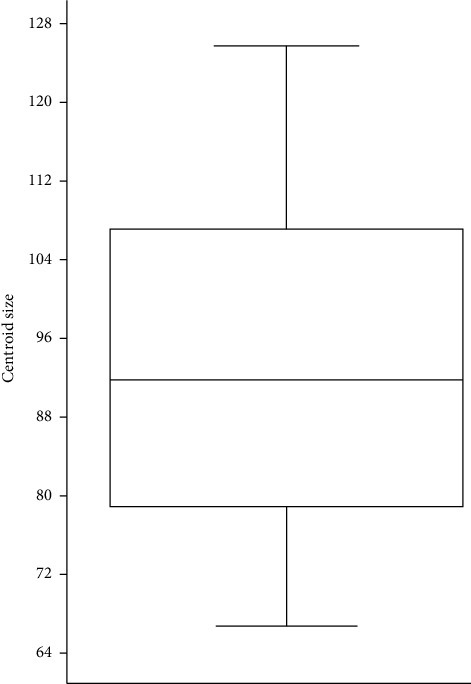 Figure 3
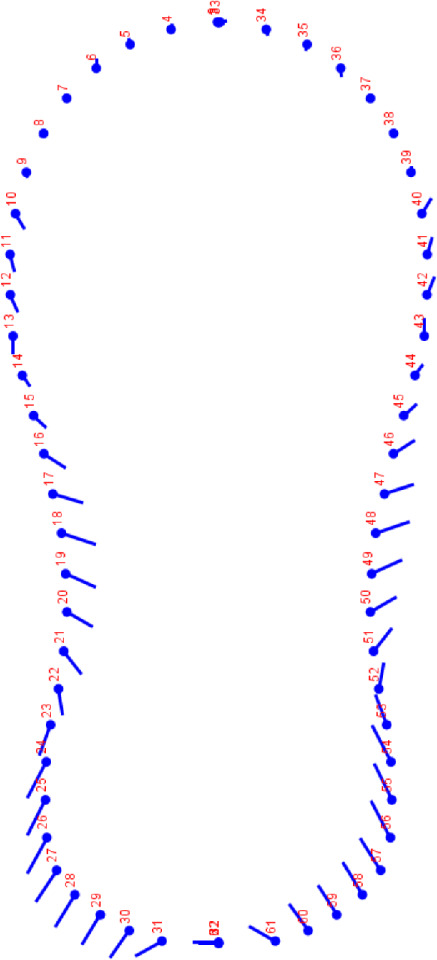 Figure 4
- —Universidad Cooperativa de Colombia
Peer Reviews
No public reviews on file for this paper yet. If you reviewed it on a platform where reviews are public (OpenReview, ICLR, NeurIPS, ICML), you can paste yours below so the community can read it here.
Videos
No videos yet. Explain this paper in a talk, walkthrough, or lecture? Add one.
Taxonomy
TopicsMorphological variations and asymmetry · Animal Vocal Communication and Behavior · Genetic and phenotypic traits in livestock
1. Introduction
The larynx is a part of the respiratory system [1] and protects the respiratory tract during swallowing, respiration, and voice production, and provides a mechanism for organisms to seal the airways, and hold their breath [1, 2]. The larynx is important for communication between members of the same species and evolutionary studies, as in the case of anuran species [2, 3]. Voice production occurs as a result of vibrations of the larynx [1, 4]. Although there are descriptions on the form and constitution of the cartilaginous muscle of the larynx of animals, there are few studies on signs of sexual dimorphism in the larynx in domestic or wild mammals [5]. Larynx vibration facilitates the production of sounds that exhibit reduced environmental attenuation [6]. “The size and composition of larynx” appears to contribute to species specific acoustic properties [7, 8]. Little is known about size and morphology of cattle larynx. Vocal organ morphology represents a “complex shape and the absence of homologous landmarks pose major challenges in its geometrical analysis” [9]. In older females, vocal cord contact increases, while in males it decreases with age [10, 11].
The association between larynx length, elasticity, and body size has been described in several mammal species, such as human, red deer, horses, and Rocky Mountain elk [4, 12]. Moreover, in humans the larynx is sexually dimorphic [13, 14] as well as in rats [14]. Despite this observed sexual dimorphism, little is known about the sexual dimorphism of the thyroarytenoid, the main muscle of the larynx [14]. The literature suggests that the number of muscle fibers decreases in the thyroarytenoid, and differences have been found between the thyroarytenoid muscles of male and female rats in old age [15]. But sex differences in larynx contact area during sound production have not been studied for any animal, at least in authors' knowledge. We therefore hypothesized that there would be noticeable shape changes in the larynx associated with functional vocalizations differences among genders in cattle.
Although geometric morphometrics (GM) is not a novel technique for the study of form in structures, it has been scarcely applied to the study of soft tissues [16]. Nor has it been applied to the study of soft tissue sexual dimorphism [17]. So, its application to the analysis of shape variation for larynx is totally novel. In this research, we apply GM techniques to the study of larynx in a sample of meat calves, with the purpose to study form (size + shape) of both sides of larynx, and test the following research questions:
-
- Is there any asymmetry (directional or fluctuating) in the bovine larynx?
-
- Are there asymmetric differences (directional) between the sexes?
The aim of the present study was to assess anatomical asymmetry using GM techniques of the formalin-fixed larynx in “Bruna dels Pirineus” breed. A preprints.org has previously been published [18].
2. Materials and Methods
2.1. Sample
A sample of 14 larynges from calves belonging to “Bruna dels Pirineus” breed and its F1 crosses (cross with another meat breed) was obtained in an abattoir during the first semester of 2021. “Bruna dels Pirineus” is a breed from Catalonia (NE Spain) with meat purposes and managed under semiextensive conditions mainly on the Pyrenean and Prepyrenean area. Sample included 6 females and 8 males in an age range 335–625 days and a mean of 263.3 ± 53.26 kg for hot carcass weight (Figure 1), which is the commercial age demanded by the Catalan market. The age was calculated according to official individual documents (mandatory). No animal presented anomalies on antemortem inspection. Larynx samples were obtained from fresh carcasses. The samples included all the pieces and were never fragmented.
At the laboratory, fresh larynges were dissected and were preserved in buffered formaldehyde at least for a minimum of 72 h 4% until they were photographed. A transversal cut at the level of larynx was obtained and fixed in a standard plane and pictures were then taken using a digital camera (Nikon D1500) equipped with a lens (Nikon DX de 18–105 mm). A scale was included and placed parallel to the face plane (Figure 2).
2.2. Comparison Between Sexes
Age and hot carcass weight between sexes were compared using the Mann–Whitney U test.
2.3. GM
A set 2 midsagittal landmarks and 30 semilandmarks per side were selected. Location and digitalization were performed with TpsDig v. 2.16 [19]. Digitalization was done in two separate sessions. Semilandmarks are points on curves for which their exact position cannot be determined using anatomical criteria. They were ulteriorly transformed to landmarks with the program TpsUtility v. 1.70 [19]. Statistical analyses were done using standard procedures [20].
All coordinates were then aligned using a Procrustes superimposition, thus eliminating non-shape information. Size (expressed as Centroid Size, CS) was estimated as “the square root of the sum of squared distances from the centroid of a landmark configuration” [20]. To perform size correction, the allometric influence of size on shape was estimated by regressing the shape scores on the CS log transformed.
It has been noted “that measurement error is a confounding factor in the assessment of fluctuating asymmetry” [21–23]. Therefore, all pictures were digitized twice to estimate inter-observer error. A shape Procrustes ANOVA to analyze the variation in total shape and to examine the mean squares proportion of measurement error to the overall variation was performed. The symmetric component is the variation among individuals in the consensus. “The asymmetric component is the squared distances between the original configurations from this symmetric component” [22, 23]. Since Procrustes ANOVA assumes an isotropic variation around the landmark configuration, a Multivariate Analysis of Variance (MANOVA) test with a Pillai's trace and the associated parametric p value to assess the statistical significance was performed. Finally, the asymmetry between sexes was assessed by means of a Canonical Variate Analysis (CVA) on regression residuals of asymmetric components using the Mahalanobis distance, which assumes a lack of isotropy.
Symmetry was considered as object symmetry for example, as a single structure which is identical according to a mid-sagittal plane [22]. To analyze the total shape variation of the entire sample into components of symmetric variation (“Individuals”), directional asymmetry (“Side”), and fluctuating asymmetry (“Individual by Side interaction”), a Procrustes ANOVA was calculated.
Analyses were carried out with MorphoJ v. 1.07a software [24]. A p value of < 0.05 was considered statistically significant.
3. Results
3.1. Comparison Between Sexes
Carcass weight was statistically higher (U = 42; p=0.00123) among males (220.2 ± 46.7 kg) than among females (177.8 ± 42.4 kg), but age did not differ between sexes (U = 116; p=0.664).
3.2. Allometry
The contribution of global size variation was 17.52% (p=0.0008; 10,000 randomization rounds). A clear correlation between centroid size (Figure 3) and carcass weight was found (r^2^ = 0.527; p=0.0019, data log-transformed).
3.3. ANOVA
Measurement error was 4.5% (Table 1). ANOVA also showed a significant effect for DA (47.6%) and FA (9.5%, mainly on the former (Table 1).
3.4. Shape Changes
Deformation grids helped visualize the shifts in aligned coordinates from one shape to another and it depicted a clear directional bias (toward left on the lateral parts and toward right on the ventral parts) (Figure 4). Significant differences in the morphometric profile were found between the right and left larynx, and between the sexes (p < 0.05).
3.5. CVA
The asymmetric components were significantly different among sexes (p < 0.0001; 10,000 permutation rounds).
4. Discussion and Conclusion
In this study, significant differences were found between the sexes and in the morphometric profile between the left and right part of the larynx. Laryngeal sexual dimorphism is recognized in humans [25] and reindeer [26] but has not been found in dogs [27], in horses [28] or pigs [29]. In the larynx of adult rats, researchers have also found sexual dimorphism in function and structure, with lower frequency of vocalization in males [14].
At the onset of normal larynx vibration, the larynx are adducted [30] (their displacement is away from the midline in symmetric movements), so our results signal an asymmetric vibration, with a possible lack of equivalence with the shape properties of the larynx. In fact, it has been presumed “that laryngeal asymmetry (either in mass or tension) causes irregular vibrations” [31]. The laryngeal tissue, in particular the cartilages is sensitive to testosterone leading to a larger overall growth in males, and this in turn leads to larynx size sexual dimorphism in some species [4], and this would explain the detected sexual dimorphism, as males were larger than females. Asymmetry was correlated with larynx size, which in turn appeared to be correlated with body weight (e.g., more asymmetry with body weight). Other studies report that the higher the body height, “the laryngeal measurements were statistically significant,” and higher for males [32]. Variations in laryngeal structure may explain much of the interpopulation signal differences [33], body size and phylogeny [34] and sexual differences. Efforts to quantify laryngeal morphology have been hampered by its complex structure [9], which poses challenges for comparative analyses [34]. However, imaging technology has made morphological reconstruction possible in such structures [4].
The main limitation of the present study is that the sample size was limited to 14 larynges. As formaldehyde fixation can induce shrinkage, the question remains how different a fixed larynx is from a fresh one. Our results do not necessarily correspond to the situation of live cattle, but we have just intended an approximation of comparison between sides, so detected asymmetry could be found in fresh structures as well.
In this study, calves were used because they are the ones that usually arrive at the slaughterhouse. Evidently, sampling in other factories could have enlarged the sample and the age range, but it was not possible due to sanitary restrictions. Likewise, there is an important lack of bovine larynx anatomy. This reinforces the importance and the novelty of our study.
This study can be considered the first to detect larynx asymmetries in bovine livestock. Further study involving a larger sample size is needed to validate this information in a larger population. Regarding other limitations, the present study has not sampled adult animals, so it would be worth investigating if results are similar among full-grown animals.
The reference list from the paper itself. Each links out to its DOI / PubMed record.
- 1Riede T. Coyne M. Tafoya B. Baab K. L. Postnatal Development of the Mouse Larynx: Negative Allometry, Age-Dependent Shape Changes, Morphological Integration, and a Size-Dependent Spectral Feature Journal of Speech, Language, and Hearing Research 20206382680269410.1044/2020_jslhr-20-0007032762490 · doi ↗ · pubmed ↗
- 2Joshi M. M. Joshi S. S. Joshi S. D. The Morphological Study of Adult Human Larynx in a Western Indian Population Journal of Laryngology and Voice 201112505410.4103/2230-9748.85062 · doi ↗
- 3de La Vega B. Pombal J. P. Hepp F. Description and Evolution of the Larynx of the Physalaemus Olfersii Species Group, With Remarks on the Laryngeal Anatomy of the P. Cuvieri Clade (Amphibia: Anura: Leiuperinae) Journal of Anatomy 2021239355758210.1111/joa.1343633817810 PMC 8349454 · doi ↗ · pubmed ↗
- 4Riede T. Brown C. Size, Vocal Fold Length, and Fundamental Frequency—Implications for Mammal Vocal Communication Nova Acta Leopoldina NF 2013111295314
- 5Souza Junior P. Carvalho N. C. Mattos K. Anjos B. L. Santos A. L. Q. Morfologia da laringe em Cerdocyon thous (Linnaeus, 1766) Pesquisa Veterinária Brasileira 2016361455410.1590/s 0100-736x 20160001000082-s 2.0-84963744734 · doi ↗
- 6Wahlberg M. Larsen O. N. Brown C. Riede T. Propagation of Sound Comparative Bioacoustics: An Overview 2017 Sharjah, UAE Bentham Science Publishers 61120
- 7Sacchi R. Galeotti P. Fasola M. Gerzeli G. Larynx Morphology and Sound Production in Three Species of Testudinidae Journal of Morphology 2004261217518310.1002/jmor.102362-s 2.0-404311703515216522 · doi ↗ · pubmed ↗
- 8Riede T. Kobrina A. Bone L. Darwaiz T. Pasch B. Mechanisms of Sound Production in Deer Mice (Peromyscus spp.) Journal of Experimental Biology 20222259 jeb 2436951210.1242/jeb.24369535413125 PMC 9163445 · doi ↗ · pubmed ↗