An ultraviolet-C (UV-C) light device is effective for low-level disinfection of surgical site marking pens with UV-C transmissible caps
Amelia L. Milner, Jennifer L. Cadnum, Jennifer M. Hailes, Curtis J. Donskey

TL;DR
A UV-C light device can effectively disinfect surgical site marking pens, potentially reducing plastic and carbon waste.
Contribution
The study introduces a UV-C light device that enables low-level disinfection of marking pens with UV-C transmissible caps.
Findings
The UV-C light device effectively decontaminated marking pens with UV-C transmissible plastic caps.
Using this device could reduce the environmental impact of single-use plastic pens.
The method offers a sustainable alternative to traditional single-use practices.
Abstract
Single-use plastic pens are commonly used to mark surgical sites on the skin of patients. In laboratory testing, an ultraviolet-C (UV-C) light device was effective for decontamination of marking pens with plastic caps designed to allow transmission of UV-C. Decontamination of marking pens could reduce plastic and carbon footprints.
Genes, proteins, chemicals, diseases, species, mutations and cell lines named across the full text — each resolved to its canonical identifier and authoritative record.
Click any figure to enlarge with its caption.
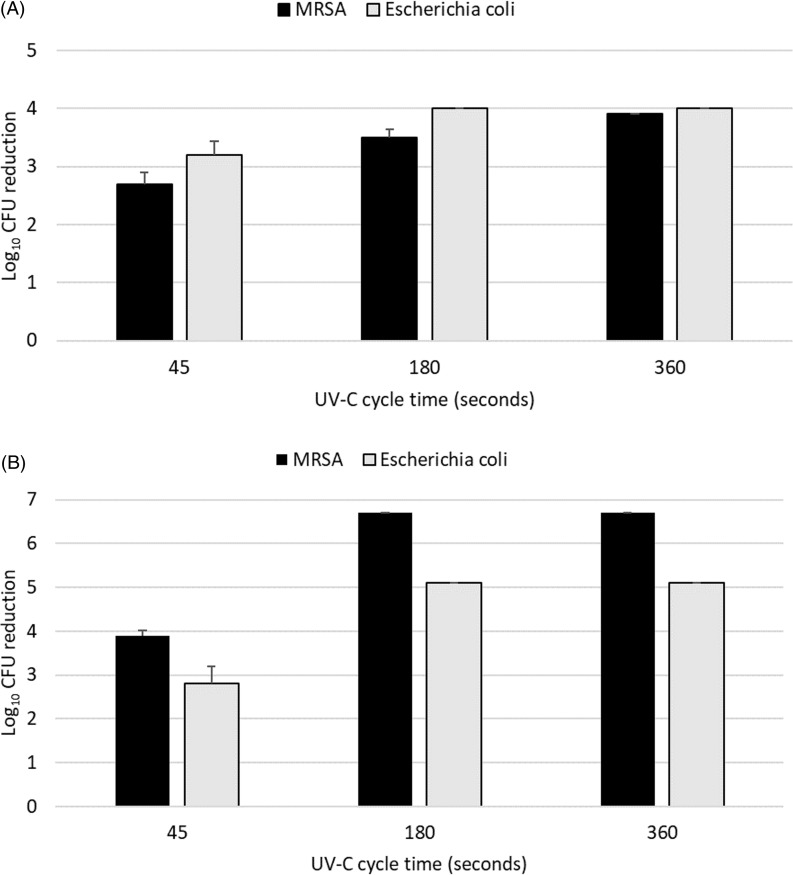 Figure 1
Peer Reviews
No public reviews on file for this paper yet. If you reviewed it on a platform where reviews are public (OpenReview, ICLR, NeurIPS, ICML), you can paste yours below so the community can read it here.
Videos
No videos yet. Explain this paper in a talk, walkthrough, or lecture? Add one.
Taxonomy
TopicsDigital Imaging in Medicine · Anatomy and Medical Technology · Reconstructive Facial Surgery Techniques
Introduction
The healthcare system contributes substantially to greenhouse gas emissions in the United States.^ 1 ^ Plastics account for 30% of healthcare waste, and many plastic items are single-use disposables.^ 2 ^ In addition to greenhouse gas emissions, plastic waste causes adverse environmental effects.^ 2,3 ^ Thus, there is increasing interest in approaches that might allow reuse of plastic items in healthcare.^ 4 ^
Single-use plastic pens are used to mark surgical sites on skin. These pens are classified as non-critical items requiring only low-level disinfection because they only contact intact skin.^ 5 ^ Low-level disinfection of these pens is challenging because liquid disinfectants might damage the tip of the pen and technologies such as ultraviolet-C (UV-C) light do not penetrate the plastic cap that covers the pen tip. Moreover, because marking pens are relatively inexpensive, a disinfection process would have to be inexpensive and easy to use to be cost-effective. Here, we tested the efficacy of a UV-C light device for low-level disinfection of marking pens with novel plastic caps designed to allow transmission of UV-C light to the pen tip.
Methods
Description of the test device
The Steri-Write system (Steri-Write, North Canton, OH) is a small portable device designed for semi-automated pen decontamination using 265-nm UV-C.^ 6 ^ Pens placed in the top of the device are automatically loaded onto a conveyer system that rotates the pens to provide UV-C exposure to all sides. The total exposure time is adjustable. After decontamination, pens are dispensed at the base. In a previous study, the device reduced bacteria and viruses inoculated on writing pens.^ 6 ^ The manufacturer’s suggested retail price for the device is less than $1,000 and the estimated lamp life is more than 5 years.
For the current study, we used marking pens with caps made from a proprietary plastic that allows transmission of ∼70% of UV-C light, providing decontamination to the area under the cap including the felt tip of the marker. The suggested retail price for the pen is $2.00. Based on testing completed by the manufacturer, it is estimated that each marker would provide 400 or more uses before needing replacement due to loss of ink; no degradation of the plastic occurs with this amount of exposure.
Evaluation of efficacy in reducing pathogens
We tested the efficacy of the device against a clinical methicillin-resistant Staphylococcus aureus (MRSA) isolate and Escherichia coli (American Type Culture Collection number 15597) using a modification of the American Society for Testing and Materials standard quantitative carrier disk test method (ASTM E-2197-02).^ 7 ^ Ten μL aliquots containing ∼10^6^ log_10_ colony-forming units (CFU) of the test organisms in phosphate-buffered saline with 5% fetal calf serum were inoculated onto the felt writing tip or the outside body of the pen; for the pen tip, the pen was capped after inoculation. After air drying for 30 minutes, the pens were exposed to UV-C cycles of 45, 180, or 360 seconds. The body of the pen was sampled with pre-moistened cotton-tipped swabs that were vortexed for 1 minute in 200 µL of phosphate-buffered saline with 0.02% Tween. Serial dilutions were plated on selective media including CHROMagar Staph aureus with 6 μg/mL cefoxitin for MRSA and MacConkey agar for E. coli. The pen tip was sampled by direct imprint onto selective media. Experiments were completed in triplicate with 3 control and 3 experimental pens for each test organism. Log_10_ CFU reductions were calculated in comparison to untreated controls. A reduction of ≥3 log_10_ in comparison to untreated controls was considered effective.^ 8 ^
Estimation of the carbon and plastic footprints of the markers
We estimated the cost of the markers and the carbon and plastic footprints for our hospital. Information on the number and cost of markers purchased each year was obtained from hospital purchasing records. The plastic footprint was calculated as the total amount of plastic waste discarded per year. The carbon footprint was approximated using the conversion rate of 1 kg of plastic to 5 kg of CO_2_.^ 9 ^
Results
Figure 1 shows the efficacy of the 45-, 180- and 360-second cycles in reducing MRSA and E. coli on inoculated pens. The 180- and 360-second cycles consistently reduced MRSA and E. coli by >3 log_10_ CFU, whereas the 45-second cycle did not. The 180-second cycle reduced the test organisms to undetectable levels in all experiments except for MRSA on the pen tip; no organisms were recovered in any experiment with the 360-second cycle.
Figure 1.Efficacy of 45-, 180-, and 360-second ultraviolet-C (UV-C) light cycles in reducing pathogens inoculated on the felt writing tip (A) and body (B) of surgical site marking pens. CFU, colony-forming unit. Error bars show standard error.
Our 215-bed hospital orders ∼18,000 marking pens (Surgical Skin Markers) each year- with an annual cost of ∼1.08 per marker). The individual markers weigh 5.7 grams resulting in a plastic footprint of approximately 102.4 kg of plastic each year. Based on the plastic-to-CO_2_ conversion, approximately 511.2 kg of CO_2_ are released yearly due to use and disposal of single-use surgical markers at our facility. Based on the manufacturer’s suggested pricing (90 with a plastic footprint of 0.26 kg.
Discussion
Single-use plastic items contribute substantially to the plastic and carbon footprints of healthcare facilities.^ 1–3 ^ We demonstrated that a UV-C light device was effective for low-level disinfection of marking pens with plastic caps that were modified to allow transmission of UV-C. A 360-second cycle consistently reduced the test pathogens to undetectable levels. These findings suggest that use of the UV-C device in combination with the modified plastic caps could allow multiple reuses of marking pens, thereby reducing costs as well as carbon and plastic footprints.
The use of plastic that allows transmission of UV-C light is a novel approach to enhance the disinfection capability of UV-C. UV-C is ineffective for disinfection of the internal components of many devices with lumens due to lack of penetration through plastic. Additional studies are needed to identify other potential applications of the UV-C transmissible plastic for disinfection of non-critical or semi-critical items.
Our study has some limitations. We only tested efficacy against MRSA and E. coli. UV-C light is less effective against Candida auris and Clostridioides difficile spores.^ 6,8 ^ However, in settings where such organisms are a concern, the device could be adjusted to provide a longer UV-C cycle. We did not calculate the time required for use of the device in a real-world setting. However, we anticipate that the time requirement would be minimal if the device were placed in the area where marking pens are used. We did not culture markers that had been used to assess the level of contamination in real-world settings. It is plausible that contamination of the marker tip may be uncommon given that the ink component of many commercial markers contains gentian violet with anti-bacterial and anti-fungal properties.^ 10 ^ Finally, the UV-C transmissible cap is currently only available for pens used with the UV-C light device. However, in the future the same type of plastic could be used to make caps for other marking pens.
In summary, the UV-C light device was effective for low-level disinfection of marking pens. Use of the UV-C device could potentially reduce the carbon and plastic footprints associated with these pens. Additional studies are needed to investigate the potential for UV-C transmissible plastics to facilitate the use of UV-C for disinfection of other plastic items used in healthcare.
The reference list from the paper itself. Each links out to its DOI / PubMed record.
- 1Chung JW , Meltzer DO . Estimate of the carbon footprint of the US health care sector. JAMA 2009;302:1970–1972.19903917 10.1001/jama.2009.1610 · doi ↗ · pubmed ↗
- 2Rizan C , Mortimer F , Stancliffe R , Bhutta MF . Plastics in healthcare: time for a re-evaluation. J R Soc Med 2020;113:49–53.32031491 10.1177/0141076819890554 PMC 7068768 · doi ↗ · pubmed ↗
- 3Fletcher CA , St. Clair R , Sharmina M . A framework for assessing the circularity and technological maturity of plastic waste management strategies in hospitals. J Cleaner Production 2021;306:127169.
- 4Vacharathit V , Walsh RM , Utech J , Asfaw SH . Action in healthcare sustainability is a surgical imperative: This is a novel way to do it. J Surg Educ 2022;79:275–278.34600860 10.1016/j.jsurg.2021.09.002 · doi ↗ · pubmed ↗
- 5Rutala WA , Weber DJ , Healthcare Infection Control Practices Advisory Committee. Guideline for disinfection and sterilization in healthcare facilities, 2008. https://www.cdc.gov/infectioncontrol/pdf/guidelines/disinfection-guidelines-H.pdf
- 6Emig E , Alhmidi H , Ng-Wong YK , Mana TSC , Cadnum JL , Donskey CJ . Efficacy of a novel ultraviolet light-emitting diode device for decontamination of shared pens in a health care setting. Am J Infect Control 2020;48:100–102.31444096 10.1016/j.ajic.2019.07.014 · doi ↗ · pubmed ↗
- 7ASTM International, Designation E 2197: Standard Quantitative Disk Carrier Test Method for Determining Bactericidal, Virucidal, Fungicidal, Mycobactericidal, and Sporicidal Activities of Chemicals, 2011.
- 8Cadnum JL , Shaikh AA , Piedrahita CT , Jencson AL , Larkin EL , Ghannoum MA , Donskey CJ . Relative resistance of the emerging fungal pathogen Candida auris and other Candida species to killing by ultraviolet light. Infect Control Hosp Epidemiol 2018;39:94–96.29157326 10.1017/ice.2017.239 · doi ↗ · pubmed ↗