Conformational Analysis of Uniformly 13C-Labeled Peptides by Rotationally Selected 13Cα-13CH3 Double-Quantum Solid-State NMR
David Middleton

TL;DR
This paper introduces a new solid-state NMR method to determine the 3D structure of labeled peptides using carbon-carbon and carbon-hydrogen interactions.
Contribution
A novel MAS SSNMR approach using rotational resonance and double-quantum coherence for peptide structure determination in the solid state.
Findings
The method measures 13C–13C distances and C–H bond orientations in uniformly 13C-labeled peptides.
Two molecular conformations of fMLF were determined, one matching a related peptide's crystal structure.
The technique is applicable to amyloid fibrils and pharmaceutical formulations.
Abstract
Peptides are an important class of biomolecules that perform many physiological functions and which occupy a significant and increasing share of the pharmaceutical market. Methods to determine the solid-state structures of peptides in different environments are important to help understand their biological functions and to aid the development of drug formulations. Here, a new magic-angle spinning (MAS) solid-state nuclear magnetic resonance (SSNMR) approach is described for the structural analysis of uniformly 13C-labeled solid peptides. Double-quantum (DQ) coherence between selective pairs of 13C nuclei in peptide backbone and side-chain CH3 groups is excited to provide restraints on (i) 13C–13C internuclear distances and (ii) the relative orientations of C–H bonds. DQ coherence is selected by adjusting the MAS frequency to the difference in the resonance frequencies of selected…
Click any figure to enlarge with its caption.
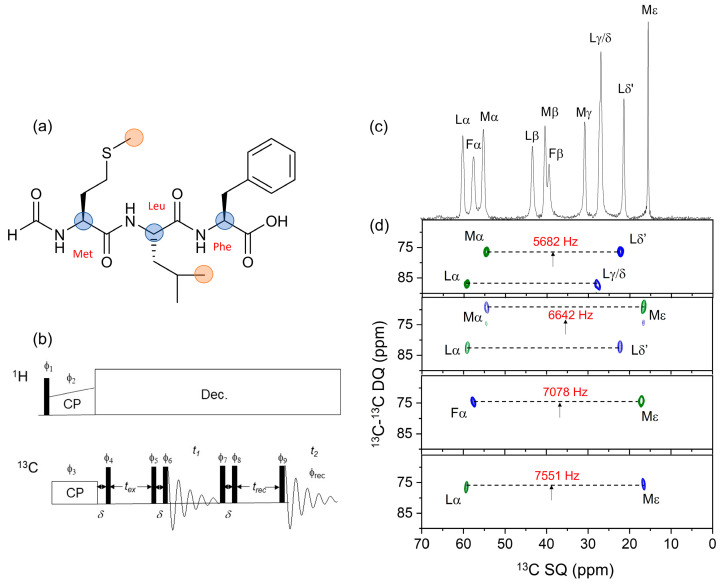 Figure 1
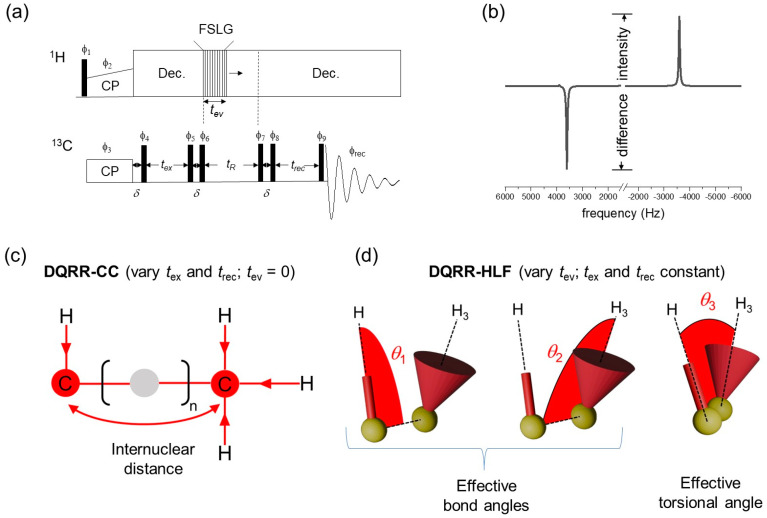 Figure 2
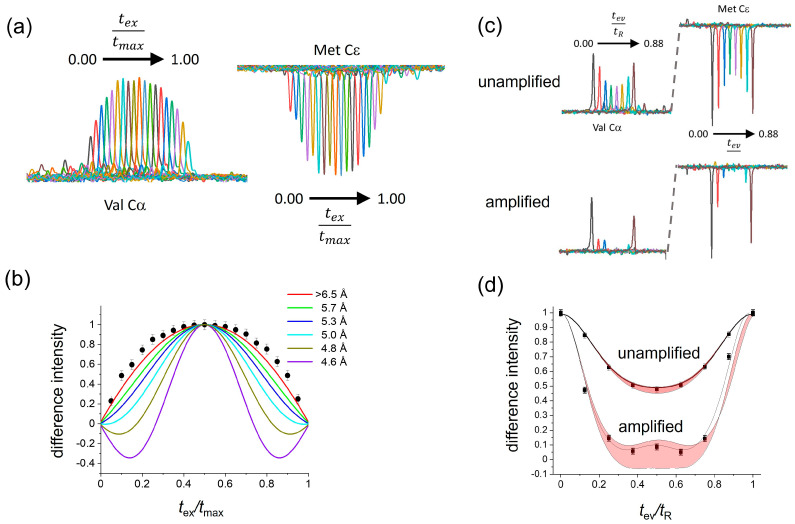 Figure 3
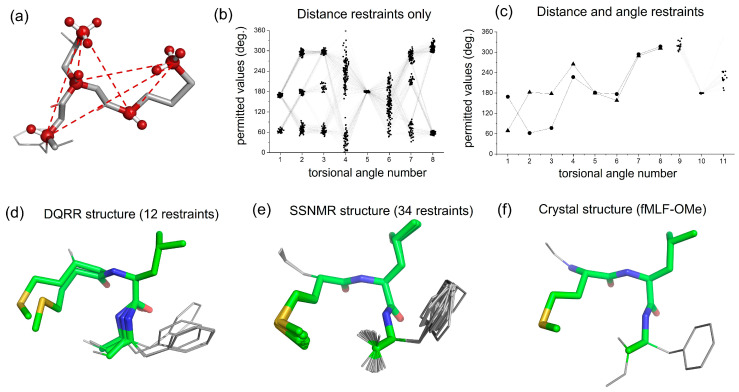 Figure 4
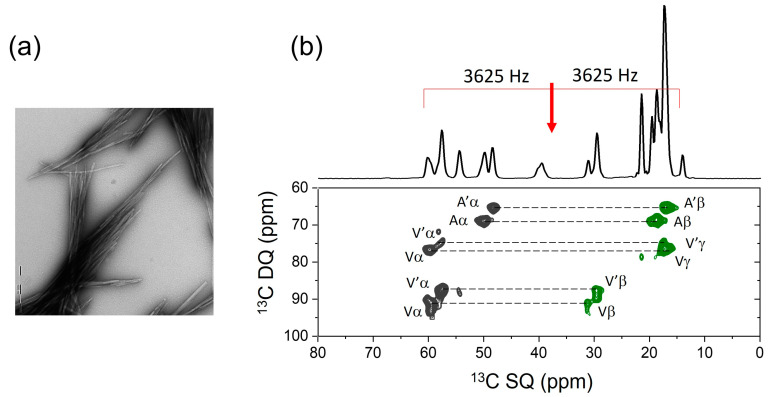 Figure 5
Peer Reviews
No public reviews on file for this paper yet. If you reviewed it on a platform where reviews are public (OpenReview, ICLR, NeurIPS, ICML), you can paste yours below so the community can read it here.
Videos
No videos yet. Explain this paper in a talk, walkthrough, or lecture? Add one.
Taxonomy
TopicsAdvanced NMR Techniques and Applications · Solid-state spectroscopy and crystallography · Muon and positron interactions and applications