Exploring the Link Between Motor Functions and the Relative Use of the More Affected Arm in Adults with Cerebral Palsy
Isabelle Poitras, Jade Clouâtre, Alexandre Campeau-Lecours, Catherine Mercier

TL;DR
This study explores how adults with cerebral palsy use their more affected arm during daily tasks and finds that bilateral motor assessments are strong predictors of this use.
Contribution
The study introduces the use of intensity-based accelerometry metrics and highlights the importance of bilateral tasks in predicting arm use in cerebral palsy.
Findings
The Use Ratio of the more affected arm during kitchen tasks ranged from 0.10 to 0.63.
Bilateral motor assessments were the best predictors of accelerometry metrics (r² = 0.23–0.64).
Results support using intensity-based accelerometry to measure more affected arm use in daily activities.
Abstract
Individuals with hemiparetic cerebral palsy (CP) exhibit reduced use of their more affected (MA) arm, yet the factors that influence its use during activities of daily living remain elusive. The objectives of this study were to describe the relative use of the MA arm during an ecological task, examine its relationship with the level of impairment, and investigate its association with performance in various unilateral and bilateral tasks. Methods: Participants took part in two sessions comprising robotic assessments and clinical assessments of motor functions, as well as accelerometry measurement during kitchen tasks. Four variables were derived from accelerometry data. Stepwise regression analyses were used to identify the best contributors to the accelerometry variables among robotic and clinical assessments. Results: Nineteen adults with CP (34.3 years old ± 11.5; MACS I = 7, II = 6,…
Genes, proteins, chemicals, diseases, species, mutations and cell lines named across the full text — each resolved to its canonical identifier and authoritative record.
Click any figure to enlarge with its caption.
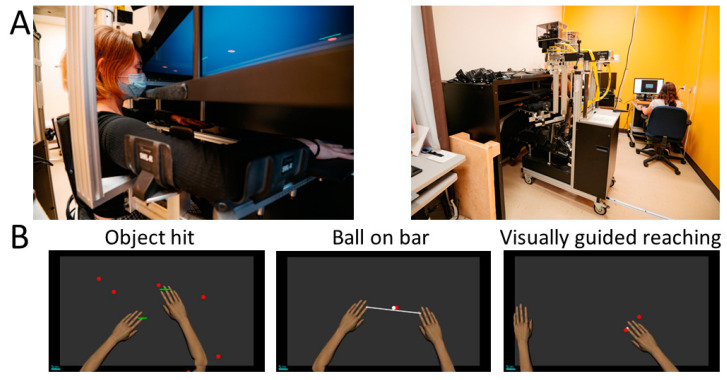 Figure 1
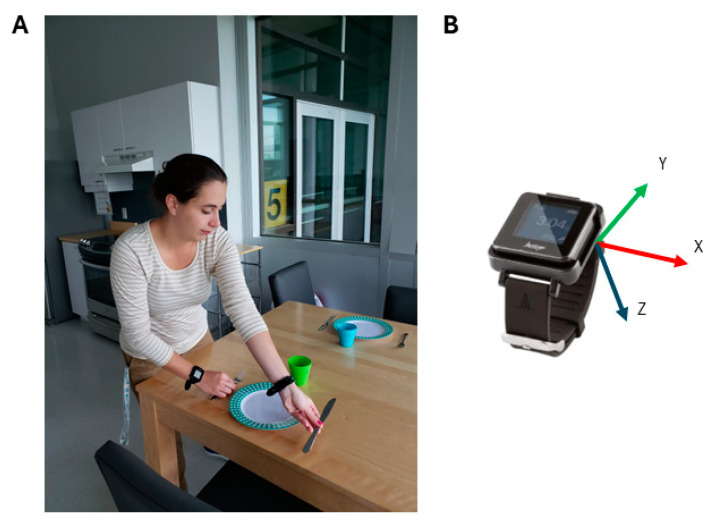 Figure 2
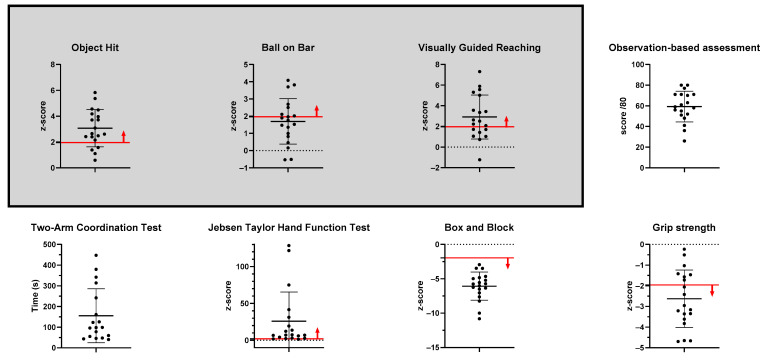 Figure 3
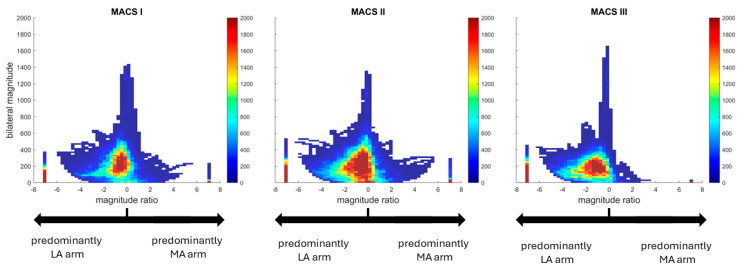 Figure 4
Peer Reviews
No public reviews on file for this paper yet. If you reviewed it on a platform where reviews are public (OpenReview, ICLR, NeurIPS, ICML), you can paste yours below so the community can read it here.
Videos
No videos yet. Explain this paper in a talk, walkthrough, or lecture? Add one.
Taxonomy
TopicsCerebral Palsy and Movement Disorders · Assistive Technology in Communication and Mobility · Stroke Rehabilitation and Recovery