Genotype–Phenotype Correlation in a Large Cohort of Eastern Sicilian Patients Affected by Phenylketonuria: Newborn Screening Program, Clinical Features, and Follow-Up
Maria Chiara Consentino, Luisa La Spina, Concetta Meli, Marianna Messina, Manuela Lo Bianco, Annamaria Sapuppo, Maria Grazia Pappalardo, Riccardo Iacobacci, Alessia Arena, Michele Vecchio, Martino Ruggieri, Agata Polizzi, Andrea Domenico Praticò

TL;DR
This study examines the genetic and phenotypic characteristics of PKU in Sicilian patients over 40 years, emphasizing the importance of dietary management and new therapies.
Contribution
The study provides a detailed genotype-phenotype correlation in a large Eastern Sicilian PKU cohort, highlighting dietary tolerance as a key classification factor.
Findings
m-HPA patients showed higher dietary tolerance compared to classic, moderate, or mild PKU forms.
Common PAH variants included c.1066-11G>A, c.782G>A, and c.165delT.
Phenotype classification sometimes diverged from genotype predictions, emphasizing the role of dietary tolerance.
Abstract
Background: Phenylketonuria (PKU) is an autosomal recessive disorder caused by mutations in the phenylalanine hydroxylase (PAH) gene, leading to impaired amino acid metabolism. Early diagnosis through newborn screening (NBS) enables prompt treatment, preventing neurological complications. This study aims to describe the genetic and phenotypic spectrum of PKU and mild hyperphenylalaninemia (m-HPA) in patients diagnosed at the Department of Inborn Errors of Metabolism and Newborn Screening, Hospital G. Rodolico-S. Marco, Catania, over four decades (1987–2023). Materials and Methods: The retrospective analysis included 102 patients with elevated blood phenylalanine (Phe) levels born in Sicily and followed at the Institute. The phenotype evaluation comprised the Phe levels at birth/diagnosis, dietary tolerance, and sapropterin dihydrochloride responsiveness. The dietary compliance and…
Genes, proteins, chemicals, diseases, species, mutations and cell lines named across the full text — each resolved to its canonical identifier and authoritative record.
Click any figure to enlarge with its caption.
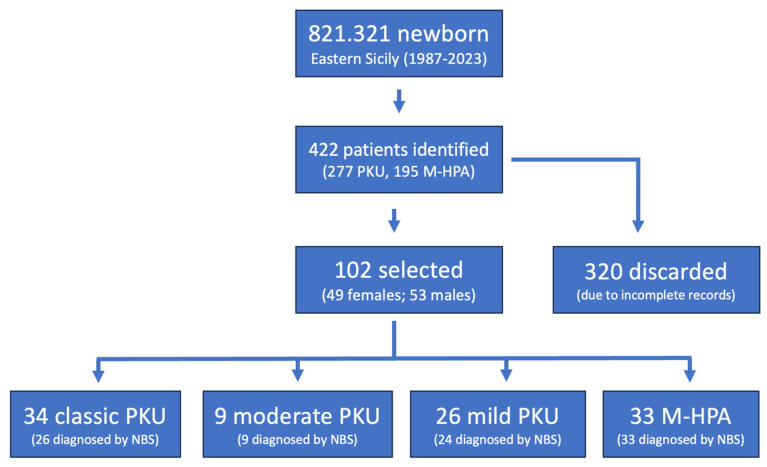 Figure 1
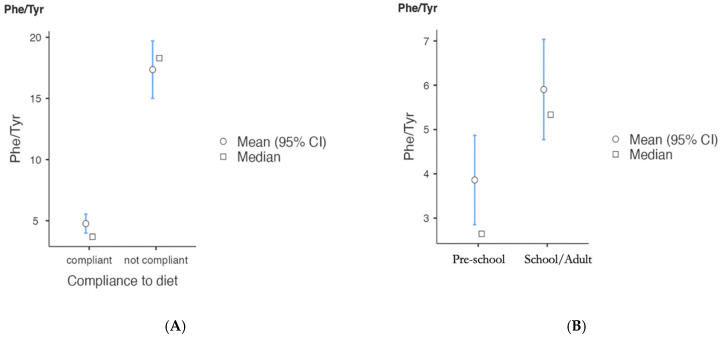 Figure 2
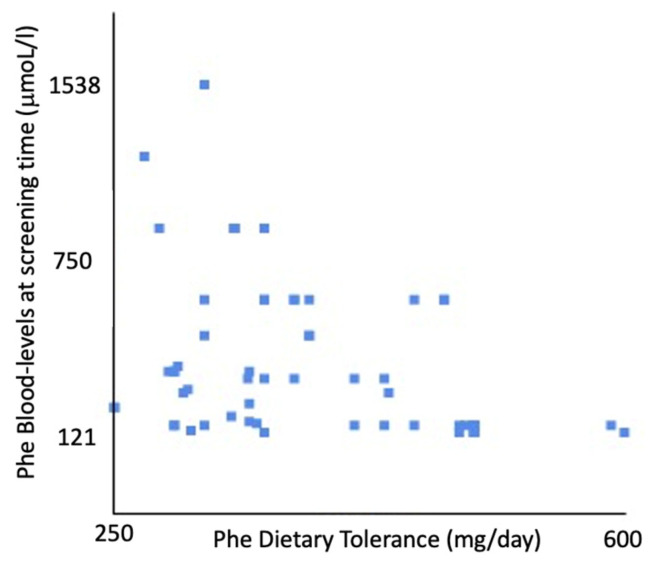 Figure 3
Peer Reviews
No public reviews on file for this paper yet. If you reviewed it on a platform where reviews are public (OpenReview, ICLR, NeurIPS, ICML), you can paste yours below so the community can read it here.
Videos
No videos yet. Explain this paper in a talk, walkthrough, or lecture? Add one.
Taxonomy
TopicsMetabolism and Genetic Disorders · Mitochondrial Function and Pathology · Diet and metabolism studies