Use of Biopowders as Adsorbents of Potentially Toxic Elements Present in Aqueous Solutions
Vanesa Santás-Miguel, Vanesa Lalín-Pousa, Manuel Conde-Cid, Andrés Rodríguez-Seijo, Paula Pérez-Rodríguez

TL;DR
This study explores how cork and pine bark can effectively remove toxic elements like arsenic and chromium from water, offering eco-friendly solutions for water treatment.
Contribution
The study introduces cork and pine bark as novel, sustainable biosorbents for removing multiple potentially toxic elements from water.
Findings
Cork bark showed higher adsorption for arsenic and fluoride compared to pine bark.
Desorption tests revealed high retention rates for most contaminants, indicating strong binding.
Acidic conditions improved chromium adsorption similarly in both biopowders.
Abstract
This study examines the adsorption and desorption behaviors of phosphorus (P), arsenic (As), fluoride (F), and chromium (Cr) in aqueous solutions on green materials such as cork bark (CB) and pine bark (PB). These materials are characterized by active functional groups and net negative charges on their surfaces and porous structures. The evaluation considers variations in contaminant concentrations (0.01–10 mM) and pH (3.5–12). Cork bark exhibited higher adsorption capacity for As and F, while PB was more effective for P and Cr. Adsorption isotherms followed the Freundlich and Langmuir models, indicating surface heterogeneity and multilayer adsorption for most potentially toxic elements (PTEs). Desorption tests demonstrated low rates, with CB retaining up to 99% of F and 85% of As, and PB achieving up to 86% retention for Cr and 70% for P. The influence of pH was minimal for As, P, and…
Genes, proteins, chemicals, diseases, species, mutations and cell lines named across the full text — each resolved to its canonical identifier and authoritative record.
Click any figure to enlarge with its caption.
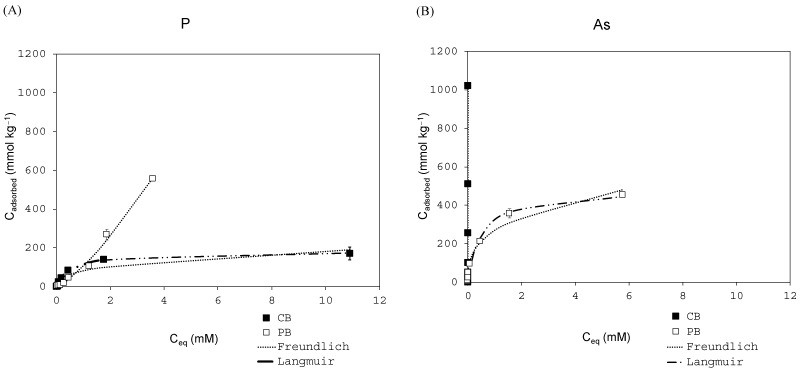 Figure 1
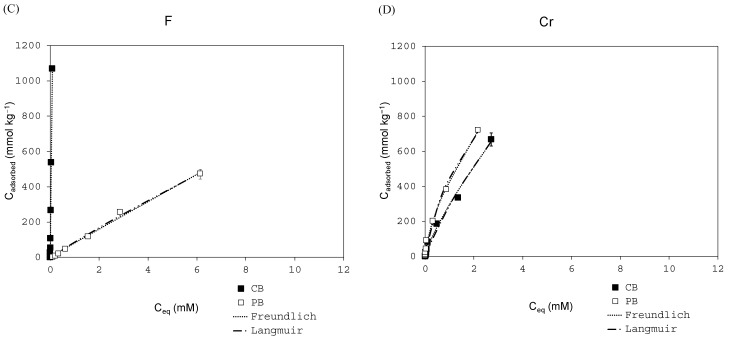 Figure 2
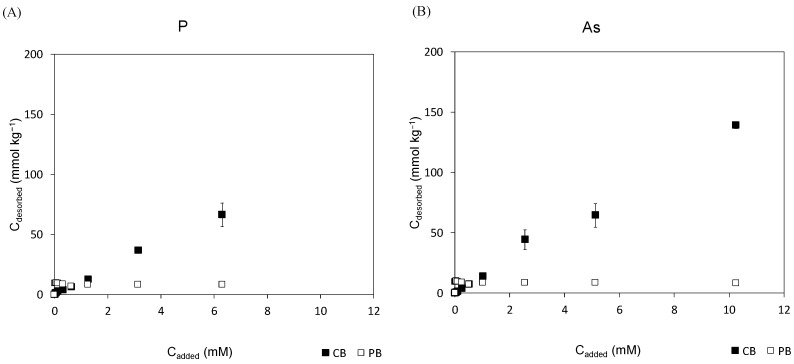 Figure 3
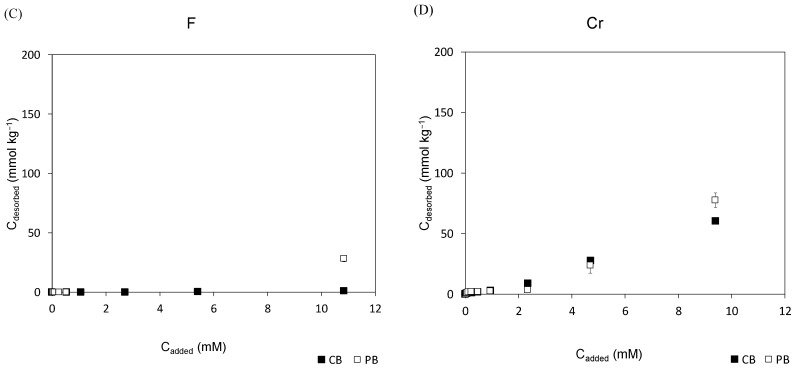 Figure 4
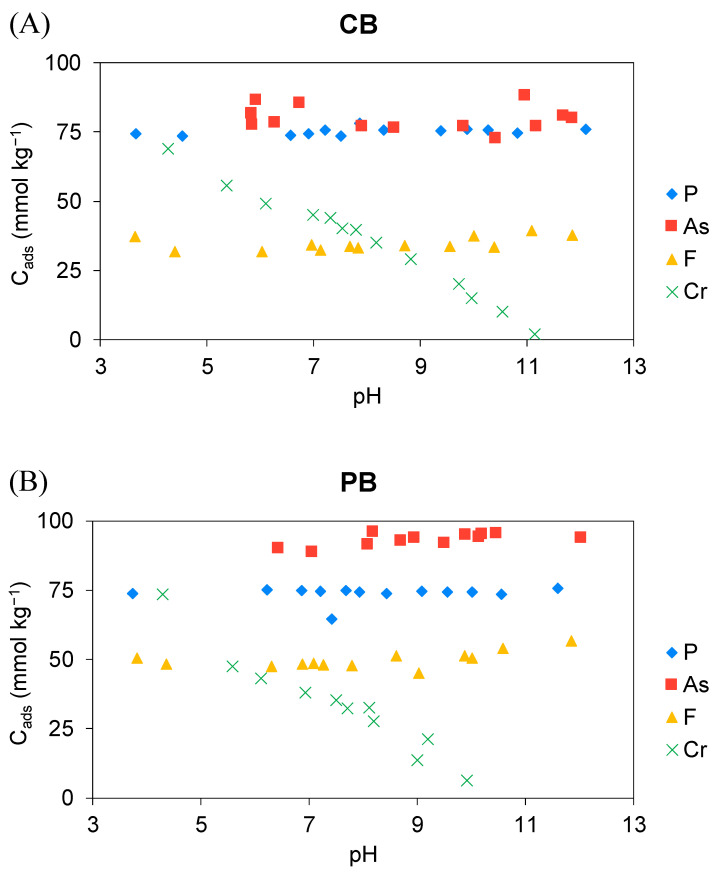 Figure 5
Peer Reviews
No public reviews on file for this paper yet. If you reviewed it on a platform where reviews are public (OpenReview, ICLR, NeurIPS, ICML), you can paste yours below so the community can read it here.
Videos
No videos yet. Explain this paper in a talk, walkthrough, or lecture? Add one.
Taxonomy
TopicsAdsorption and biosorption for pollutant removal · Heavy metals in environment · Phosphorus and nutrient management