Redox-Driven Magnetic Regulation in a Series of Couplers in Bridged Nitroxide Diradicals
Fengying Zhang, Meiwen Song, Cheng Luo, Teng Ma, Yali Zhao, Boqiong Li, Yuxiang Bu

TL;DR
This paper explores how redox reactions can control magnetic properties in organic diradicals, offering insights for designing molecular magnetic switches.
Contribution
The study predicts redox-driven magnetic transitions in specific bridged nitroxide diradicals using computational methods.
Findings
Dihydrogenation causes magnetic transitions in 9,10-anthraquinone and 9,10-diazanthracene-bridged diradicals.
Shorter bonds and larger spin polarization lead to stronger magnetic coupling in the studied diradicals.
π-conjugated structures enhance magnetic coupling, as explained by McConnell’s spin alternation rule.
Abstract
Redox-induced magnetic regulation in organic diradicals is distinctly attractive. In this work, taking nitroxide radicals as spin sources, we predict the magnetic properties of 9, 10-anthraquinone, 9, 10-phenaquone, 9, 10-diazanthracene and 9, 10-diazepine-bridged molecular diradical structures in which the couplers are prone to dihydrogenation reduction at positions 9 and 10. As evidenced at both the B3LYP and M06-2X levels of theory, the calculations confirm that the magnetic transitions between ferromagnetism and antiferromagnetism can take place for 9, 10-anthraquinone and 9, 10-diazanthracene-bridged diradicals after dihydrogenation. The differences in the magnetic behaviors and magnetic magnitudes of 9, 10-anthraquinone and 9, 10-diazanthracene-bridged diradicals before and after dihydrogenation could be attributed to their noticeably different spin-interacting pathways. As for 9,…
Genes, proteins, chemicals, diseases, species, mutations and cell lines named across the full text — each resolved to its canonical identifier and authoritative record.
Click any figure to enlarge with its caption.
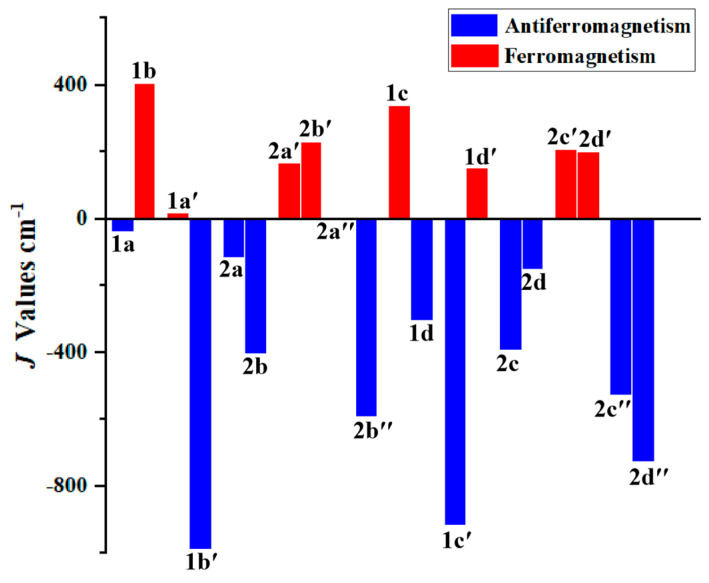 Figure 1
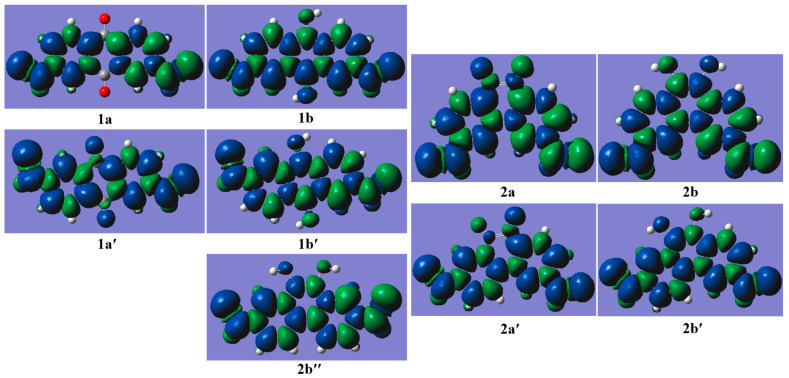 Figure 2
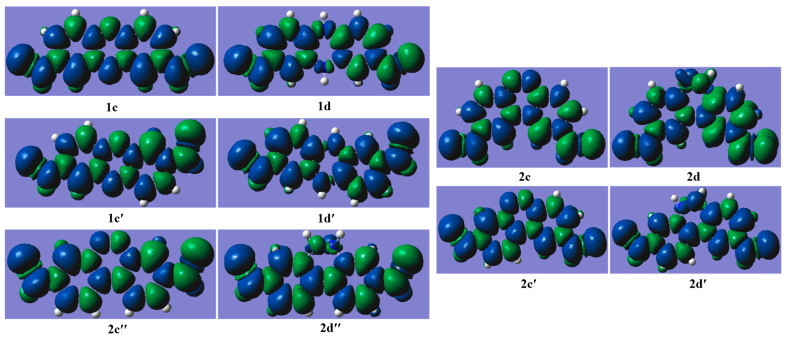 Figure 3
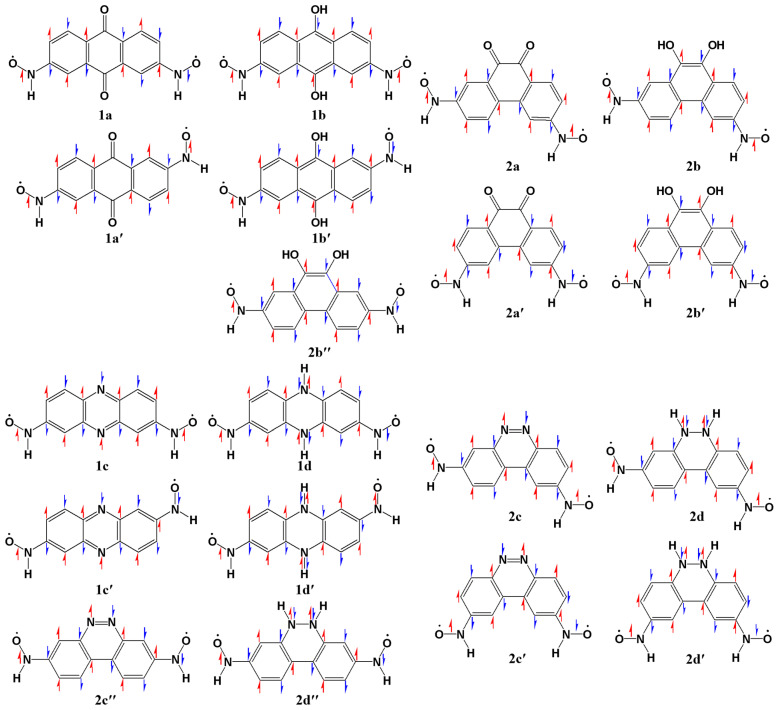 Figure 4
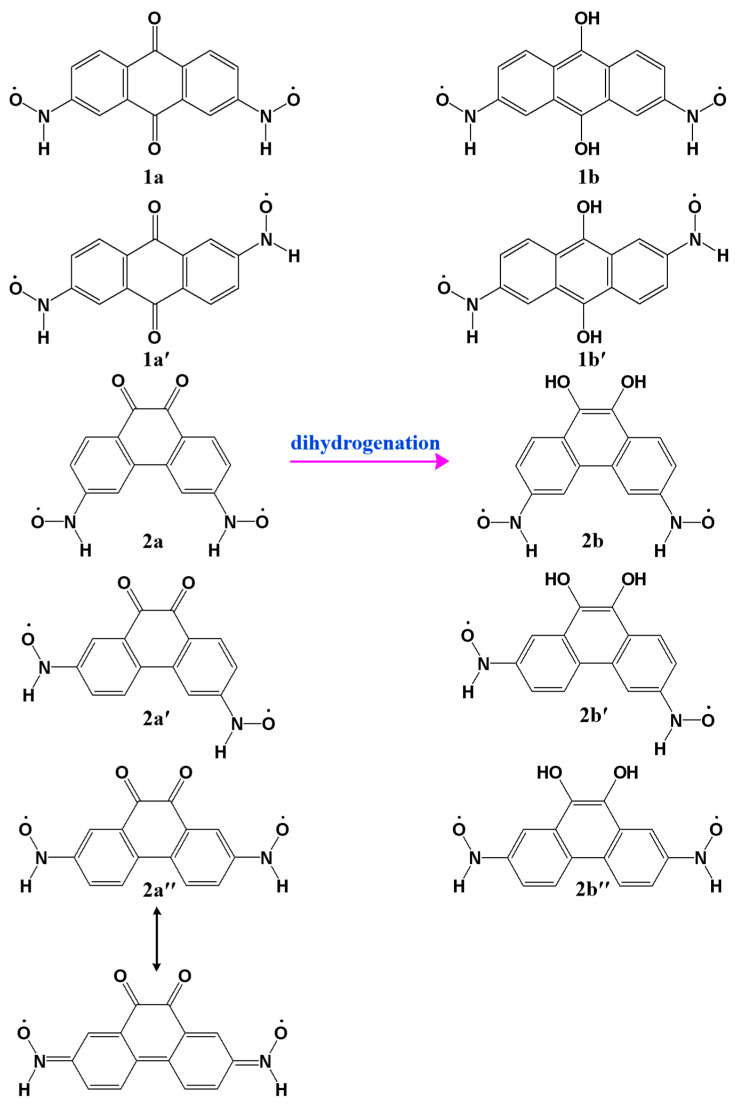 Figure 5
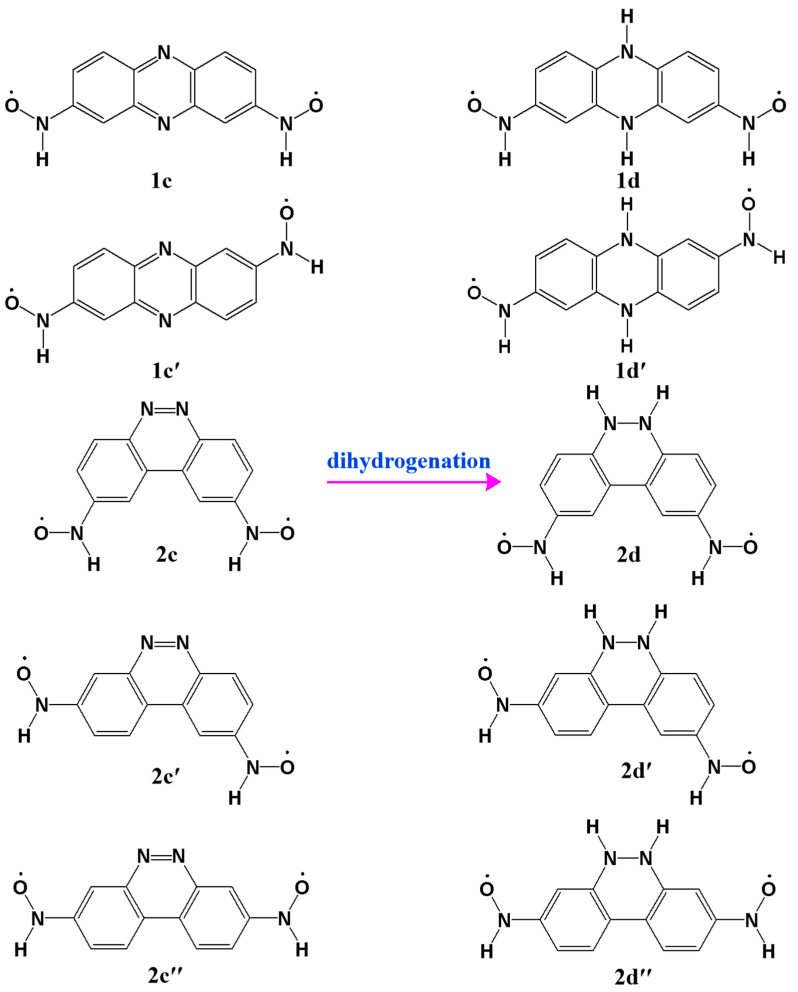 Figure 6
Peer Reviews
No public reviews on file for this paper yet. If you reviewed it on a platform where reviews are public (OpenReview, ICLR, NeurIPS, ICML), you can paste yours below so the community can read it here.
Videos
No videos yet. Explain this paper in a talk, walkthrough, or lecture? Add one.
Taxonomy
TopicsMagnetism in coordination complexes · Porphyrin and Phthalocyanine Chemistry · Electron Spin Resonance Studies