Adaptive robust position control scheme for an electromagnetic levitation system with experimental verification
Ziwei Wu, Kuangang Fan, Ping Yi

TL;DR
This paper proposes a new control method for electromagnetic levitation systems that improves stability and performance under disturbances.
Contribution
A novel IWOA-SMC-ALADRC control scheme is introduced, combining optimization and robust control for better performance.
Findings
The proposed control method shows improved anti-disturbance performance compared to existing methods.
Simulation and experimental results confirm the effectiveness of IWOA-SMC-ALADRC in tracking and stability.
The adaptive parameter tuning strategy enhances the controller's robustness.
Abstract
Electromagnetic levitation technology has several advantages, such as no friction, safety, and reliability. Electromagnetic levitation control, as the core of electromagnetic levitation technology, has attracted people’s attention. The use of other traditional control algorithms frequently results in a decline in the system’s anti-disturbance and tracking performance due to the highly nonlinear, stochastic uncertainty, and time delay characteristics of electromagnetic levitation systems. This work takes the single point electromagnetic levitation ball system as the research object to address the above-mentioned issues. A control method combining an improved whale optimization algorithm with robust sliding mode control and adaptive linear active disturbance rejection (IWOA-SMC-ALADRC) is proposed to achieve stable control of a single point electromagnetic levitation ball. Firstly, a…
Genes, proteins, chemicals, diseases, species, mutations and cell lines named across the full text — each resolved to its canonical identifier and authoritative record.
Click any figure to enlarge with its caption.
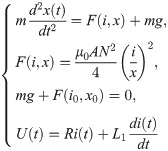 Figure 1
 Figure 2
 Figure 3
 Figure 4
 Figure 5
 Figure 6
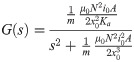 Figure 7
 Figure 8
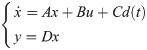 Figure 9
 Figure 10
 Figure 11
 Figure 12
 Figure 13
 Figure 14
 Figure 15
 Figure 16
 Figure 17
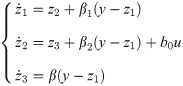 Figure 18
 Figure 19
 Figure 20
 Figure 21
 Figure 22
 Figure 23
 Figure 24
 Figure 25
 Figure 26
 Figure 27
 Figure 28
 Figure 29
 Figure 30
 Figure 31
 Figure 32
 Figure 33
 Figure 34
 Figure 35
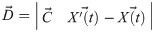 Figure 36
 Figure 37
 Figure 38
 Figure 39
 Figure 40
 Figure 41
 Figure 42
 Figure 43
 Figure 44
 Figure 45
 Figure 46
 Figure 47
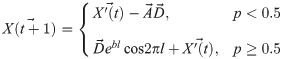 Figure 48
 Figure 49
 Figure 50
Peer Reviews
No public reviews on file for this paper yet. If you reviewed it on a platform where reviews are public (OpenReview, ICLR, NeurIPS, ICML), you can paste yours below so the community can read it here.
Videos
No videos yet. Explain this paper in a talk, walkthrough, or lecture? Add one.
Taxonomy
TopicsMagnetic Bearings and Levitation Dynamics · Magnetic and Electromagnetic Effects · Wireless Power Transfer Systems