Morphological changes in the human mandible associated with the presence of exostoses: A cross-sectional study in two archaeological populations from southern France
Estelle Casazza, Benoit Ballester, Camille Philip-Alliez, Yann Ardagna, Anne Raskin, Sameh Attia, Sameh Attia, Sameh Attia, Sameh Attia

TL;DR
This study examines how bony growths on the jawbone relate to anatomical changes in ancient human remains from southern France.
Contribution
The study introduces a new method for analyzing jawbone variations linked to parafunctional activities in archaeological populations.
Findings
Mandibles with more exostoses showed greater values in several anatomical measurements.
Key differences were found in bicondylar width, ramus height, and coronoid process height between groups.
Results highlight the anatomical impact of parafunctional behaviors like bruxism on the mandible.
Abstract
This cross-sectional study aimed to investigate morphological changes in the human mandible in archaeological collections associated with the presence of bony exostoses at the mandibular angle, which is described in the literature as related to specific behaviours of the masticatory apparatus like parafunctional activities. The skeletal sample investigated comprised adult individuals from two archaeological series. Sixteen measurements of the mandible were selected to evaluate anatomic variation in the two populations. Mandibles from both series were pooled for statistical analysis into two groups according to the number of exostoses at the mandibular angles: group 1 (number of exostoses ≤1) and group 2 (number of exostoses ≥ 2). Measurements could be made on eighty mandibles. A statistically significant difference was demonstrated between group 1 and group 2 for the following…
Genes, proteins, chemicals, diseases, species, mutations and cell lines named across the full text — each resolved to its canonical identifier and authoritative record.
Click any figure to enlarge with its caption.
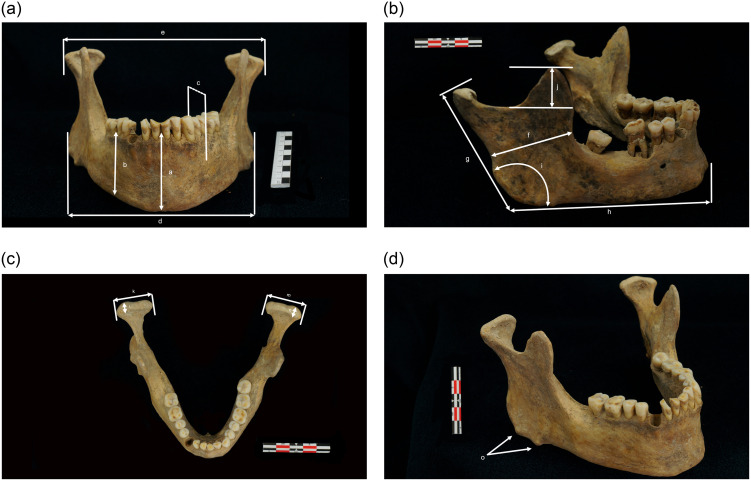 Figure 1
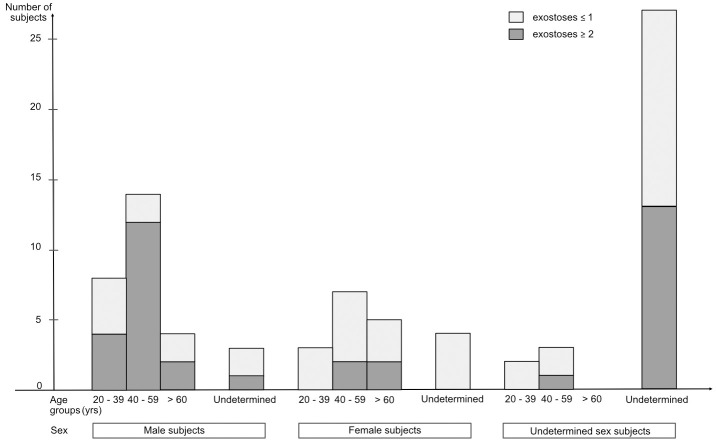 Figure 2
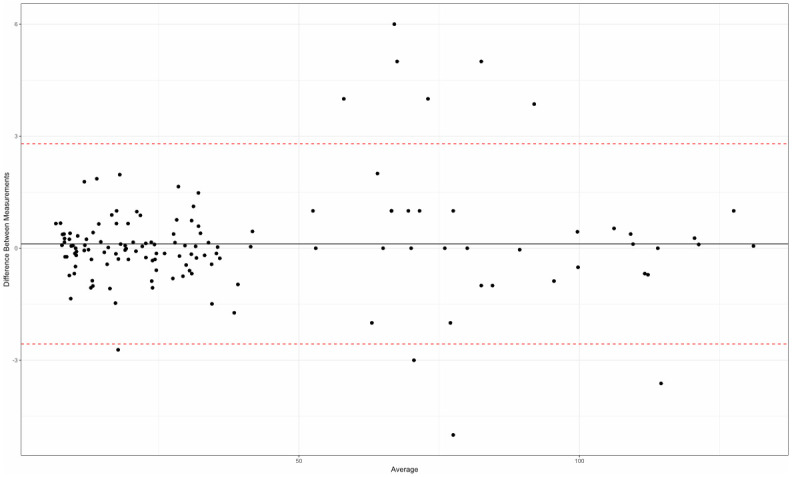 Figure 3
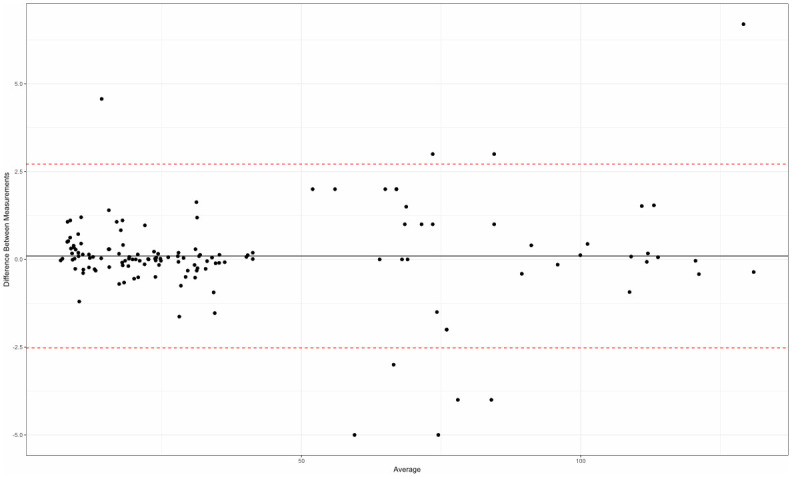 Figure 4
 Figure 5
 Figure 6
 Figure 7
 Figure 8
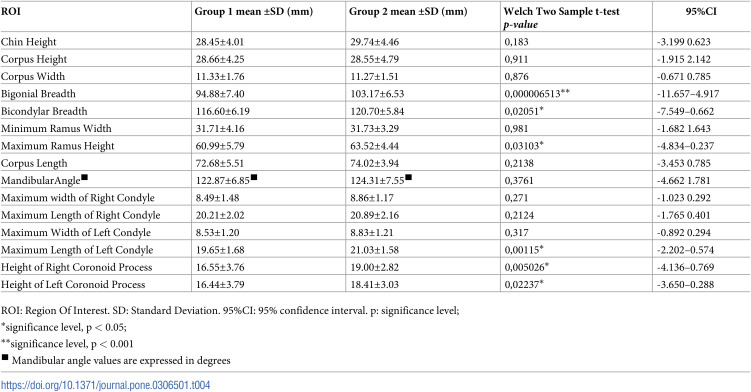 Figure 9
Peer Reviews
No public reviews on file for this paper yet. If you reviewed it on a platform where reviews are public (OpenReview, ICLR, NeurIPS, ICML), you can paste yours below so the community can read it here.
Videos
No videos yet. Explain this paper in a talk, walkthrough, or lecture? Add one.
Taxonomy
TopicsOropharyngeal Anatomy and Pathologies · Temporomandibular Joint Disorders · dental development and anomalies