The relation of nasopharyngeal colonization by Streptococcus pneumoniae in comorbid adults with unfavorable outcomes in a low-middle income country
Juan Olivella-Gomez, Julián Lozada, Cristian C. Serrano-Mayorga, Lina Méndez-Castillo, Alejandro Acosta-González, André Emilio Viñán Garcés, Ingrid G. Bustos, Elsa D. Ibáñez-Prada, Yuli V. Fuentes, Ana M. Crispin, Erica Y. Garcia-Garcia, Eveling Santana, Diego F. Josa

TL;DR
This study explores how Streptococcus pneumoniae colonization affects adults with chronic diseases in a low-middle income country, finding no link to worse outcomes.
Contribution
The study provides novel data on Spn colonization in comorbid adults, revealing its association with chronic diseases but not with adverse outcomes.
Findings
Chronic kidney and cardiac diseases are independently associated with Spn colonization.
Spn colonization was not linked to lower respiratory tract infections or unfavorable outcomes in the study cohort.
Only 10.1% of the 810 enrolled patients were found to be colonized with Spn.
Abstract
Streptococcus pneumoniae (Spn) is the primary bacterial cause of lower respiratory tract infections (LRTI) globally, particularly impacting older adults and children. While Spn colonization in children is linked to LRTI, its prevalence, and consequences in adults with comorbidities remain uncertain. This study aims to provide novel data in that regard. This prospective study of outpatient adults with chronic diseases was conducted in Colombia. Data on demographics, vaccination, and clinical history was collected in a RedCap database. Nasopharyngeal aspirate samples were examined for Spn colonization using traditional cultures and quantitative—real time polymerase chain reaction (q-rtPCR). Patients were followed for 18 months, with colonization prevalence calculated and factors influencing colonization and its impact on clinical outcomes analyzed through logistic regressions. 810…
Genes, proteins, chemicals, diseases, species, mutations and cell lines named across the full text — each resolved to its canonical identifier and authoritative record.
Click any figure to enlarge with its caption.
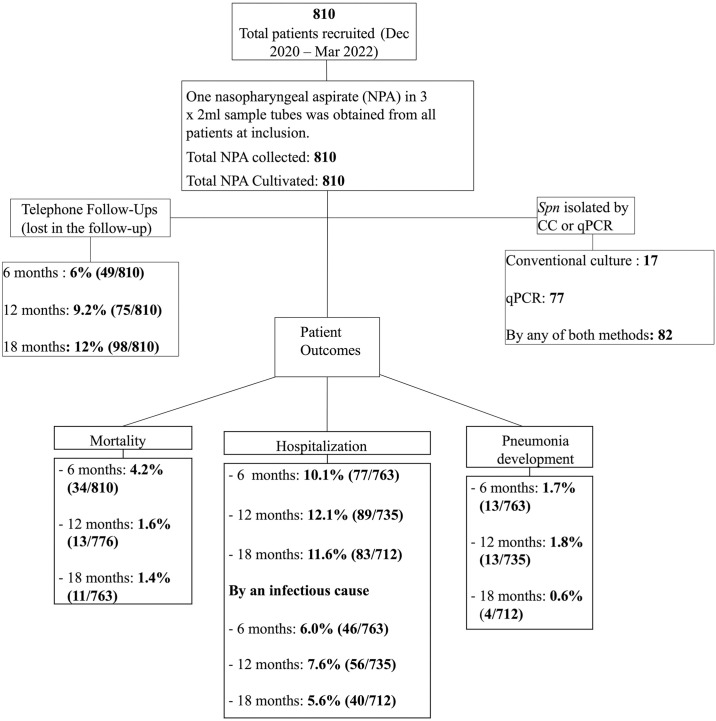 Figure 1
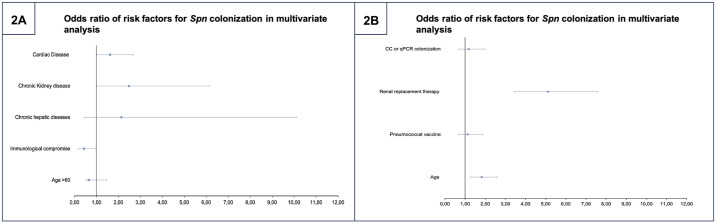 Figure 2
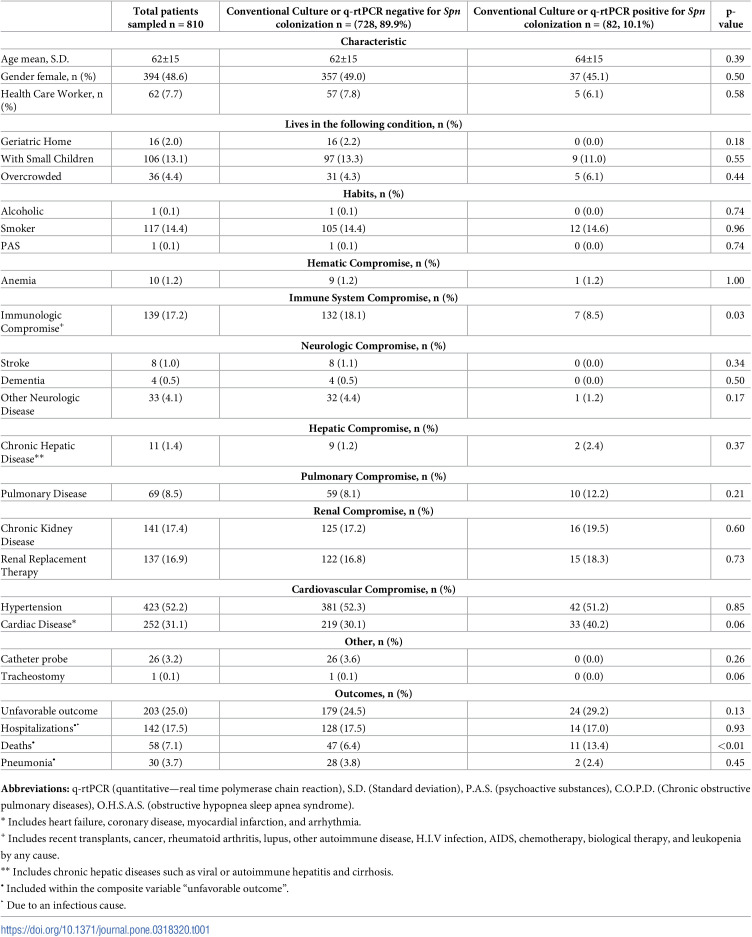 Figure 3
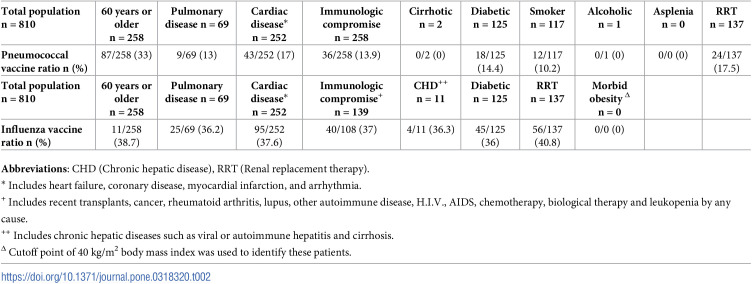 Figure 4
Peer Reviews
No public reviews on file for this paper yet. If you reviewed it on a platform where reviews are public (OpenReview, ICLR, NeurIPS, ICML), you can paste yours below so the community can read it here.
Videos
No videos yet. Explain this paper in a talk, walkthrough, or lecture? Add one.
Taxonomy
TopicsPneumonia and Respiratory Infections · Respiratory viral infections research · Bacterial Infections and Vaccines