Early Sacral Neuromodulation: A Promising Opportunity or an Overload for Patients with a Recent Spinal Cord Injury? A Cross-Sectional Study
Sophina Bauer, Lukas Grassner, Doris Maier, Ludwig Aigner, Lukas Lusuardi, Julia Peters, Orpheus Mach, Karin Roider, Evelyn Beyerer, Michael Kleindorfer, Andreas Wolff, Iris Leister, Elena E. Keller

TL;DR
This study explores whether patients with spinal cord injuries would agree to early sacral neuromodulation to improve urinary tract dysfunction, finding that a majority would consent if informed properly.
Contribution
The study provides novel insights into patient attitudes toward early sacral neuromodulation following spinal cord injury, highlighting potential for early intervention acceptance.
Findings
61.9% of patients would have agreed to early treatment before autonomic dysfunction emerged.
51.8% of patients would have consented to early sacral neuromodulation.
Many patients underestimated the severity of neurogenic lower urinary tract dysfunction, correlating with lower quality of life.
Abstract
Background: A solid rationale exists for early sacral neuromodulation in the form of causal therapy that improves neurogenic lower urinary tract dysfunction after complete spinal cord injury. However, the short and early time frame for minimally invasive therapy poses a series of ethical and medical issues, which has impeded clinical realisation thus far. Objectives: We performed a cross-sectional study on patients with chronic spinal cord injury to learn about patients’ attitudes towards early treatment to prepare for large randomised controlled trials. Methods: A cohort of patients (n = 86, mixed genders) with spinal cord injury over two years was analysed. Their lower urinary tract-related quality of life was assessed using the Qualiveen-30 tool. The extent of neurogenic lower urinary tract dysfunction, patients’ awareness of it, and their attitude towards early sacral…
Genes, proteins, chemicals, diseases, species, mutations and cell lines named across the full text — each resolved to its canonical identifier and authoritative record.
Click any figure to enlarge with its caption.
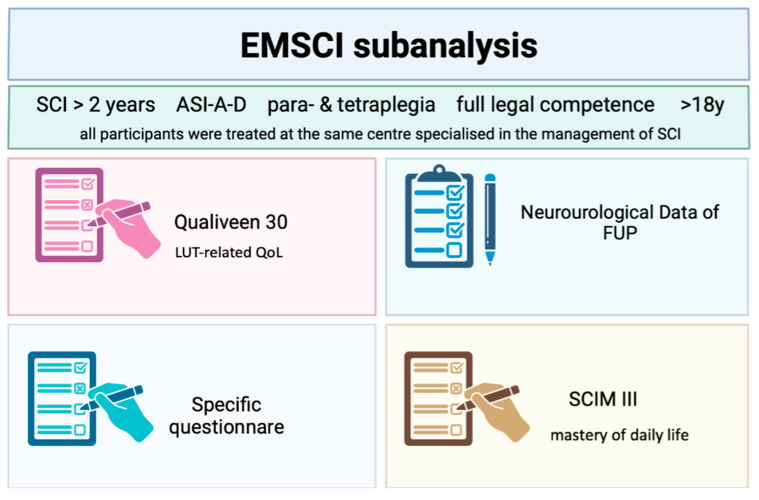 Figure 1
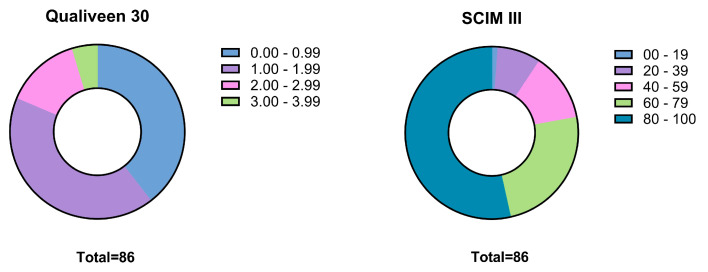 Figure 2
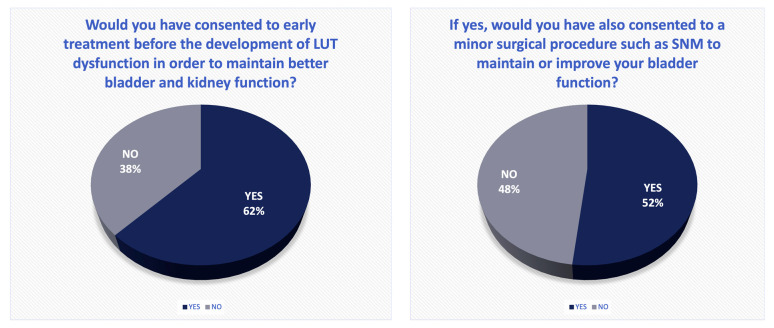 Figure 3
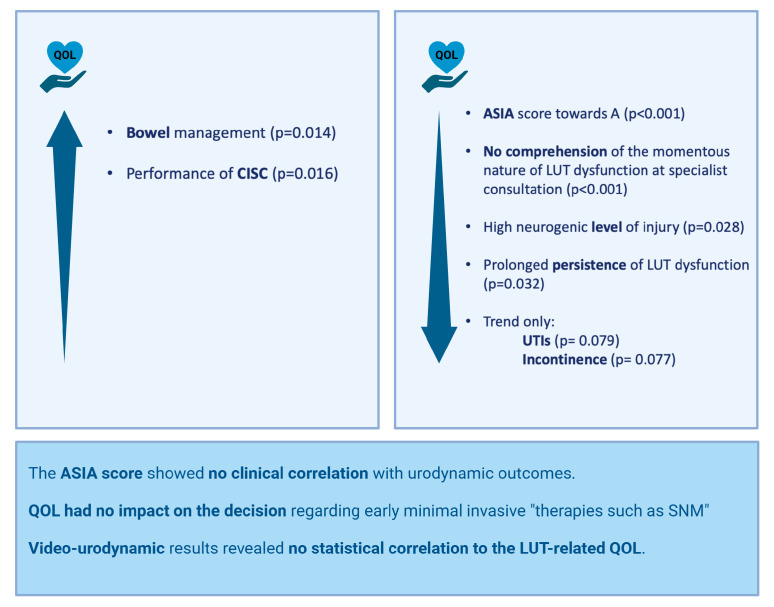 Figure 4
Peer Reviews
No public reviews on file for this paper yet. If you reviewed it on a platform where reviews are public (OpenReview, ICLR, NeurIPS, ICML), you can paste yours below so the community can read it here.
Videos
No videos yet. Explain this paper in a talk, walkthrough, or lecture? Add one.
Taxonomy
TopicsUrinary Bladder and Prostate Research · Pelvic floor disorders treatments · Urological Disorders and Treatments